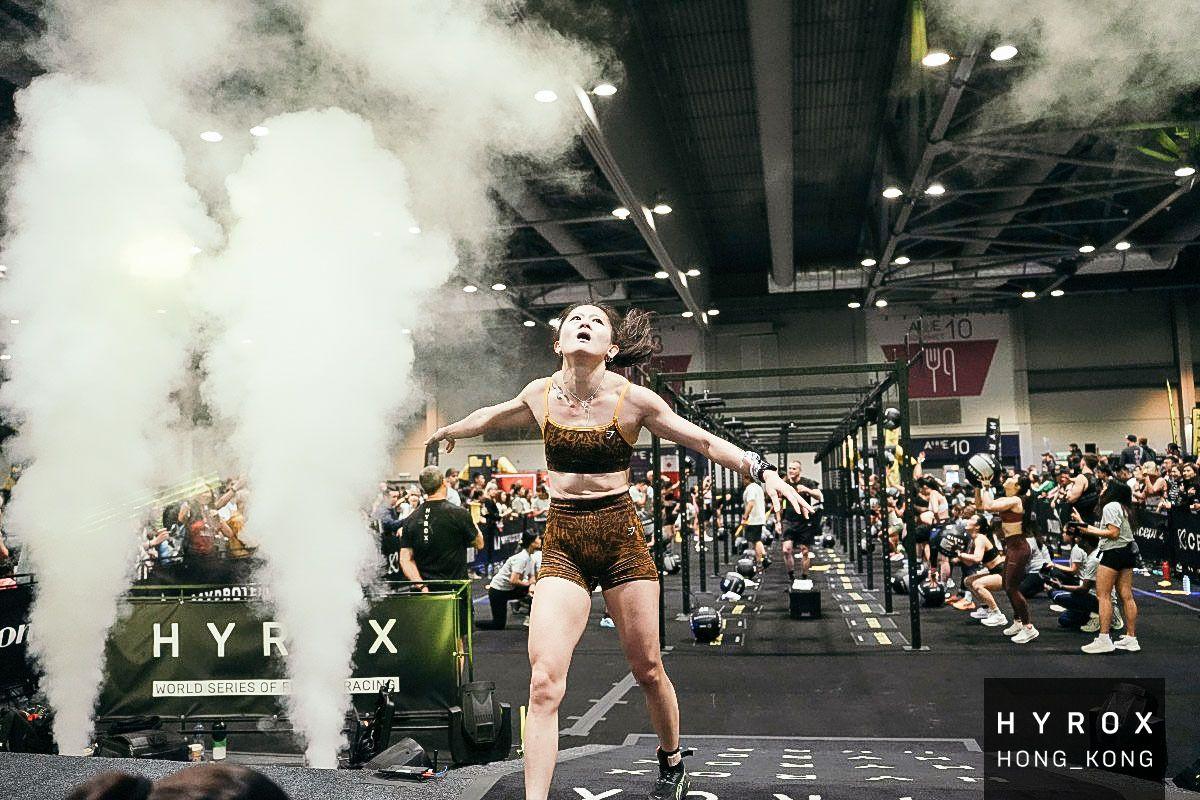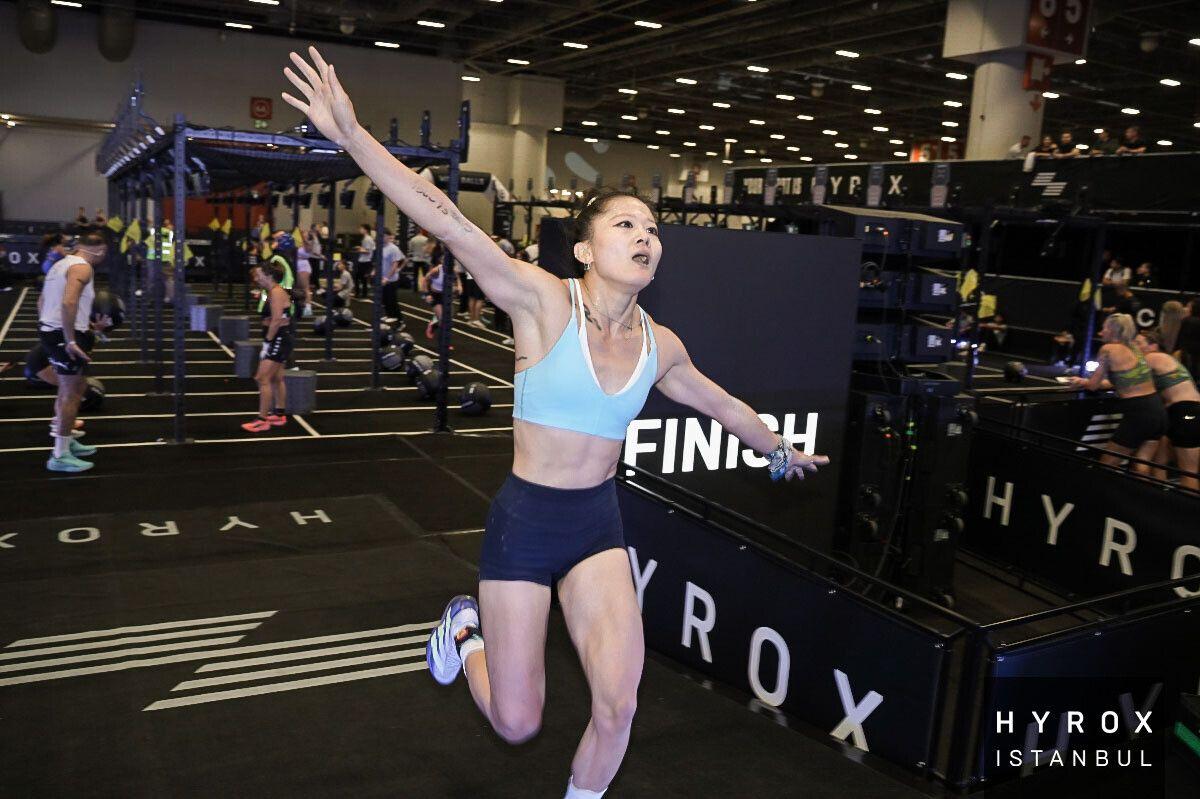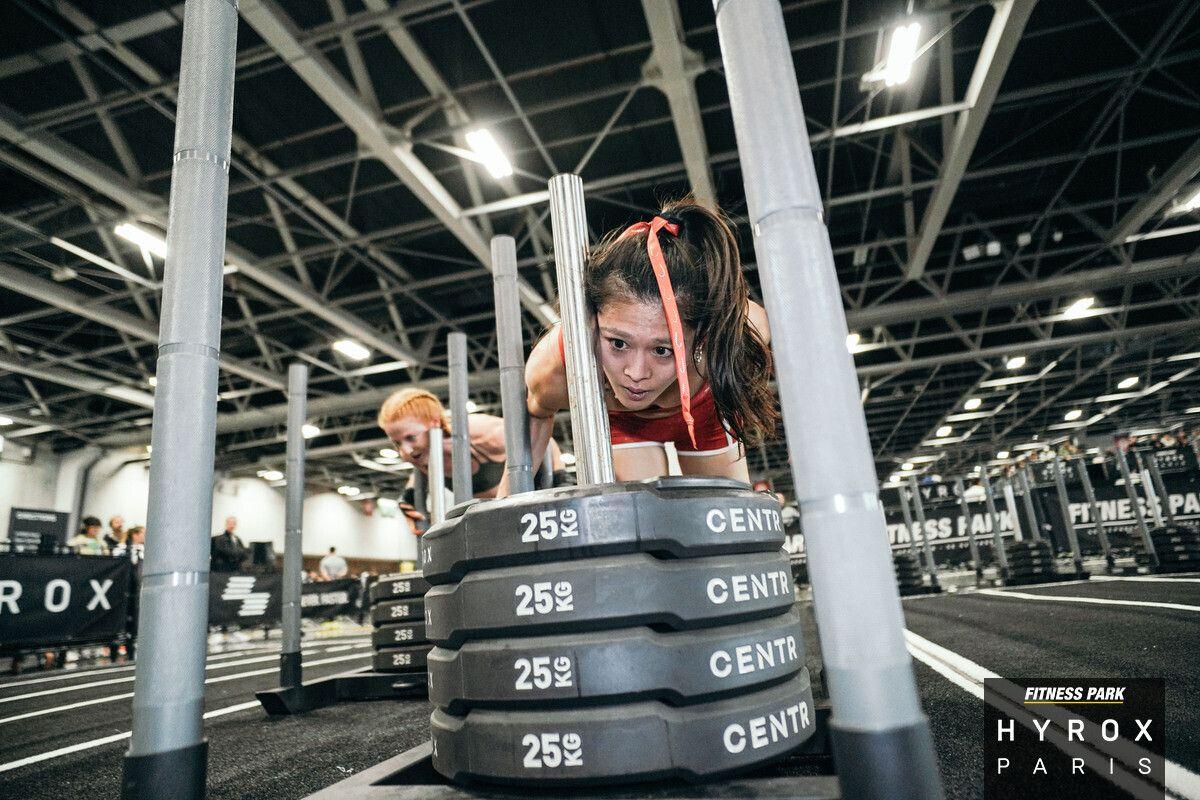
Hi everyone! I'm Pauline Yu (PYY), Taiwan's only 4× Hyrox World Championship qualifier. I still remember the first time I heard the word 'Hyrox' — I was scrolling through Instagram late at night in my Paris apartment, and I saw a video of women running and pushing the sled in what looked like a massive warehouse, and I thought, what on earth is this? I had no idea that a few months later I'd be completely obsessed, training six days a week and eventually representing Taiwan on the world stage. If you're a woman in Taiwan or anywhere else in Asia who's just stumbled across Hyrox and feels equal parts curious and confused, this guide is written specifically for you. I'm going to share everything I wish someone had told me when I was a complete beginner — the race format, the eight workout stations, how to start training, and why I genuinely think Hyrox is one of the best fitness challenges women in Asia can take on right now.
Key Takeaways
- ▸Hyrox is a standardized global fitness race that combines 8 km of running with eight functional workout stations, making it equally accessible to beginners and elite athletes competing under the same roof at the same event.
- ▸Women in Taiwan and across Asia are joining Hyrox in rapidly growing numbers — the sport has no minimum fitness requirement, and your only competition when you start out is your own previous time.
- ▸The eight Hyrox stations always appear in the same fixed order at every race worldwide, so once you learn the sequence you can train specifically for it no matter where you live or which gym you use.
- ▸For women beginners, building a base of aerobic fitness combined with functional strength movements like lunges, burpees, and rowing will give you the most return on your training investment in the first 12 weeks.
- ▸Pacing strategy matters just as much as raw fitness in Hyrox — going out too hard on the first run kilometre is the single most common mistake I see new athletes make, and it can wreck your entire race experience.
- ▸You do not need to be a CrossFit athlete or a marathon runner to do Hyrox — I know women in their 40s and 50s in Taiwan who finished their first race and immediately signed up for the next one with huge smiles on their faces.
What Hyrox Actually Is — And Why I Fell In Love With It
Let me give you the clearest explanation I can. Hyrox is a global fitness race that was created in Germany in 2017, and it has since exploded in popularity across Europe, North America, and now Asia — including Taiwan. Every single Hyrox race in the world follows exactly the same format: you run 1 kilometre, then you complete one functional workout station, then you run another kilometre, then the next station, and you repeat this pattern eight times until you cross the finish line. The total running distance across all eight segments is 8 km, and the eight stations are always in the same order no matter where in the world the race is held. That consistency is one of the things that makes Hyrox so special — whether you race in Taipei, Tokyo, Singapore, London, or Hamburg, you will face the exact same challenge, which means your time is directly comparable to athletes all over the world.
The eight stations in order are: SkiErg (1,000 m), sled push, sled pull, burpee broad jumps (80 m), rowing (1,000 m), farmers carry (200 m), sandbag lunges (200 m), and wall balls (100 reps). In the women's open category, the weights are designed to be challenging but achievable — for example, the sled for women is typically lighter than the men's sled, and the wall ball weight reflects a standard that most women with a few months of training can work towards. When I first read the station list I genuinely panicked about the sled push — I had never touched a sled in my life and the idea of pushing a loaded sled across a floor while my legs were already burning from running seemed absolutely impossible. But here's what I learned: none of these movements require a lifetime of specialist training. They are all learnable, and with consistent practice they become things you actually look forward to on race day.
- ▸Write down the eight station names and spend one training session per week dedicated to practising each movement pattern — familiarity with each station removes race-day anxiety and lets you focus entirely on your effort and pacing.
- ▸Watch race footage on YouTube of women's open and women's elite Hyrox competitors completing each station — seeing real athletes move through the format helps you visualise your own race plan long before you ever stand on the start line.
- ▸If you're in Taiwan and want to find a gym with a sled track and SkiErg machine, search for functional fitness gyms in Taipei or join local Hyrox training groups on Facebook and Instagram — the community here is welcoming and growing fast.
- ▸Don't worry about the weights or distances feeling intimidating at first — when you train consistently for eight to twelve weeks, movements that once seemed impossible start to feel like second nature, and your confidence grows with every session.
How to Start Training for Hyrox as a Woman in Asia — My Honest Advice
When I talk to women across Taiwan and Asia who are curious about Hyrox but don't know where to start, the first thing I tell them is this: don't wait until you're 'fit enough' to begin. That's the trap I almost fell into myself. I kept telling myself I needed to improve my running first, or get stronger first, or lose a few kilos first — but the truth is, the training itself is what gets you fit. The best approach for a complete beginner is to build three things simultaneously: aerobic base, functional strength, and movement familiarity. You don't need to do all eight stations perfectly in week one. You just need to start showing up and moving your body in the right directions. I started with three sessions a week — one longer easy run, one strength session focusing on the Hyrox movements, and one short high-intensity interval session — and that simple structure was enough to build real fitness momentum within the first month.
One thing that's really specific to training as a woman in Taiwan and across Asia is the heat and humidity factor. Most of our Hyrox races in this region happen in large indoor arenas or convention centres, but your training is often outdoors or in gyms without full air conditioning — and that heat stress adds a real layer of difficulty that athletes in Europe simply don't face in the same way. I learned this the hard way when I went to my first international race in a cooler climate and suddenly felt like I could run forever, because my body had been adapting to training in 30+ degree heat back in Taiwan. So actually, training in the heat here is a hidden advantage if you manage it correctly — just make sure you're hydrating well, training at cooler times of day when possible, and not dismissing your slower paces in the heat as a sign of weakness. They're not. They're a sign that your body is working very hard.
- ▸Start with three training sessions per week — one easy aerobic run of 30 to 45 minutes, one functional strength session practising Hyrox movements with light weights, and one short interval session combining running and station work to build race-specific fitness.
- ▸Practise transitioning between running and station work in your training — set up a mini-circuit where you run 400 metres and then immediately row or do burpees, because the ability to keep moving when your heart rate is elevated is a skill you genuinely need to train.
- ▸If you're training in Taiwan's summer heat, track your effort by heart rate rather than pace — this keeps your aerobic training in the right zone and prevents you from burning out before your race-day taper even begins.
Race Day Reality — What to Expect as a First-Time Hyrox Competitor
My first Hyrox race was one of the most electric experiences of my life. I had trained hard, I thought I knew what to expect — and then I walked into the venue and the energy hit me like a wall. The music was loud, the crowd was cheering, there were athletes of every age and body type warming up around me, and I immediately felt both terrified and completely at home. What I wasn't prepared for was how emotional the atmosphere would be. I saw women in their 50s crossing the finish line with tears in their eyes. I saw teammates cheering each other through the final wall ball reps. I felt something shift in me during that race — a realisation that this sport is genuinely for everyone, and that finishing is its own kind of victory. The race took me longer than I'd hoped on my first attempt, but I was already planning my next one before I even got my finisher medal.
Practically speaking, here's what you need to know about race day logistics so you're not caught off guard. You'll register for a specific start wave based on your predicted finish time — as a beginner, choose a wave that gives you enough time to complete the race without rushing. You'll need to wear your bib number clearly, and you'll have a timing chip that tracks your splits through each station. The venue will have bag check, water stations throughout the course, and staff at every station who will count your reps and ensure you complete the required distance or volume before you can move on. No one is going to let you skip reps — the race officials are strict about this, and it's part of what makes a Hyrox finish so meaningful. You earned every single second of your finish time. Bring your own snacks and a water bottle for warm-up, arrive at least 90 minutes before your wave starts, and most importantly — trust your training and go enjoy the experience.
- ▸Wear kit you have trained in before and that you know is comfortable for both running and floor-based movements — race day is never the time to debut brand-new shoes or a new sports bra that you haven't properly tested during hard training sessions.
- ▸Practise your pacing strategy by running your first kilometre in training at your planned race pace and then immediately going into a station — if you can't complete the station properly, your planned pace is too fast and needs to be adjusted before race day.
- ▸Connect with other women doing Hyrox in Taiwan and Asia through social media and local gym communities before your first race — having people to share the experience with, whether they're training partners or friendly competitors, makes the whole journey dramatically more enjoyable and sustainable.
What the Research Says
The science behind why Hyrox works so well as a training format is genuinely fascinating to me, especially now that I look back on my own journey with more knowledge than I had at the start. Research published in the Journal of Strength and Conditioning Research has consistently shown that combining aerobic endurance training with functional resistance movements — exactly what Hyrox demands — produces superior improvements in both cardiovascular fitness and muscular endurance compared to training either quality in isolation. This is sometimes called concurrent training, and it's the physiological foundation of what makes Hyrox so effective as a total-body fitness challenge. The fact that you can't separate your running fitness from your strength in a Hyrox race forces your training to become genuinely well-rounded in a way that pure running programmes or pure lifting programmes simply don't achieve. Research in the British Journal of Sports Medicine has also consistently highlighted that high-intensity functional training formats lead to meaningful improvements in body composition, aerobic capacity, and muscular strength in women across a wide range of age groups and fitness levels. When I read findings like these, I feel validated in what I've experienced personally — my body changed in ways that years of solo running never produced, and my overall fitness became more resilient and functional once I committed to Hyrox-specific training. The science confirms what thousands of women across Taiwan, Asia, and the world are already discovering through experience: this format works.
Frequently Asked Questions
Q: Do I need to be a runner or a CrossFit athlete to do Hyrox? A: Absolutely not — and I want to say this as clearly as possible because I think this misconception stops so many women from signing up. When I started, I was a decent runner but had almost no gym background. Other women I know came to Hyrox from CrossFit with great strength but struggled with the running. The truth is that Hyrox rewards a balanced approach, and almost every beginner has something to build on and something to work on. The open category is genuinely designed for everyday athletes, and I have personally seen women in Taiwan with no competitive fitness background complete their first Hyrox race and feel immensely proud. You do not need to be elite. You just need to be willing to train consistently and show up.
Q: How long does it take to train for a first Hyrox race? A: Based on my experience coaching and training alongside women in Taiwan and Asia, I'd suggest giving yourself a minimum of eight to twelve weeks of dedicated preparation if you already have some base fitness — meaning you can run 5 km without stopping and do basic gym movements. If you're starting from very low fitness, give yourself four to six months. The key is not to rush the process. I made the mistake in my early career of signing up for races too close together without adequate recovery, and my performance suffered. Build your base slowly, increase your training volume by no more than about 10 percent per week, and make sure you include at least one full rest day per week. Your body adapts during rest, not during the sessions themselves.
Q: Is Hyrox safe for women who have never done functional fitness training before? A: Yes, with the right approach — and this is actually something I feel strongly about. The movements in Hyrox are all functional, meaning they mimic natural human movement patterns like pushing, pulling, lunging, and carrying. None of them require extreme mobility or a specialist athletic background. That said, I always recommend that women who are brand new to functional fitness movements get at least a few sessions with a qualified coach or trainer before their first race, just to make sure their movement mechanics are sound and they're not going to injure themselves by, say, using their lower back to compensate during the sled pull. Good form protects you and makes you faster — it's never a waste of time to invest in learning the movements correctly from the beginning.
I hope this guide gives you the clarity and confidence you need to take that first step into Hyrox — because I genuinely believe this sport can change your relationship with your body and your fitness in the most positive way. Whether you're in Taipei, Tokyo, Singapore, or anywhere else in Asia, the Hyrox community is waiting to welcome you with open arms. Come find me on Instagram and let me know when you sign up for your first race — I love hearing from women who are just starting this journey. And if you want more training tips, race breakdowns, and honest personal insights from my years competing at the women's elite Hyrox level, subscribe to my newsletter at paulineyuyu.com. I share things there that I don't post anywhere else. See you at the start line!
Taiwan's elite HYROX Pro athlete and 4× World Championship qualifier. I share my training journey, race insights, and performance notes from the competition floor.