Hi everyone! I'm Pauline Yu (PYY), Taiwan's only 4× Hyrox World Championship qualifier. I still remember the first time someone asked me whether they should sign up for HYROX or DEKA FIT — I was standing at a fitness expo in Taipei, sweaty from a demo workout, and I realised I had a real opinion on this because I'd actually raced both. Not just dabbled in training for them, but toed the start line for each format and felt the very different ways each race breaks you down and builds you back up. As someone who competes in the women's elite Hyrox category and has spent years chasing improvement across Asia, I've watched this question come up again and again from beginners, from recreational athletes, and from competitive women who want to do their first hybrid race but don't know where to begin. So today I'm going to give you the honest, detailed comparison I wish someone had given me — no fluff, no brand loyalty, just real experience from someone who has lived both formats.
Key Takeaways
- ▸HYROX follows a fixed global format — 8 km of running broken into 1 km segments, each followed by one of eight standardised functional stations — making it easier to train specifically and compare your performance against a worldwide field.
- ▸DEKA FIT uses a 10-station circuit with 500 metres of SkiErg rowing between each station, which means your aerobic engine gets hammered differently, and you need to be comfortable managing effort on a rower rather than running.
- ▸For women who are new to hybrid racing and have a running background, HYROX is generally the more accessible entry point because the transitions are clear, the crowd energy is massive, and the worldwide community makes it easy to find training partners and resources.
- ▸DEKA FIT is excellent for athletes who are strong on cardio machines and enjoy a more gym-floor atmosphere, or those who want to use it as a complementary race to sharpen weaknesses before their next HYROX.
- ▸If you're in Taiwan or elsewhere in Asia and can only pick one race to prioritise, HYROX currently has a larger and faster-growing regional presence with events across the Asia-Pacific region, which makes qualifying and community-building more practical for most athletes.
The Race Formats: What You're Actually Signing Up For
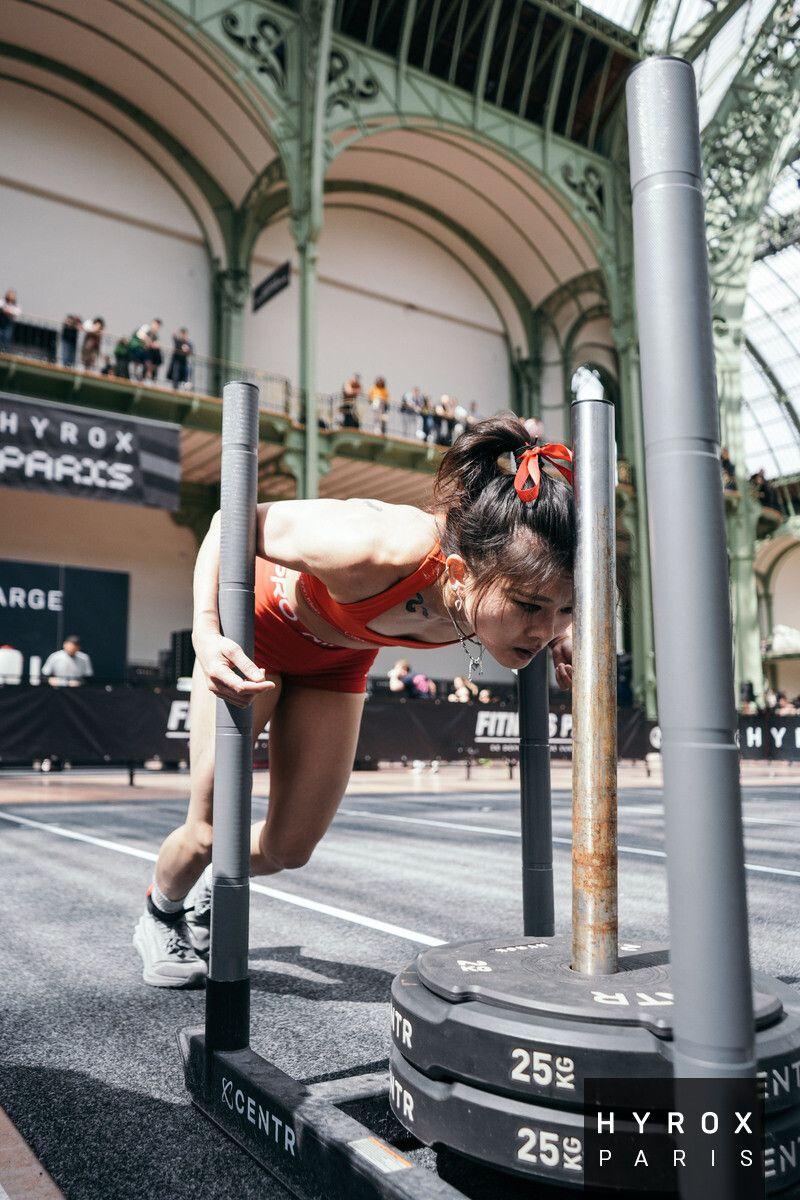
Let me be direct about the structure of each race because this is where most people get confused. HYROX is a single-event race format that goes like this: you run 1 km, then complete a functional workout station, then run another 1 km, then another station, and you repeat that eight times until you've run 8 km total and completed all eight stations. The eight stations are always the same worldwide — SkiErg (1,000 m), sled push, sled pull, burpee broad jumps (80 m), rowing (1,000 m), farmers carry, sandbag lunges, and wall balls. The weights and distances at each station vary depending on your division — women's elite like me face different loads than recreational athletes — but the structure never changes. That consistency is one of HYROX's greatest strengths. When I raced in Singapore, I knew exactly what was coming and in what order. There were no surprises in the format, only surprises in how my body would feel on that particular day.
DEKA FIT is structured quite differently, and I think that difference catches a lot of people off guard. Instead of running between stations, you row 500 metres on a SkiErg machine between each of the 10 stations. The 10 stations themselves include things like the assault bike, box jump-overs, burpee broad jumps, farmers carry, sandbag lunges, wall balls, a shuttle run, and others depending on the event type. The total SkiErg distance across the race adds up to 5,000 metres — that's 10 sets of 500 metres — which is genuinely brutal if you haven't trained on the SkiErg specifically. What I found personally was that the SkiErg transitions in DEKA FIT demanded a completely different kind of pacing strategy than the running transitions in HYROX. In HYROX, your running pace naturally gives your upper body some recovery. In DEKA FIT, your upper body is being taxed both during the stations AND during the transitions. That accumulates fast.
- ▸If you're deciding based on training logistics, consider which cardio machine you have access to most often — HYROX demands strong running whereas DEKA FIT demands proficiency on the SkiErg, and training the wrong one will cost you significantly on race day.
- ▸Study the division-specific weights before you register for either race — HYROX women's open versus women's elite carry meaningfully different loads, and knowing your category upfront will shape every week of your training plan.
- ▸Watch at least one full-length race video for each format on YouTube before signing up — seeing the transitions, the crowd layout, and the pacing strategies of top athletes will give you a realistic picture of what you're walking into far better than any written description.
- ▸Pay attention to the total race duration for your expected fitness level — most recreational women finish HYROX in roughly 75 to 90 minutes, while DEKA FIT completion times vary more widely depending on SkiErg efficiency, so your race-day nutrition strategy needs to be calibrated accordingly.
The Athlete Experience: Crowd, Community, and How Each Race Feels
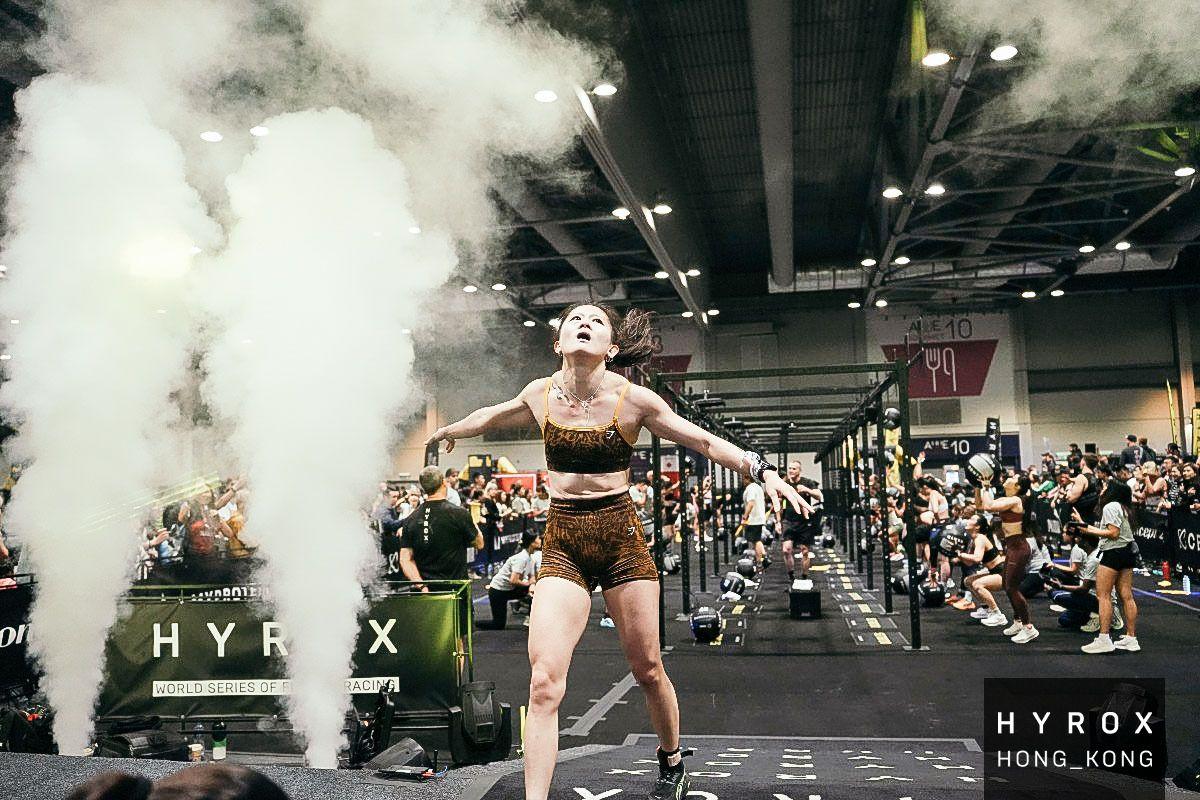
I want to talk about something that race comparison articles almost never cover — how the race actually feels to be inside it, not just what's written on the website. The first time I competed at a major HYROX event, I was overwhelmed by the energy in the arena. HYROX events are typically held in large indoor venues, and because athletes from all divisions start in staggered waves throughout the day, there's always someone racing when you're racing. The crowd is loud, the music is pumping, and when you hit the wall balls at station eight with your lungs burning and your legs gone, the noise from the crowd genuinely carries you through. I'm not being dramatic — I've experienced that lift personally at races across Asia. That atmosphere is a massive part of why HYROX has grown so fast globally, and why I keep coming back to it. There's a collective suffering and celebration that you feel even when you're in the middle of your own private battle.
DEKA FIT has a different vibe — it tends to feel more like an organised gym competition than a major sporting spectacle, at least at most of the events I've seen. That's not a criticism; it's actually perfect for certain athletes. If you're someone who gets anxious in big crowds, who prefers a more focused, quieter atmosphere where you can hear your own breathing and truly manage your pacing without distraction, DEKA FIT might suit your personality better. I've spoken to plenty of women in Taiwan who told me they found HYROX overwhelming as their first race and wished they'd started somewhere lower-stakes. If that sounds like you, DEKA FIT might genuinely be the smarter first step. But if you're someone who feeds off energy, who trains better when you're a little fired up by external noise and competition, HYROX's arena atmosphere will be one of the best motivators you've ever experienced.
- ▸Visit a HYROX event as a spectator before you race, if you can — standing in that arena for an hour will tell you more about whether the atmosphere excites or overwhelms you than anything you can read online, and it costs you nothing except the time.
- ▸Connect with the local HYROX or DEKA FIT communities in your city before choosing — in Taiwan, there are active Facebook and Instagram groups of athletes training for both formats, and the people in those groups are generous with course previews, training tips, and honest feedback about the local race experience.
- ▸Think about your long-term goal before committing to a format — if you eventually want to qualify for a World Championship, HYROX is currently the only hybrid race format with a structured global qualification pathway and a dedicated World Championship event that draws the best athletes from across Asia and beyond.
My Honest Recommendation: Who Should Start Where
After everything I've shared, here's the bottom line from my personal perspective as a women's elite Hyrox athlete who has competed across Asia and has also done DEKA FIT. If you are a woman who runs regularly, has access to a gym with sleds, rowers, and functional equipment, and wants to be part of a massive global movement with a clear competitive ladder to climb — start with HYROX. The training is demanding but highly structured. The worldwide community means you'll never lack for resources, training plans, or inspiration. And if you ever get good enough, there's a genuine path to the World Championships. I started competing in HYROX without knowing any of that was waiting on the other side, and it transformed the way I train, race, and think about my own athletic ceiling. Taiwan's hybrid racing scene has grown enormously in recent years, and HYROX is leading that charge across Asia.
If you are a woman who spends a lot of time on cardio machines, who loves the SkiErg specifically, or who wants to complement an existing HYROX training block with a different kind of race-day pressure, then DEKA FIT is an excellent choice and should absolutely be on your radar. I've used DEKA FIT personally as a way to stress-test my upper body endurance and machine pacing in a competitive environment, and it revealed weaknesses in my SkiErg efficiency that I subsequently fixed before my next HYROX. The two formats aren't enemies — they're actually complementary. But if I could only recommend one as your very first hybrid race ever, knowing nothing else about you other than that you found this article, I'd say HYROX. The structure, the scale, and the community make it the most complete first experience you can have in hybrid racing.
- ▸If your gym doesn't have a sled, seriously reconsider your HYROX timeline and find a facility that does — the sled push and sled pull are two of the most technique-dependent stations in the race, and doing them for the first time on race day is one of the most common and most avoidable mistakes I see from first-timers.
- ▸Book a practice session in a HYROX simulation class or DEKA FIT prep class at a partner gym before race day — many gyms across Taiwan and Asia now offer these, and even one full mock-race experience will dramatically reduce your anxiety and improve your pacing strategy on the actual start line.
- ▸Give yourself at least 10 to 12 weeks of structured preparation before your first race regardless of which format you choose — arriving underprepared doesn't just hurt your time, it risks injury and can kill your motivation to ever try again, and I've seen that happen to talented women who could have had incredible first race experiences with a little more patience.
What the Research Says
The science of hybrid racing is still catching up with how fast the sport has grown, but there are well-established findings in sports science that apply directly to both HYROX and DEKA FIT. Research published in the British Journal of Sports Medicine has consistently shown that concurrent training — combining endurance work and resistance training in the same programme — produces meaningful improvements in both aerobic capacity and muscular endurance when training is appropriately periodised. That's essentially what both HYROX and DEKA FIT training demands: you are simultaneously building your running economy or machine efficiency AND your capacity to perform functional strength movements under fatigue. From my own experience, the interference effect between my strength and endurance work was something I had to manage carefully, especially in the weeks leading up to a race. Research in Medicine and Science in Sports and Exercise has also consistently supported the importance of sport-specific fatigue simulation in training — meaning that simply being fit isn't enough, you need to practise performing your race skills when you're already tired. This is why I always include race-simulation workouts in my training blocks for both formats, and why I encourage every athlete in Taiwan and across Asia who is preparing for either race to do the same. The science and my lived experience say the same thing: specificity under fatigue is everything.
Frequently Asked Questions
Q: I've never done a hybrid race before and I'm worried about the functional stations. Should I be able to do all the HYROX movements perfectly before I sign up? A: Honestly, no — and I say that from experience. When I first started training for HYROX, my sled technique was terrible and my wall ball efficiency was all over the place. What matters more than perfection is that you've practiced each movement enough to do it safely under fatigue. You don't need to be elite at every station before your first race. Get comfortable with the movements, understand the basics of pacing, and trust that the experience of actually racing will teach you more than any number of training sessions. Sign up, commit to a 10 to 12 week prep block, and go learn by doing.
Q: Is DEKA FIT harder than HYROX? A: This is one of those questions where the honest answer is 'it depends on you.' For athletes who are strong runners with average SkiErg ability, DEKA FIT will likely feel harder because the 5,000 metres of total SkiErg work taxes your upper body and aerobic system in a way that running doesn't. For athletes who are machine-based cardio specialists but weaker runners, HYROX's 8 km of cumulative running will be the bigger challenge. I personally find HYROX harder for me because my competitive standards in the women's elite category are extremely high and the pressure to perform is immense. But for a recreational first-timer, neither race should be thought of as 'hard' versus 'easy' — both are genuinely challenging and both are completely achievable with proper preparation.
Q: Are there DEKA FIT events in Taiwan or Asia? A: As of my knowledge, DEKA FIT events have been expanding in Asia but HYROX has a much more established and growing presence in the region, with events in cities across Asia-Pacific. If you're based in Taiwan specifically, your most accessible and community-supported option right now is HYROX — there's an active local training community, more frequent events within travelling distance, and a clear pathway if you want to compete at higher levels. That said, I always recommend checking the current event calendars for both organisations directly since the Asia schedule changes regularly and new events get added throughout the year. Don't rely on second-hand information — go to the source and check what's actually available in your region right now.
Whatever you decide — HYROX or DEKA FIT — the most important thing is that you start. I've seen so many talented women in Taiwan and across Asia spend months researching and comparing and never actually sign up. Pick one, commit to the training, and go find out what you're capable of. I promise you, the race will change how you see yourself. If you want more honest training content, programming tips, and race breakdowns from my personal experience as a women's elite Hyrox athlete, subscribe to my newsletter at paulineyuyu.com. I'd love to have you along for the journey.
Sources: British Journal of Sports Medicine / Medicine & Science in Sports & Exercise
Taiwan's elite HYROX Pro athlete and 4× World Championship qualifier. I share my training journey, race insights, and performance notes from the competition floor.