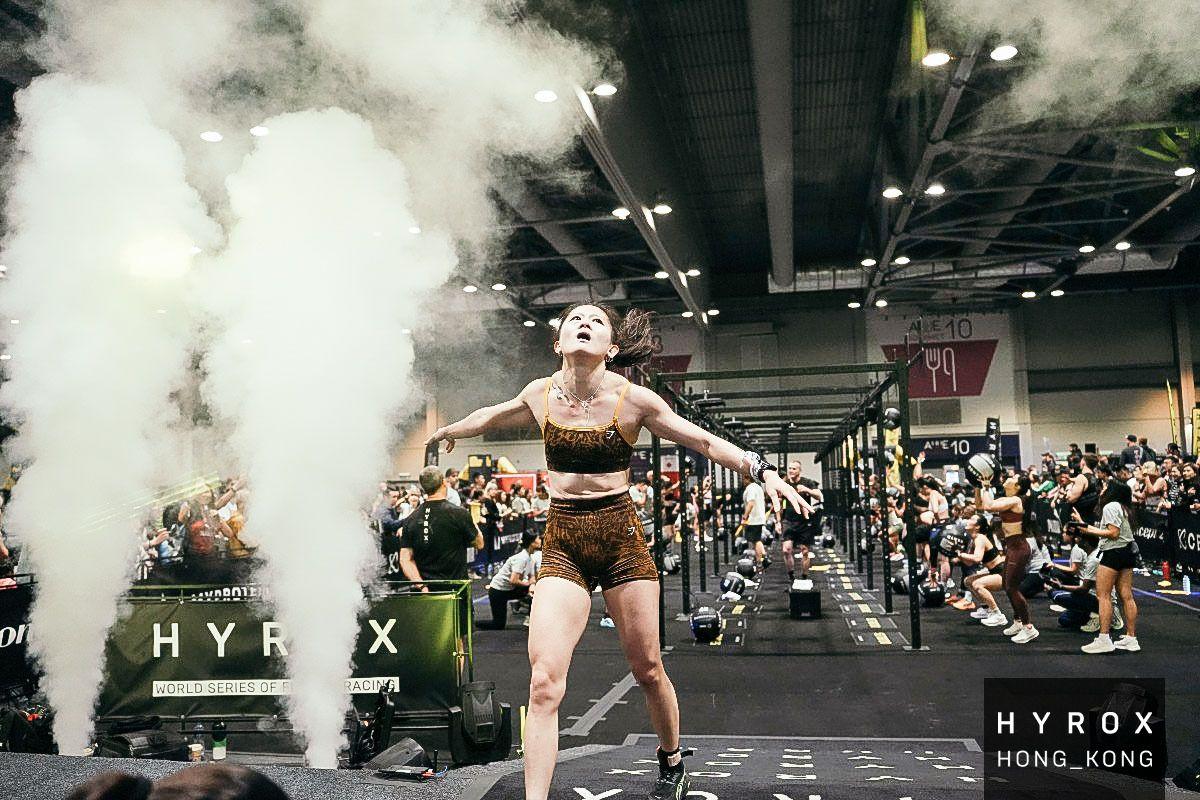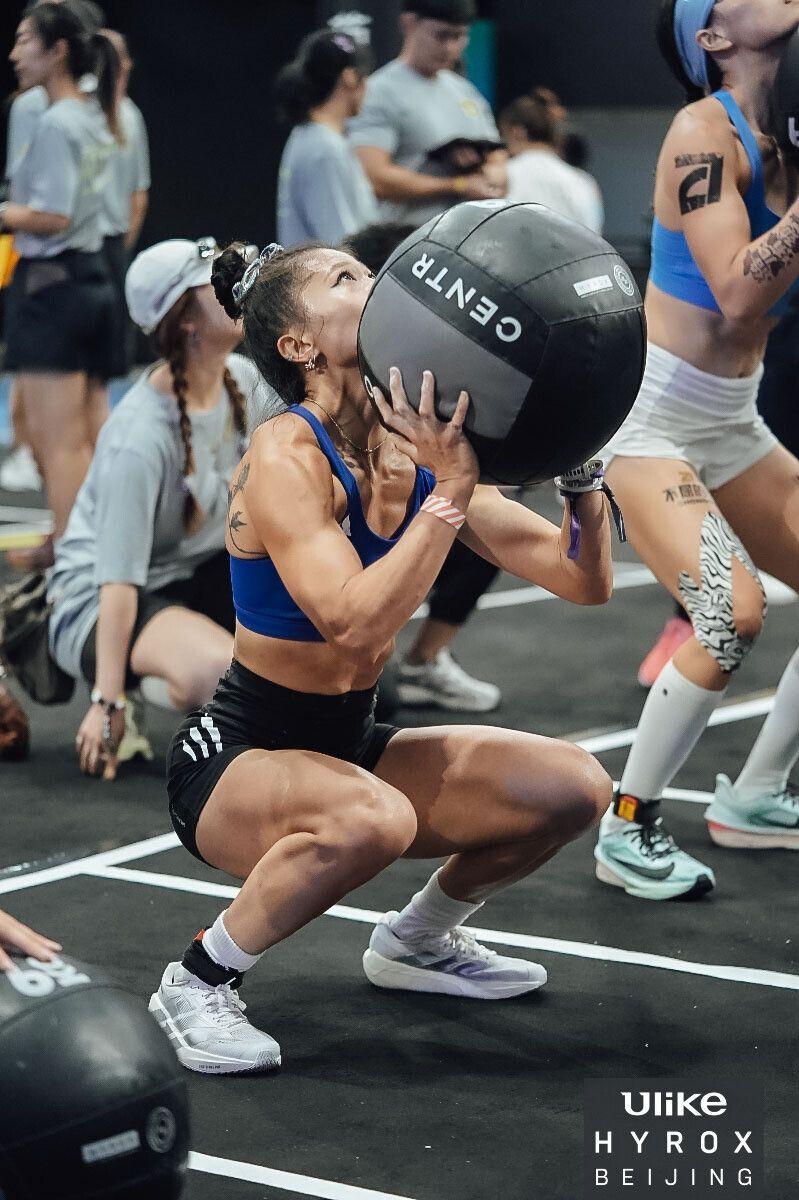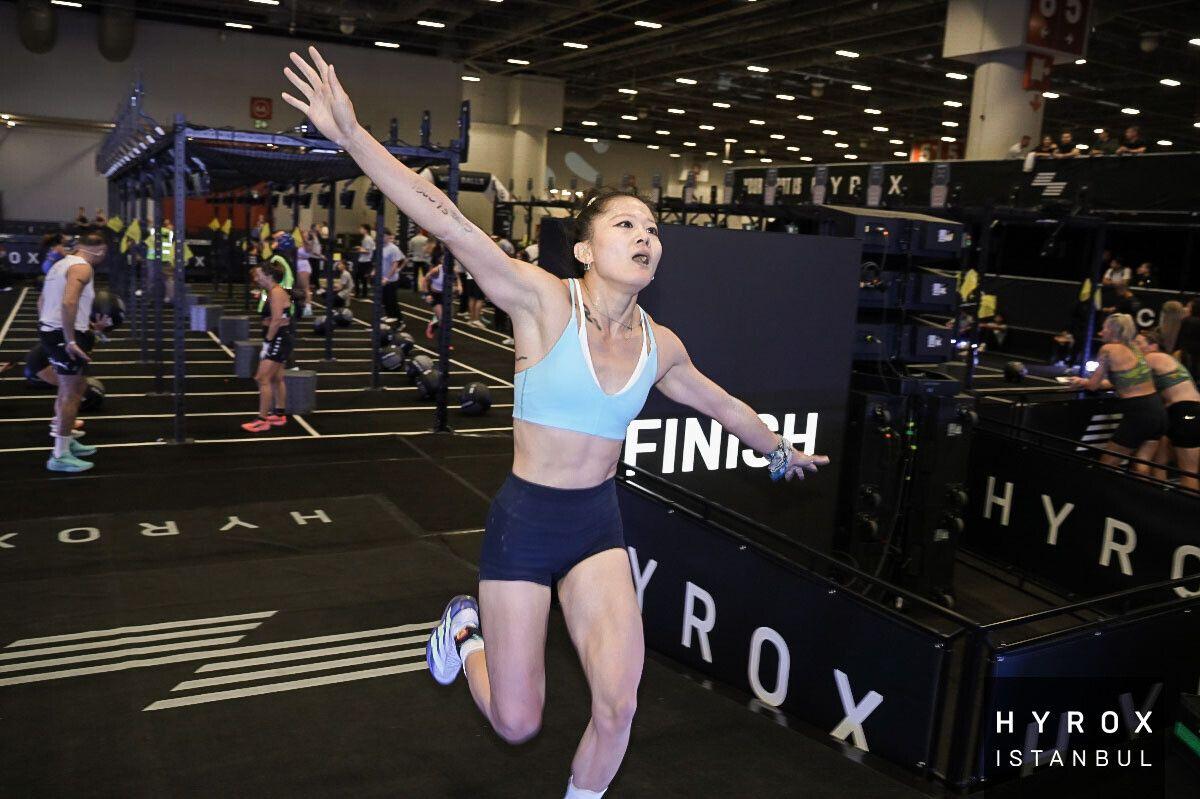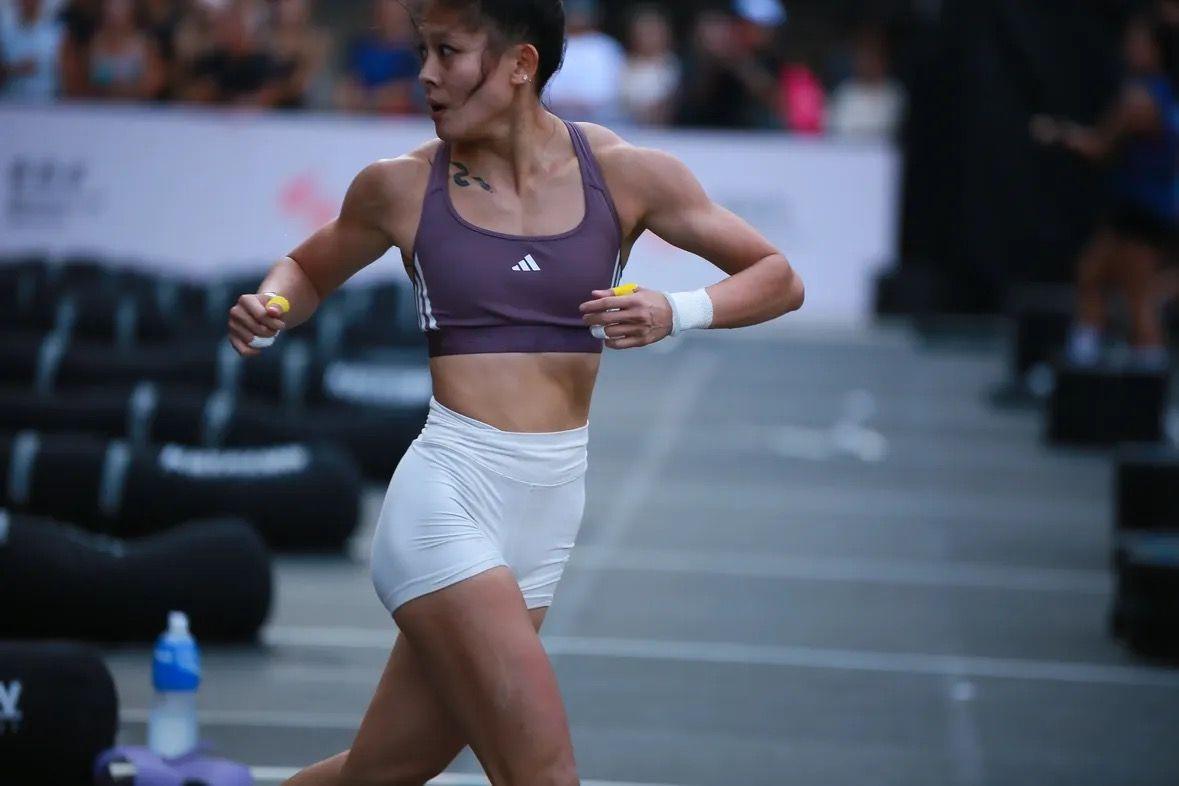
Hi everyone! I'm Pauline Yu (PYY), Taiwan's only 4× Hyrox World Championship qualifier. I still remember the first time I walked into a CrossFit box in Paris — I was standing in the doorway holding a water bottle, staring at a barbell-loaded pull-up rig and a whiteboard full of abbreviations I couldn't decode. WOD, AMRAP, RFT — it looked like a foreign language, and honestly, I nearly turned around and left. I was already training hard for functional fitness at the time, but CrossFit felt like its own universe with its own rules, its own community, and its own unspoken code of conduct. What I wish someone had told me that first day is exactly what I'm going to share with you right now, because walking in prepared makes all the difference between falling in love with this sport and never going back.
Key Takeaways
- ▸Every movement in CrossFit can and should be scaled to your current ability level — scaling is not cheating, it is the intelligent and coach-approved way to build fitness safely and sustainably from day one.
- ▸CrossFit box culture across Taiwan and Asia is generally welcoming to women beginners, but understanding the unwritten social norms before you arrive will help you feel at ease much faster and get more out of every class.
- ▸You do not need to be fit to start CrossFit — the entire methodology is built around meeting athletes where they are, so showing up as a complete beginner is not just acceptable, it is expected and celebrated.
- ▸Introducing yourself to the coach before class begins is one of the single most impactful things you can do as a first-timer — they will watch out for you, cue your form, and make the whole experience significantly less intimidating.
- ▸For women with a Hyrox or functional fitness background, CrossFit is a genuinely powerful training tool for building gymnastics strength and barbell power that will directly translate back to race performance.
The First Day Feeling — And Why It's Normal to Feel Overwhelmed
Let me take you back to that Paris box. The warm-up alone involved jump rope double-unders, hollow body rocks, and some kind of hip mobility drill I had never seen before. I was a competitive athlete — I had been training for several years — and I still felt completely out of my depth. That feeling, I later learned, is almost universal for first-timers, regardless of their fitness background. CrossFit has a specific vocabulary, a specific movement library, and a specific training culture that genuinely takes time to absorb. The mistake most women make on day one is assuming that because they feel confused, they must not belong there. That could not be further from the truth.
What helped me most that first session was deciding upfront that my only goal was to watch, absorb, and ask questions — not to impress anyone. I introduced myself to the coach, told her I was new, and asked her to flag me if my form looked off on anything. She spent extra time with me during the strength portion, and by the end of the class I understood at least half the whiteboard vocabulary. That small act of reaching out before the workout started completely changed the trajectory of my experience. As a CrossFit beginners women guide tip, this is honestly the number one thing I tell every woman who asks me about starting CrossFit: talk to your coach before the workout, not after.
- ▸Arrive ten to fifteen minutes early to your first class so you can introduce yourself to the coach, ask about scaling options, and get a brief orientation to the equipment layout without holding up the group warm-up.
- ▸Write down three movement abbreviations from the whiteboard before class starts and ask the coach or a friendly member what they mean — this tiny habit accelerates your CrossFit literacy faster than any other approach.
- ▸Resist the urge to compare your weights or reps to the person on the rig next to you, especially in your first month — the athlete who looks effortless has likely been training in this environment for one to three years already.
- ▸Keep a small training journal or use your phone notes app to log the scaling options you used in each session, because tracking your progression from session one is deeply motivating and practically useful when the coach asks about your previous performance.
Understanding Scaling — The Most Misunderstood Part of CrossFit Culture
This is where I see the most anxiety in women who are new to CrossFit, especially in Asia. There is a cultural tendency — and I say this as someone who grew up in Taiwan and has trained across multiple boxes in East Asia — to see scaling as a sign of weakness or insufficiency. I used to feel a flicker of embarrassment when I had to scale a gymnastics movement, even when I have already had several sports backgrounds level. But here is the reality that completely shifted my mindset: scaling is how CrossFit is designed to work. It is not the backup plan for people who can't do the real workout. It is the mechanism that makes the same workout simultaneously appropriate for a 22-year-old Games athlete and a 45-year-old woman doing her third-ever class.
In practice, scaling in CrossFit means you might reduce the load on a barbell movement, swap a pull-up for a ring row or a banded pull-up, replace a handstand push-up with a dumbbell press, or shorten a run distance to match your current aerobic capacity. None of these modifications change the intended stimulus of the workout — they preserve it. A good CrossFit coach will always tell you what the stimulus is supposed to feel like (breathless but consistent, heavy but technically sound, fast but controlled) and then help you choose the scaling option that delivers that stimulus for your body today. This is especially relevant for women coming from a personal training background who are used to having workouts prescribed specifically for them — in CrossFit, the coach is doing that in real time, for the whole group, during the brief pre-workout briefing.
- ▸Before every class, ask the coach what the intended stimulus of the workout is — knowing whether it's supposed to be a heavy grind or a fast sprint completely changes how you should approach your scaling choices.
- ▸For pull-ups, start with ring rows if you have zero pulling strength, then progress to banded pull-ups once you can complete ring rows with a flat, rigid body position and controlled tempo on both the pull and the return.
- ▸When in doubt about barbell weight, always go lighter than you think you need to in your first two weeks — moving well at a lighter load builds the motor patterns that will allow you to add weight safely and quickly in the weeks that follow.
CrossFit Box Culture in Taiwan and Asia — What No One Tells You
CrossFit box culture in Asia has its own specific flavour, and I think it's genuinely worth talking about because the experience can be quite different from what you might expect if you've only ever read about CrossFit through an American or European lens. From my experience training in boxes across Taiwan, I've found that the community spirit is real and the coaching quality is often extremely high — Taiwan has produced some brilliant CrossFit coaches who have a deep understanding of movement mechanics, for example HongTai. What is sometimes different in the Asian CrossFit box culture context is that the social atmosphere can be slightly more reserved at first, particularly in boxes where most members already know each other well. Don't mistake a quieter vibe for unfriendliness. Once you show up consistently for two or three weeks, you will very quickly become part of the inner circle.
One thing I genuinely appreciate about CrossFit box culture — and this applies across Asia and globally — is the way the community cheers for the last person to finish a workout with just as much energy as they cheer for the first. I've watched this happen in boxes in Taipei, and I've experienced it myself during tough workouts where I was dead last on a gymnastics-heavy WOD. That culture of collective encouragement is not performative. It is deeply embedded in how CrossFit communities function, and it's one of the reasons the sport has such extraordinary retention rates compared to conventional gym memberships. For women who are worried about being judged for being new or slow or uncoordinated — please hear me when I say this: a good CrossFit box is one of the least judgmental training environments you will ever walk into.
- ▸Show up consistently for at least four consecutive weeks before deciding whether a particular box is the right community fit for you — one class is never enough to get an accurate read on the culture and the coaching quality.
- ▸Stay after the workout for at least ten minutes in your first few sessions — the post-WOD cool-down period is when most of the genuine community bonding happens, and it's the easiest, most natural time to start conversations with other members.
- ▸If a box offers a fundamentals or on-ramp program specifically for new members, take it even if you already have a solid fitness base — these programs teach the CrossFit movement standards and terminology that will make every subsequent group class significantly more productive and enjoyable.
What the Research Says
The science backs up what I've experienced personally on the training floor. Research published in the Journal of Strength and Conditioning Research has consistently shown that group-based high-intensity functional training programs produce significant improvements in body composition, aerobic capacity, and muscular endurance across both trained and untrained women — and critically, the group training format itself appears to be a meaningful driver of adherence and long-term engagement. This aligns exactly with what I've seen in CrossFit boxes across Taiwan: the community accountability is not just a nice cultural feature, it is a measurable factor in whether people keep coming back. Additionally, research in the British Journal of Sports Medicine has consistently highlighted that scaling load and intensity appropriately for an individual's current fitness level does not compromise training adaptations — in fact, correctly scaled training produces superior results compared to attempting prescribed loads prematurely, because it preserves movement quality and reduces injury risk. This is the scientific foundation for why CrossFit's scaling methodology is not a compromise — it is the optimal approach, and it's especially important for women who are new to barbell and gymnastics movements. My own training history reinforces this completely. When I scaled intelligently during my early CrossFit sessions rather than ego-lifting, I progressed faster and stayed injury-free, which directly supported my Hyrox race performance rather than detracting from it.
Frequently Asked Questions
Q: Do I need to be fit before I start CrossFit? A: Absolutely not — and I say this from direct personal experience, not just as a talking point. CrossFit is genuinely designed to be scalable for everyone, from elite athletes to complete beginners. When I first started incorporating CrossFit sessions into my training for women's Hyrox, I was fit in a very specific way. The program met me exactly where I was. Your first goal is simply to learn the movements and understand the culture. Fitness follows naturally from consistent, scaled participation. Show up, scale intelligently, and trust the process — you will be surprised by how quickly your capacity builds.
Q: Will I feel out of place as a woman in a CrossFit box, especially in Taiwan or Asia? A: This is one of the most common concerns I hear from women considering their first CrossFit class, and I want to address it honestly. In my experience training across boxes in Taiwan and broader Asia, women are extremely welcome in CrossFit communities — in fact, CrossFit globally has one of the highest female participation rates of any strength and conditioning sport. That said, some boxes skew more male-heavy depending on their location and programming style. I always recommend visiting a box as a drop-in first, or attending a trial class, to get a feel for the gender balance and the coaching approach before committing to a membership. Trust your instincts about the vibe when you walk in.
Q: How is CrossFit different from the personal training sessions I already do at a regular gym? A: Great question, and one I thought about a lot when I first started. The biggest differences are the community structure, the constantly varied programming, and the emphasis on functional barbell and gymnastics movements performed at relatively high intensity. In a personal training session, the program is designed entirely around you, executed in a one-on-one or semi-private environment. In CrossFit, you're training in a group with a shared workout, but with individualised scaling applied by the coach. The community accountability and competitive energy of a group setting create a training stimulus that is genuinely hard to replicate in a private session — and for Hyrox athletes like me, that shared intensity is directly transferable to race performance.
I hope this guide gives you the confidence to walk into your first CrossFit class knowing exactly what to expect and how to make the most of every minute. Whether you're training in Taipei, somewhere else in Asia, or anywhere in the world, remember: everyone in that box was a beginner once, and the ones who stayed are the ones who gave themselves permission to be imperfect while they learned. If you want more training content, honest race breakdowns, and practical tips from my journey as a competitive Hyrox athlete, come find me at paulineyuyu.com and subscribe for weekly updates. I can't wait to cheer you on. — PYY
Sources: British Journal of Sports Medicine / Journal of Strength and Conditioning Research
Taiwan's elite HYROX Pro athlete and 4× World Championship qualifier. I share my training journey, race insights, and performance notes from the competition floor.