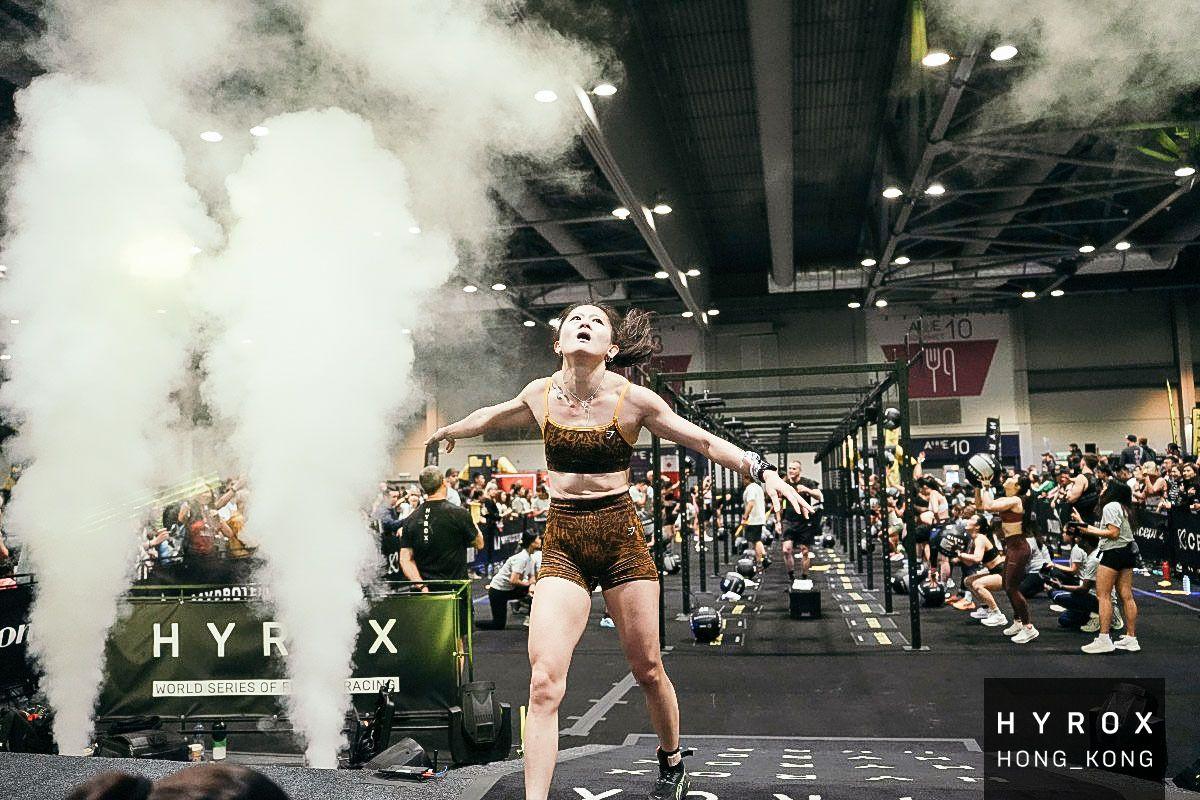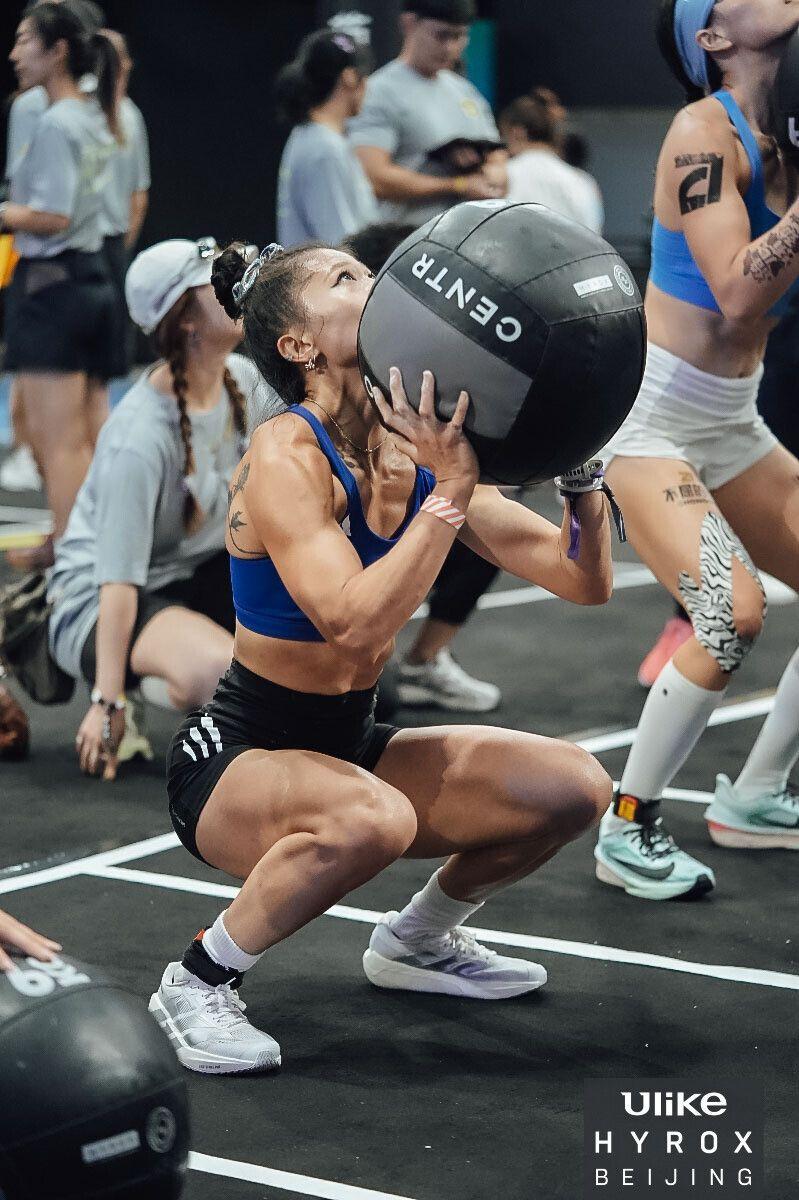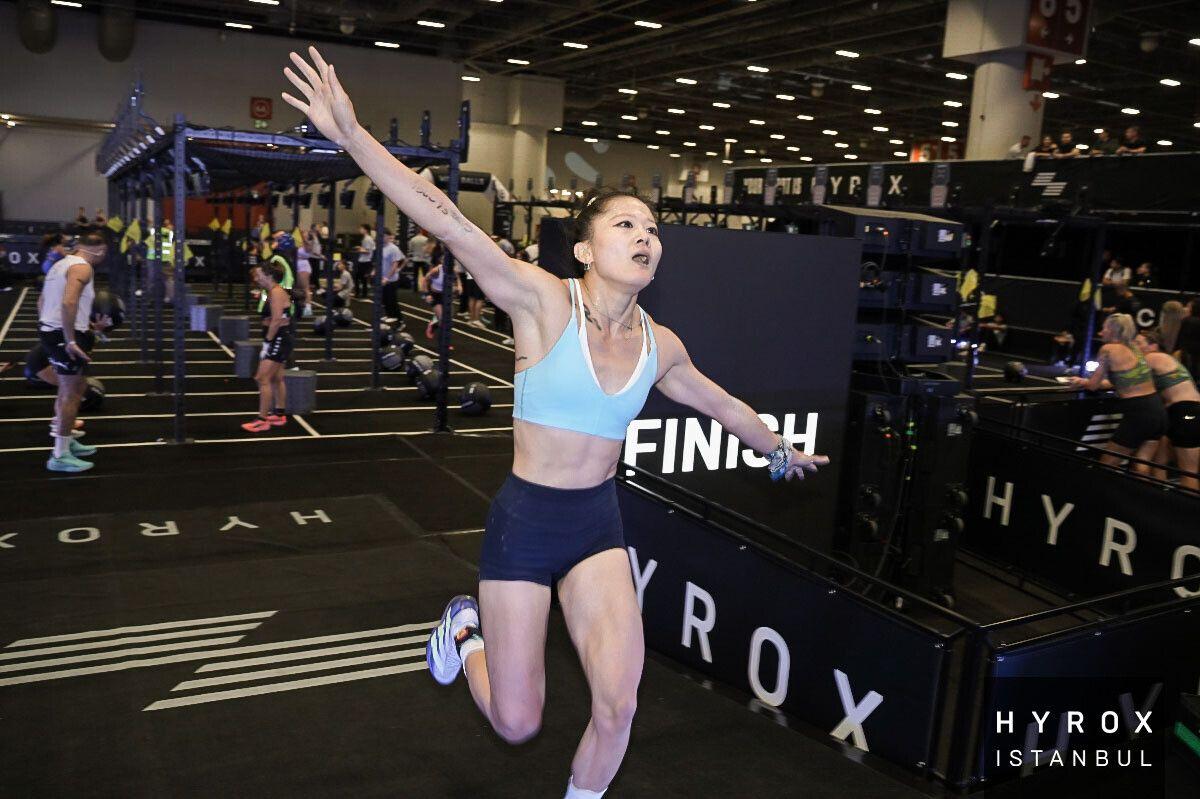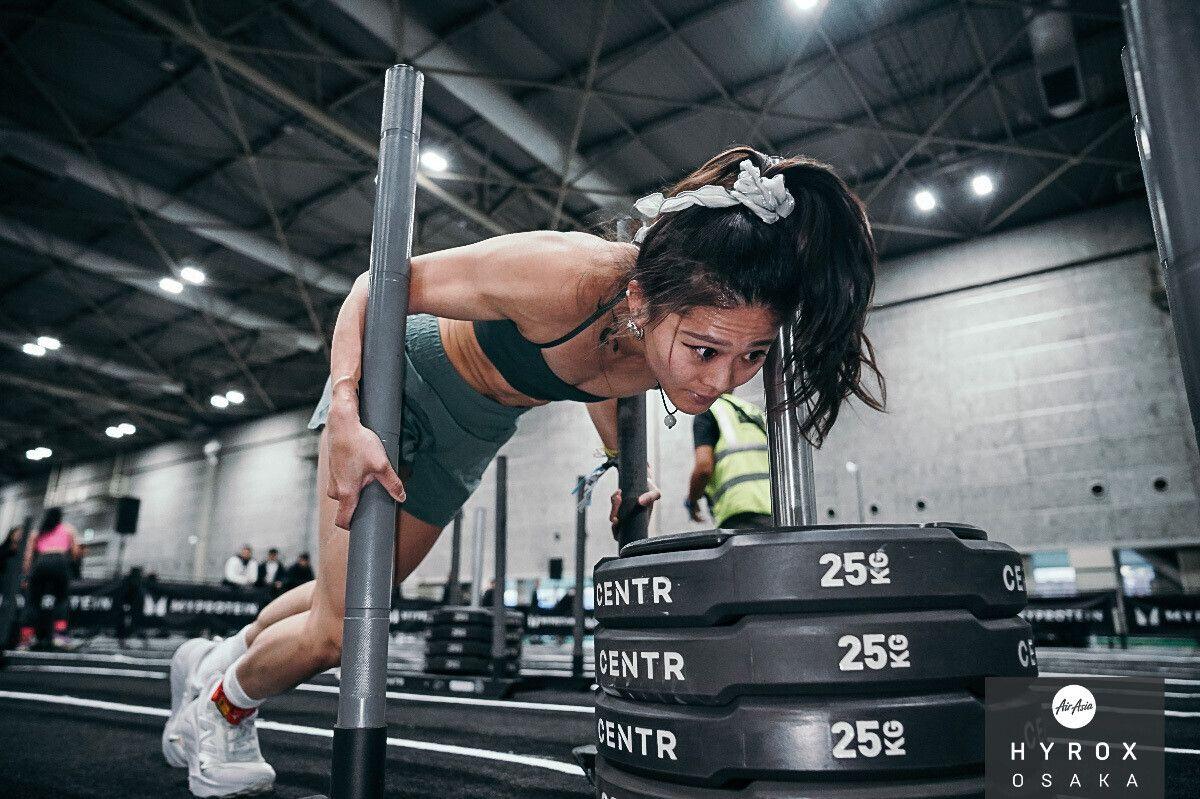
Hi everyone! I'm Pauline Yu (PYY), Taiwan's only 4× Hyrox World Championship qualifier. I still remember standing in the free weights section of my gym in Taipei about five years ago, holding a pair of 15kg dumbbells and feeling genuinely terrified that picking them up regularly would somehow turn me into a completely different person. My friends in Taiwan had warned me — 'you'll get too bulky,' they said, 'your arms will look masculine.' I believed them for longer than I'd like to admit, and it genuinely held back my athletic development for almost two full years. Looking back now, as someone who competes at the elite women's Hyrox level internationally, I can tell you that fear was one of the most expensive fitness myths I ever bought into. The truth about women's strength training and body composition is not only more nuanced than the myth — it's actually really exciting, and I want to share everything I've learned, both from the science and from my own body.
Key Takeaways
- ▸Women produce significantly less testosterone than men, which is the primary hormonal driver of large muscle hypertrophy — this physiological reality means the 'bulking up overnight' fear is almost entirely unfounded for most women training without pharmaceutical assistance.
- ▸Strength training increases lean muscle mass while simultaneously accelerating your resting metabolic rate, meaning your body burns more calories at rest — this combination typically leads to a leaner, more athletic body composition, not a larger one.
- ▸For women training in Hyrox or any hybrid sport in Asia and Taiwan, strength training is not optional — it's the foundation that protects your joints during the 8 functional stations and enables you to hold race pace through a full 8km run.
- ▸Body composition changes happen slowly and predictably — if you are eating at or near maintenance calories and following a well-structured program, you will get stronger and more defined without gaining significant body weight or size.
- ▸The Taiwan women's fitness myth that 'lifting heavy equals bulky' is deeply cultural, not scientific — challenging it is not just good for your performance, it's genuinely empowering and one of the best gifts you can give your future athletic self.
The Myth That Held Me Back — And Why It's Wrong
Let me be completely honest with you. For the first two years of my fitness journey in Taiwan, I exclusively did cardio — cycling classes, treadmill running, and some light yoga. My aerobic base was decent, but every time I tried to push my pace or hold a harder workout, something would give out: my hips, my lower back, my knees. I kept getting injured in frustrating, nagging ways that never seemed to fully heal. A coach I respected finally sat me down and told me plainly that my body had no structural strength to support the demands I was placing on it. She prescribed heavy squats, Romanian deadlifts, and loaded carries. I panicked. I genuinely thought that in six months I would look completely different — bigger, heavier, less feminine. I almost didn't do it. I'm so glad I did, because what actually happened was the opposite of what I feared. My body started to look more defined, more athletic, and I stopped getting injured. That experience fundamentally changed how I think about women's strength training and body composition.
Here's the physiology that explains why the bulking myth is wrong. Women's testosterone levels are roughly ten to twenty times lower than men's, on average. Testosterone is the primary anabolic hormone driving significant muscle hypertrophy — the kind that gives male bodybuilders their visually striking size. Without high levels of this hormone, women's bodies simply don't respond to resistance training the same way. What women do get from consistent strength training is increased muscle density, improved neuromuscular efficiency, and a higher ratio of lean mass to body fat — all of which make you look more toned and athletic, not bigger. Even elite women's Hyrox athletes, who lift heavy multiple times per week, tend to look lean and defined rather than bulky. The female Hyrox body is built on strength, not size, and those two things are not the same.
- ▸Stop measuring progress by body weight alone — track how much you can lift, how fast you can run, and how recovered you feel, because these markers tell a much more accurate story of body composition progress than the scale does.
- ▸If you are eating at a caloric maintenance level — not in a significant surplus — you will not gain meaningful amounts of body mass from strength training, even if you're lifting relatively heavy weights two to three times per week.
- ▸Start with compound movements like squats, deadlifts, and bench press because these recruit the most muscle groups at once, giving you the best return on your training time and the strongest hormonal training response per session.
- ▸Trust the process for at least twelve weeks before drawing any conclusions — body recomposition, where you simultaneously lose fat and gain lean muscle, is a slow process that reveals itself gradually rather than all at once, especially for women.
How I Structure Strength Training for the Female Hyrox Body
When I first started properly programming my strength work for Hyrox competition, I made another classic mistake: I tried to train like a powerlifter. Heavy singles, long rest periods, minimal conditioning. My numbers went up, but my Hyrox race performance didn't improve at the rate I expected, and I felt slow and stiff when I transitioned from a lifting station back into running. It took real trial and error — and honest conversations with my coach — to understand that women training for hybrid sports like Hyrox need a very specific kind of strength: functional, repeatable, and paired with cardiovascular output. The strength work needs to complement your aerobic engine, not compete with it. Once I understood that framework, my programming clicked into place, and my competitive results at both the Taiwan and international level improved dramatically.
The way I currently structure strength training for Hyrox-specific female body composition goals is built around three principles: movement specificity, metabolic density, and progressive overload. Movement specificity means I prioritize the exact patterns that appear in Hyrox stations — hip hinges for sled push and pull, single-leg strength for lunges, horizontal pulling for rowing efficiency, and overhead pressing for the wall balls. Metabolic density means I keep rest periods controlled — usually 60 to 90 seconds — so there's a conditioning component baked into every strength session. Progressive overload means I track my numbers religiously and aim to increase either weight, reps, or density every one to two weeks. This combination builds real, functional strength without creating the kind of slow, heavy physique that would hurt rather than help my run splits between stations.
- ▸Prioritize hip hinge movements — Romanian deadlifts, kettlebell swings, and trap bar deadlifts — because these directly transfer to sled push and pull performance, which are two of the most demanding Hyrox stations for women to manage under fatigue.
- ▸Program two to three dedicated strength sessions per week rather than trying to add a little lifting onto every run day — quality and recovery between sessions matter enormously for actual adaptation to occur in the female body.
- ▸Keep a training log for every single session — write down the weight, reps, and how the movement felt, because this data is what allows you to make intelligent, evidence-based decisions about when and how to progress your training load over time.
Nutrition and Recovery: The Real Reasons Women 'Feel Bulky'
I want to address something that almost nobody talks about openly, and it's something I had to figure out the hard way during my first serious competition prep in Taiwan. When women first start lifting heavier weights, they sometimes experience temporary water retention and inflammation in the trained muscles — especially in the first four to eight weeks. This is glycogen supercompensation and normal inflammatory response to a new training stimulus, not actual muscle gain. Your muscles are storing more glycogen and water to repair and adapt. I went up about 1.5kg on the scale in my first three weeks of heavy lifting and completely freaked out. I almost quit. But my coach explained what was happening physiologically, and sure enough, by week ten, my scale weight had come back down while my strength had gone up significantly and my body looked visibly leaner. That initial bump is not fat, it's not permanent muscle, and it is not something to be afraid of.
Protein intake is the single most important nutritional lever for women who want to get stronger without gaining unwanted body fat. When I transitioned into serious Hyrox training, I increased my protein intake to roughly 1.6 to 2 grams per kilogram of body weight per day, spread across four to five meals. This wasn't about eating more overall — it was about eating smarter and ensuring my muscles had enough amino acid availability to repair and grow after training sessions. Women in Asia, and Taiwan especially, often under-eat protein because of cultural dietary patterns that favor carbohydrate-heavy meals. I'm not saying that's wrong — I love a good bowl of rice as much as anyone — but if you're training seriously and wondering why your body composition isn't changing despite hard work in the gym, insufficient protein is very often the culprit. Add a source of complete protein to every meal and watch what happens over eight to twelve weeks.
- ▸Aim for 1.6 to 2 grams of protein per kilogram of body weight daily, distributed evenly across meals, to support muscle repair and lean mass retention while training — this is the most evidence-backed nutritional strategy for female body recomposition.
- ▸Do not fear temporary scale increases in the first four to eight weeks of a new lifting program — this is primarily water retention from glycogen storage and muscle repair, and it resolves naturally as your body adapts to the new training stimulus.
- ▸Sleep is non-negotiable for body composition — women who sleep less than seven hours per night have measurably higher cortisol levels and impaired growth hormone release, both of which directly interfere with fat loss and lean muscle development, regardless of how well they train and eat.
What the Research Says
The science here is really reassuring, and it lines up completely with my personal training experience. Research published consistently in the Journal of Strength and Conditioning Research has shown that women who follow progressive resistance training programs develop significant improvements in strength, power output, and functional movement quality — without the kind of muscle hypertrophy commonly seen in male subjects following the same protocols. The hormonal environment in the female body simply does not support rapid or large-scale muscle growth under normal training conditions. Separately, research in the British Journal of Sports Medicine has consistently highlighted that resistance training is one of the most effective interventions for improving bone density, joint health, and injury resilience in active women — outcomes that are particularly critical for female hybrid athletes who place repetitive stress on the joints through high-volume running and functional training. Both bodies of research reinforce what I've experienced personally: lifting heavy, done consistently and intelligently, makes women leaner, stronger, and more durable — and it does not make us bulky. The fear is cultural, not scientific, and I hope more women in Taiwan and across Asia start to feel empowered by that distinction.
Frequently Asked Questions
Q: I've been avoiding anything heavier than 8kg dumbbells because I'm afraid of getting big — where should I actually start? A: Start with the movements, not the weight. I'd recommend beginning with bodyweight squats, hip hinges, and push-ups to build movement quality first, then progressively add load over two to three weeks. Once your form is solid, don't be afraid to push to a weight that genuinely challenges you in the 8 to 12 rep range. If the last two reps of a set feel easy, the weight is too light to drive any meaningful adaptation. I started with 15kg on my back squat and worked up steadily — there was no sudden transformation, just gradual, sustainable improvement. The only thing you risk by lifting too light is wasting your time.
Q: How many times per week should a woman do strength training if she's also running and preparing for Hyrox? A: In my experience, two to three dedicated strength sessions per week is the sweet spot for most women balancing hybrid sport training. I personally do two heavy lifting sessions and one lighter, more conditioning-focused session weekly during my competition prep phase. The key is leaving at least 48 hours between heavy sessions targeting the same muscle groups, so your body has time to actually repair and grow stronger. More is not always better — I've made my worst body composition progress during periods when I was in the gym every single day with no real recovery structure. Quality, intentional sessions beat high frequency every time for female athletes managing multiple training modalities.
Q: Will strength training slow down my running pace for Hyrox? A: This is one of the most common fears I hear from women getting into Hyrox in Taiwan, and the answer is: not if you structure it correctly. In the short term, adding new strength work can create some muscular fatigue that temporarily affects your run feel — but within four to six weeks, the neuromuscular adaptations kick in and your run economy actually improves. Stronger glutes, hamstrings, and core mean better running mechanics and less energy leakage per stride. I've run my fastest 8km Hyrox splits during training cycles where my strength was at its highest. The two qualities are symbiotic, not competing, as long as you're managing your recovery and not trying to lift maximally the day before a hard running session.
I hope this article helps you give yourself permission to finally pick up those heavier weights without fear — because I promise, they're not going to transform you into someone you don't recognize. They're going to make you the strongest, most capable version of yourself. That's been the single biggest gift strength training has given me throughout my Hyrox journey, and I want the same for every woman reading this. If you want more training content, race-day strategies, and honest conversations about the female Hyrox experience, come find me and subscribe at paulineyuyu.com — I'd love to have you in the community.
Sources: British Journal of Sports Medicine / Journal of Strength and Conditioning Research
Taiwan's elite HYROX Pro athlete and 4× World Championship qualifier. I share my training journey, race insights, and performance notes from the competition floor.