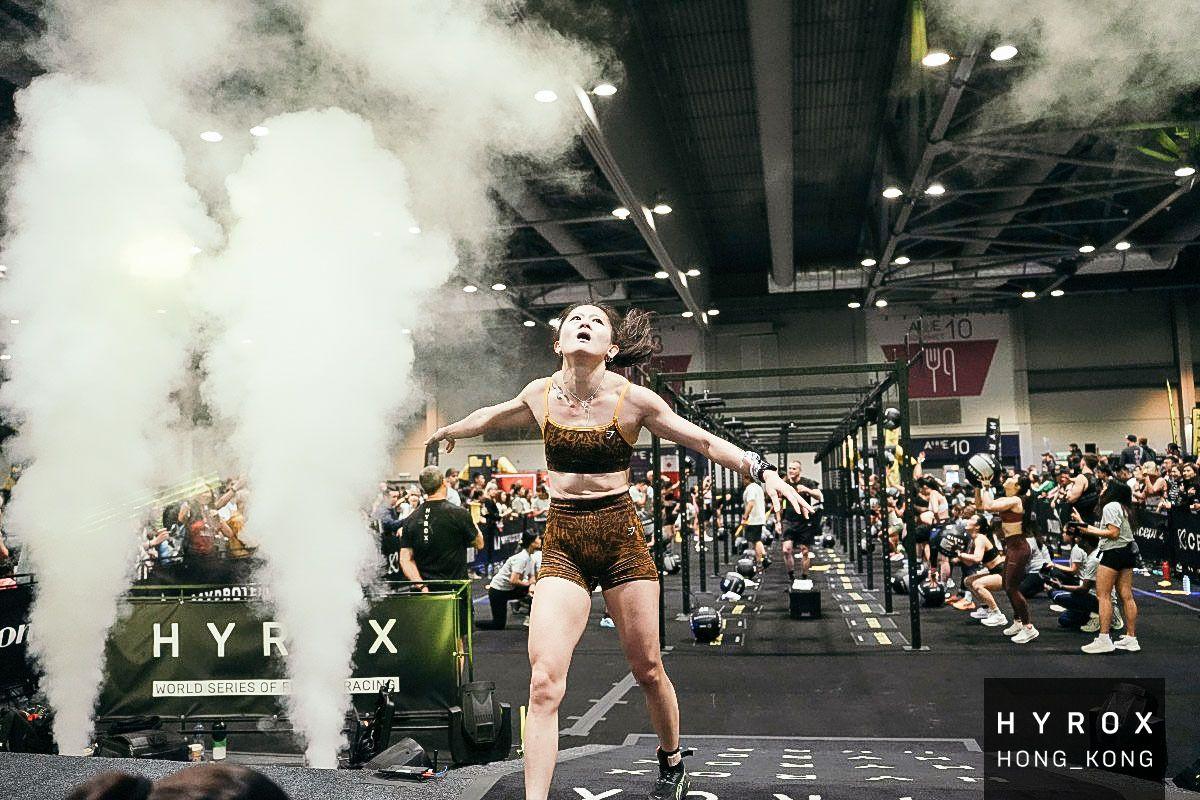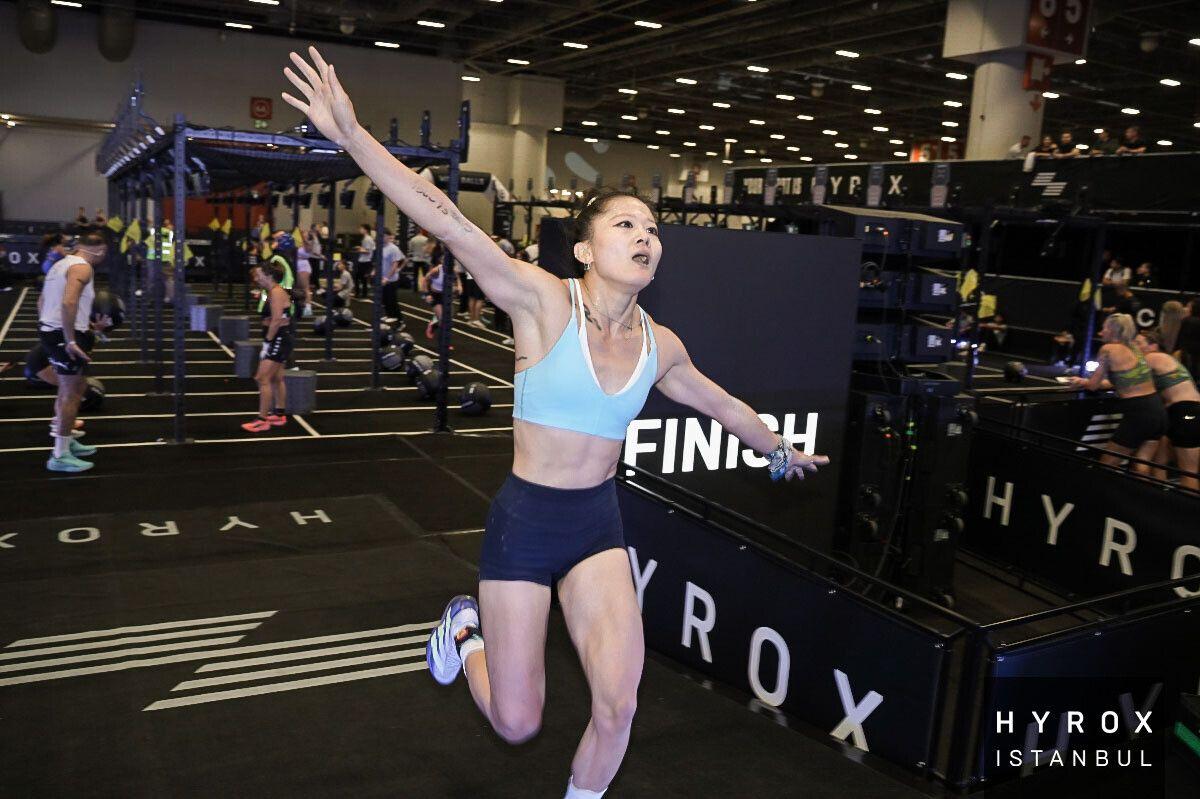
Hi everyone! I'm Pauline Yu (PYY), Taiwan's only 4× Hyrox World Championship qualifier. A few years ago, I was mid-race at an Asian Hyrox event — somewhere around the fourth station — when I felt something I hadn't experienced before. It wasn't just regular race fatigue. My legs still had power, my lungs were okay, but my brain felt like it was wrapped in wet cotton. I slowed down without even meaning to. I finished the race, but I stood at the finish line knowing I'd left a lot of time on the course, and heat was the reason. That moment changed everything about how I approach women Hyrox heat preparation, and it's honestly one of the reasons I want to write about this today.
Key Takeaways
- ▸Female thermoregulation training is not optional in Asia — women have a higher core temperature threshold before sweating begins, which means heat stress accumulates faster during Hyrox races held in warm, humid environments like Taiwan and Southeast Asia.
- ▸Pre-cooling strategies — such as cold towels on the neck, cold water ingestion before the race start, and ice vests during warm-up — have been shown to meaningfully reduce early race heat burden and help female athletes maintain intensity through later stations.
- ▸Heat acclimatisation over 10 to 14 days of deliberate training in warm conditions creates measurable physiological adaptations, including earlier sweat onset and increased plasma volume, that directly improve women's endurance heat performance.
- ▸Menstrual cycle phase affects thermoregulation significantly — core temperature is measurably higher in the luteal phase, so women should factor cycle timing into race week hydration and heat management plans rather than treating every week identically.
- ▸Hyrox women Asia competitors racing in humid climates should prioritise sodium replacement alongside fluid intake, because heavy sweating in humidity depletes electrolytes faster than athletes typically expect, leading to early-onset fatigue and cramping at the sled or wall balls.
- ▸Cognitive load under heat stress is real and underestimated — the mental fog that comes from racing hot is a physiological response, not a weakness, and knowing this lets you plan your pacing strategy to protect your decision-making in the back half of a race.
Why Heat Hits Female Athletes Differently — My Wake-Up Call in Taiwan
I've trained in Euro in my my main athletic life. I thought I was used to the heat because Taiwanese summers are brutal — high thirties Celsius, humidity above eighty percent — and I trained through all of it. But there's a difference between training in heat and actually understanding what heat does to the female body during competition intensity. After that race where I hit that cognitive wall mid-event, I started digging into the physiology, and what I found genuinely surprised me. Women's bodies, on average, begin sweating at a slightly higher core temperature than men's. We also have a lower sweat rate per gland in many conditions. This doesn't mean women are worse at handling heat — it means we handle it differently, and our preparation needs to reflect that. In women's elite Hyrox and endurance sports more broadly, ignoring this distinction is a competitive mistake.
Here's what made it personal for me. I started tracking my core temperature responses and performance data across different training blocks and noticed a clear pattern: my perceived effort in heat would spike earlier than my heart rate data suggested it should. I was working harder than the numbers showed, because the heat was adding a hidden tax on every single movement. When you're pushing a sled, doing ski erg intervals, or grinding through burpee broad jumps in a warm venue, that tax compounds across the race. Women endurance heat tolerance is trainable, but you have to train for it specifically. General fitness doesn't automatically translate into heat resilience, and I learned that lesson more than once before I built it properly into my programme.
- ▸Track your perceived exertion versus heart rate in training sessions done in the heat — a consistent gap between the two is an early warning sign that your body is carrying a higher heat load than your cardiovascular data alone is showing.
- ▸Do at least two to three full Hyrox simulation sessions in conditions as close to race-day temperature and humidity as possible before any warm-weather event, because the race environment must not be the first time your nervous system encounters that specific stress.
- ▸Keep a simple race-day log noting temperature, humidity, your menstrual cycle phase, and how you felt at each station — patterns emerge over multiple events that help you make smarter, more personalised heat management decisions going forward.
- ▸Don't assume that being fit in a cool gym equals being race-ready for a warm venue — women Hyrox heat adaptation is a specific physiological quality that requires deliberate, progressive heat exposure to build, regardless of your overall fitness level.
Heat Acclimatisation and the Menstrual Cycle: The Two Variables Most Women Ignore
Let me talk about two things that most generic Hyrox training content completely skips, and both of them matter enormously for Hyrox women Asia competitors. The first is structured heat acclimatisation. I started adding deliberate heat sessions to my training block roughly six weeks out from any event I knew was going to be warm. This means finishing my runs or ergometer intervals without rushing to air conditioning, doing easy recovery sessions in warmer conditions, and occasionally training in the hottest part of the day rather than escaping to an early morning slot. Over 10 to 14 days of consistent heat exposure, your body starts to adapt. You begin sweating earlier, your heart rate stabilises faster at a given effort, and your perception of heat stress decreases. These are real, measurable changes — and for female thermoregulation training specifically, building that earlier sweat onset is valuable because it gives your cooling system a head start.
The second variable is your menstrual cycle, and I know this still feels awkward to talk about in some sports communities, but I'm going to be direct because it's affected my racing and it likely affects yours too. In the luteal phase — the roughly two weeks after ovulation — progesterone rises, and with it, resting core body temperature increases by around 0.3 to 0.5 degrees Celsius. That might sound small, but when you're already racing in a warm venue and your core temperature is already climbing, starting from a higher baseline means you hit your heat ceiling sooner. I've had races where I've felt inexplicably sluggish and heavy despite being well-rested and well-trained, and when I look back at my cycle tracking, it maps almost perfectly to luteal phase timing. The practical response isn't to avoid racing in the luteal phase — that's not realistic. It's to adjust your pre-race cooling strategy, increase your sodium intake slightly, and expect that perceived effort may feel higher than normal so you don't panic and blow up your pacing.
- ▸Start a structured heat acclimatisation block at least ten days before a warm-weather Hyrox event by progressively increasing the temperature and duration of your training sessions — even twenty to thirty minute easy sessions in the heat add up to meaningful adaptation over time.
- ▸Use a cycle tracking app alongside your training log so you can correlate perceived effort and heat tolerance with your menstrual phase — this data is genuinely useful for race-day planning and takes only two to three minutes per day to collect.
- ▸In the luteal phase, increase your fluid intake by roughly 200 to 300 millilitres per hour during training and add an electrolyte tab to your pre-race drink, since progesterone-driven temperature increases make fluid and sodium management even more critical than usual.
Race-Day Cooling Strategies That Actually Work for Women's Elite Hyrox
Okay, let's get practical. Race day in a warm climate is its own skill, and over four World Championship qualifications and many regional events across Asia, I've refined what actually works versus what just sounds good in theory. The single most effective thing I've added to my race-day routine is pre-cooling. About 20 to 30 minutes before my wave starts, I put cold, wet towels on the back of my neck and my wrists, and I sip cold water rather than room-temperature water. The neck cooling in particular has a strong effect on perceived exertion — there are thermoreceptors in that area that signal to your brain, and keeping them cool buys you real comfort in the opening stations. I've also experimented with an ice vest during warm-up, and while it looks a little intense in a race venue, I genuinely don't care — it works. Starting a race with a lower skin temperature gives your body more thermal headroom before core temperature starts climbing into uncomfortable territory.
Beyond pre-cooling, pacing is your most powerful heat management tool during the race itself. I learned — the expensive way, in terms of race time — that going out at your cool-weather pace in a warm venue is a trap. The heat debt you accumulate in the first two stations is very hard to recover from. The burpee broad jumps and ski erg are already demanding; doing them in high heat and humidity means your cardiovascular system is fighting two battles at once. My strategy now is to consciously hold back about five to eight percent in perceived effort for the first half of the race, trust that my acclimatised body will manage heat better as the race progresses, and then push hard from station five onward when I know my heat tolerance is holding. This approach has consistently produced better results for me than going hard early and fading badly in the back half. Women's elite Hyrox is won in the second half of the race.
- ▸Apply cold wet towels to your neck and wrists for at least fifteen minutes before your race wave starts — this simple pre-cooling method is low-cost, easy to set up in any race venue, and consistently reduces perceived exertion in the early stations.
- ▸Deliberately hold back five to eight percent of your effort in the first two running segments and first two stations compared to your cool-weather race plan — the heat tax on your body is real, and banking your energy early pays dividends in the back half of a Hyrox race.
- ▸Carry a small sodium electrolyte drink or chews for the mid-race water stations rather than relying on plain water alone — by station four or five in a warm race, sodium loss through sweat is significant enough to cause premature fatigue if you haven't been replacing it.
What the Research Says
The science backs up what I've experienced personally, and it's reassuring to know that what I felt in those hot races wasn't just in my head. Research published in the British Journal of Sports Medicine has consistently shown that female athletes have distinct thermoregulatory responses compared to male athletes, including differences in sweat onset threshold, sweat rate, and skin blood flow distribution — all of which affect how heat stress accumulates during prolonged high-intensity exercise. Critically, BJSM research has also highlighted that these differences are influenced by hormonal fluctuations across the menstrual cycle, reinforcing why cycle-aware training and race planning is not just a nice idea but a legitimate performance strategy for women endurance heat events. Separately, research in Medicine and Science in Sports and Exercise has consistently demonstrated that heat acclimatisation produces significant physiological adaptations — including increased plasma volume and earlier sweat onset — that are accessible to female endurance athletes and translate directly into improved performance in warm conditions. What this means for me personally is that every adaptation I've built through deliberate heat training in Taiwan is not just anecdotal; it's supported by a body of evidence showing that the female body responds well to heat stress when that stress is applied progressively and intelligently. The research also consistently flags that cognitive performance degrades under heat stress before physical output does — which completely explains that brain-fog experience I described at the top of this article. Knowing the science makes you a smarter athlete, and for Hyrox women Asia competitors racing in humid summer conditions, this knowledge is a genuine competitive edge.
Frequently Asked Questions
Q: How early before a warm-climate Hyrox race should I start heat acclimatisation training? A: In my experience, ten to fourteen days of consistent heat exposure is the minimum to feel a real difference on race day, but starting three to four weeks out is even better if your schedule allows. Don't try to cram all your heat sessions into the final three days — that just adds fatigue without the adaptation. The protocol I use is simple: finish my main training sessions without rushing indoors, add one or two short easy runs in the warmest part of the day per week, and gradually extend the duration. By the time race week arrives, the heat feels familiar rather than threatening.
Q: Should I change my Hyrox race weights or target times when racing in heat as a female athlete? A: The Hyrox station weights are fixed by the competition format — you don't get to change them based on conditions. But your target finishing time, absolutely yes. In my early competitive years I made the mistake of refusing to adjust my goal time for warm events, and I paid for it by blowing up mid-race. Now I build a separate race plan for warm-climate events that adds roughly three to five percent to my expected finishing time compared to a cool venue. Think of it as a handicap you give yourself upfront so you race smart rather than spend the second half of the event in survival mode.
Q: I train in an air-conditioned gym most of the time. Is there any way to simulate heat adaptation without always training outdoors? A: Yes, and this is something I've used during Taiwan winters when the outdoor heat training window closes. Wearing extra layers during low-intensity recovery sessions raises your skin temperature and creates some heat stress even indoors. You can also do easy cardio in a warmer room if your gym has a sauna or steam room adjacent to the training floor. It's not a perfect substitute for outdoor heat acclimatisation in genuine humidity, but it maintains some heat tolerance between seasons. Even thirty minutes of low-intensity movement at an elevated body temperature two to three times per week creates measurable adaptation over time — it's better than nothing, and for many Hyrox women Asia athletes who train primarily indoors, it's a realistic option.
Heat is one of the most underestimated factors in women's endurance performance, and I genuinely hope this article saves you from some of the hard lessons I had to learn mid-race. You're stronger than you think — you just need the right information to channel that strength intelligently. If you want more training content like this, come find me at paulineyuyu.com and subscribe — I share real, experience-based insights for female athletes every week. See you at the start line!
Sources: British Journal of Sports Medicine / Medicine & Science in Sports & Exercise
Taiwan's elite HYROX Pro athlete and 4× World Championship qualifier. I share my training journey, race insights, and performance notes from the competition floor.