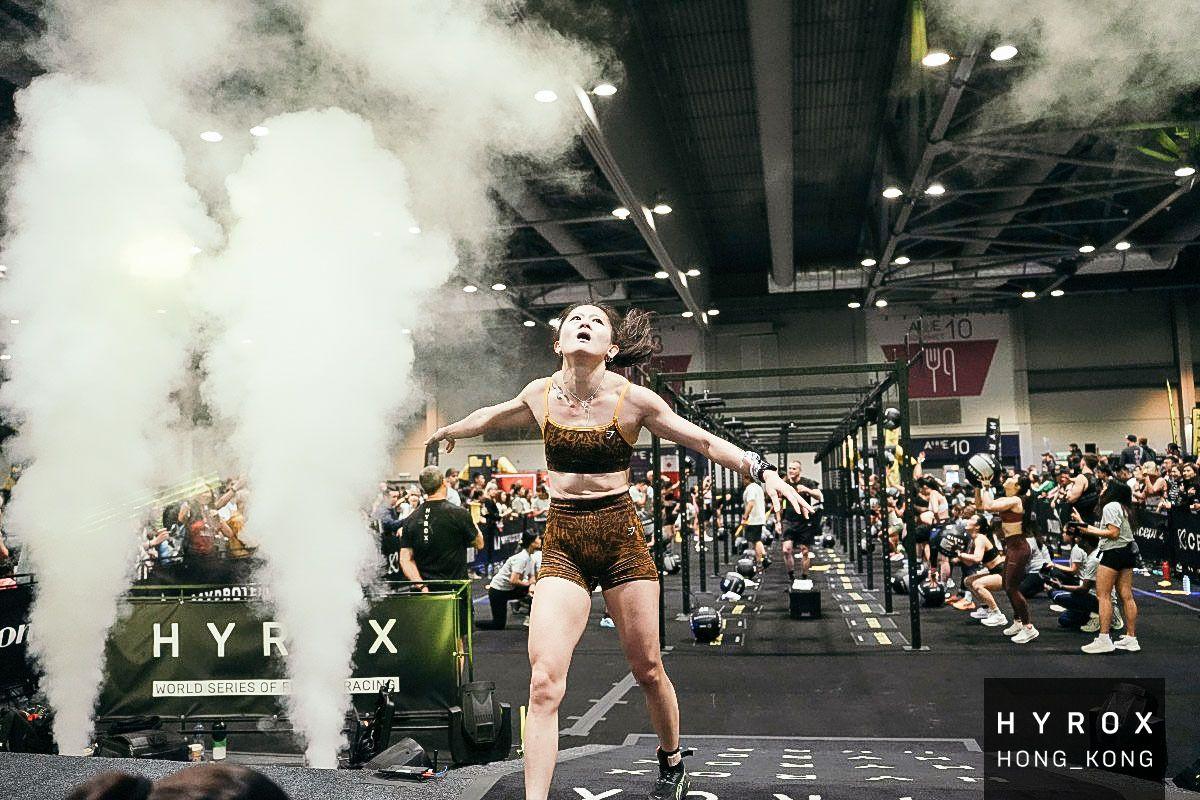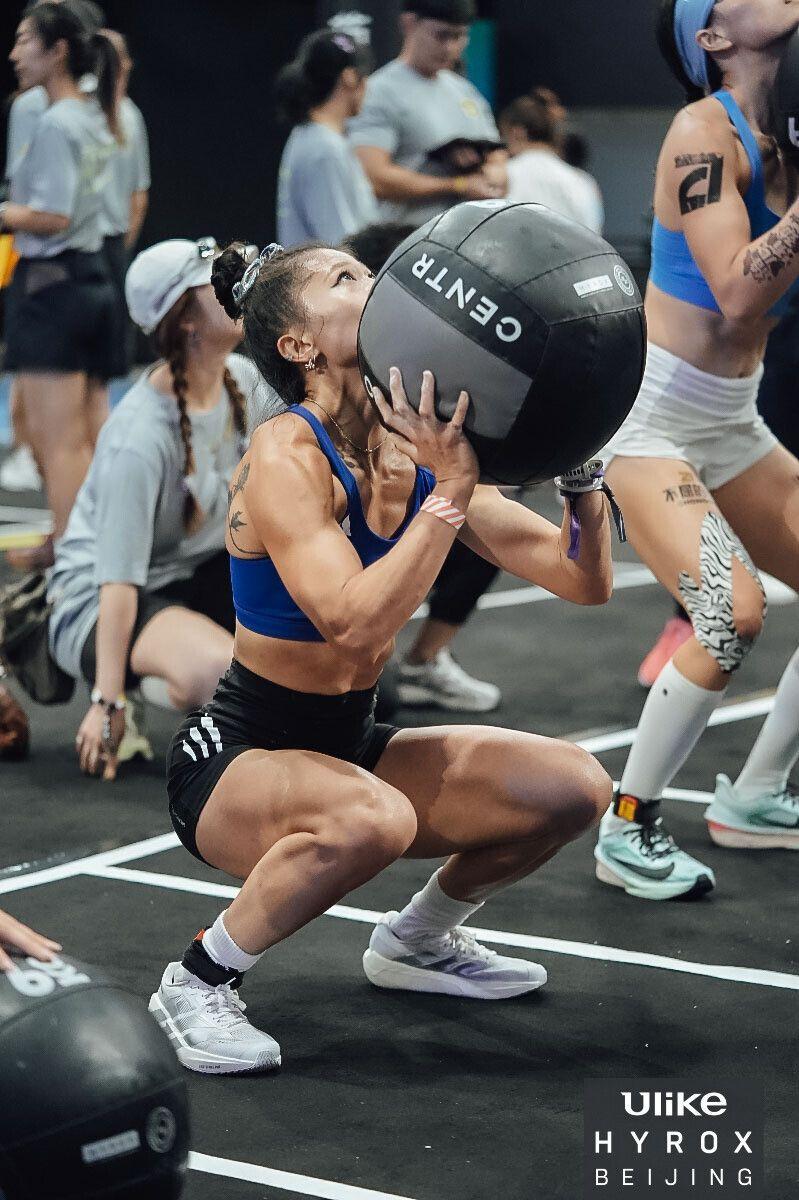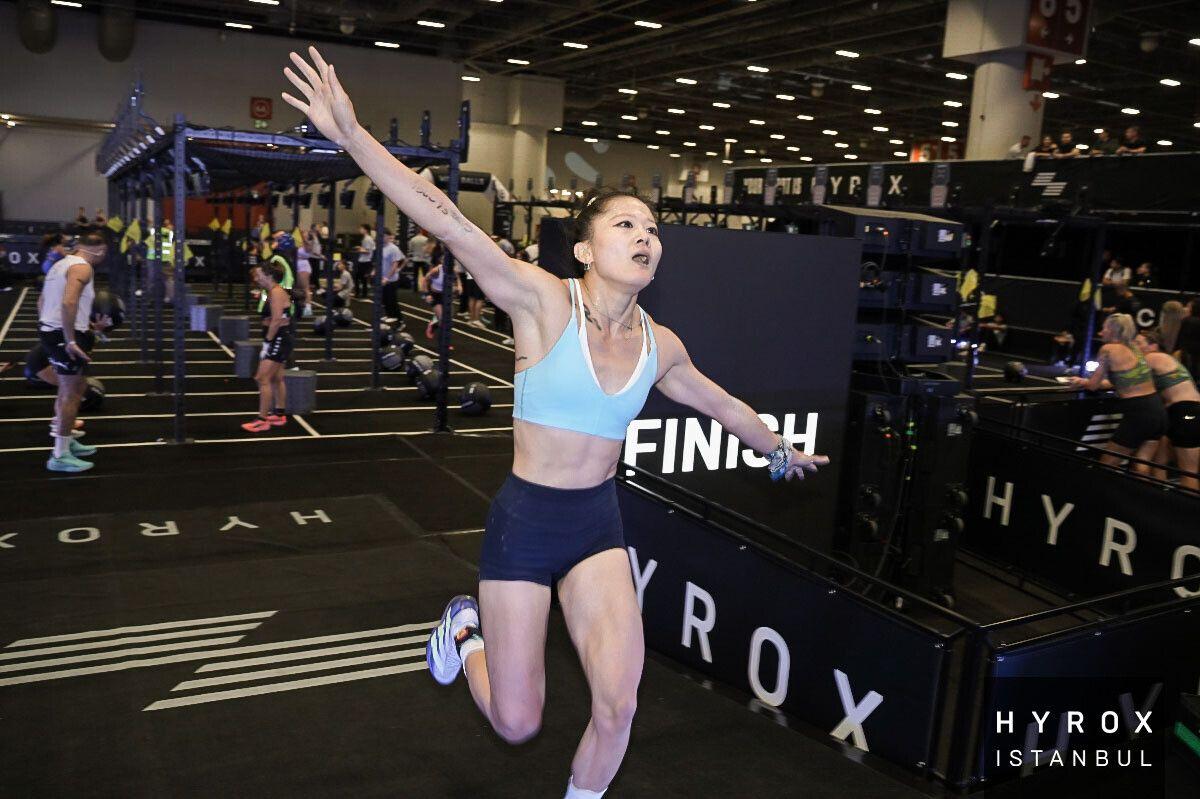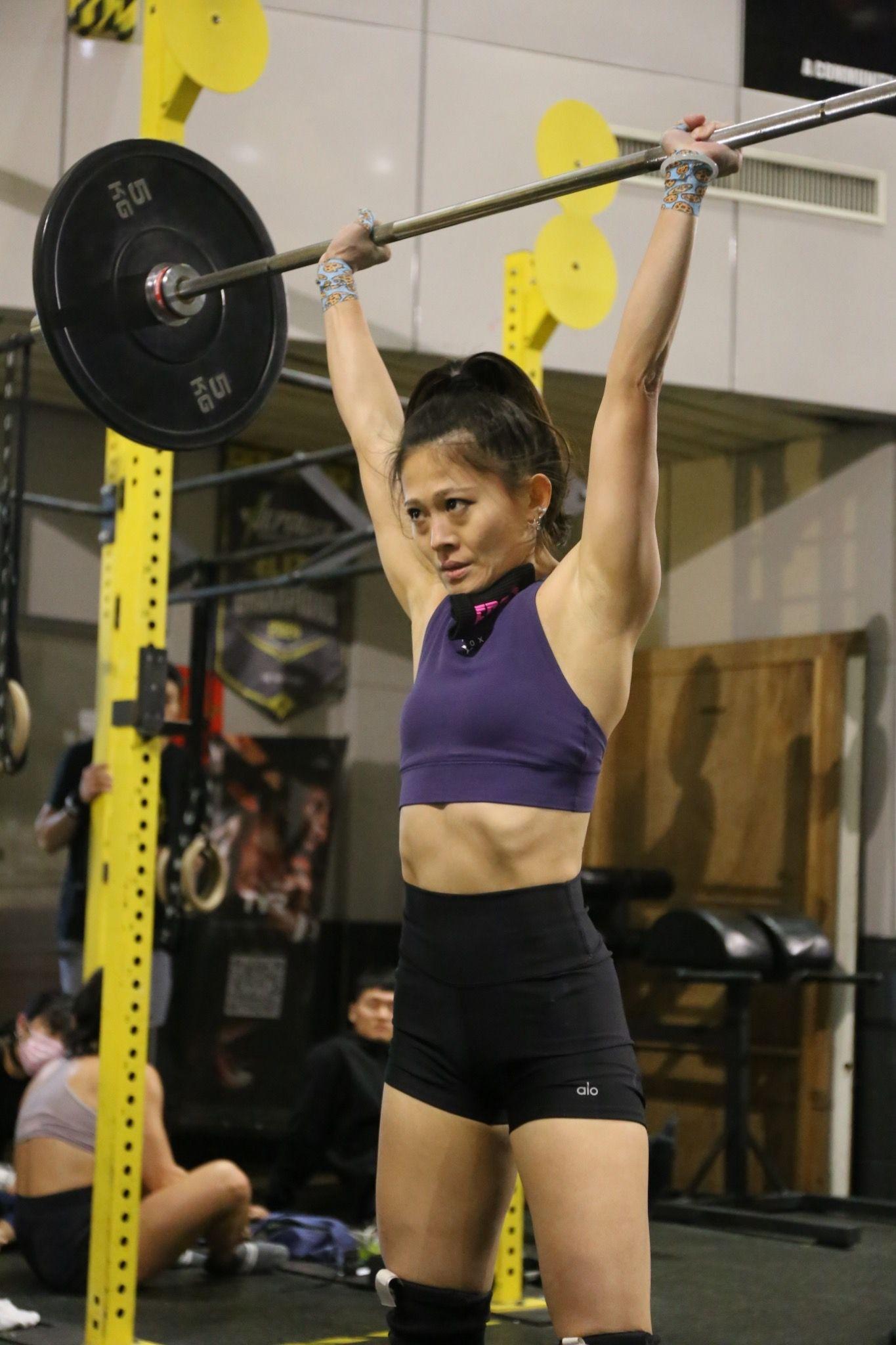
Hi everyone! I'm Pauline Yu (PYY), Taiwan's only 4× Hyrox World Championship qualifier. I still remember standing in a gym in Taipei about four years ago, nervously eyeing the barbell rack like it was some kind of trap. A well-meaning friend had warned me — 'If you lift heavy, you'll get bulky and lose your running speed.' I believed her. For months, I stuck to light dumbbells, resistance bands, and endless cardio. The turning point came when my coach finally sat me down and said, 'Pauline, you are leaving so much performance on the table.' That conversation changed my entire approach to training, and honestly, it changed my career. I want to share everything I've learned so that women across Taiwan and Asia don't spend years stuck in the same myth-driven cycle I did.
Key Takeaways
- ▸Women do not have enough circulating testosterone to build large, bulky muscles from standard strength training — this is basic endocrinology, and every female Hyrox athlete should understand it before designing her program.
- ▸Heavy compound lifts like deadlifts, squats, and loaded carries directly transfer to Hyrox stations including the sled push, sled pull, sandbag lunges, and farmers carry — skipping them is one of the most costly performance mistakes a female athlete can make.
- ▸Strength training increases bone density and connective tissue resilience, which is especially important for female athletes in their 30s and 40s who are at higher risk of stress fractures and joint injuries during high-volume Hyrox training blocks.
- ▸Getting 'toned' is not a separate goal from getting strong — muscle definition comes from building muscle through progressive overload and reducing body fat through smart nutrition, not from doing endless light-weight, high-rep circuits alone.
- ▸Elite women competing in women's elite Hyrox at the World Championships — myself included — train with heavy barbells, kettlebells, and sleds multiple times per week, and we look and move like powerful athletes, not bodybuilders.
The Myth That Kept Me Weak: Where the 'Bulky' Fear Comes From
The fear that lifting heavy will make women bulky is probably the single most persistent myth in female fitness, and it drives me a little crazy every time I hear it — especially because I lived inside that fear for longer than I care to admit. The myth has roots in decades of marketing. Fitness brands in Asia and the West have historically sold women on the idea that their goal should be to be 'small' and 'lean,' and that the path there runs through low-weight, high-rep classes and long cardio sessions. Heavy barbells were coded as a 'male' tool. When I was coming up as an athlete in Taiwan, I absorbed all of this without questioning it. I thought that if I started squatting heavy or deadlifting seriously, I would wake up one morning looking like a competitive bodybuilder. It took real education — from my coach, from other elite female athletes, and from my own mirror — to break that belief down completely.
Here is the physiological reality: women have significantly lower levels of testosterone than men — roughly 15 to 20 times lower on average. Testosterone is the primary hormonal driver of large muscle hypertrophy. This means that for a woman to gain the kind of muscular size that reads as 'bulky,' she would need to train at an extremely high volume for many years, eat in a substantial caloric surplus consistently, and often she would still not reach that level without pharmacological assistance. What actually happens when most women begin serious strength training is that they get functionally stronger, their muscles become more defined and dense, and — crucially for Hyrox — they become dramatically more powerful at every single station on the course. I experienced this directly. When I finally committed to heavy lower-body and posterior chain work, my sled push improved by a margin that no amount of cardio had ever delivered.
- ▸Stop using the word 'toned' as a reason to avoid progressive overload — true muscle definition requires building actual muscle tissue through challenging loads, which means lifting weights that feel genuinely difficult for 3 to 6 reps, not just 20 easy reps.
- ▸If you're a woman in Taiwan or anywhere in Asia who has been told by a trainer to 'just do light weights,' ask them directly how much of their programming experience comes from working with female strength and endurance athletes specifically.
- ▸Look at the body composition of women competing in women's elite Hyrox — they are lean, powerful, and athletic, not bulky, and almost every one of them incorporates heavy barbell work into their weekly training routine.
- ▸Understand that any visible increase in muscle size during the first few months of women powerlifting or Hyrox strength training is almost always accompanied by a reduction in body fat, meaning your overall silhouette typically becomes leaner, not larger.
Which Hyrox Stations Demand Female Hyrox Strength — and How to Build It
Let me be very specific here, because I think one of the reasons women avoid heavy lifting for Hyrox is that they don't fully connect the dots between the gym and the race floor. Every single Hyrox station has a direct strength component, and several of them are almost entirely about raw force production. The sled push requires you to drive hard through your hips, glutes, and quads against resistance. The sled pull demands your entire posterior chain — hamstrings, glutes, lower back, and grip. The sandbag lunges put 10 kilograms on your shoulder (in the open female category) for 100 metres of repeated single-leg loading. The farmers carry is a pure loaded carry that fries your grip, your traps, and your core stability. The wall balls, the burpee broad jumps, the rowing — all of these have force production components that a stronger athlete will always execute more efficiently than a weaker one. When I finally stopped being afraid of female Hyrox strength work and started training it seriously, every single one of these stations improved.
The good news is that you don't need to become a powerlifter to see massive Hyrox-specific gains from strength training. You need a smart, Hyrox-targeted program that prioritises the movement patterns that appear on race day. For me, the biggest bang-for-my-buck exercises have been the Romanian deadlift for posterior chain strength, the Bulgarian split squat for single-leg power that transfers directly to lunges, the heavy kettlebell swing for hip extension power and grip, and the heavy farmers carry for loaded movement capacity. I also do heavy barbell back squats and trap bar deadlifts in my off-season and early base phases. These lifts don't make me slow or stiff — they make me explosive off the start line and resilient through the back half of a race when fatigue is hammering every other competitor. Women strength training myths want you to believe that strength and endurance are in opposition. In Hyrox, they are not. They are symbiotic.
- ▸Prioritise Romanian deadlifts and hip hinges at least twice a week to build the posterior chain strength that directly powers your sled push, sled pull, and sandbag lunge performance on race day.
- ▸Add loaded carries — farmers carries with heavy dumbbells or kettlebells — into your weekly training because they simultaneously build grip strength, core stability, and the mental toughness to keep moving under load when everything is burning.
- ▸Don't skip single-leg work: Bulgarian split squats, step-ups, and reverse lunges under load build the asymmetrical strength and stability that sandbag lunges over 100 metres absolutely require, especially in the final 1000-metre running splits of a race.
Building Confidence Under the Bar: A Practical Starter Plan for Female Athletes
I know that reading about the benefits of heavy lifting and actually walking up to a barbell in a public gym are two very different things. I grew up in Taiwan, where gym culture has changed enormously over the last decade but where there is still — especially for women — a social layer of anxiety around looking like you belong in the weights room. I remember the first time I loaded a barbell for a back squat with a weight that genuinely challenged me. My hands were shaking a little. I kept glancing around to see if anyone was watching and judging. That feeling is real and valid, and I'm not going to dismiss it. What I will tell you is that it disappears completely once you start feeling the results. The first time I walked off the race floor after a competition and realised my legs still had power because I'd spent months building real strength, all the gym self-consciousness evaporated permanently. The results speak louder than anyone's sideways glance.
If you're new to heavy lifting or returning after a long break, the most important thing is to approach it progressively and with good technique from day one. I'd recommend starting with a three-day-per-week full-body strength program that includes one primary lower-body hinge movement, one primary squat-pattern movement, one upper-body push, and one upper-body pull per session. Work in the 4 to 6 rep range for your main lifts at a weight that is genuinely hard by the last rep. Add 2.5 to 5 kilograms to your main lifts every one to two weeks when form is solid. Within eight to twelve weeks, most women will notice significant strength gains, improved posture, better running economy, and — yes — a physique that looks more athletic, not bulkier. I've seen this transformation in dozens of female athletes I've trained alongside and mentored in Taiwan, and the pattern is almost universally the same: initial hesitation followed by complete conversion once results appear.
- ▸Start your strength journey with three full-body sessions per week, each anchored by one heavy compound movement, and resist the temptation to add too many isolation exercises before you've built a base of real functional strength.
- ▸Film your main lifts every session when you're learning — reviewing your own footage is the fastest way to self-correct technique without needing a coach present for every single rep, and it builds proprioceptive awareness much faster than mirrors alone.
- ▸Find a training partner or online community of female Hyrox or women powerlifting athletes — the accountability and normalisation of seeing other women lift heavy in a Hyrox context will accelerate your confidence far more than any amount of solo motivation.
What the Research Says
The science on this topic is actually very clear, and it has been for years. Research published in the Journal of Strength and Conditioning Research has consistently shown that women who engage in progressive resistance training experience significant increases in muscular strength and power without proportional increases in muscle cross-sectional area — meaning they get meaningfully stronger without getting visually 'bigger' in the way the bulky myth predicts. The physiological explanation is well-established: women's lower anabolic hormone concentrations mean that strength gains in the early and intermediate stages of training come primarily from neural adaptations — your nervous system learns to recruit more muscle fibers more efficiently — rather than from large increases in muscle size. The British Journal of Sports Medicine has also consistently highlighted that resistance training is one of the most important interventions for long-term bone density in female athletes, something that matters enormously for women in their 30s and beyond who are putting their skeletal system under the repeated impact stress of running-heavy sports like Hyrox. I can tell you personally that since prioritising strength training, I've had zero stress fracture issues despite dramatically increasing my overall training load across multiple Hyrox seasons. The research and my own body are telling the same story.
Frequently Asked Questions
Q: If I start lifting heavy, will my clothes stop fitting because my muscles are too big? A: This is honestly one of the most common fears I hear from women in Taiwan who are new to strength training, and I want to address it directly from personal experience. When I began lifting seriously, my clothes did change — but not because I got bigger. My waist got smaller, my posture improved, and my legs became more defined. The only time clothing fit differently was that some of my jeans became looser in the waist and more fitted in the glutes, which I personally consider a very positive outcome. Unless you are eating a large caloric surplus deliberately and training with extreme volume for years, your clothes will not stop fitting because of muscle. What's far more likely is that your body composition will shift in a way you love.
Q: How do I balance heavy strength training with all the running and cardio Hyrox also requires? A: This is the real programming challenge of Hyrox, and I won't pretend there's a one-size-fits-all answer. What works for me is periodising my training so that my strength emphasis is highest in the off-season and early base-building phases, and then I shift toward maintaining strength while increasing sport-specific work as a race approaches. During peak preparation I'm typically doing two dedicated strength sessions per week alongside three to four Hyrox-specific workouts. The key is managing fatigue: heavy lower-body lifting the day before a long run is a recipe for poor quality in both sessions. I always separate my hardest strength days from my hardest running days by at least 48 hours when possible.
Q: I'm a woman in my 40s — is it too late to start heavy lifting for Hyrox? A: Absolutely not, and I would actually argue it's more important than ever. Women in their 40s are navigating hormonal changes that accelerate muscle loss and bone density reduction, and resistance training is one of the most evidence-backed interventions to counter both of those processes. Some of the most inspiring female Hyrox athletes I know in Taiwan and across Asia started serious strength training in their 40s and have gone on to qualify for national and even world-level competitions. The adaptation timeline might be slightly different than for a 25-year-old, but the direction of change — stronger, more powerful, more resilient — is exactly the same. Start now. Your future self will thank you endlessly.
Thank you so much for reading — it genuinely means the world to me that women across Taiwan and beyond are asking these questions and seeking real answers instead of accepting old myths. If this article sparked something for you, please share it with a training friend who needs to hear it. Come find me and subscribe at paulineyuyu.com for training programs, race-day strategies, and honest first-person content from a female Hyrox athlete who has learned every lesson the hard way. Let's lift heavy and race fast together — PYY.
Sources: British Journal of Sports Medicine / Journal of Strength and Conditioning Research
Taiwan's elite HYROX Pro athlete and 4× World Championship qualifier. I share my training journey, race insights, and performance notes from the competition floor.