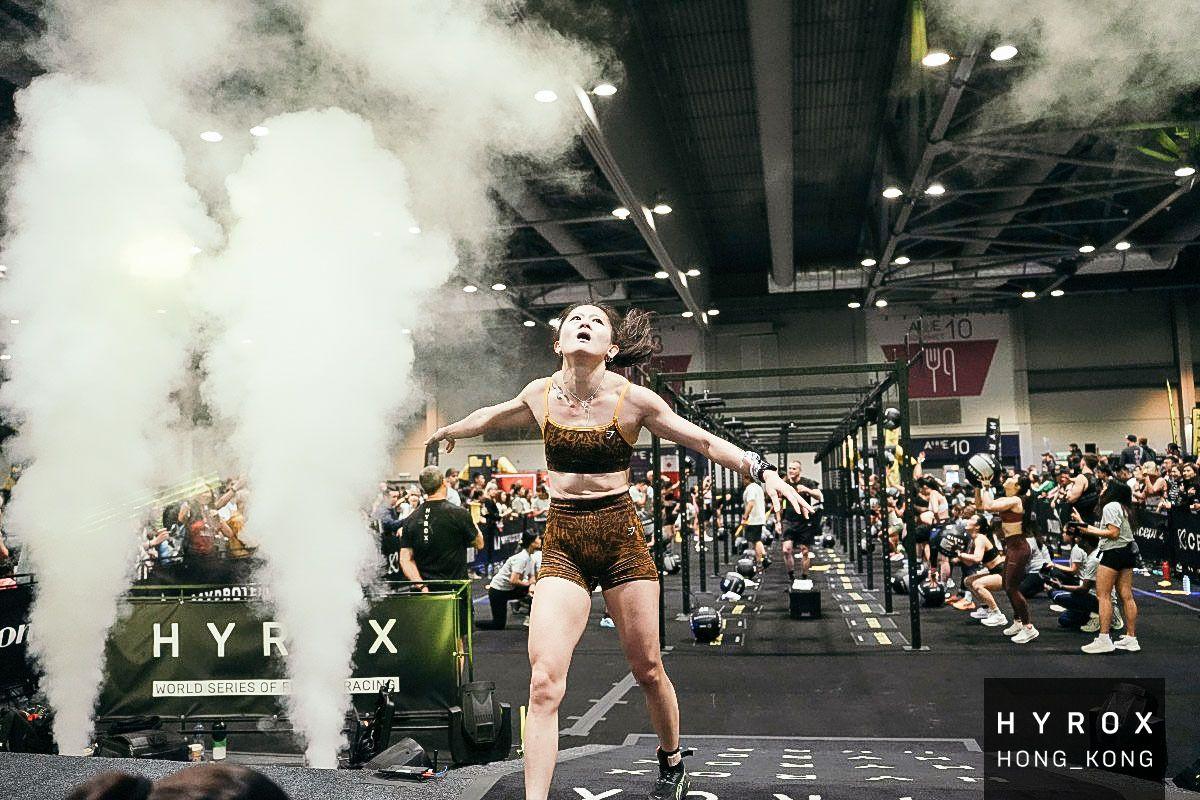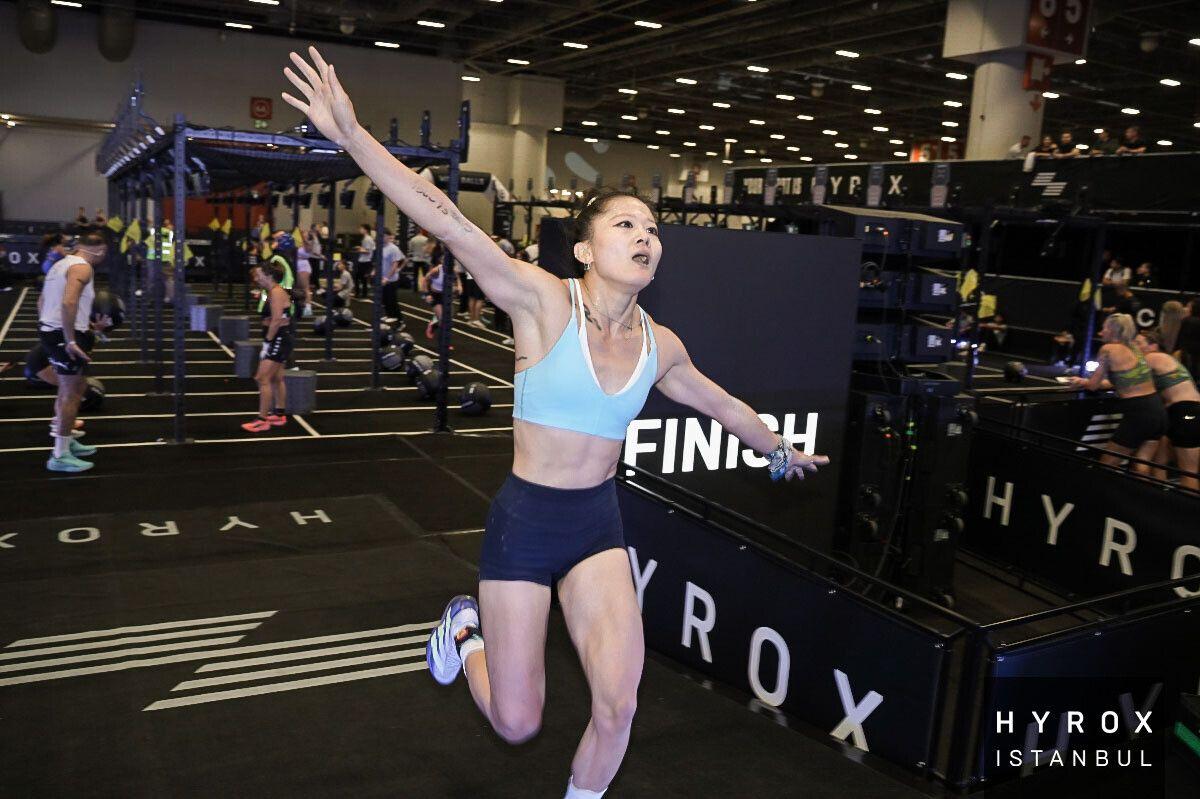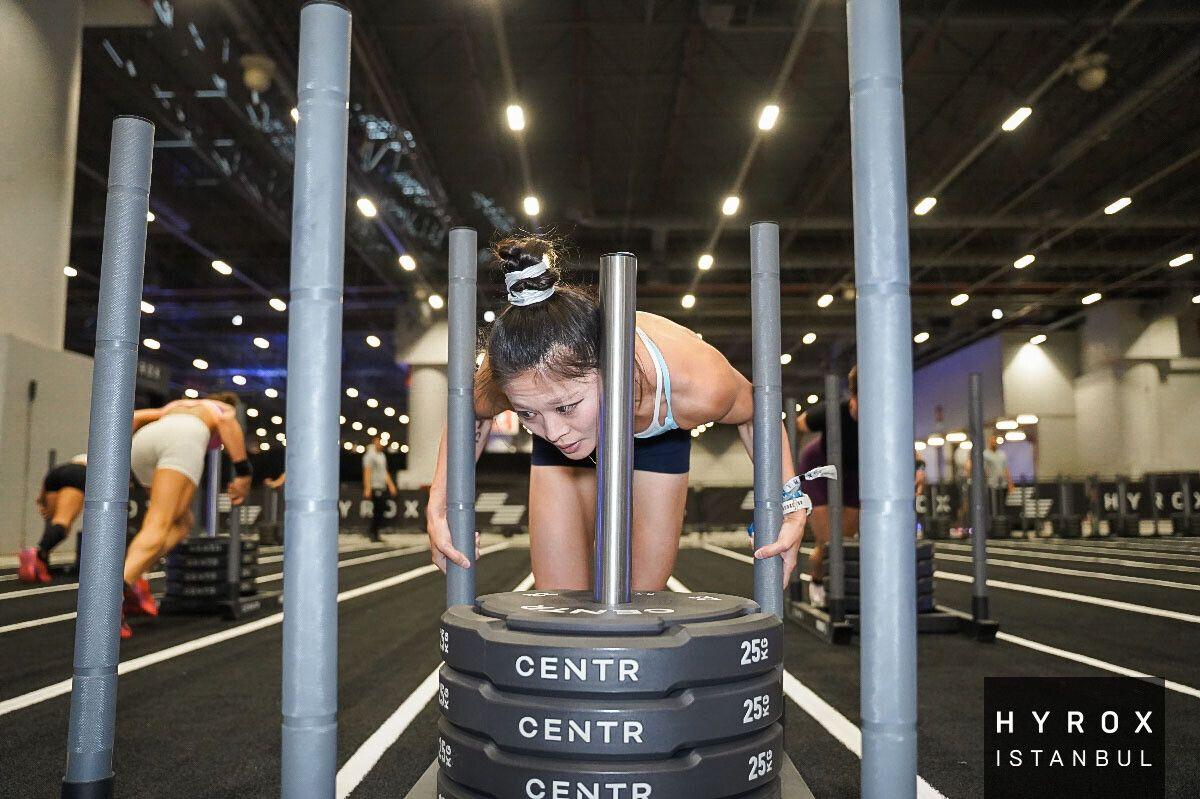
Hi everyone! I'm Pauline Yu (PYY), Taiwan's only 4× Hyrox World Championship qualifier. My first instinct was panic. I thought, I need to cut weight, I need to eat less, I need to fix this before race day. Thank goodness I didn't listen to that voice, because that heavier, stronger version of me ran the fastest race of my life up to that point. That experience completely rewired how I think about body composition, performance, and what it actually means to be a female Hyrox athlete at an elite level — especially here in Taiwan and across Asia, where the cultural pressure on women to stay small and light is incredibly intense.
Key Takeaways
- ▸Body weight on a scale tells you almost nothing useful about your readiness to perform in a Hyrox race — it cannot distinguish between muscle, fat, water retention, glycogen stores, or bone density, all of which fluctuate daily.
- ▸For female Hyrox athletes, gaining lean muscle mass almost always improves race performance by increasing power output at the sled, SkiErg, and wall ball stations, even if the scale number goes up in the process.
- ▸Performance metrics like your 1km run split, sled push time, and roxzone transition speed are far more reliable indicators of race readiness than any number on a bathroom scale.
- ▸Chronic undereating to stay light will sabotage your recovery, suppress your hormones, increase injury risk, and ultimately slow you down — a pattern I have seen devastate talented women athletes across Taiwan's fitness community.
- ▸The women winning women's elite Hyrox races are not the lightest women in the field — they are the most powerful, the most aerobically efficient, and the best at pacing eight back-to-back functional stations under fatigue.
- ▸Shift your tracking focus to training performance data, body composition measurements like body fat percentage if you use them at all, and subjective markers like energy levels, sleep quality, and training enjoyment.
The Day the Scale Almost Wrecked My Race
Let me take you back to a specific training block, about eight weeks out from a World Championship qualifier. I was deep in strength-focused mesocycle work — heavy sled pushes and pulls, loaded carries, Romanian deadlifts, and a ton of wall ball volume. My coach and I had deliberately prioritised building raw power that season because my data from the previous race showed I was losing too much time at the functional stations compared to my running splits. The training was working. My sled push times were dropping. My wall ball sets felt more controlled. But the scale crept up by about two and a half kilograms over six weeks, and I will be honest with you — it messed with my head. Growing up in Taiwan, like most women in Asia, I absorbed decades of messaging that lighter is better, that thin equals athletic, that the scale is the ultimate report card on your body. Even as an elite athlete who absolutely knew better intellectually, that number still triggered anxiety I had to actively manage.
What saved me was switching my focus entirely to performance benchmarks. My coach had me track a set of weekly training metrics instead of body weight — my 1km time trial pace, my max sled push load for a 25-meter effort, my SkiErg 500m split, and my ability to complete a wall ball set of 30 reps unbroken after running 1km. Every single one of those metrics was trending in the right direction while my weight was going up. That disconnect was the most powerful lesson I have ever learned as a Hyrox athlete: the scale and performance are not the same conversation. They are not even in the same room. If I had cut calories, lost the muscle I was building, and chased a lower number on the scale, I would have arrived at that race lighter and slower. Instead, I arrived heavier and faster. That is the only story that matters in women's elite Hyrox.
- ▸Replace your morning weigh-in habit with a performance log: record one training metric each day — a split time, a load lifted, or a rep count — so your brain starts associating progress with output, not body weight.
- ▸If you genuinely need to track body composition, use body fat percentage measurements taken monthly rather than daily scale readings, which fluctuate wildly based on hydration and glycogen and tell you nothing meaningful about tissue changes.
- ▸Talk honestly with your coach about any anxiety you feel around body weight during strength-focused training blocks — this is one of the most common and most damaging hidden conversations in women's elite Hyrox training, and naming it out loud helps defuse it.
- ▸Look at photos and videos of yourself training rather than at the scale — seeing your posture, your power expression under load, and your movement quality gives you far richer information about what your body is actually doing and becoming.
What Hyrox Body Composition Actually Needs to Look Like
Hyrox is a uniquely demanding hybrid event — 8km of running broken up by eight functional workout stations, including the 50-meter sled push, the 50-meter sled pull, 80 meters of burpee broad jumps, 100-meter farmer's carry, 200 meters of sandbag lunges, the SkiErg, rowing, and wall balls. The loads in the Pro Women category are serious: a 152kg sled push, a 102kg sled pull, a 20kg sandbag in each hand for the lunges, a 24kg sandbag for the farmer's carry, and a 6kg wall ball. To move those loads efficiently after running multiple kilometres, your body needs functional muscle mass. Not bulk, not size for aesthetics, but dense, well-trained muscle that can generate force repeatedly without breaking down. The female athletes I watch dominate women's elite Hyrox races in Asia and globally are not waif-thin. They are compact, powerful, and built for output. Their Hyrox body composition reflects training priorities, not calorie restriction.
Here in Taiwan, I work with a lot of women who come to me having already spent years in traditional gym culture or endurance sport culture where the dominant message was always lose weight to go faster. That thinking made some sense in pure running or cycling, where power-to-weight ratio over long distances is genuinely relevant. But Hyrox is not a pure endurance sport. The sled doesn't care how light you are — it cares how strong you are. The wall ball doesn't care about your BMI — it cares whether your legs and shoulders can produce explosive, repeatable power. So when I sit down with a new female athlete from Taiwan and she tells me she wants to improve her Hyrox time by losing weight, my first question is always the same: which station is slowing you down? Almost always, the answer is a strength station. And the solution to getting faster at a strength station is never to eat less — it's to build more capacity. That means eating enough, training specifically, and letting your body do what it was designed to do.
- ▸Prioritise strength training for the specific Hyrox stations where you lose the most time — if the sled consistently wrecks you, your training block should include heavy sled work, loaded squats, and hip-dominant movements that build posterior chain power.
- ▸Eat enough protein to support muscle retention and growth during training — research and my own experience both point to adequate protein intake as one of the most non-negotiable factors in female athlete performance improvement, especially during heavy training phases.
- ▸Accept that your body weight may increase during a proper strength-building phase, and hold onto the evidence from your training benchmarks as the proof that the process is working — trust the data over the mirror or the scale.
The Hidden Cost of Chasing a Lighter Body in Women's Hyrox
I want to talk about something that doesn't get discussed enough in the Taiwan fitness community and more broadly across Asian women's athletic circles: the very real and very serious health consequences of under-fuelling in pursuit of a lower body weight. I have watched talented female athletes crater their performance not because they lacked the physical ability, but because they were simply not eating enough to support the training demands of Hyrox preparation. The signs are subtle at first — slightly slower recovery, more muscle soreness than usual, disrupted sleep, a growing sense of dread before training sessions that used to feel exciting. Then, if the under-fuelling continues, things get more serious: hormonal disruption, stress fractures, persistent illness, and mental health impacts that go far beyond sport. This pattern has a clinical name — Relative Energy Deficiency in Sport, or RED-S — and it disproportionately affects female athletes, especially those training in high-volume hybrid sports like Hyrox.
The cruel irony of chasing a lower scale number in Hyrox is that it almost always backfires in exactly the way you were trying to avoid. When you consistently under-eat relative to your training load, your body responds by protecting itself — it downregulates your metabolism, catabolises muscle tissue for energy, and produces hormones that actually make fat loss harder over time while simultaneously making you weaker and slower. I have been through periods of my own training in Taiwan where I wasn't eating enough — not through conscious restriction, but through the chaos of heavy competition schedules, travel, and not paying enough attention to fuelling. The drop in performance was immediate and noticeable. My sled times went up. My run pace dropped. I felt heavy and flat even though my body weight had barely changed. The lesson I keep coming back to is this: a well-fuelled, slightly heavier female Hyrox athlete will always outperform an under-fuelled, slightly lighter one. Every single time.
- ▸Learn to recognise the early warning signs of under-fuelling — persistent fatigue that doesn't resolve with rest, declining motivation to train, increased irritability, and slower recovery between sessions are all red flags worth taking seriously before they become serious health issues.
- ▸Work with a sports nutritionist who understands hybrid athlete demands if you are serious about optimising your Hyrox body composition — not someone whose primary tool is calorie restriction, but someone who thinks in terms of fuelling performance and supporting recovery.
- ▸Time your nutrition around your training sessions intentionally — eating adequate carbohydrates before and after your longest and hardest sessions supports both performance and recovery, and has a direct positive impact on the quality of your next training block.
What the Research Says
The science here is unambiguous and has been for many years. Research published in the British Journal of Sports Medicine has consistently shown that Relative Energy Deficiency in Sport is one of the most prevalent and underdiagnosed performance threats facing female athletes across virtually every sport discipline — and the findings apply directly to the demands of hybrid events like Hyrox. The core finding is straightforward: when energy availability drops below what the body needs to sustain both training load and basic physiological function, performance declines before body weight does. In other words, you will get slower before you look lighter. That is a devastating trade-off for a competitive Hyrox athlete. Research in the Journal of Strength and Conditioning Research has also consistently reinforced that absolute strength and the ability to express power under fatigue are the primary determinants of performance in stations like the sled push and sled pull — and that building those qualities requires progressive overload, adequate protein intake, and sufficient total caloric support. You cannot build the engine Hyrox demands while running the body on empty. For me personally, these findings validate exactly what I experienced during that training block before my World Championship — the weight gain was muscle, the muscle made me faster, and the scale was lying to me the entire time.
Frequently Asked Questions
Q: Should I try to lose weight before my first Hyrox race? A: My honest answer is almost certainly no — at least not as a primary goal. If you're new to Hyrox, the single biggest performance gain you will make between now and race day comes from improving your running efficiency and your strength at the functional stations. Neither of those adaptations is helped by aggressive calorie restriction. What does help is consistent training, adequate fuelling, and enough sleep to recover properly. If over time you naturally change in body composition because you are training well and eating well, great — but chasing a lower scale number as a goal in itself is the fastest way to arrive at the start line under-prepared and under-powered. Focus on the process, not the scale.
Q: How do I know if my body composition is actually impacting my Hyrox performance? A: Look at your station-by-station data from your race results or from timed training benchmarks. If you are losing significant time at sled push, sled pull, sandbag lunges, or farmer's carry relative to your running splits, that is usually a signal that you need more functional strength — which means building muscle, not losing weight. If your run splits are the problem, then we talk about running economy and aerobic efficiency, which also has almost nothing to do with the scale. I track specific benchmark times in training — sled push over 25 meters, wall ball sets to failure, SkiErg 500m — and those numbers tell me everything the scale never could.
Q: As a woman training for Hyrox in Taiwan, how do I deal with social pressure around body weight and body image? A: This is real, and I won't pretend it's easy. Taiwan and broader Asian culture can be particularly intense around this topic for women — comments from family, comparisons on social media, the persistent idea that smaller is always better. What helped me most was building a very clear internal framework around what I am actually training for. I am training to move a 102kg sled. I am training to run 8km under fatigue. I am training to compete on a world stage and represent Taiwan with everything I've got. None of those goals are served by being small. They are served by being strong, fast, and well-fuelled. When I am crystal clear on my performance goals, the cultural noise gets quieter. It doesn't disappear, but it loses its power over my daily choices.
Thank you so much for reading all the way through — this topic is genuinely close to my heart, and I hope it helps at least one woman in Taiwan or anywhere in Asia step away from the scale and step toward what actually makes her faster and stronger. If you want more honest, first-person content about training, nutrition, and competing as a female Hyrox athlete, come find me at paulineyuyu.com and subscribe for new articles every week. See you at the start line.
Sources: British Journal of Sports Medicine / Journal of Strength and Conditioning Research
Taiwan's elite HYROX Pro athlete and 4× World Championship qualifier. I share my training journey, race insights, and performance notes from the competition floor.