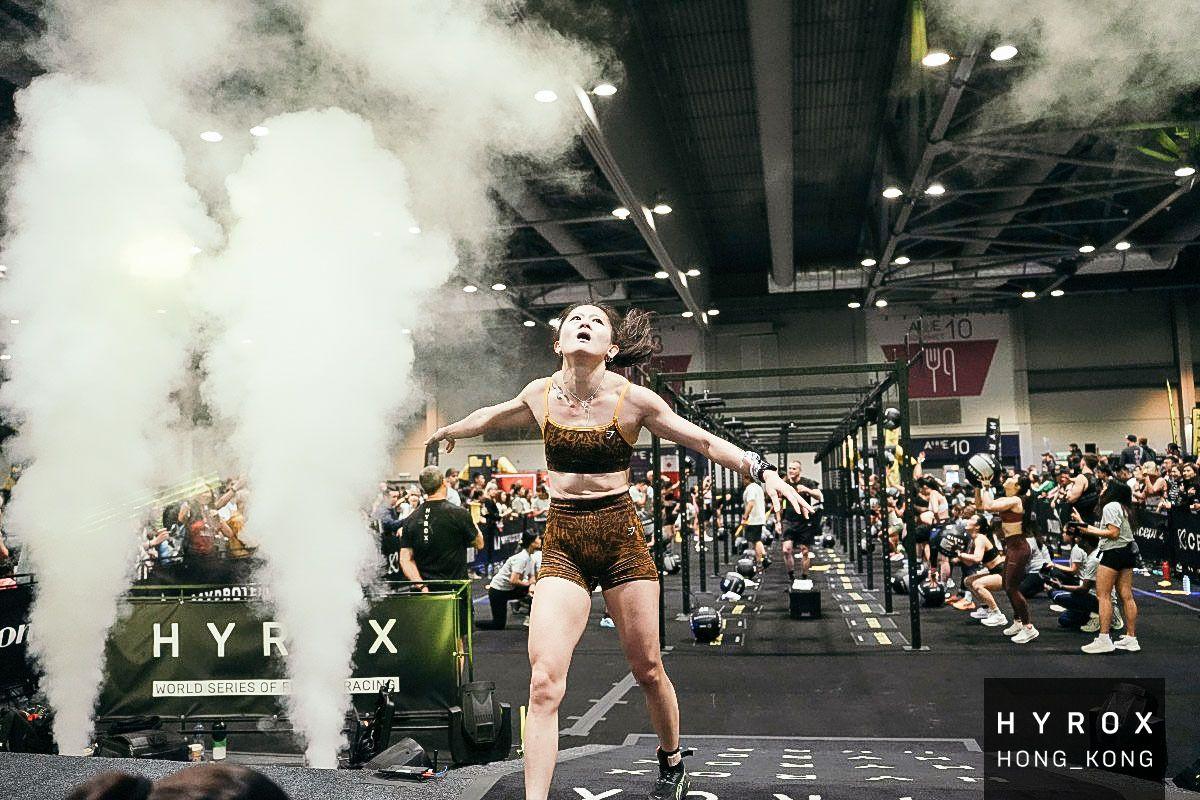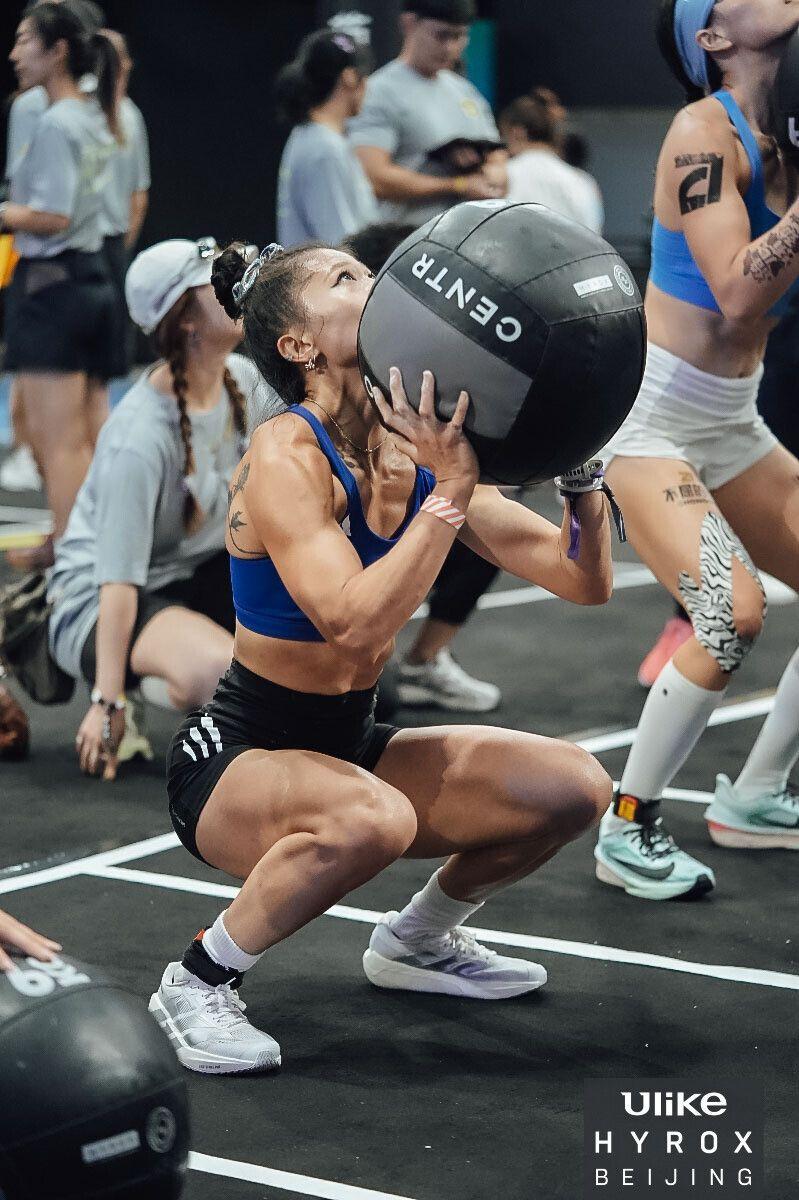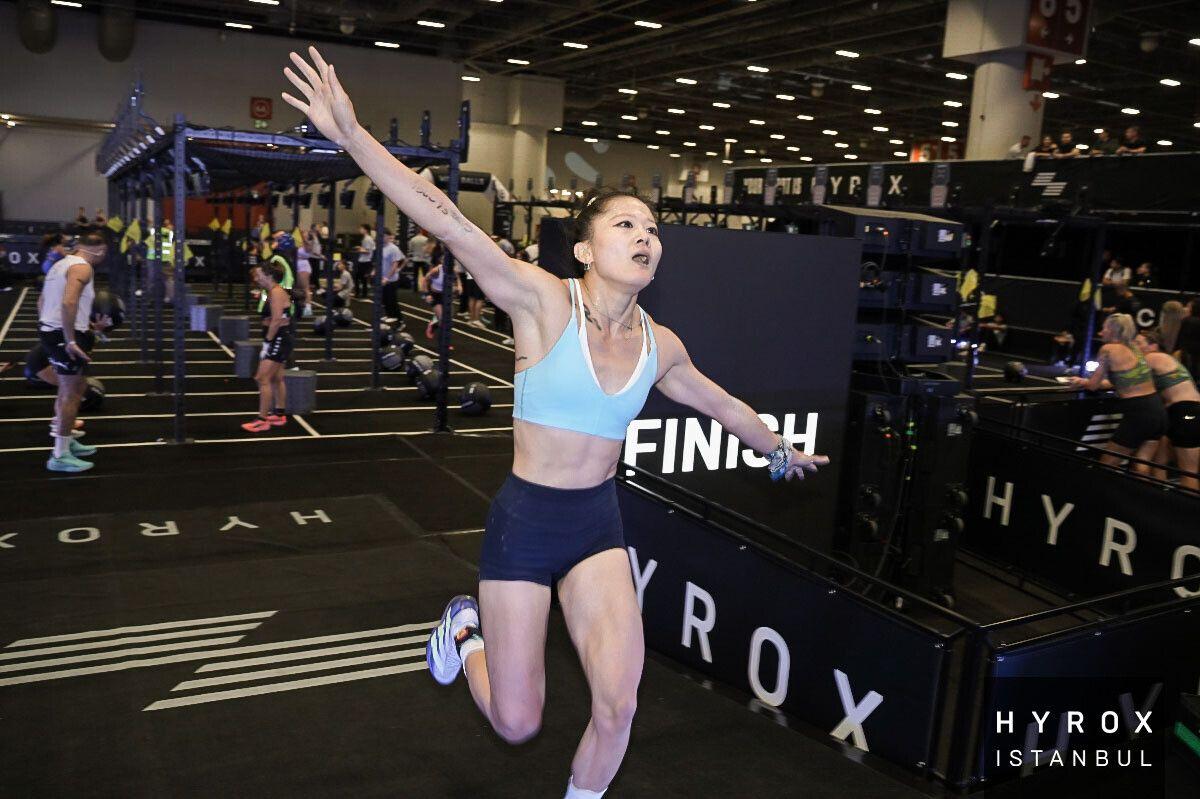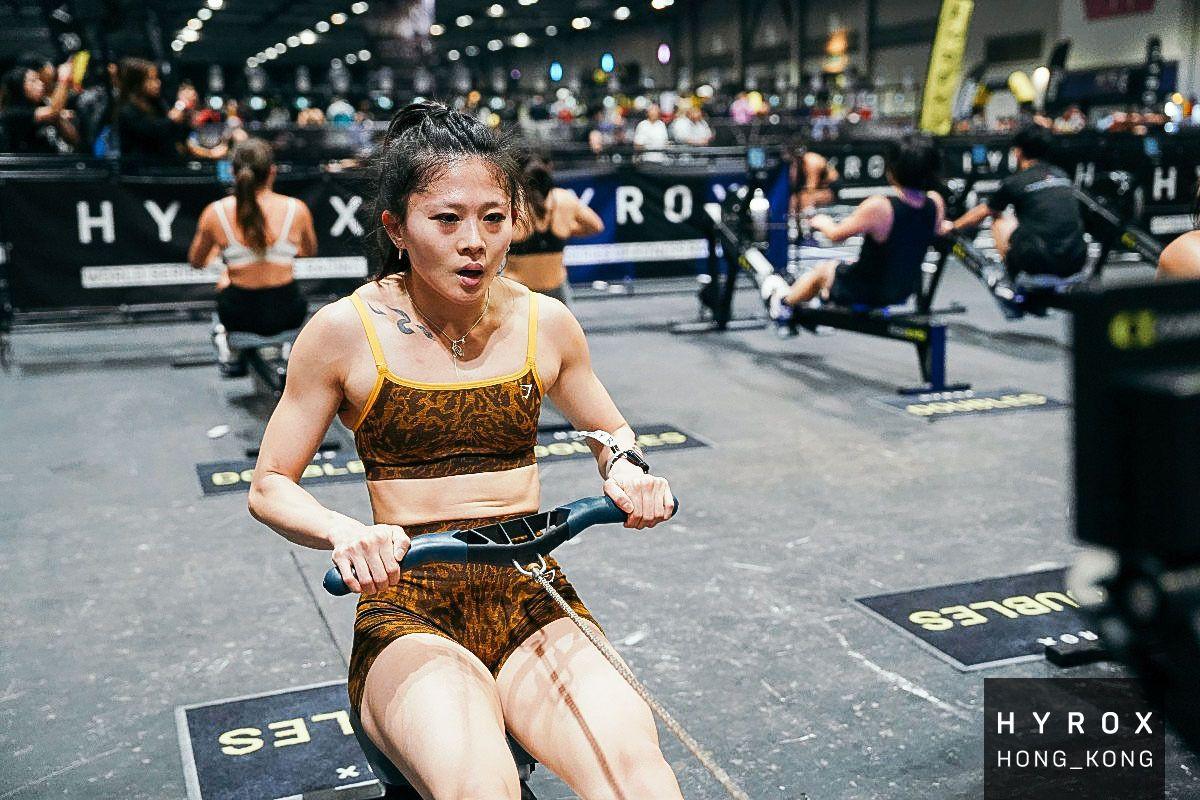
Hi everyone! I'm Pauline Yu (PYY), Taiwan's only 4× Hyrox World Championship qualifier. I still remember standing at the finish line of my third half marathon back in 2015, feeling oddly hollow. I had trained for months, clocked hundreds of kilometers on the roads around Taipei, and crossed the line faster than I ever had — and yet something was missing. It wasn't until a friend dragged me to my first Hyrox event that I finally understood what that something was: I wanted to feel strong, not just lean. That shift in mindset changed everything about how I train, how I eat, and honestly, how I see myself as an athlete. And from what I'm seeing across Taiwan and the wider Asian women fitness community, I'm far from alone in making this transition.
Key Takeaways
- ▸Hyrox offers Asian women a measurable, strength-focused fitness goal that marathon training simply cannot replicate, combining eight functional stations with 8km of running inside a single race format.
- ▸The women Hyrox Asia trend is accelerating rapidly, with participation in races across Singapore, Japan, South Korea, and Taiwan growing significantly year on year as more women seek performance over aesthetics.
- ▸From a body composition standpoint, Hyrox training builds lean muscle mass while maintaining cardiovascular fitness, meaning you get the metabolic benefits of both strength work and endurance training simultaneously.
- ▸Hyrox vs marathon women debates often miss the point — the real shift is psychological: Hyrox rewards you for getting stronger every week, which creates a far more sustainable long-term motivation loop.
- ▸If you are an Asian woman considering your first Hyrox, start with three to four months of hybrid training that blends zone 2 cardio, strength circuits, and sport-specific station practice before race day.
- ▸Women's elite Hyrox is one of the fastest-growing competitive categories globally, and the accessibility of the open division means complete beginners and elite athletes compete at the same event on the same day.
From Marathon Roads to Hyrox Floors: A Personal Turning Point
Let me take you back to early 2022. I had just come off a solid marathon block — we're talking 16 weeks of structured running, long Sunday runs up to 32km, tempo sessions, the whole program. My aerobic engine was genuinely impressive, and I was proud of that. But when I started incorporating strength work into my routine and walked into a gym for the first time in years, I couldn't do a proper sled push without my hips wobbling all over the place. That was humbling. I had been so focused on running volume that I had completely neglected functional strength, and it showed the moment I had to do anything other than move forward in a straight line. That experience was the real catalyst for me. I started to realize that marathon training, as beautiful and meditative as it can be, had given me a very narrow kind of fitness — one that looked good on a race certificate but felt fragile the moment real-world demands changed.
What I've heard from women all across Taiwan and Asia mirrors my own story almost exactly. So many women I talk to at events describe years of marathon training that left them feeling depleted, injured, or just bored. The repetitive nature of marathon prep — run more, run longer, run again — doesn't build the kind of well-rounded physical confidence that many women are now actively seeking. Hyrox changed that equation for me personally because every single training session has a different demand. One day I'm working on SkiErg technique, the next I'm doing heavy sled work, and then I'm refining my burpee broad jumps for speed. The variety is not just mentally stimulating — it produces genuinely different physiological adaptations that make your body more capable in every direction. That is a profound thing to experience, especially if you have spent years on a single-sport path.
- ▸If you are coming from a marathon background, don't abandon your running fitness — instead, treat it as a foundation and layer in strength work two to three times per week from day one of your Hyrox prep.
- ▸Practice the Hyrox stations in sequence at least once a month, even at low intensity, so your body and nervous system learn how to transition between radically different movement patterns under real fatigue.
- ▸Address your weakest station first every week, not last — I used to save sled pull for the end of sessions when I was already tired, and my technique suffered massively as a result of that bad habit.
- ▸Schedule one dedicated zone 2 run per week of at least 45 minutes to protect your aerobic base while you are also building strength, because the 8km of running in Hyrox will punish you if your cardio slips.
What the Women Hyrox Asia Trend Actually Reflects About Modern Fitness Culture
The women Hyrox Asia trend is about so much more than just choosing a different race format. When I look at the women showing up to Hyrox events in Taipei, Singapore, Tokyo, and Seoul, I see a generation of athletes who have fundamentally rewritten the narrative around what female fitness is supposed to look like. For so long in Asia, the dominant fitness aesthetic for women was centered around being small, light, and lean — and marathon running fit perfectly into that cultural framework. Long-distance running became almost synonymous with the ideal female body in many Asian fitness communities, because it produced a certain slender physique that was socially celebrated. But something started shifting around 2021 and 2022, and I watched it happen in real time both in Taiwan and through the broader Asian women fitness conversations happening on social media.
Women began celebrating strength. Not in a bodybuilding way, not in a heavily aesthetic way, but in a genuinely functional, performance-driven way. I started seeing posts from women in Taiwan and across Asia who were proud of their sled push numbers, who were sharing their wall ball set times, who were posting before-and-after stories not about weight loss but about how much heavier their sandbag carries had gotten. Hyrox gave women a structured, competitive container for that kind of strength identity. And importantly, Hyrox is explicitly inclusive — the open women's division has no minimum performance requirement, so a woman doing her first race stands in the same arena as women's elite Hyrox competitors. That democratic structure matters enormously for building a community where all women feel like they belong. In my personal experience training and racing across Asia, this sense of shared challenge is unlike anything marathon culture ever offered me.
- ▸Follow women's elite Hyrox athletes on social media and use their training content as inspiration, but remember that elite programming is built around years of accumulated fitness — adapt the principles, not the volumes.
- ▸Join a local Hyrox training community or group class in your city, because training alongside other Asian women who are navigating the same learning curve dramatically accelerates your progress and keeps motivation high.
- ▸Track performance metrics that matter — station split times, sled weights moved, and running pace under fatigue — rather than tracking body weight, because Hyrox rewards what your body can do, not what it weighs.
The Practical Case for Hyrox Over Marathons for Asian Women Starting Today
Here's the conversation I have most often with women who are curious about making the switch from marathon to Hyrox. They almost always ask: isn't Hyrox harder? And my honest answer is: it's differently hard, and for most people that difference is actually a relief. Marathon training demands enormous time commitment — a proper 16-week marathon build for a competitive amateur can require 10 to 14 hours of training per week. Hyrox training, especially in the early phases, can be incredibly effective with just six to eight hours per week if those hours are intelligently structured. I am a professional athlete with coaching support and I still think about efficiency constantly, because sustainable training is the only training that works long-term. For working women in Taiwan and across Asia who are juggling careers, families, and social lives, that time efficiency is not a small thing — it is genuinely life-changing.
There is also the injury risk conversation, which I think is critically important and doesn't get discussed enough in the Hyrox vs marathon women debate. High-volume marathon training carries well-documented risks of overuse injuries — stress fractures, IT band syndrome, plantar fasciitis, and runner's knee are incredibly common among dedicated marathon runners, especially women. I dealt with IT band issues myself during my heaviest running phases, and it was miserable. Hyrox training distributes mechanical stress across many more movement patterns and muscle groups, which in my personal experience and in what I observe coaching and training alongside other women, tends to reduce overuse injury risk significantly when programming is sensible. You're skiing, pushing sleds, doing wall balls, rowing, lunging, carrying sandbags, and yes, running — but no single movement is accumulating the kind of repetitive micro-trauma that pure marathon training can create.
- ▸Build up your sled push and pull weights gradually over 8 to 12 weeks rather than jumping straight to race weight, because your hip stabilizers and lower back need time to adapt to these highly specific loaded movement patterns.
- ▸Invest in at least three or four sessions learning proper SkiErg technique from a coach or experienced athlete, because poor arm mechanics on the SkiErg will cost you both time and energy that you desperately need for later stations.
- ▸Do a mock race simulation — all eight stations plus the runs at reduced intensity — at least six weeks before your target event so you know exactly where your limiters are and have time to address them specifically.
What the Research Says
The science strongly supports what many Asian women are discovering through lived experience. Research published in the British Journal of Sports Medicine has consistently shown that concurrent training — combining endurance and resistance work in the same program — produces superior health outcomes compared to either modality alone, including better cardiovascular markers, improved body composition, and enhanced metabolic function. This is essentially what Hyrox demands by design: you cannot succeed without both a strong aerobic engine and genuine functional strength. The Journal of Strength and Conditioning Research has also published extensive work demonstrating that functional strength training, particularly movements involving loaded carries, pushing, and pulling, builds a quality of neuromuscular resilience that pure endurance training leaves largely untouched. When I read this research, it mirrors exactly what I felt in my own body during the transition — running had made me aerobically fit but functionally fragile, and Hyrox training rebuilt that fragility into genuine resilience. The science and the personal experience pointed to the same conclusion: for women seeking long-term athletic health and performance, hybrid training is not a compromise between two disciplines — it is genuinely the superior approach.
Frequently Asked Questions
Q: I've never done strength training before — can I still do Hyrox as a first fitness event? A: Absolutely yes, and honestly this is one of my favorite things about Hyrox. The open division is genuinely welcoming to complete beginners. What I would recommend is giving yourself at least 12 to 16 weeks of preparation before race day, and spending the first four to six of those weeks just learning the movements — SkiErg, sled push and pull, burpee broad jumps, rowing, farmers carry, sandbag lunges, and wall balls — at very low intensity. You don't need to be strong to start. You just need to start, and the strength will come faster than you expect once you're training consistently with clear purpose.
Q: As an Asian woman, will I be competitive at Hyrox events or will I always be at the bottom of results? A: This question genuinely makes me smile, because the Asian women fitness community in Hyrox is growing so fast and the talent level is rising sharply. But more importantly — competition matters far less than you think when you're starting out. Your real competitor is your previous self, and Hyrox is beautifully set up to show you your progress because every result is timed and every station split is recorded. I remember my first Hyrox finish time and it was nothing close to elite. What mattered was that I finished, I learned, and I came back four months later measurably better. That process of measurable improvement is addictive in the best possible way, and it belongs to every woman who steps on the floor regardless of where she finishes in the results.
Q: How do I balance marathon training with Hyrox prep if I don't want to give up running entirely? A: You don't have to give up running at all — in fact, your running background is a massive advantage in Hyrox because the 8km of running spread across the race format is where many newer athletes lose significant time. What I'd suggest is restructuring your running to prioritize quality over volume: two to three runs per week rather than five or six, including one longer zone 2 effort, one tempo run, and one shorter interval session. Then use the training days you've freed up for station-specific strength work. This hybrid approach is essentially how I train, and it's how I've qualified for the World Championships four times while keeping running as a genuine strength rather than just a base.
This shift happening across Asia — more women choosing strength, choosing Hyrox, choosing to define fitness on their own terms — genuinely excites me every single day. You are part of something real and growing, and whether you are training for your first Hyrox or chasing a World Championship qualifier spot, I see you and I'm cheering for you hard. If you want more training tips, race preparation guides, and honest personal insights from my journey, come find me and subscribe at paulineyuyu.com — I'd love to train alongside you.
Sources: British Journal of Sports Medicine / Journal of Strength and Conditioning Research
Taiwan's elite HYROX Pro athlete and 4× World Championship qualifier. I share my training journey, race insights, and performance notes from the competition floor.