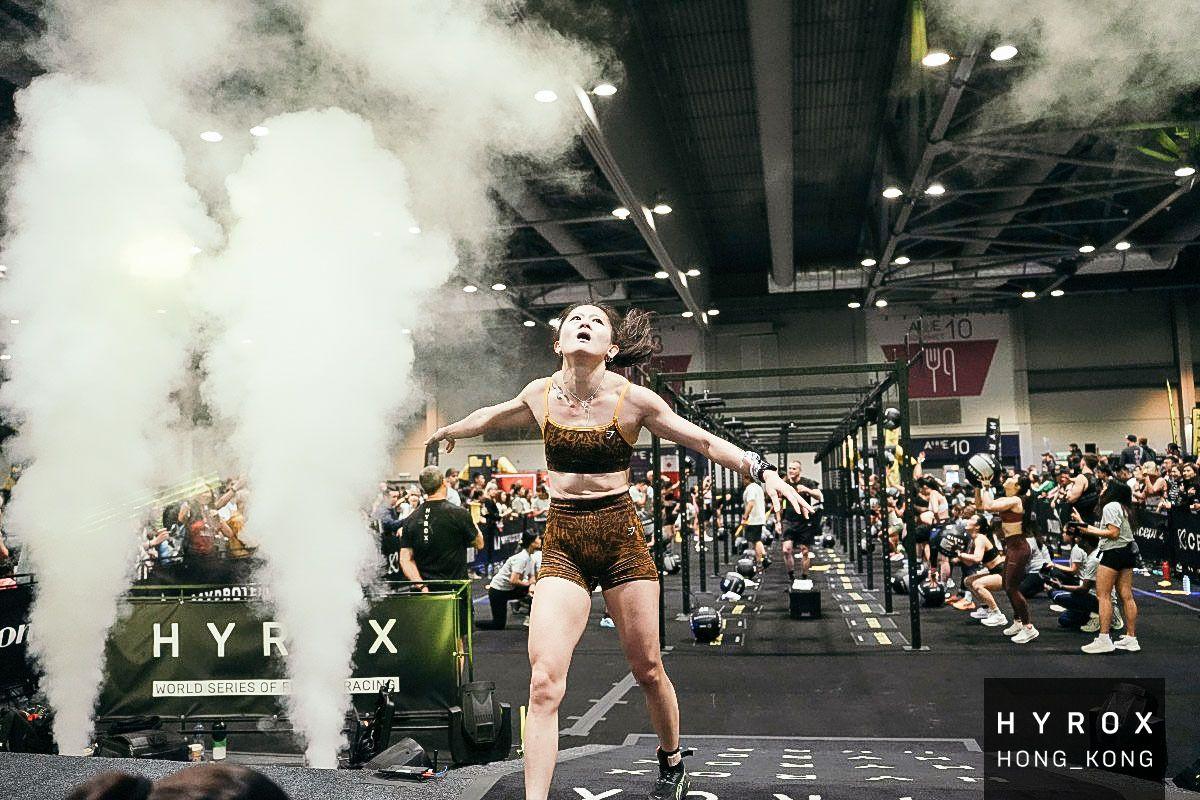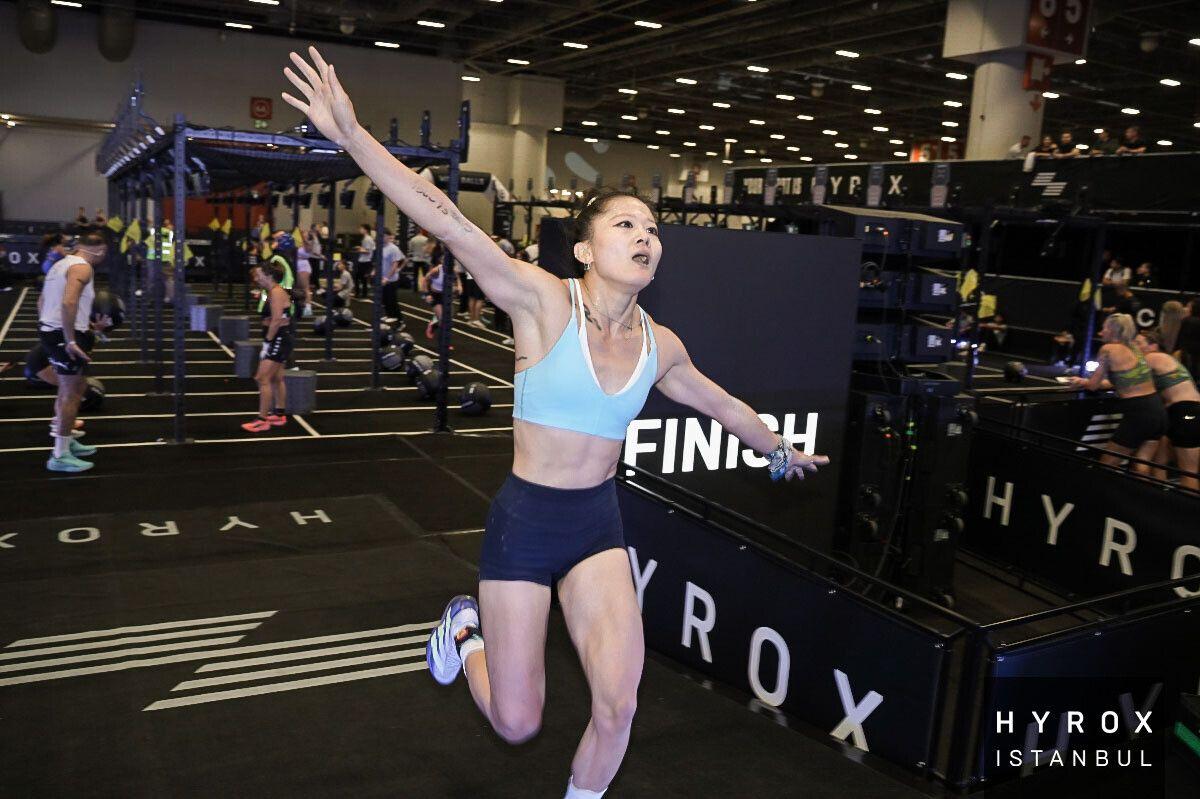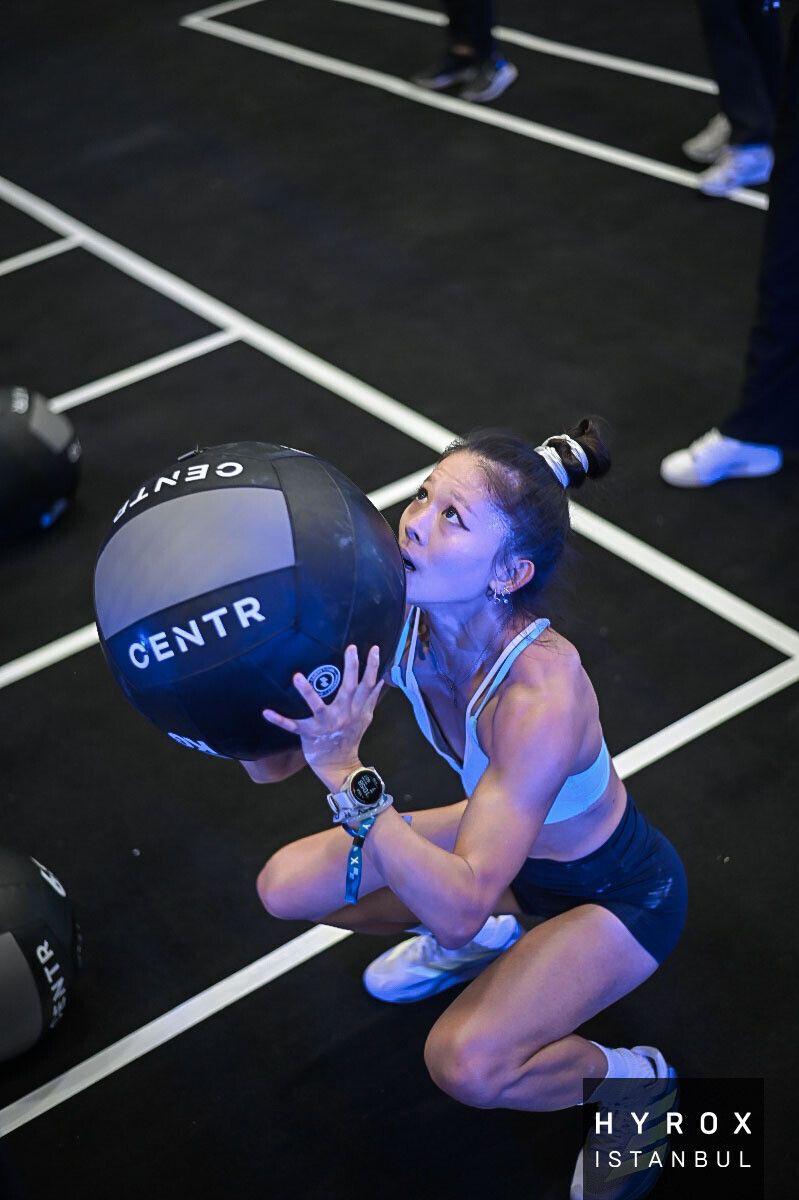
Hi everyone! I'm Pauline Yu (PYY), Taiwan's only 4× Hyrox World Championship qualifier. There was a period — about two years into my competitive Hyrox journey — where I was convinced that more was always better. I was training six, sometimes seven days a week, stacking SkiErg sessions on top of heavy sled push days, barely sleeping, and telling myself that exhaustion was just weakness leaving the body. It wasn't. By the time I flew to a major competition in Europe, my legs felt like concrete, my motivation had flatlined, and I posted one of my worst race times ever. That result broke something open in me, and it forced me to completely rethink what sustainable Hyrox training frequency actually looks like — not just for elite athletes in general, but specifically for women competing at the highest level in Asia and beyond.
Key Takeaways
- ▸Training six days a week is absolutely sustainable for women's elite Hyrox athletes — but only when each session has a clear purpose and intensity is varied deliberately across the week so your body can adapt without breaking down.
- ▸Avoiding overtraining as a woman means paying close attention to your hormonal cycle and adjusting training load accordingly — what feels hard on day 21 of your cycle might feel easy on day 7, and that difference matters enormously for recovery quality.
- ▸Sleep is your most powerful recovery tool — I prioritise a minimum of eight hours every night during heavy training blocks, and I treat anything less than seven hours as a red flag that requires me to scale back intensity the following day.
- ▸Nutrition timing around sessions — especially adequate protein intake within 30 to 60 minutes of finishing a hard workout — is a non-negotiable pillar of sustainable athlete training that many recreational Hyrox athletes in Taiwan and across Asia consistently underestimate.
- ▸Your one true rest day each week should be genuinely restful — not a sneaky active recovery day loaded with extra running — because the adaptation and hormonal reset that happens during full rest is what allows six quality training days to exist in the first place.
How I Learned the Hard Way That Volume Isn't the Same as Progress
When I first started competing seriously in Hyrox in Taiwan, I looked at the training schedules of some of the top European and North American women and tried to copy them wholesale. They were running high weekly mileage, doing heavy functional fitness work, and seemingly never resting. What I didn't see — what I couldn't see from their social media highlights — was how meticulously periodised their programmes were, how much their coaches were managing fatigue in the background, and how many years of accumulated aerobic base those athletes had built before they could handle that volume. I was essentially trying to drive at 200 kilometres per hour in a car that was still being assembled. The result was predictable: persistent shin splints, disrupted sleep, irritability, and a creeping feeling that I dreaded going to the gym — which, for someone who genuinely loves training, was the biggest warning sign of all. Hyrox training frequency isn't just about how many days you show up. It's about whether the days you show up are actually making you better.
Once I accepted that truth, I sat down with my coach and rebuilt my week from scratch. The core principle we worked from was simple: every single session needed a purpose that was different enough from the session before it that my body had a reason to recover and adapt. Gone were the back-to-back high-intensity days. Instead, we mapped the week so that hard efforts were always followed by something that demanded technical focus at low intensity, or genuine active recovery, or targeted strength work that didn't spike my cardiovascular system. The shift was dramatic. Within six weeks I was training the same number of days — six — but I was finishing each week feeling sharper, not flatter. That experience taught me more about sustainable athlete training than any article I've ever read, and it's the foundation of everything I'm going to share with you in this post.
- ▸Map your week before it starts: write down the primary stimulus for each session — speed, strength, endurance, or technique — and make sure no two high-intensity sessions fall on back-to-back days without a deliberate buffer between them.
- ▸Track your subjective readiness every morning using a simple 1-to-10 score for sleep quality, mood, and muscle soreness — if two or more scores fall below 5, consider swapping that day's hard session for something lower in intensity rather than pushing through and digging a deeper recovery hole.
- ▸Use your one weekly rest day as a true anchor for the whole programme — schedule it after your longest or most demanding training day so that your body gets the recovery window exactly when it needs it most, rather than placing it arbitrarily mid-week.
- ▸Review your training block every three to four weeks and honestly ask yourself whether your performance in sessions is trending upward — if it's stagnating or declining, that's the most objective sign that your Hyrox training frequency or intensity distribution needs recalibration.
The Women-Specific Recovery Strategies That Changed Everything for Me
Here's something I rarely saw discussed in the Hyrox community when I first started — especially in Taiwan and across the broader Asian fitness scene — and that's the very real impact of the female hormonal cycle on training capacity and recovery speed. I used to ignore this completely. I'd follow a fixed training plan with zero adjustments week to week, and I'd beat myself up on the days when I felt like I was running through treacle, convinced I was being mentally weak. It took working with a sports physiologist to understand that my progesterone and oestrogen fluctuations were legitimately shifting my perceived exertion, my core temperature during exercise, my glycogen storage capacity, and even my ligament laxity. This isn't a minor rounding error — it's a significant physiological reality that, once I started working with it instead of against it, completely transformed how I approached avoiding overtraining as a woman competing at the elite level.
Practically speaking, what this means for your six-day training week is that you should front-load your highest-intensity and highest-volume sessions into the follicular phase of your cycle — roughly the first two weeks after your period starts — when oestrogen is rising and your body's capacity for hard work and fast recovery is genuinely at its peak. Then, as you move into the luteal phase — the two weeks before your next period — you shift toward maintaining fitness rather than chasing new performance highs. Your strength sessions become slightly lower in load, your running intervals get shorter recovery windows or reduced volume, and you pay extra attention to carbohydrate intake because your body's demand for glucose increases during this phase. I implemented this in my own training in Taiwan and within one full cycle I noticed I was sleeping better, my mood was more stable across the month, and perhaps most importantly, I stopped having those crushing 'bad training weeks' that had previously derailed my confidence and my consistency. This is one of the most underused tools in women's elite Hyrox performance anywhere in the world.
- ▸Download a period tracking app and log it alongside your training diary — after two to three months you'll start seeing clear patterns in which days you feel strongest, recover fastest, and which days you need extra sleep or lower intensity to feel good the next morning.
- ▸Increase your carbohydrate intake by approximately 10 to 15 percent during your luteal phase to support elevated resting metabolic rate and reduce the cravings that often derail nutrition plans — fuelling adequately during this phase is a recovery strategy, not a setback.
- ▸Schedule your hardest race simulations and time trials during your follicular phase whenever possible — I do this religiously before every major Hyrox competition block, and the performance data I collect from those sessions is significantly more representative of my race-day capacity than data collected mid-luteal phase.
Building the Daily Habits That Hold a Six-Day Week Together Long-Term
Sustainable Hyrox training isn't just about what happens inside the gym or on the track. It's about the architecture of your entire day, and whether the choices you make between sessions are supporting or slowly eroding your ability to train hard the next time you lace up. I learned this lesson gradually over years of competing out of Taiwan, travelling across Asia for races, and watching other incredibly talented female athletes flame out because they trained brilliantly but lived chaotically. The habits I'm going to share with you aren't sexy or complicated — honestly, that's exactly the point. The most sustainable training frameworks are always built on boring, unglamorous daily disciplines that compound invisibly over months and years until one day you realise you've been training six days a week for three consecutive years without a single overtraining crash.
The single biggest daily habit I credit for my longevity in this sport is what I call 'deliberate wind-down.' Every night, no matter how busy life gets — and if you're a working athlete in Taiwan juggling training with a career and family, you know how relentless that pressure can feel — I spend at least 20 minutes before bed doing something that actively lowers my nervous system arousal. This might be light stretching, breathwork, reading, or simply sitting quietly without my phone. The quality of sleep I get after a proper wind-down versus a night where I scroll until I crash is not even remotely comparable. And since sleep is the single most important recovery variable in any sustainable athlete training programme, protecting sleep quality is protecting every single session that follows. I also eat a full, protein-rich dinner rather than skimping on evening calories — under-eating at night is one of the most common mistakes I see among female athletes who are trying to manage body composition while also training hard, and it wrecks recovery in ways that take weeks to diagnose.
- ▸Set a non-negotiable phone-down time at least 45 minutes before you want to be asleep — this single habit has more impact on next-day training quality than almost any supplement or recovery gadget you could buy, and it costs absolutely nothing.
- ▸Eat at least 30 grams of high-quality protein at every main meal throughout your training day — not just post-workout — because muscle protein synthesis requires a sustained amino acid supply across the full 24-hour recovery window, not just a single post-session shake.
- ▸Build a short but consistent morning check-in ritual before every session — even five minutes of intentional breathing and a quick body scan helps you arrive at training present and aware rather than distracted, and it dramatically reduces the risk of training through early warning signs of overreaching that your body is always trying to send you.
What the Research Says
The science genuinely backs up what I've learned the hard way through years of personal training experience. Research published in the British Journal of Sports Medicine has consistently shown that non-functional overreaching — the clinical term for what most of us would call overtraining — is significantly more common in female endurance and functional fitness athletes than is widely recognised, and that hormonal disruption is often the earliest measurable marker, appearing well before performance declines become obvious. This aligns exactly with my own experience: my mood and sleep were deteriorating weeks before my race times started dropping. The BJSM literature also highlights that recovery modalities need to be matched to training load, not just tacked on as an afterthought. Meanwhile, research in the Journal of Strength and Conditioning Research has repeatedly demonstrated that training frequency can remain high — five to seven sessions per week — without negative adaptations, provided that intensity distribution follows a polarised or pyramidal model where the majority of sessions sit at genuinely low intensity and only a small proportion involve high-effort work. When I restructured my own Hyrox training frequency along these lines, the results were immediate and lasting. The science wasn't telling me to do less. It was telling me to be smarter about what I was doing — and that's a message I now carry into every single training week.
Frequently Asked Questions
Q: Is it really safe for women to train six days a week for Hyrox, or is that only for elite athletes? A: Honestly, six days a week is accessible to more people than you'd think — but the key word is 'structured.' I'd never recommend jumping straight to six days if you're currently training three or four. Build up one day at a time over several months, and make sure your new session is genuinely lower in intensity than your existing hard days. What makes six days work for me as a women's elite Hyrox athlete in Taiwan is that probably three of those six days are at an effort level where I could hold a full conversation throughout the session. That low-intensity volume is what lets the hard days land without crushing me. So if you're adding a sixth day, make it easy — a Zone 2 run, a technique-focused SkiErg or rowing session, or a mobility-based strength circuit. Don't add a sixth hard day and wonder why you're exhausted by Thursday.
Q: How do I know if I'm overtraining versus just having a hard week? A: This is the question I get asked most often by female athletes across Asia, and my honest answer is: track your resting heart rate every morning. A resting heart rate that creeps up by five or more beats per minute above your personal baseline for three or more consecutive days is one of the clearest objective signals that your body is under-recovering. Beyond that, pay attention to your mood — genuine overtraining often shows up as irritability, low motivation, and a feeling of dread about sessions you normally enjoy, well before your performance data deteriorates. For me personally, the earliest warning sign was always sleep quality. I'd start waking up at 3am for no reason, and that was my body's way of waving a red flag. If you catch these signs early and take one or two extra easy days immediately, you can usually course-correct without losing weeks of training momentum.
Q: What does a realistic six-day Hyrox training week actually look like for you? A: My week typically follows a rhythm like this — Monday is a strength-focused session targeting my weakest Hyrox stations, usually sled and wall balls. Tuesday is a hard aerobic day, something like a long threshold run or a demanding SkiErg interval session. Wednesday I drop the intensity right down — technique work, easy rowing, maybe some sandbag carries at conversational effort. Thursday is my race simulation day, where I put several Hyrox stations together under race conditions. Friday is a gym strength session at moderate intensity. Saturday is either a long easy run or a group training session in Taipei with training partners — the social energy makes it feel effortless. Sunday is my full rest day, no exceptions. That structure has kept me healthy, competitive, and genuinely excited about training for years, and I genuinely believe any woman who loves Hyrox and wants to compete seriously can build something similar with enough patience and self-awareness.
Thank you so much for reading — this topic is genuinely close to my heart because I've lived both sides of it, and I know how demoralising it feels to love a sport and watch your body refuse to keep up with your ambition. You deserve a training life that's both ambitious and sustainable, and I promise those two things are not mutually exclusive. If you want more honest, experience-based Hyrox training content like this — written from the perspective of a Taiwanese woman competing on the world stage — come subscribe at paulineyuyu.com. New articles and training tips every week. See you there!
Sources: British Journal of Sports Medicine / Journal of Strength and Conditioning Research
Taiwan's elite HYROX Pro athlete and 4× World Championship qualifier. I share my training journey, race insights, and performance notes from the competition floor.