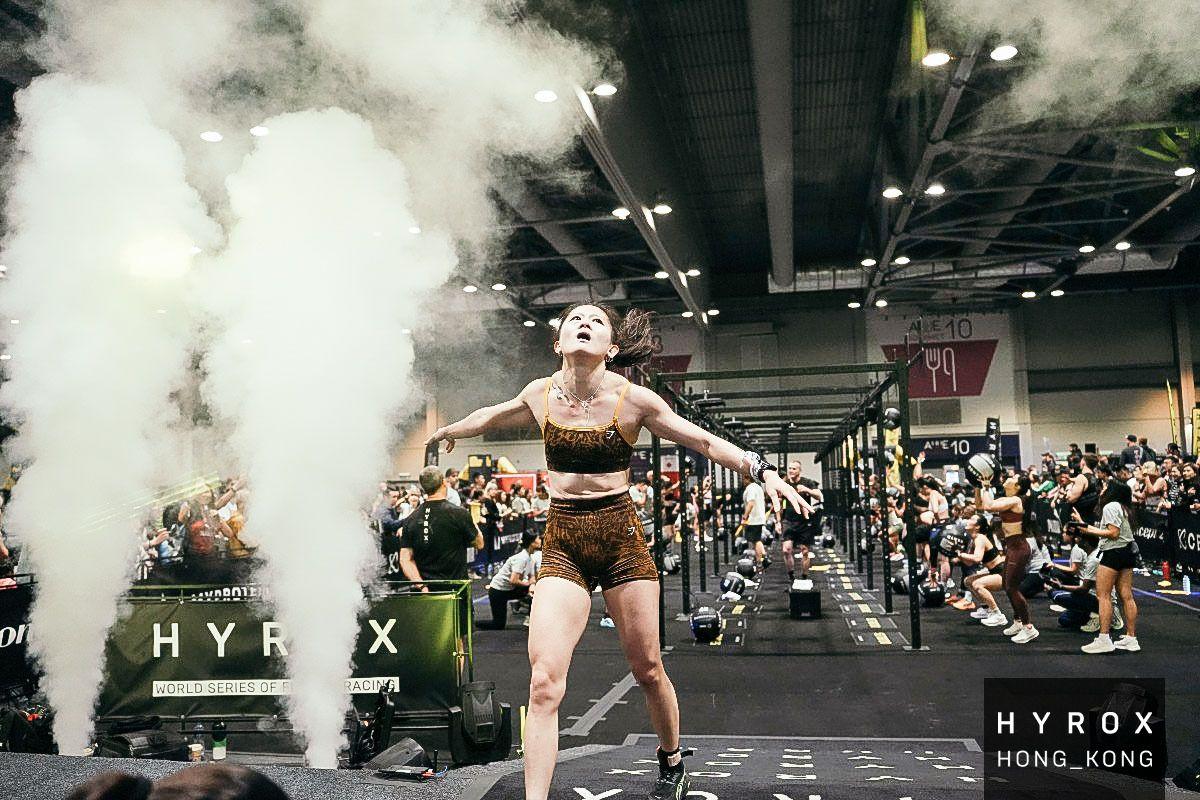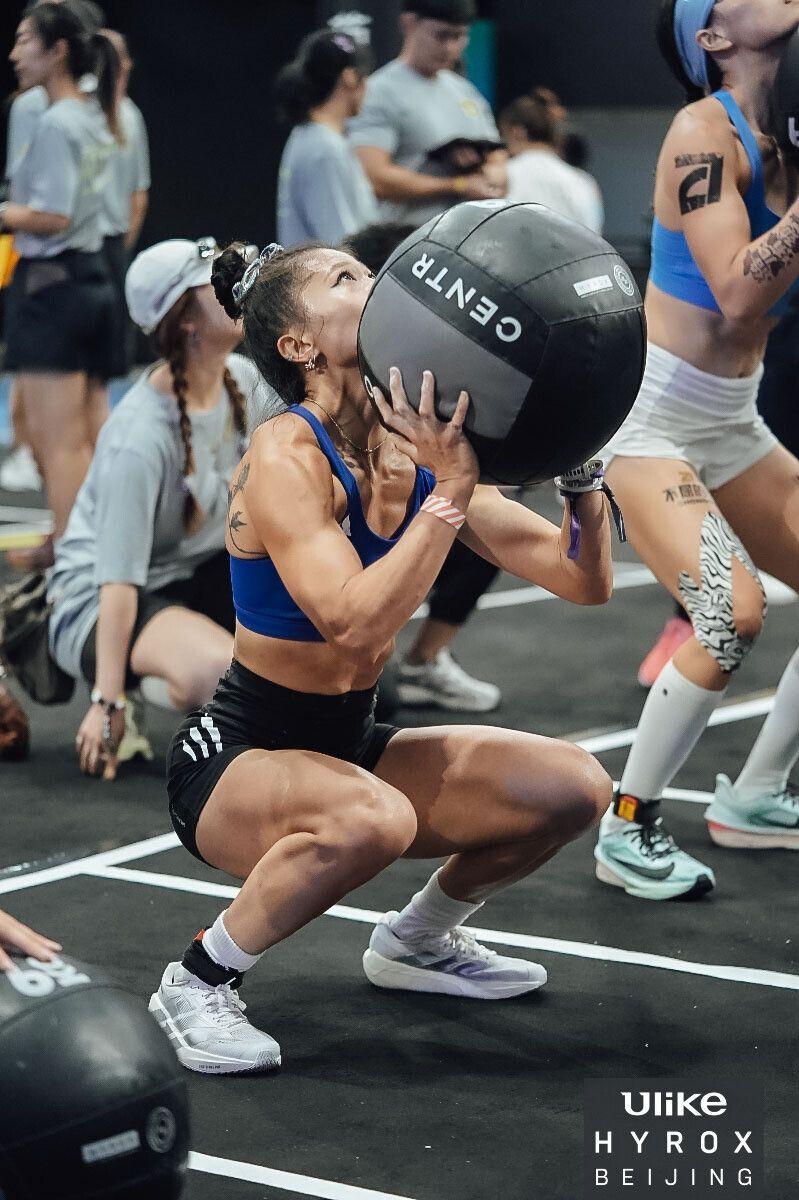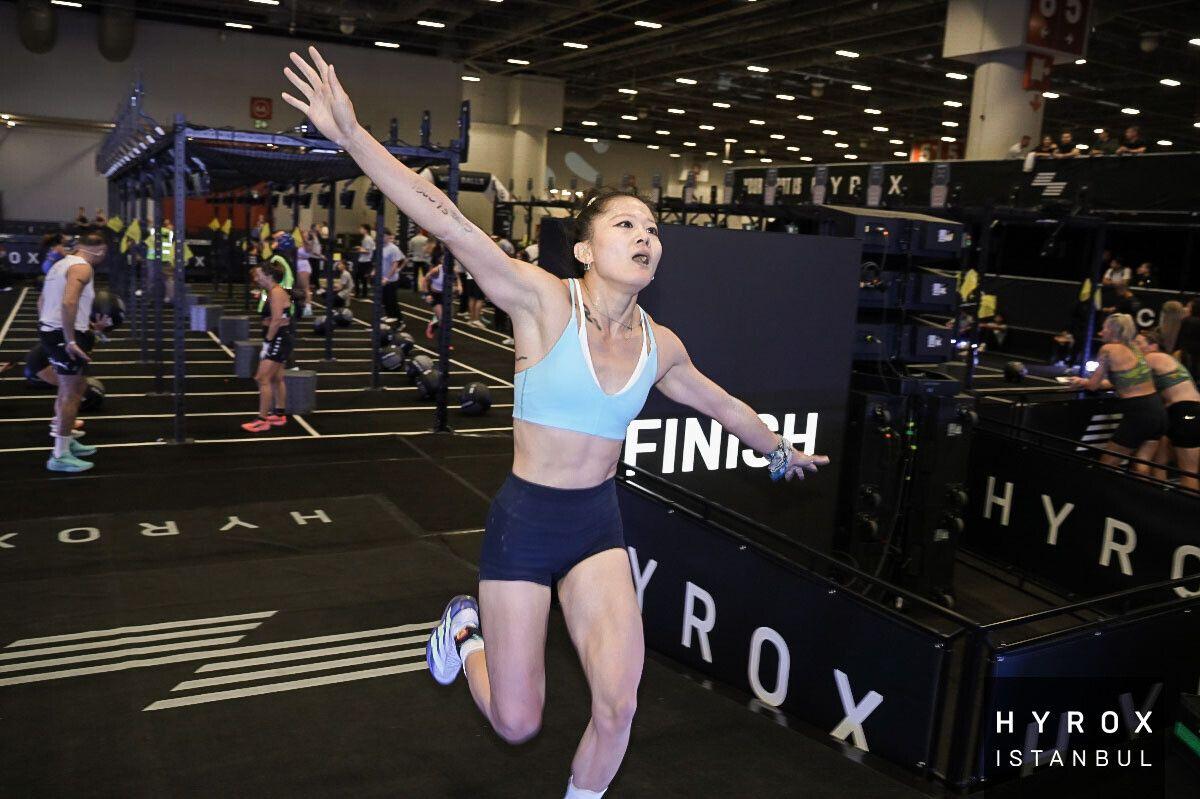
Hi everyone! I'm Pauline Yu (PYY), Taiwan's only 4× Hyrox World Championship qualifier. I still remember standing in the gear area before my very first Hyrox World Championship, surrounded by athletes decked out in all kinds of kit — thick gloves, wild shoes, full-length compression tights — and feeling completely overwhelmed. I had no idea what was necessary and what was marketing fluff. I made some expensive mistakes that first year: I bought shoes that were great for running but destroyed my feet on the sled push, and I skipped gloves entirely because I thought I was tough enough. Spoiler: I was not. After four World Championship appearances and countless races across Asia and Taiwan, I've tested enough gear to know exactly what belongs in a solid Hyrox gear checklist and what's just taking up space in your race bag.
Key Takeaways
- ▸Your shoes are the single most impactful piece of gear in any Hyrox gear checklist — choose a hybrid trainer that can handle both running kilometres and loaded functional movements without sacrificing grip or support on the sled push.
- ▸Hyrox compression tights or calf sleeves genuinely help reduce muscle oscillation and perceived fatigue during the running portions, especially in the back half of the race when your legs are already screaming from Ski Erg and wall balls.
- ▸Hyrox sled gloves are non-negotiable if you want to push the sled without shredding your palms — thin, grippy gloves designed for pushing, not lifting, are the category you should be shopping in.
- ▸Women's elite Hyrox athletes often run lighter and more minimalist than their male counterparts — prioritise weight and breathability over maximum cushion, because every extra gram adds up over eight kilometres of running.
- ▸Do not try any new gear on race day — every single item in your Hyrox gear checklist must be tested in training at least three to four times before you pin on your bib, or you risk hot spots, blisters, and unexpected restrictions in movement.
Shoes: The Biggest Gear Decision You'll Make
I got this badly wrong in my early races. My first Hyrox, I wore a popular road running shoe — great stack, great energy return, wonderful for pure running. And for the first two running segments, I felt amazing. Then I hit the sled push. The high heel drop and soft foam midsole meant I had almost zero control when I was driving into the ground at a low angle. My feet slipped inside the shoe, I lost power, and I finished that sled station feeling like I'd burned twice the energy I should have. I came home to Taiwan after that race and immediately started testing hybrid trainers. The shoe category that works best for Hyrox is what I'd call a 'cross-training runner' — something with a wide, stable forefoot, a relatively flat heel-to-toe drop (around four to eight millimetres tends to work well for most people), and an outsole with actual grip. You need that shoe to carry you through approximately eight kilometres of running, plus sled push, sled pull, and burpee broad jumps where your foot needs real traction against the floor.
In my experience racing across Asia, including multiple events in Taiwan and Singapore, the athletes who struggle most with shoe choice are the ones who optimise for only one thing. Pure runners choose a maximalist shoe and hate the sled. CrossFit athletes choose a flat lifter and die on the running segments. The best shoes for Hyrox live in the middle — and luckily, several major brands now make shoes specifically targeting this hybrid need. When you're shopping, I'd suggest going to a store and actually running in the shoe while also doing some lateral shuffles and a low-angle push against a wall to mimic sled mechanics. Your foot should feel locked in and confident at that pushing angle, not sloppy or sliding forward inside the upper. For women's elite Hyrox specifically, I also pay close attention to the women's-specific last — a shoe built on a men's last that's been narrowed down often doesn't hold a woman's heel securely, and heel slippage during the run is a blister waiting to happen.
- ▸Look for a heel-to-toe drop between four and eight millimetres — this range gives you enough heel support for running economy while keeping you low and powerful during sled push and other ground-contact functional movements.
- ▸Prioritise a wide, stable forefoot platform over maximum stack height — during burpee broad jumps and the rowing machine, a wobbly, high-stack shoe will cause micro-instabilities that add up to real fatigue over a full race.
- ▸Always train three or four long runs in your race shoes before competition day — I wear mine for at least two full mock-race sessions so I know exactly how my feet feel at kilometre seven, not just kilometre one.
- ▸If you're a woman shopping for the best shoes for Hyrox, actively seek out models built on a women's-specific last rather than a scaled-down men's version — heel lock and midfoot security matter enormously for the sled and for long-run comfort.
Hyrox Compression and What It Actually Does for Your Race
Okay, let's talk Hyrox compression — because this is a topic where there's a lot of noise and not a lot of signal. When I first started racing, I wore compression tights because they looked good and felt tight and athletic. That's honestly it. I had no real understanding of what they were doing for my body. Over time, racing and training with and without compression gear, I developed a much clearer picture. The primary benefit I notice — and this matches what sports science generally supports — is reduced muscle oscillation during the running segments. When your quad and calf muscles vibrate less with each foot strike, you accumulate less micro-fatigue over time. In a race that involves eight kilometres of running split into segments, that compounding effect is real. I also find that compression tights help me feel more 'contained' and aware of my body position during the wall ball and sandbag movements, which is a more psychological benefit but still a real one.
The question I get all the time from athletes in Taiwan and across Asia is: full tights or calf sleeves? My honest answer is that it depends on your personal heat tolerance. Taiwan's race venues can get very warm, and I've raced in conditions where full-length compression tights made me overheat noticeably in the second half of the race. On cooler race days or in air-conditioned venues, full tights are my preference because they support the quads, hamstrings, and calves all at once. In warmer conditions, I switch to calf sleeves only and leave the upper leg bare. The calf sleeve still gives me the lower-leg compression benefit during running and reduces the shin tightness I tend to get during the Ski Erg and sled pull, without cooking me alive. Whatever you choose, make sure the compression level is firm enough to actually do something — loose, cheap tights that stretch out after twenty minutes of movement are not giving you the benefit you paid for.
- ▸Choose graduated compression tights with at least fifteen to twenty millimetres of mercury compression at the ankle — anything lighter than this is essentially just a fashion choice and won't meaningfully reduce muscle oscillation during the running segments.
- ▸In hot climates like Taiwan or Southeast Asia, consider calf sleeves instead of full-length tights to get the lower-leg compression benefit without the added heat load, which can genuinely slow you down in the back half of the race.
- ▸Test your compression gear during a hard training session that mimics race effort — if the waistband rolls down during sled push or the fabric bunches behind your knee during lunges, find a different brand before race day arrives.
Hyrox Sled Gloves and the Small Gear That Completes Your Kit
The first time I skipped gloves for a sled push, I paid for it immediately. The sled handle grip tape is rough, and when you're pushing for any meaningful distance at race pace, the friction against your palm is intense. By the end of that first gloveless sled station I had raw patches that bothered me for the rest of the race every time I gripped anything — the Ski Erg handle, the rowing machine handle, the sandbag. It was completely avoidable and entirely my fault for thinking gloves were optional. Now, Hyrox sled gloves are in my race bag without exception. What I've found works best is a thin, fitted glove with a silicone or textured palm for grip — not a thick padded lifting glove, which actually reduces your feel for the handle and can cause your hand to fatigue faster because you're over-gripping to compensate for the bulk. Think more along the lines of a cycling glove or a thin work glove with palm grip, rather than a heavy gym glove.
Beyond gloves and shoes and compression, there are a few other small gear items that consistently make the cut in my personal Hyrox gear checklist. A good race belt or bib number system that sits flat and doesn't bounce is worth having — I've lost time at stations fumbling with a bib that got twisted mid-race. I always carry Body Glide or an anti-chafe balm for inner thighs and underarms, because a long race plus wet clothing is a recipe for chafing that you'll feel for days. A lightweight race vest or just a well-fitted singlet in moisture-wicking fabric rounds out the kit. Women's elite Hyrox athletes at the World Championships tend to wear minimal, close-fitting kit for a reason — excess fabric catches air, holds sweat weight, and gets in the way during the burpee broad jumps. Keep it simple, keep it tested, and keep it light.
- ▸Choose thin, grip-palmed gloves for the sled push rather than thick lifting gloves — you want tactile connection with the handle, and a bulky glove forces you to over-grip, which tires your forearms and hands faster than necessary.
- ▸Apply anti-chafe balm to inner thighs, underarms, and any compression seam line before every race — this takes thirty seconds in transition prep and saves you from skin damage that can genuinely ruin the experience of a race you trained months for.
- ▸Use a flat, low-profile race number belt rather than safety-pinning your bib directly to your kit — a twisted or flapping bib is a small distraction that compounds over eight kilometres, and a good belt keeps everything secure without adding restriction.
What the Research Says
I'm not someone who just goes off feel — I like to know there's science backing up the choices I make in my kit. Research in the British Journal of Sports Medicine has consistently shown that compression garments reduce perceived muscle soreness and support faster recovery in endurance and hybrid sport contexts, with the most reliable benefit appearing during the exercise bout itself in the form of reduced muscle oscillation and improved proprioception. That proprioception finding is actually really relevant for Hyrox specifically — having a tighter, more 'connected' feeling in your lower body during multi-modal movements like lunges, wall balls, and sled work helps you move more efficiently and with better body awareness. Research published in the Journal of Strength and Conditioning Research has also broadly supported the idea that footwear stability and heel-to-toe drop meaningfully affect ground contact mechanics during loaded functional movements — which is exactly why shoe selection matters so much in a sport like Hyrox where you're running and then immediately loading your body in a very different mechanical pattern. These aren't abstract findings for me. I've felt the difference in my own body over four World Championship races, and the science lines up with the practical reality I experience on the race floor.
Frequently Asked Questions
Q: Do I really need special shoes for Hyrox, or can I just use my normal running shoes? A: This is honestly the most common question I get from athletes in Taiwan who are doing their first Hyrox. The short answer is: your normal running shoes will get you through the race, but they may cost you time and comfort at the functional stations. Standard running shoes — especially high-stack, high-drop models — are not designed for the low, driving angle of a sled push, and you'll likely feel unstable and lose power transfer. A hybrid trainer or cross-training shoe will serve you significantly better across the full race format. It's an investment worth making if you're planning to race more than once.
Q: Is Hyrox compression actually worth the money, or is it just marketing? A: I was sceptical for a long time too. But after years of testing, my honest answer is: yes, quality compression is worth it, but the keyword is quality. Cheap tights that have no real compressive force are just leggings — they're not doing anything for your muscles. Proper graduated compression at a meaningful pressure level does reduce muscle vibration during running, and that adds up over a full Hyrox race with eight kilometres of total running distance. I notice the difference most in how my legs feel during the fifth and sixth running segments, when accumulated fatigue is at its peak. Invest in one or two good pairs rather than four pairs of low-quality ones.
Q: What type of gloves should I use for the Hyrox sled push, and do I keep them on the whole race? A: I keep my Hyrox sled gloves on for the entire race because putting them on and taking them off mid-race wastes time and creates a transition fumble point. For glove type: go thin and grippy, not thick and padded. You want maximum feel for the handle with just enough protection to prevent palm abrasion. Cycling-style gloves with silicone palm grip, or thin work gloves with a rubberised palm, are my go-to categories. Avoid heavy gym gloves — they're designed for gripping a barbell, not pushing a sled handle at speed, and the bulk will work against you.
Thank you so much for reading — gear decisions might seem like the boring part of Hyrox prep, but getting this right genuinely removes friction on race day and lets you focus entirely on performance. If you want more training tips, race-day strategies, and honest gear reviews from a Taiwanese woman who has actually stood on the World Championships floor four times, come find me at paulineyuyu.com and subscribe for regular updates. See you at the start line!
Sources: British Journal of Sports Medicine / Journal of Strength and Conditioning Research
Taiwan's elite HYROX Pro athlete and 4× World Championship qualifier. I share my training journey, race insights, and performance notes from the competition floor.