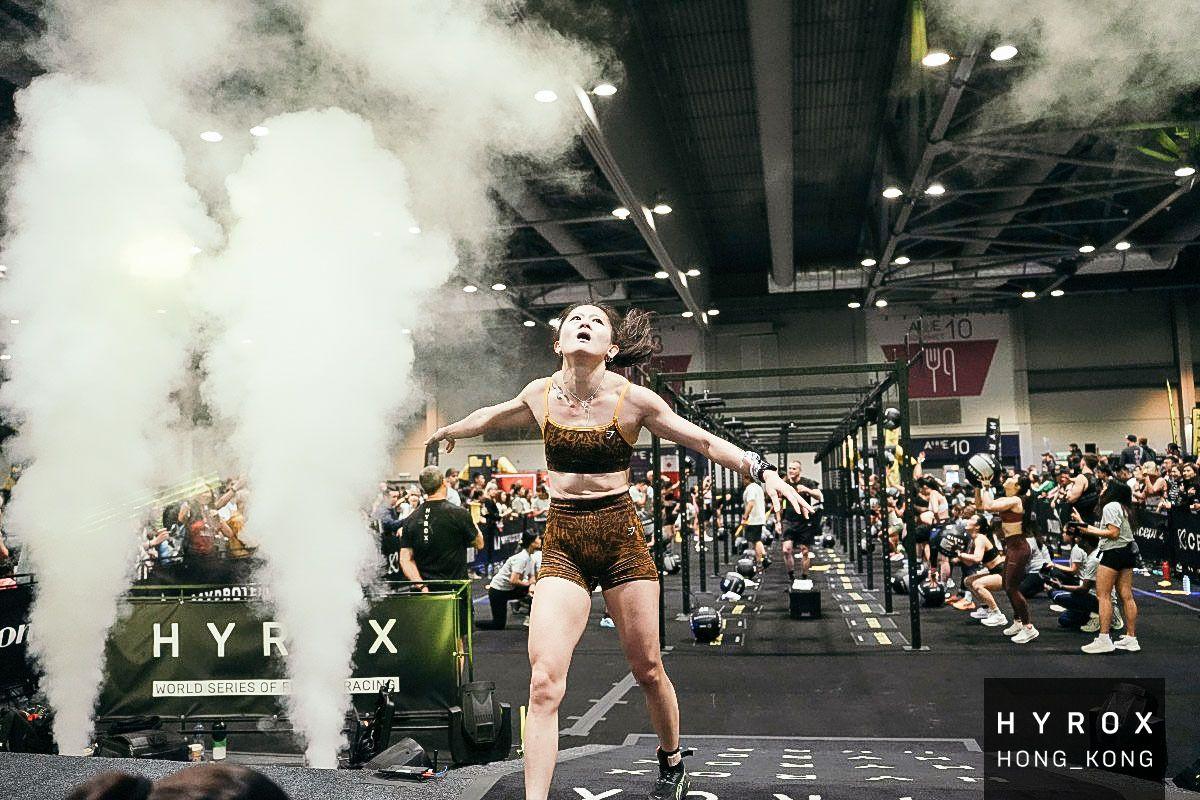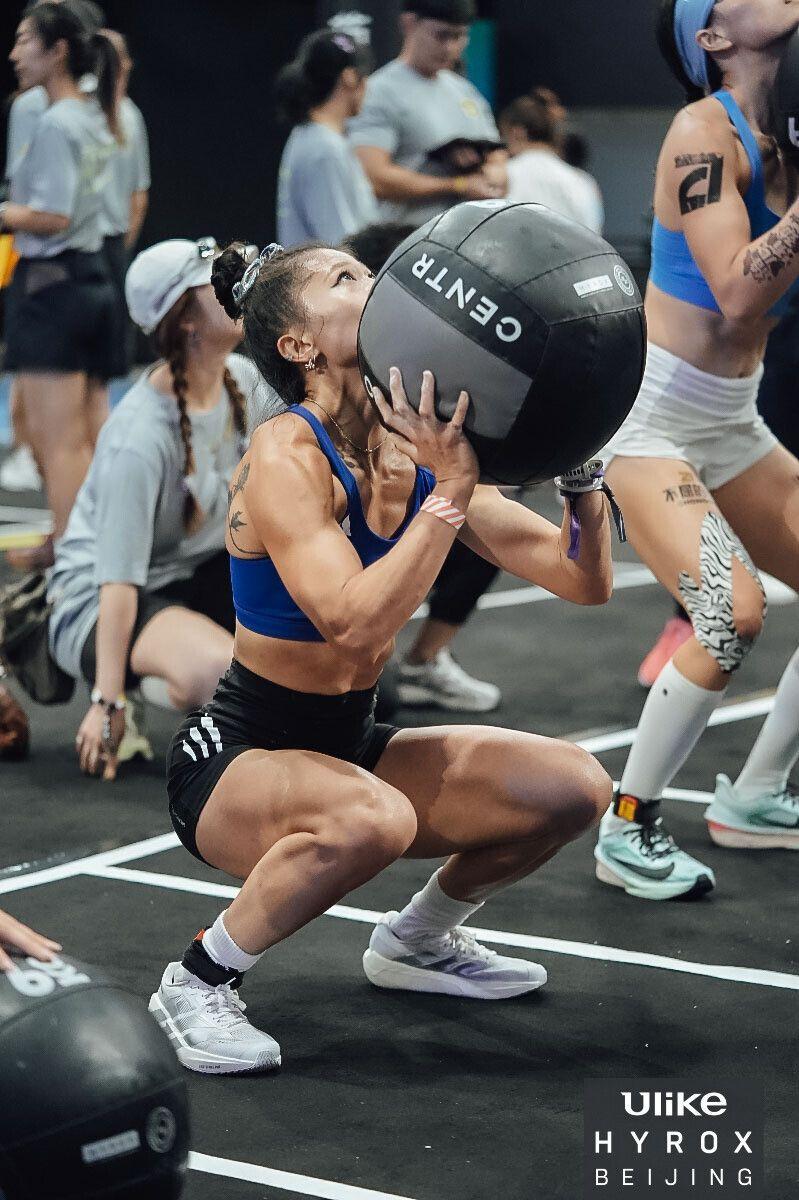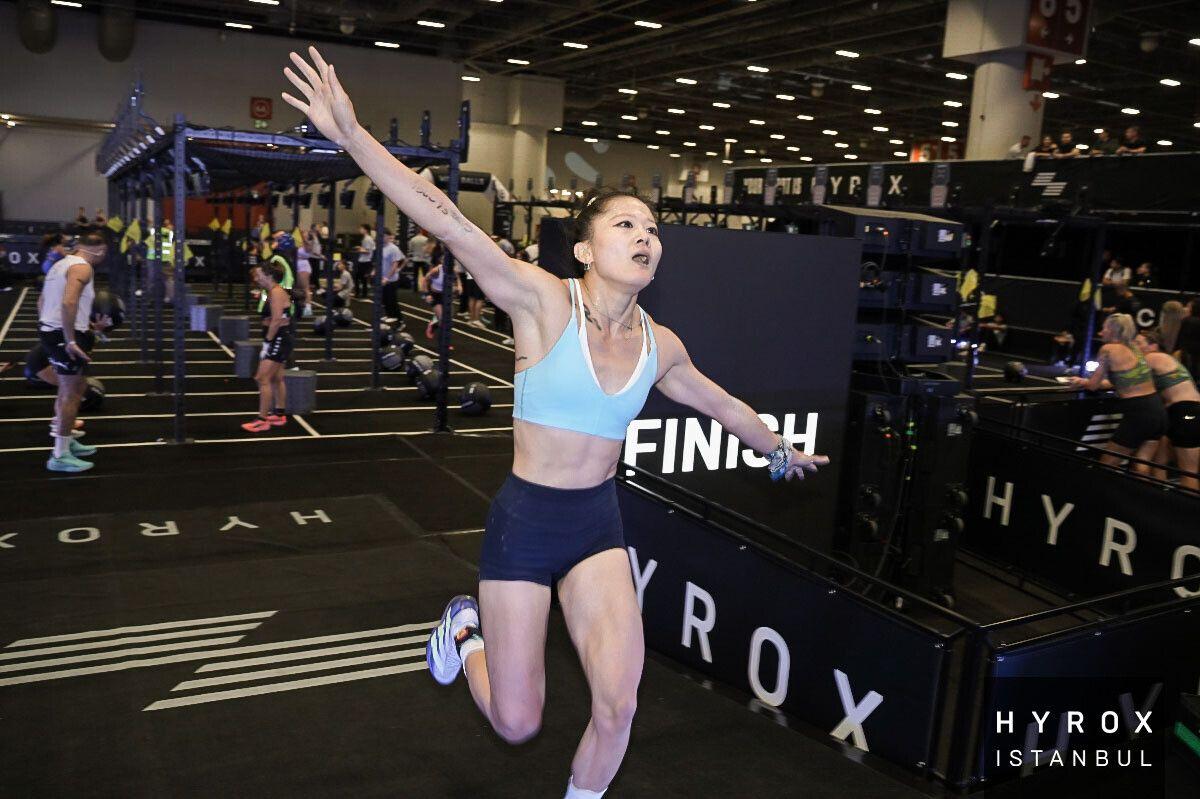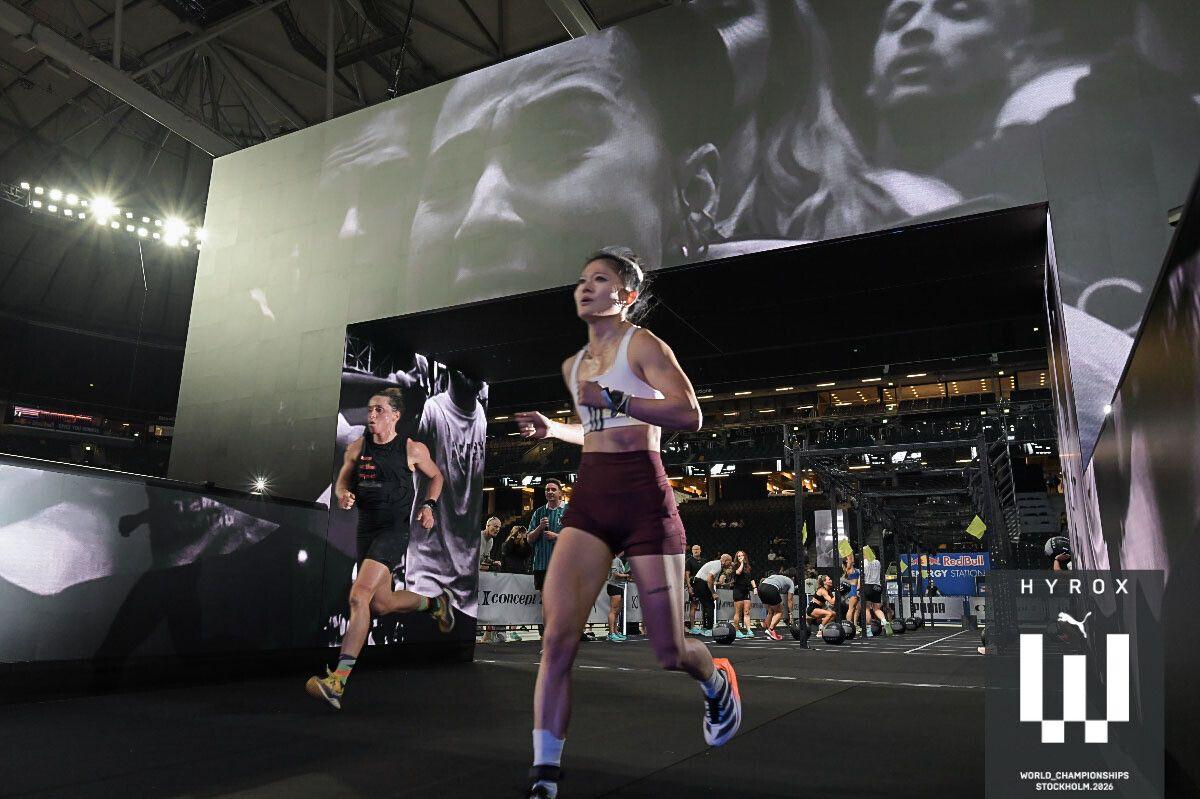
Hi everyone! I'm Pauline Yu (PYY), Taiwan's only 4× Hyrox World Championship qualifier. I still remember standing on the start line at my very first Hyrox race in Asia, looking around and thinking — where are all the women? The field was tiny, the energy was uncertain, and honestly, I wasn't sure if this sport would ever catch fire here the way it had in Europe. Fast forward to today, and I get genuinely emotional seeing the wave of Taiwan women Hyrox athletes showing up at regional qualifiers, pushing each other harder than ever, and making noise on the Asian Hyrox women rise leaderboards. Something has shifted in a real, irreversible way — and I've had a front-row seat to all of it.
Key Takeaways
- ▸Taiwan women Hyrox athletes have grown from a niche handful into a legitimate competitive force in Asia over just a few years, driven by community, social media visibility, and a culture of shared training.
- ▸The Asian Hyrox women rise is not accidental — it's the result of structured training programs, dedicated coaches entering the space, and women choosing to compete rather than just participate.
- ▸Taiwan female athletes in Hyrox tend to excel at the running segments and ski erg, but building strength for the sled push and pull remains a key area of focused development for most newcomers.
- ▸Women's elite Hyrox is fiercely competitive globally, and Asian athletes — especially from Taiwan, Singapore, and Japan — are closing the gap on European rivals with smart, sport-specific training methodologies.
- ▸If you're a woman in Taiwan or anywhere in Asia considering your first Hyrox race, the community around you is the biggest performance tool you have — find your training group and start now.
- ▸Consistency over intensity is the non-negotiable principle I've seen separate the women who improve season after season from those who plateau — show up every week and trust the cumulative process.
Where It All Started: The Early Days of Women in Asian Hyrox
When I first started competing in Hyrox, the women's categories in Asia were genuinely sparse. I remember registering for one of the earlier Asian races and being told that the women's pro division barely had enough athletes to fill a heat. That stung a little, honestly — not because of ego, but because I knew what this sport could offer women and I desperately wanted others to discover it. The format of Hyrox — eight kilometers of running broken up by eight functional fitness stations — is uniquely suited to the strengths many women already have: aerobic endurance, movement efficiency, and the mental grit to push through discomfort over a sustained effort. I knew that if more women just tried it, they'd be hooked.
What changed the trajectory, from what I've observed and lived through, was a combination of things hitting at the same time. Social media started amplifying women's Hyrox results in Asia. A few key athletes — including myself, I'd like to hope — started posting their training journeys openly and honestly, showing not just the podium moments but the ugly 5 AM sessions and the failed sled pushes. That authenticity resonated. Women in Taiwan, Singapore, Hong Kong, and Japan started tagging each other, forming WhatsApp groups, showing up to the same boxes. The community dynamic became self-reinforcing, and the numbers at races began to swell in a way that felt almost sudden, even though the groundwork had been laid quietly over years.
- ▸If you want to grow the women's Hyrox community in your city, the most effective thing you can do is race publicly and share your experience honestly — your vulnerability will attract more women than any polished highlight reel ever will.
- ▸Look for local Hyrox-affiliated gyms and ask them specifically about women's training groups — more boxes in Taiwan and Asia now run gender-specific prep sessions that address the unique strength and strategy gaps women face in this format.
- ▸Don't wait until you feel ready to register for your first race — the registration deadline itself becomes the training anchor that makes everything click into a purposeful structure that casual gym sessions never provide.
- ▸Follow Asian Hyrox women athletes on social media not just for inspiration but for tactical intel — watching how top Taiwan female athletes pace their runs and manage transitions is genuinely instructional if you pay close attention.
What Makes Taiwan Women Such a Competitive Force in Asian Hyrox
I get asked this a lot — why Taiwan specifically? And I think it comes down to a few cultural and structural factors that happen to align perfectly with what Hyrox demands. Taiwanese women have a deep running culture. Marathons in Taiwan are massively popular, and the base aerobic capacity that comes from years of long-distance running translates directly into Hyrox performance. When you can run eight kilometers at a solid pace under fatigue, you've already solved one of the sport's biggest puzzles. But the women who are really breaking through aren't just runners who wandered into Hyrox — they're athletes who took their running base and systematically layered functional strength on top of it. That combination is genuinely hard to beat.
There's also something about the Taiwanese training mentality that I find unique and powerful. When Taiwanese women commit to something, they do it with a seriousness and consistency that I genuinely admire — even from the outside looking in, and I'm one of them. I've trained alongside women who were managing full-time corporate jobs, family responsibilities, and a Hyrox prep block simultaneously, and they showed up to every single session without complaint. That work ethic, combined with increasingly sophisticated coaching infrastructure across Taipei and other major cities in Taiwan, means the quality of training is rising fast. Coaches who understand zone 2 running, lactate threshold work, and how to program the specific demands of each Hyrox station are no longer rare in Taiwan — they're becoming the norm.
- ▸If you have a running background, lean into it — your aerobic engine is a genuine asset in Hyrox, but make sure you're also spending at minimum two sessions per week on the strength elements like sled work, burpee broad jumps, and wall balls so race day isn't the first time your legs understand the combination.
- ▸Find a coach who programs specifically for Hyrox, not just general fitness — the sport has distinct demands around pacing under fatigue, transition speed, and station-specific technique that generic CrossFit or running programs simply don't address adequately.
- ▸Use the Hyrox app and race results database to benchmark yourself against other Asian women athletes — knowing where you sit in the regional rankings gives you concrete targets and makes your training decisions sharper and more motivated.
The Road Ahead: What It Will Take to Keep the Momentum Going
The rise of Taiwan women in Hyrox and the broader Asian Hyrox women rise story is genuinely exciting — but I'd be doing a disservice if I pretended there aren't still real barriers to work through. One of the biggest is the strength gap. Hyrox women's pro category requirements, particularly around the sled push at 102 kilograms and the sled pull at 78 kilograms, demand a level of raw functional strength that many women in Asia — who come predominantly from endurance sport backgrounds — haven't trained for systematically. I've personally spent entire training cycles prioritizing nothing but sled-specific strength and posterior chain development, and it still takes consistent months of dedicated work to move those weights at speed without wrecking your run pace. This is an area where Asian women are improving fast, but it requires intentional programming.
Beyond the physical, I think the biggest lever for continued growth in women's elite Hyrox across Asia is visibility and storytelling. When young women in Taiwan or Singapore or Manila see someone who looks like them, who trains in similar conditions, competing at the Hyrox World Championships in Hamburg — it shifts what feels possible. I feel the weight of that representation genuinely. Every time I post a race recap or share a training session, I'm aware that somewhere, a woman is watching and deciding whether this sport is for her. My hope is that she decides yes — and then finds her community, builds her program, and eventually stands on that start line herself, looking around and seeing a full women's field that we all helped build together.
- ▸Prioritize sled-specific strength training for at least one dedicated session per week — the sled push and pull are where time is most commonly lost by women athletes in Asia, and targeted progressive loading over a twelve-week block produces significant improvement in both power output and recovery between stations.
- ▸Share your Hyrox journey publicly and specifically — even if you're a complete beginner, your honest progress posts contribute to the cultural shift that makes other Asian women feel seen, included, and capable of entering this sport.
- ▸Attend at least one major Asian Hyrox race as a spectator or volunteer before you compete — seeing the women's pro and elite divisions in person changes your perception of what's achievable and gives you concrete visual targets for your own preparation and race execution.
What the Research Says
The science actually backs up what I've observed anecdotally in the Taiwan women Hyrox community. Research consistently published in the British Journal of Sports Medicine has shown that concurrent training — combining endurance and strength work in the same program — produces superior performance outcomes in mixed-modality sports compared to either discipline trained in isolation. This is essentially the Hyrox formula, and it explains why women who arrive with a strong aerobic base and then add structured strength work tend to improve so rapidly once they commit to the sport. The adaptation window can be dramatic. Additionally, the Journal of Strength and Conditioning Research has documented that women respond to resistance training with relative strength gains that are proportionally comparable to men, meaning there's no physiological reason why female athletes can't develop the sled strength and functional power that Hyrox demands — it simply requires the same deliberate programming and progressive overload that any serious strength athlete would apply. I've experienced both sides of this personally: the years when I neglected my strength training and hit a ceiling in my Hyrox times, and the seasons when I finally committed to a proper concurrent program and watched my performance numbers move in ways I hadn't seen in years. The research and lived experience point in the same direction.
Frequently Asked Questions
Q: I'm a woman in Taiwan who runs marathons but has never done functional fitness — am I ready for Hyrox? A: Honestly, you're in a better position than you probably think. Your aerobic base is one of the most valuable assets in Hyrox, and the running segments — eight one-kilometer runs spread through the race — will feel familiar even under the fatigue from the stations. The main adjustment you'll need to make is building familiarity with the eight stations themselves: ski erg, sled push, sled pull, burpee broad jumps, rowing, farmer's carry, sandbag lunges, and wall balls. I'd recommend spending eight to twelve weeks doing at least two station-specific sessions per week before your first race. Start light, focus on technique, then build load. The transition from marathon runner to Hyrox competitor is actually one of the most natural pathways into this sport, and I've seen many Taiwanese women make it smoothly with a focused prep block.
Q: How long did it take you personally to qualify for the Hyrox World Championships the first time? A: It took me more attempts and more frustration than I expected, and I want to be honest about that because I think the highlight reel version of athletic journeys does a disservice to everyone watching. My early races had significant weaknesses — my strength stations were costing me enormous amounts of time, and I wasn't pacing my runs intelligently. I was going too hard on the first few kilometers and dying by station five. It took a full season of deliberate work on those specific gaps, plus learning to race with a heart rate monitor and actually trust the data over my competitive instincts, before I hit the qualifying standard. So my honest answer is: expect it to take at least one to two full seasons of structured training and racing, and treat each race as a data collection event rather than a pass-or-fail test.
Q: What's the single most common mistake you see Asian women making in their first Hyrox race? A: Going out too fast on the first kilometer run — without question. I see it at every race I attend, and I did it myself early in my career. The atmosphere, the music, the adrenaline, the fact that the people around you are also sprinting — it all conspires to make you run your first kilometer thirty to sixty seconds per kilometer faster than you've planned. And you pay for it brutally by station four or five, when your legs simply don't have what they need for the sled work. My specific advice: have a very clear target pace for your first run kilometer, probably ten to fifteen seconds per kilometer slower than your comfortable race pace, and hold it as a non-negotiable. Your ego will hate you in kilometer one. Your finish time will thank you enormously at the end.
I hope this gives you a real sense of what's happening in the Taiwan and Asian women's Hyrox scene — because something genuinely special is being built right now, and I want every woman reading this to feel like she's part of it. Whether you're lining up for your first race or chasing a World Championship qualifying time, you are contributing to a movement bigger than any individual result. Come find us, train with us, race with us. And if you want more training content, honest race recaps, and deep-dive programming guides, head over to paulineyuyu.com and subscribe — I share everything I know, and I'm not done learning yet. See you on the start line.
Sources: British Journal of Sports Medicine / Journal of Strength and Conditioning Research
Taiwan's elite HYROX Pro athlete and 4× World Championship qualifier. I share my training journey, race insights, and performance notes from the competition floor.