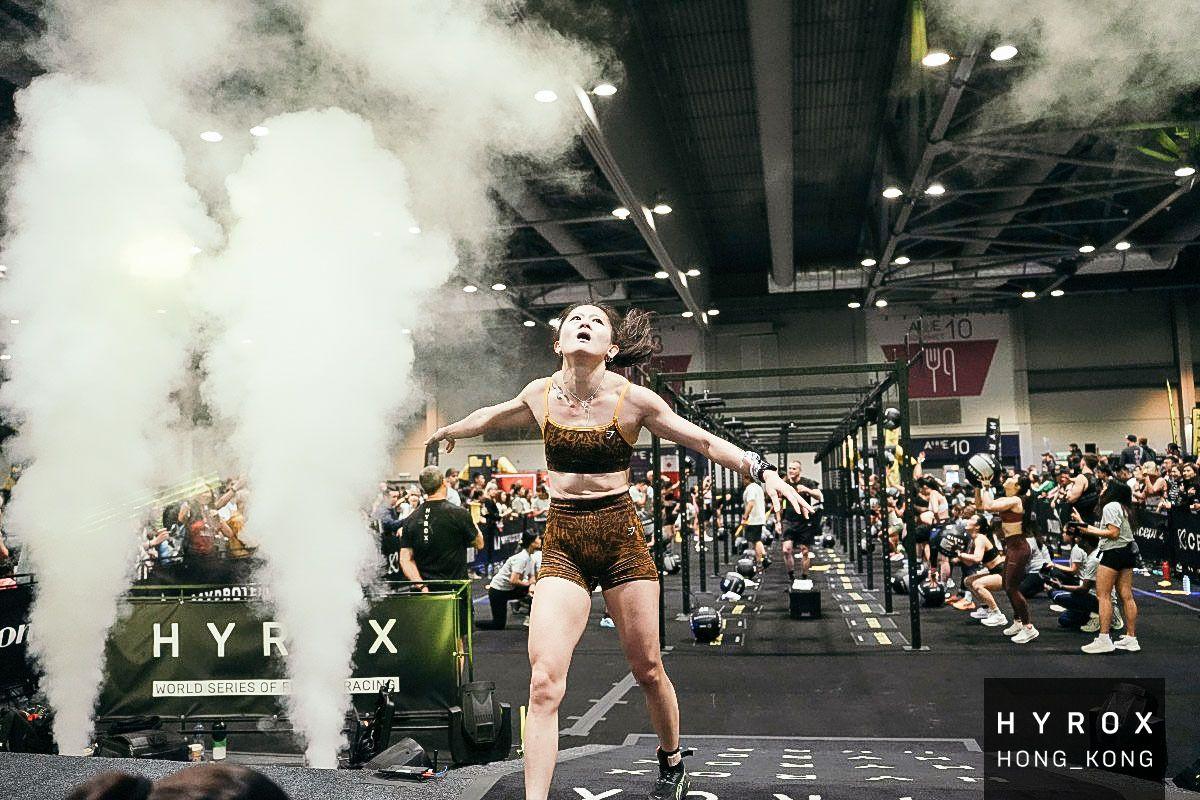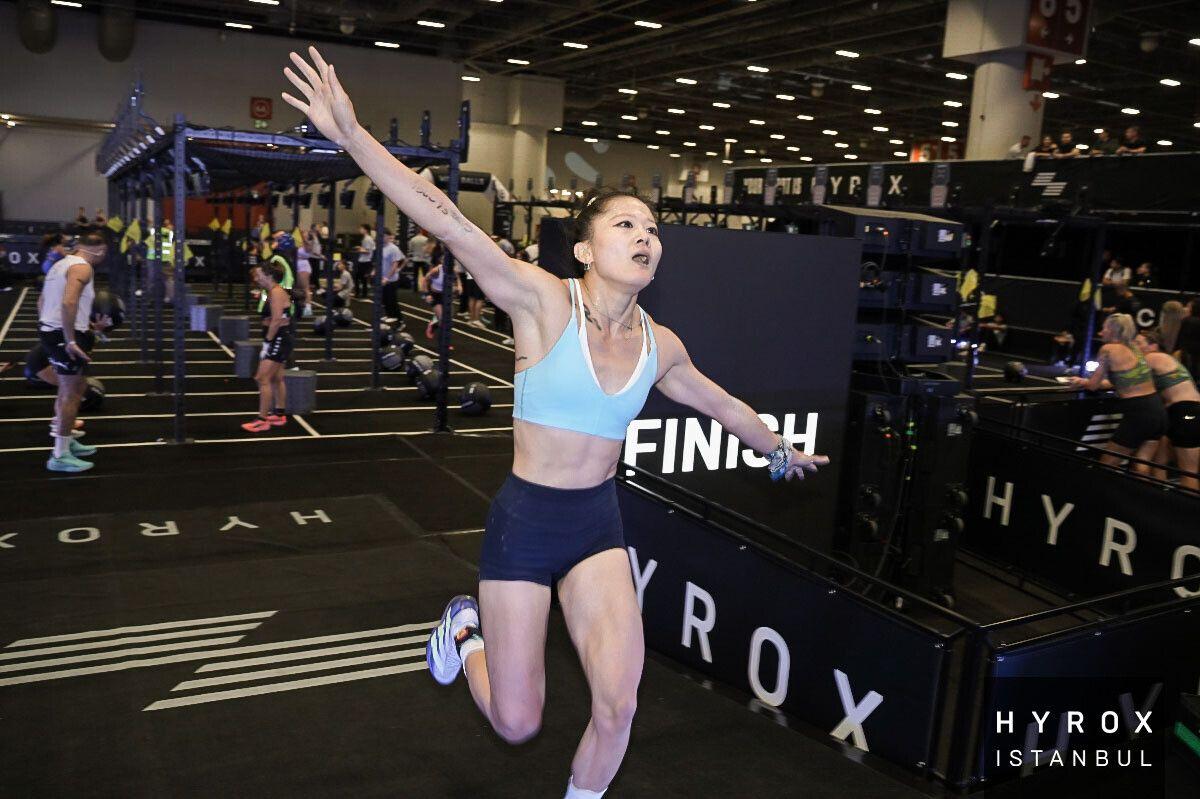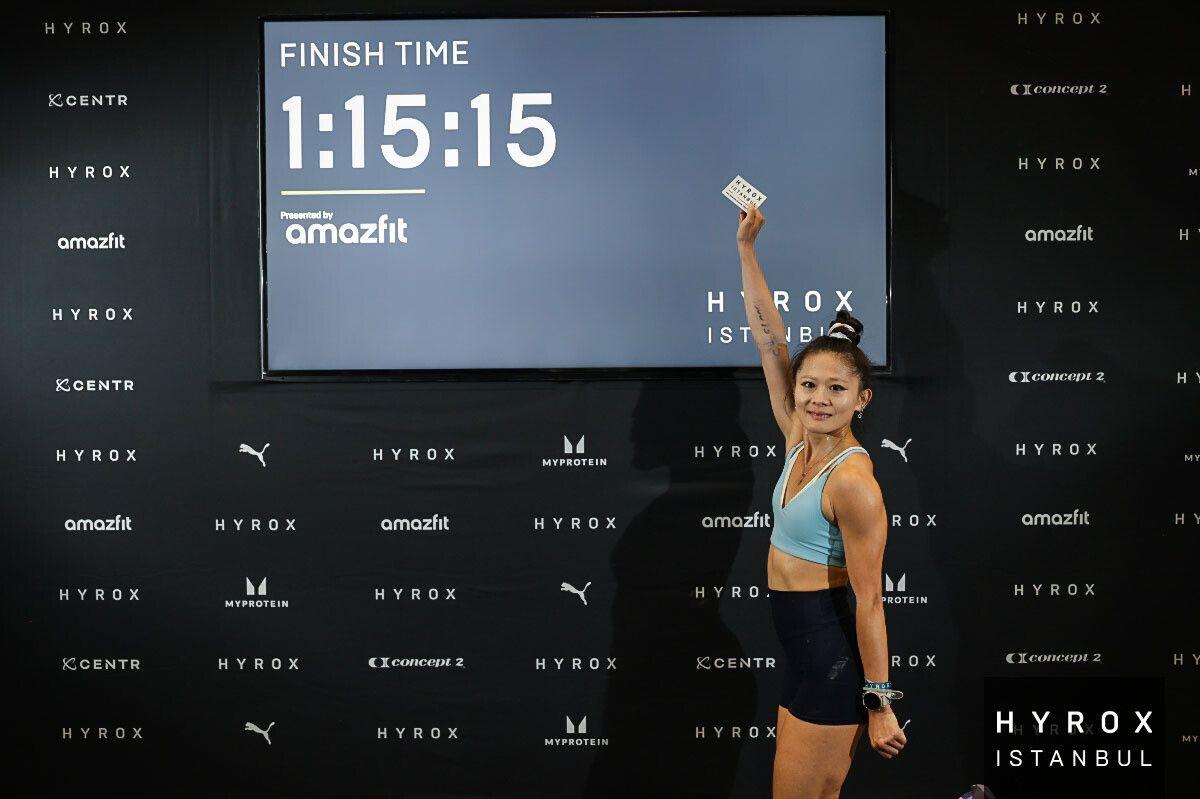
Hi everyone! I'm Pauline Yu (PYY), Taiwan's only 4× Hyrox World Championship qualifier. Standing in the start corral at HYROX Istanbul, the heat hit me before the starting horn even did. August in Turkey is no joke — the venue was warm, the crowd was electric, and somewhere in the back of my mind I was already calculating how badly the temperature was going to affect my ski erg splits. Racing on the other side of the world with athletes from dozens of countries is exactly why I fell in love with Hyrox in the first place. This is my full, honest HYROX Istanbul race report — the good, the messy, and everything in between.
Key Takeaways
- ▸Heat acclimatisation is not optional for a summer race in Istanbul — I should have arrived at least five days early and done two or three short shakeout sessions in warm conditions to let my cardiovascular system adapt before race day.
- ▸Pacing the first two kilometres of the run conservatively paid off enormously in the back half of the race, where I was able to maintain form through the Farmers Carry and the final Wall Balls while others were visibly fading around me.
- ▸The Ski Erg in warm conditions drains your shoulders and heart rate faster than in a cool venue — dropping my stroke rate by about five percent from my usual pace helped me arrive at the Sled Push with enough left in the tank.
- ▸Sodium and hydration strategy matters more than most athletes think at international races — I pre-loaded with electrolytes the evening before and sipped a sodium drink between station transitions, which I genuinely believe saved my performance in the final two kilometres.
- ▸Racing internationally as a woman from Asia and Taiwan means you carry a certain pride onto that floor — and I've learned that energy, when channelled correctly, becomes a genuine competitive advantage rather than a distraction or pressure.
- ▸Post-race reflection is a skill, not an afterthought — taking twenty minutes to write notes immediately after finishing (before the endorphins and exhaustion scramble your memory) is something I now treat as a non-negotiable part of my race process.
The Race Itself: What Happened Between the Start Horn and the Finish Line
The moment the horn sounded, I reminded myself of the one thing my coach and I had repeated all week: do not go out too fast. HYROX Istanbul's women's elite field was stacked — there were European athletes who race on their home continent every month, which means they're acclimatised, race-sharp, and hungry. My strategy going in was to run the first kilometre at a pace that felt almost embarrassingly easy, settle into a rhythm, and let the stations do what they do best — which is sort out who prepared properly and who didn't. The ski erg came first, and I immediately felt the warm air making every pull heavier than usual. I kept my damper setting consistent with what I'd practised and focused on keeping my back flat and my breathing rhythmic. I came off the ski erg feeling controlled rather than gassed, which was exactly the plan. The sled push felt solid — I had drilled heavier loads than race weight in training specifically so that the competition weight would feel manageable even when fatigued.
Through the middle stations — Sled Pull, Burpee Broad Jumps, Rowing, Farmers Carry — I kept checking in with my breathing and reminding myself to stay patient. The Burpee Broad Jumps are always a mental battle for me. I find them uniquely demoralising when you're already warm and your heart rate is climbing, because they feel so slow relative to the effort they demand. I've learned over multiple seasons that the worst thing you can do at that station is rush the landing and lose your footing or your rhythm. So I counted every single rep, kept my jumps long and deliberate, and refused to glance at the clock. By the time I reached the Rowing station, I was sitting comfortably within my target heart rate zone and I knew the plan was working. The Farmers Carry in Istanbul felt particularly brutal — the floor surface, combined with the accumulated fatigue, made every step feel like it was costing something I wasn't sure I had. But I kept my grip locked, my shoulders packed, and I walked steadily. That discipline came entirely from training.
- ▸Start the ski erg at a pace that lets you speak a broken sentence — if you're already breathless after the first thirty seconds, you've gone out too hard and the rest of the race will punish you for it.
- ▸During Burpee Broad Jumps, count every rep out loud or in your head rather than watching the clock — this keeps your attention on execution quality rather than time, which actually makes you faster and safer.
- ▸The Farmers Carry rewards athletes who train with slightly heavier loads in practice — when competition weight feels familiar, your grip and posture hold up far better under cardiovascular stress and accumulated fatigue.
- ▸Check in with your breathing every time you transition between a running segment and a station — taking two or three controlled breaths before you pick up an implement can prevent the kind of panicked, inefficient effort that costs you minutes rather than seconds.
What I Got Wrong — and What Istanbul Taught Me About My Own Limits
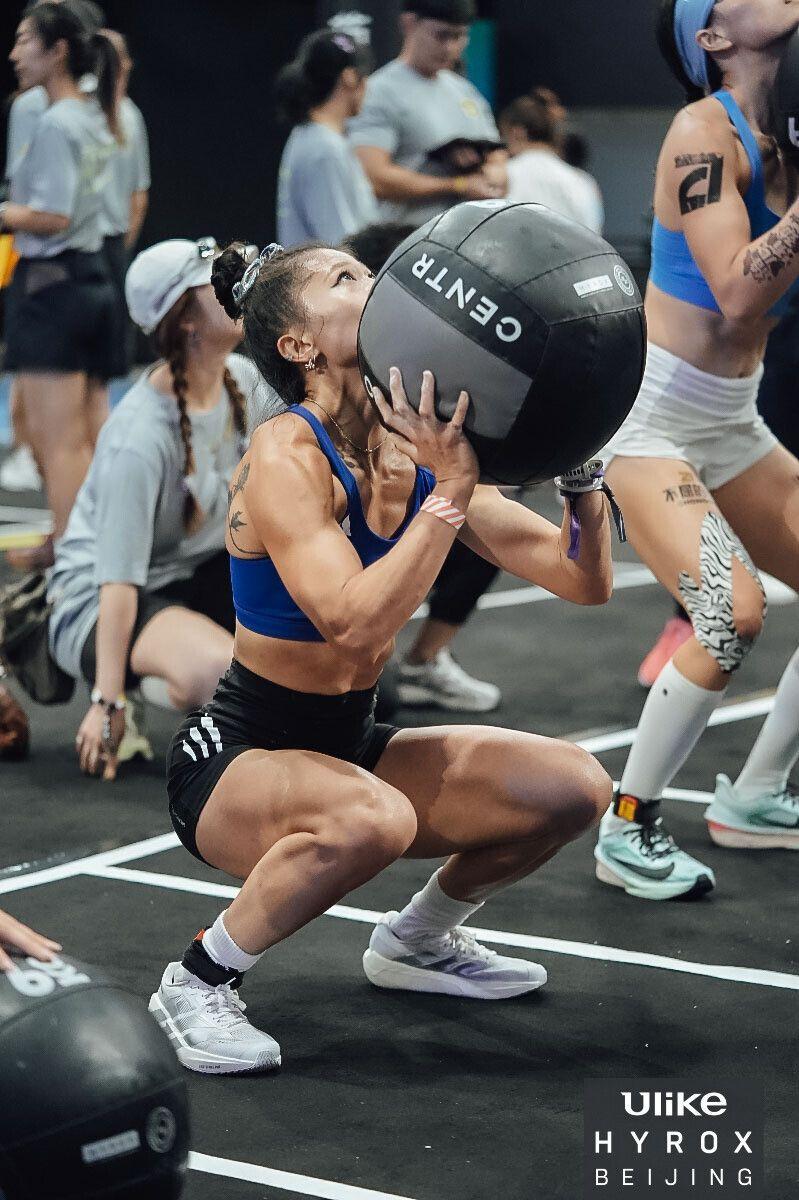
Let me be honest with you, because that's the only way these race reports are actually useful: I underestimated the Wall Balls. I always feel like I have Wall Balls under control in training. I do them regularly, I've dialled in my squat depth and my release height, and I rarely fail reps in the gym. But Wall Balls at the end of a Hyrox race in warm conditions, when your legs have already carried you through eight kilometres of running and seven demanding stations, are a completely different animal. I hit a wall — pun intended — around rep sixty, and my thighs started shaking in a way that told me I hadn't done quite enough race-specific conditioning at that level of accumulated fatigue. I finished the station, but I lost more time there than I'd budgeted for, and it's the single biggest area I'm bringing back to my training block in Taiwan. Specifically, I plan to add more sessions where I do Wall Balls as the final piece of a long, intense training day, rather than fresh or in the middle of a workout.
The other thing Istanbul taught me is how much the international race environment differs from events in Asia. The energy is different, the noise levels are different, and honestly, the competitive field dynamics feel different too. In Asia, I'm often racing with or near athletes who know me and whom I've raced before — there's a familiar rhythm to it. In Istanbul, I was surrounded by athletes I'd never met, from countries I'd never competed in, and I had to rely entirely on my own internal pacing and race sense rather than using anyone else as a reference point. That was uncomfortable at first, but by the halfway mark, I realised it was actually one of the most valuable things I could experience. It forced me to race my own race in a very pure, uncontaminated way. For any women's elite Hyrox athlete in Asia who is considering an international race: go. The discomfort is the point, and it will make you better in ways that domestic racing simply cannot.
- ▸Train Wall Balls at the end of your most fatiguing sessions, not fresh — this simulates the race reality where they come last and your legs have already absorbed enormous workload from running and all preceding stations.
- ▸When racing internationally without familiar competitors nearby, set three internal checkpoints — roughly at station three, station five, and station seven — where you consciously assess effort and adjust pace rather than reacting to those around you.
- ▸If you are a women's elite Hyrox athlete from Taiwan or elsewhere in Asia, entering at least one major international race per year is a development investment that pays back in mental resilience, tactical awareness, and a broader sense of your real competitive level.
Racing in the Heat: How Istanbul Changed My Approach to Warm-Weather Hyrox Competition
I've raced in warm venues before, but August in Istanbul pushed me into new territory. The heat affected everything from my perceived effort on the runs to the way my hands felt gripping the sled handles. One of the most practical lessons I took away is the importance of a warm-up protocol that actually raises your core temperature gradually rather than trying to stay cool until the last second. Before the race, I did a controlled fifteen-minute warm-up that included light running, some dynamic mobility, and a few ski erg pulls — enough to prime my system without draining it. That approach helped the first kilometre of the race feel less like a shock to my body and more like a continuation of movement. I also made the deliberate choice not to wear compression tights, opting instead for shorts, which I know some elite women do differently. For me, in that heat, the trade-off of slightly less muscle support was worth the reduction in thermal stress.
Hydration on race day started the night before. I pre-loaded with a sodium-rich electrolyte drink alongside my dinner, drank consistently through the morning, and had a final small sodium hit about thirty minutes before the start. Between the transition zones — those brief moments where you're moving from the end of one station to the beginning of the next running segment — I used any available hydration stations to take a small sip rather than a large gulp, which I've found sits much better in the stomach under race conditions. I want to be clear that none of this is revolutionary sports science; it's just consistent application of fundamentals that a lot of athletes, including me in earlier races, skip because race-day nerves disrupt routine. The Istanbul heat made it non-negotiable and, strangely, that was a gift — because it forced me to be disciplined in exactly the right ways.
- ▸Begin your race-day warm-up at least twenty minutes before your corral call, with enough intensity to break a light sweat — this primes your cardiovascular system and makes the first running segment feel far less shocking when the horn goes off.
- ▸Pre-load electrolytes the evening before a warm-weather race, not just on race morning — sodium and potassium levels in the body take several hours to truly stabilise, so starting hydration the night before gives you a meaningful physiological advantage.
- ▸If you are training in Taiwan's subtropical climate, your heat adaptation is actually a significant asset at warm venues like Istanbul in summer — lean into it, trust the acclimatisation your daily training environment has already built into your body.
What the Research Says
My experience in Istanbul aligns closely with what established sports science has consistently found about heat stress and endurance performance. Research in Medicine and Science in Sports and Exercise has consistently shown that exercise in warm environments elevates heart rate disproportionately relative to mechanical workload — meaning that the same physical effort genuinely feels harder and places greater strain on the cardiovascular system when ambient temperature is high. This is not a mental weakness; it is a real physiological phenomenon. What this means practically is that athletes who try to hold their usual power output or running pace in the heat will burn through their glycogen and cardiovascular reserves faster than they expect, leading to premature fatigue in the later stages of a race. The solution, as research in the British Journal of Sports Medicine has consistently emphasised, is proactive pacing and hydration — starting more conservatively than feels necessary, and maintaining fluid and electrolyte intake throughout the event rather than waiting until thirst signals appear. For me, every finding from those journals maps directly onto something I felt in my body at HYROX Istanbul. The science isn't abstract — it's the story of what happened between kilometres four and eight when the athletes who ignored it started to fall apart, and those of us who respected it kept moving.
Frequently Asked Questions
Q: How did you handle the jet lag from Taiwan to Istanbul for a race? A: Honestly, three days was not enough — I'd recommend five to seven days minimum for a travel window that large. What I did do was shift my sleep schedule two days before I flew, going to bed and waking up one hour earlier each night to start nudging my circadian rhythm in the right direction. Once in Istanbul, I forced myself to stay on local time immediately, got outside in the morning sunlight, and kept my training sessions at the same time of day I planned to race. It helped, but I still felt that heavy-legged sluggishness in the first half of the race that I think was partly jet lag. Next time, I'm booking flights earlier.
Q: What is the biggest difference between racing women's elite Hyrox in Asia versus at an international race like Istanbul? A: The competitive depth is different, and so is the pace of the field. In Asia, I have a sense of the athletes around me and can make real-time decisions based on who I'm running near. At an international race, I was genuinely surrounded by unfamiliar competitors, which stripped away any external reference points and forced me to race entirely from internal feel. It was disorienting at first but ultimately very clarifying. I also noticed that international venues tend to have a slightly louder, more festival-like atmosphere, which can either energise you or overwhelm you — preparation and mental rehearsal in the weeks before the race helped me channel that energy productively rather than letting it spike my heart rate before the start.
Q: If someone from Taiwan or Asia wants to qualify for a Hyrox World Championship, is entering international races like Istanbul necessary? A: Not strictly necessary, but I personally believe it's one of the most valuable things you can do for your development. The qualification path itself can be achieved through regional races in Asia, but the experience of competing in a large international field — the pressure, the noise, the unfamiliar environment, the travel stress — teaches you things about your own racing mind that domestic competition simply can't replicate. I qualified for Worlds four times, and every single time, the international race experiences I'd gathered in between were a huge part of why I performed when it mattered most. If you have the budget and the opportunity, go race internationally at least once a year. It is worth every uncomfortable moment.
Istanbul, thank you for humbling me and pushing me in equal measure — that's exactly what I needed. If you found this race report useful, I'd love for you to join my community at paulineyuyu.com, where I share training insights, race strategies, and honest reflections from every competition I enter. Subscribe to stay in the loop, and I'll see you at the next race.
Sources: British Journal of Sports Medicine / Medicine & Science in Sports & Exercise
Taiwan's elite HYROX Pro athlete and 4× World Championship qualifier. I share my training journey, race insights, and performance notes from the competition floor.