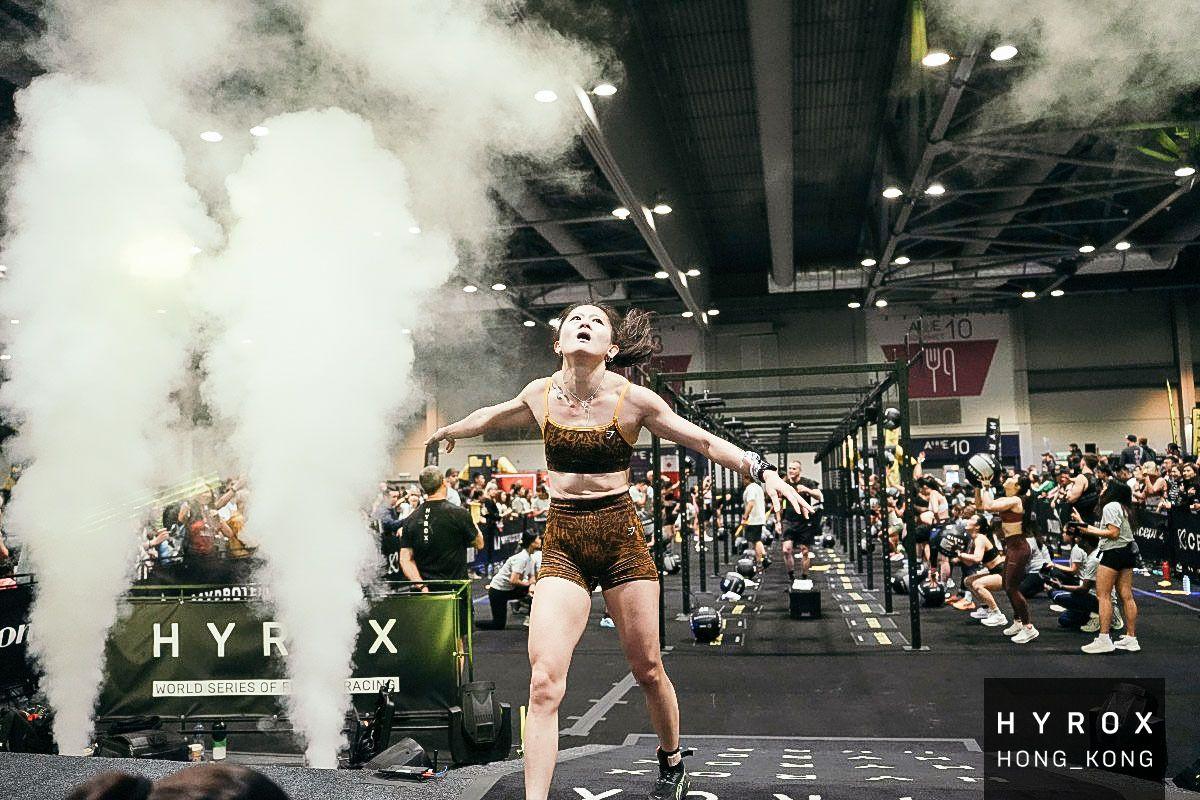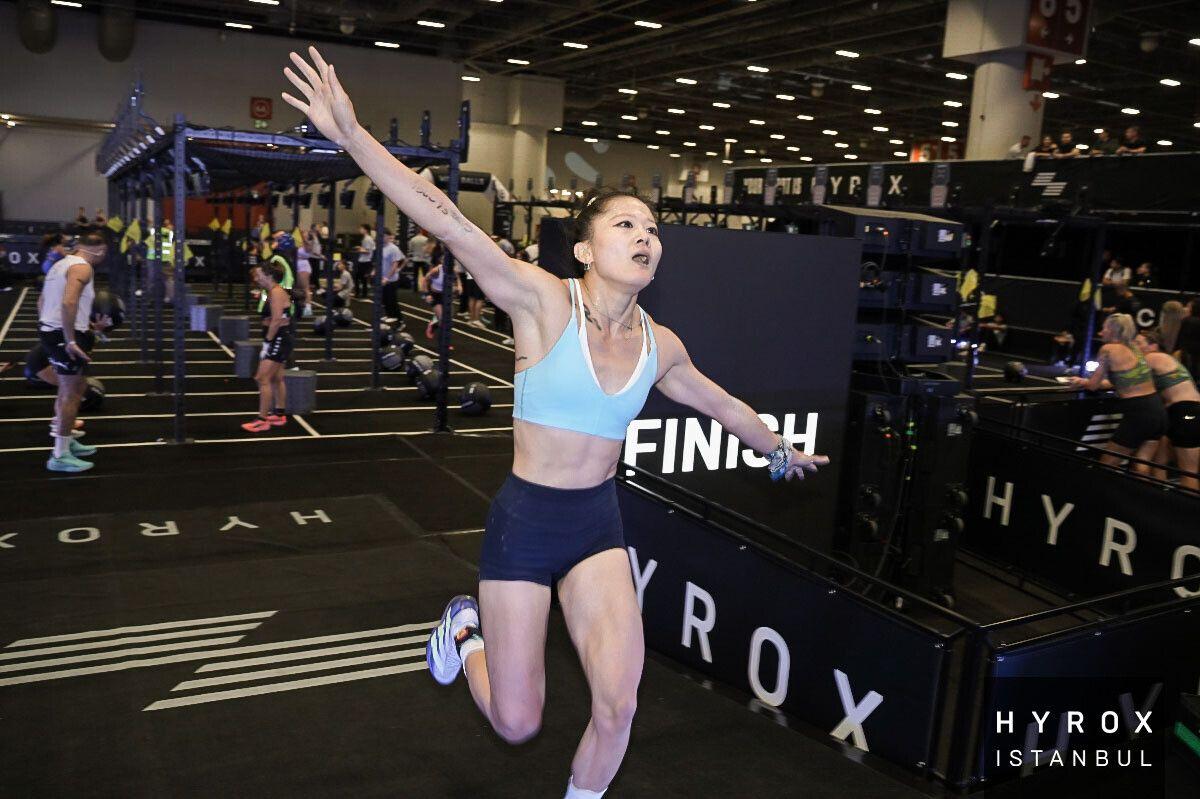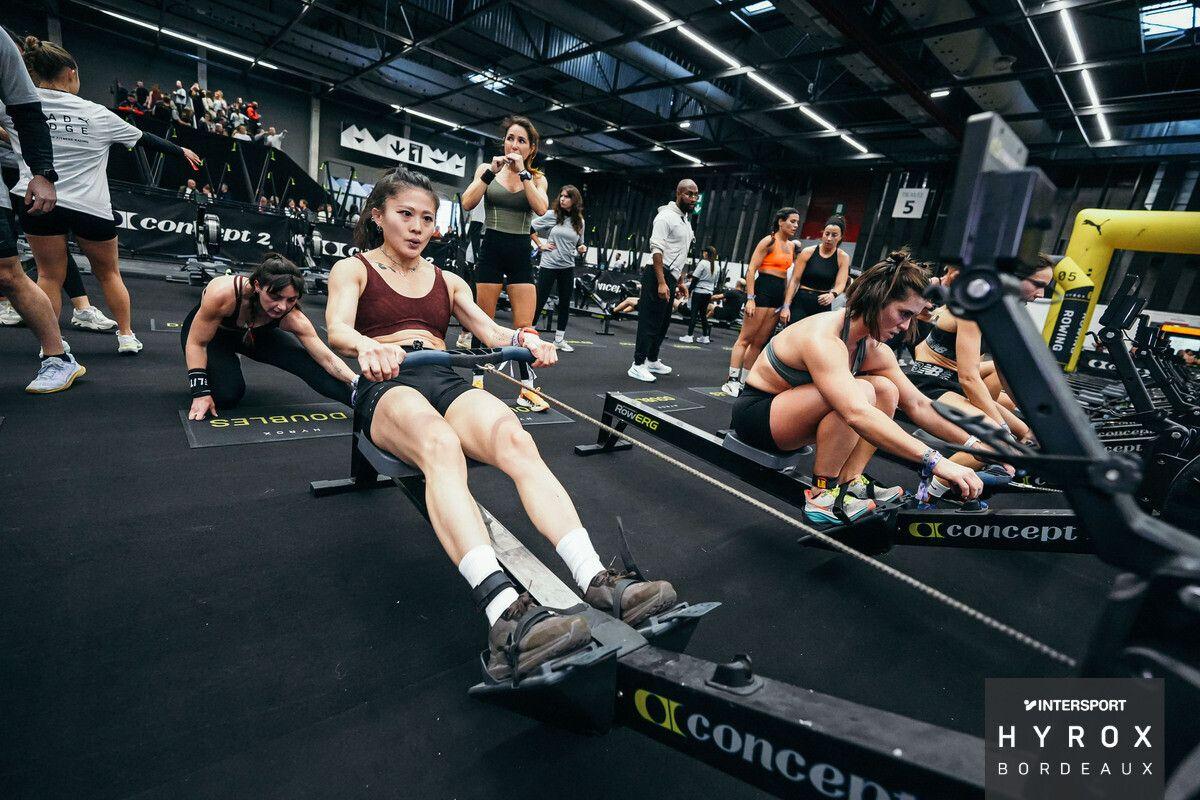
Hi everyone! I'm Pauline Yu (PYY), Taiwan's only 4× Hyrox World Championship qualifier. Let me tell you something personal: before I ever stepped into a Hyrox race, I was not a CrossFit athlete. My background was in long-distance running and general gym training. When I first heard about Hyrox, I honestly thought it was just CrossFit with a running treadmill thrown in. I was wrong — and understanding that difference completely changed how I approached my training, and eventually how I qualified for the World Championships four times.
Key Takeaways
- ▸You absolutely do not need a CrossFit background to start Hyrox — in fact, many top Hyrox athletes in Taiwan and across Asia come from running, swimming, or general fitness backgrounds, and they compete very successfully at every level.
- ▸The eight Hyrox functional stations — including sled push, sled pull, burpee broad jumps, rowing, farmers carry, sandbag lunges, wall balls, and ski erg — are all learnable movements that most healthy adults can master within a few weeks of consistent practice, regardless of prior experience.
- ▸Aerobic base and muscular endurance are far more important for Hyrox success than one-rep-max strength or technical gymnastics skills, which means runners and triathletes often have a surprisingly strong starting point when transitioning to Hyrox.
- ▸The biggest beginner mistake I see — especially among women in Taiwan who are new to Hyrox — is going out too fast in the opening run segments and arriving at the first station already exhausted, which derails the entire race strategy.
- ▸If you are starting Hyrox without CrossFit experience, your first priority should be building a solid 8–10 km aerobic running base, then gradually layering in station-specific conditioning so your body learns to work under functional fatigue, not just cardio fatigue.
Where This Question Really Comes From — And Why It's Worth Answering Honestly
When Hyrox started gaining serious momentum in Taiwan around 2025 and 2026, I noticed a pattern: a lot of the people asking me about getting into it were women from traditional gym backgrounds — pilates goers, recreational runners, group fitness regulars — who had zero CrossFit experience and were genuinely nervous about signing up. They'd look at the Hyrox station list and see things like sled push and wall balls and immediately assume, 'This must be a CrossFit thing. I'm not qualified for this.' I've been there emotionally, even if not in exactly the same context. I remember standing at the start line of my very first Hyrox race feeling completely out of my depth — not because I lacked fitness, but because I had no framework for what it would feel like to transition from running to a loaded movement station, catch my breath, and run again. That uncertainty is real, and it deserves a real answer.
Here's the truth I wish someone had told me at the beginning: Hyrox and CrossFit share some equipment overlap, but they are fundamentally different sports. CrossFit is a constantly varied, high-skill, often maximal-effort discipline. Hyrox is a standardised fitness race — the same eight stations, in the same order, every single time. That standardisation is actually one of Hyrox's greatest gifts to beginners. You can practice the exact movements you'll encounter on race day, repeatedly, until they feel comfortable. There are no surprises on race day. No one is going to ask you to do a muscle-up or a handstand push-up. Every movement in Hyrox was intentionally designed to be accessible to a wide population, and from a coaching perspective, the barrier to learning these movements is genuinely low compared to the Olympic lifting and gymnastic skills that dominate CrossFit.
- ▸Visit a Hyrox Open or Hyrox Fitness event in Taiwan before you compete — watching the race live gives you a concrete mental picture of each station transition, the crowd energy, and realistic pacing, which reduces first-race anxiety dramatically and helps you train smarter.
- ▸Practice each of the eight Hyrox stations individually for at least two to three weeks before you attempt to string them together, so your body can build movement-specific muscle memory and you are not trying to learn a new skill while also managing aerobic fatigue.
- ▸Find a training partner or small group who is also new to Hyrox — the community aspect of training together, sharing confusion, and celebrating small wins is genuinely motivating, and in Taiwan's growing Hyrox community there are more beginners than you think who are in the exact same boat.
- ▸Do not compare your preparation to what you see elite Hyrox women posting online — the women competing in the Pro or Elite categories have typically years of combined running and strength training behind them, and their training volume and intensity is not the right reference point for a first-time participant.
What Skills You Actually Need to Start Hyrox — No CrossFit Required
Let me break down what Hyrox actually demands physically, because this is where the CrossFit myth gets fully dismantled. A full Hyrox race is 8 km of running broken into eight 1 km segments, with one functional station after each run. The running distance alone tells you where your fitness foundation needs to be: if you can comfortably run 10 km at a conversational pace, you already have the aerobic engine that Hyrox is built on. The functional stations — ski erg for 1000 metres, sled push for 50 metres, sled pull for 50 metres, burpee broad jumps for 80 metres, rowing for 1000 metres, farmers carry for 200 metres, sandbag lunges for 100 metres, and wall balls for 100 reps — require muscular endurance and grit, not technical barbell skill. None of these movements require a coach to teach you for six months before you're ready to try them. Most people can learn a competent wall ball technique in a single session.
When I started coaching Hyrox beginners in Taiwan — mostly women who had never set foot in a CrossFit gym — I focused on three physical qualities in the first 8 weeks: aerobic capacity, posterior chain strength, and grip endurance. Those three things cover the vast majority of what Hyrox demands. Aerobic capacity keeps you moving between stations without collapsing. Posterior chain strength — your glutes, hamstrings, and lower back — powers the sled push, sled pull, and sandbag lunges, which are the stations where most beginners lose the most time. And grip endurance matters more than people expect: the farmers carry and the ski erg handle both demand a sustained grip under fatigue. If you address those three qualities, you will finish your first Hyrox feeling strong and proud, regardless of whether you've ever done a CrossFit WOD in your life.
- ▸Build your weekly aerobic running volume to at least 25–30 km over three to four runs before race day, because the cumulative 8 km of running within a Hyrox race hits differently than a standalone run when your legs are already loaded from station work.
- ▸Prioritise hip hinge movements like Romanian deadlifts, kettlebell swings, and hip thrusts in your gym sessions to build the posterior chain strength that will protect your lower back during sled pulls and sandbag lunges, which are the two stations where form tends to break down fastest under fatigue.
- ▸Incorporate at least one transition training session per week where you run 1 km at race effort, move directly into a station simulation without rest, and then run again — this teaches your cardiovascular system and muscles to recover while moving, which is the core physical skill that Hyrox actually tests.
Race Day Strategy for First-Timers: What I'd Tell My Younger Self
Race strategy is honestly where I see the biggest gap between prepared beginners and those who have a miserable first experience. And this has nothing to do with CrossFit experience — it has everything to do with understanding how Hyrox is structured as a race. The single most important thing I tell every first-time Hyrox participant in Taiwan is this: your pace during the running segments should feel embarrassingly easy in the first two kilometres. I know that sounds counterintuitive. You're in a race, there are people around you, the energy is electric, and every instinct you have tells you to push. But if you go out at 90% effort on that first 1 km run, you will arrive at the ski erg already in oxygen debt, and you will spend the next two hours paying for that mistake one station at a time. I learned this the hard way in my early races, and it cost me significant time.
For women starting Hyrox without CrossFit experience, I also want to address the mental side of the sled push specifically, because it intimidates almost everyone before their first race. The sled push in Hyrox is 50 metres at a loaded weight — in the Women's Open category it's typically a lighter load than the Pro categories, and the movement is simple: low hips, drive through the legs, keep moving. What no one tells you is that it feels much harder in a race than it does in training, not because the weight is heavier, but because you're already running-fatigued when you arrive at it. The solution is to practice sled pushes at the end of your runs, not the beginning. That way your body learns what it actually feels like to push a sled when your heart rate is already elevated and your legs are already warm and tired. That specific adaptation is what makes the difference between surviving the sled push and owning it.
- ▸Target a conversational pace — roughly 65–70% of your maximum effort — for the first three running segments of your Hyrox race, even if it feels slow in the moment, because this pacing strategy preserves the muscular energy you need to maintain good form through the later stations like sandbag lunges and wall balls.
- ▸Break your wall ball reps into manageable sets from the very beginning rather than going unbroken until you fail — for example, sets of 15 to 20 reps with five to ten seconds of standing rest between sets is far more time-efficient than grinding to failure and then needing a long recovery before you can continue.
- ▸Walk into your first Hyrox race with a single goal of finishing strong and learning the race experience, rather than chasing a specific time, because the data and feelings you gather from your first race are more valuable than any number on the clock and will dramatically improve how you train for race number two.
What the Research Says
The science behind what makes someone successful in a hybrid fitness event like Hyrox is genuinely fascinating, and it supports a lot of what I've learned through personal experience. Research published in the British Journal of Sports Medicine has consistently shown that aerobic capacity — specifically VO2 max and lactate threshold — is one of the strongest predictors of performance in events that combine sustained cardiovascular effort with repeated muscular work. This directly validates the idea that runners and endurance athletes often have a head start in Hyrox, even without functional fitness experience. Meanwhile, research in the Journal of Strength and Conditioning Research has established that muscular endurance — the ability to sustain submaximal force output over many repetitions — is a trainable quality that responds quickly to targeted programming, even in individuals who are new to resistance training. What this means practically is that if you start a focused 12-week Hyrox preparation block, your body can develop meaningful station-specific strength and endurance in that timeframe, even if you're starting from a general fitness base. This is exactly what I've seen play out with athletes I've coached here in Taiwan — women who came from pilates or running backgrounds, trained intelligently for three months, and completed their first Hyrox feeling genuinely prepared and proud.
Frequently Asked Questions
Q: How long does it realistically take to prepare for Hyrox if I have no CrossFit experience? A: Honestly, it depends on your current fitness base, but in my experience coaching beginners in Taiwan, 12 weeks is a very achievable preparation window if you're already running 3–4 times per week and doing some form of gym training. If you're starting from minimal fitness, give yourself 16–20 weeks. The key is not to rush the aerobic base phase — the first 4–6 weeks should be almost entirely focused on building comfortable running volume and learning the movement patterns of each station. Don't try to race-simulate until your body is comfortable with both running and the station movements independently. Quality preparation beats rushing every single time.
Q: Will I embarrass myself at a Hyrox race if I've never done CrossFit or functional fitness before? A: Absolutely not — and I say this with complete sincerity. Hyrox is one of the most welcoming race environments I've ever experienced anywhere in Asia. People cheer for each other across all categories, and finishing a Hyrox race at any time is genuinely impressive. I've seen women in their 50s completing their first Hyrox after training for only a few months, and the pride on their faces at the finish line is one of the most moving things I witness in this sport. The Hyrox community in Taiwan especially has been incredibly supportive of beginners. Nobody at that start line is judging your background — they're too busy managing their own race to care about yours.
Q: Are there specific Hyrox stations I should be most worried about as a beginner with no CrossFit background? A: The stations that tend to surprise first-timers the most are the sled push, sled pull, and wall balls — not because they're technically hard, but because they feel very different under race fatigue compared to how they feel in training. The sled push especially can feel brutal if you've never practiced it after running. My advice: in the 8 weeks before your race, add sled work to the end of your run sessions at least once a week, and practice wall balls in sets rather than trying to go unbroken. The ski erg also surprises people — it's a full-body pulling movement, and if you've never used one, your pacing instincts will be off at first. Spend some time on the ski erg machine before race day so it isn't a complete unknown when you're already 1 km into your race.
If you're sitting on the fence about whether Hyrox is 'for you' — it is. I genuinely believe that, and not just as a competitive athlete but as someone who has watched this sport transform the fitness lives of women across Taiwan and Asia who thought they needed some special credential to enter. You don't need CrossFit experience. You need consistency, a smart plan, and the courage to sign up. I'd love to support your journey — visit paulineyuyu.com to subscribe for weekly Hyrox training tips, race prep guides, and honest insights from my own experience as a pro athlete. See you at the start line!
Sources: British Journal of Sports Medicine / Journal of Strength and Conditioning Research
Taiwan's elite HYROX Pro athlete and 4× World Championship qualifier. I share my training journey, race insights, and performance notes from the competition floor.