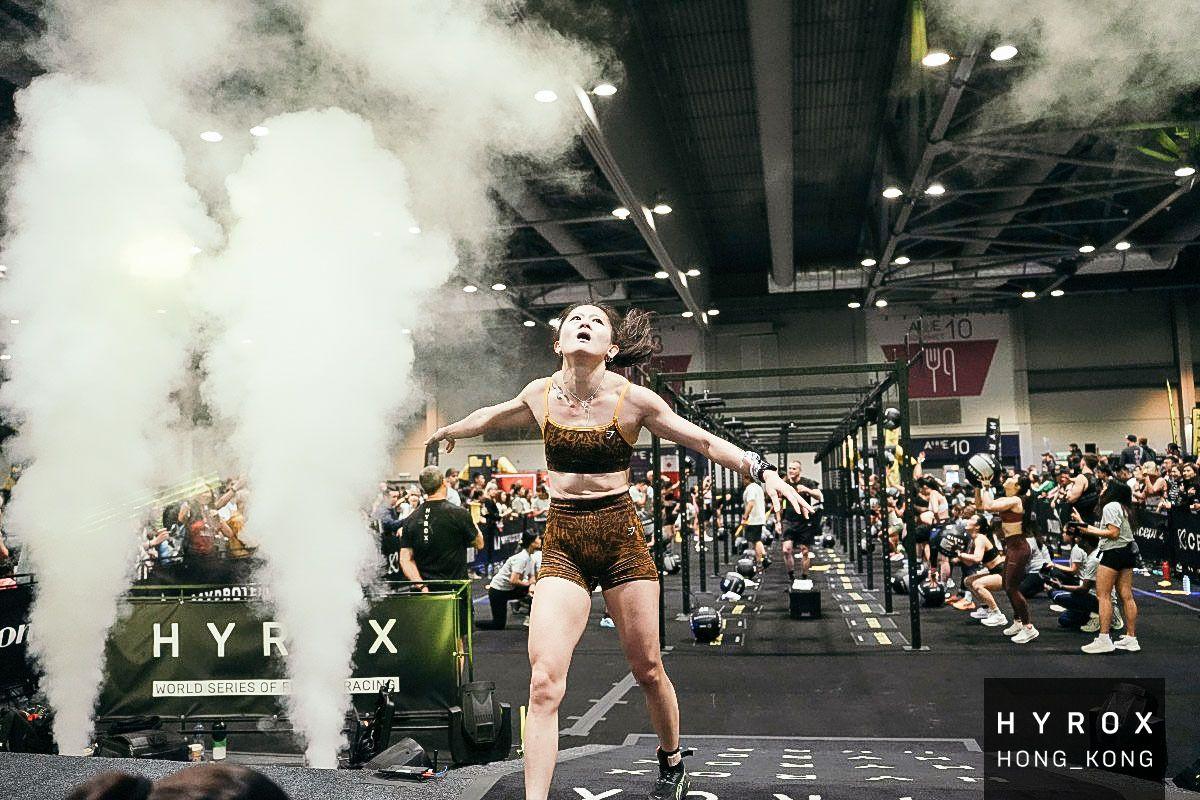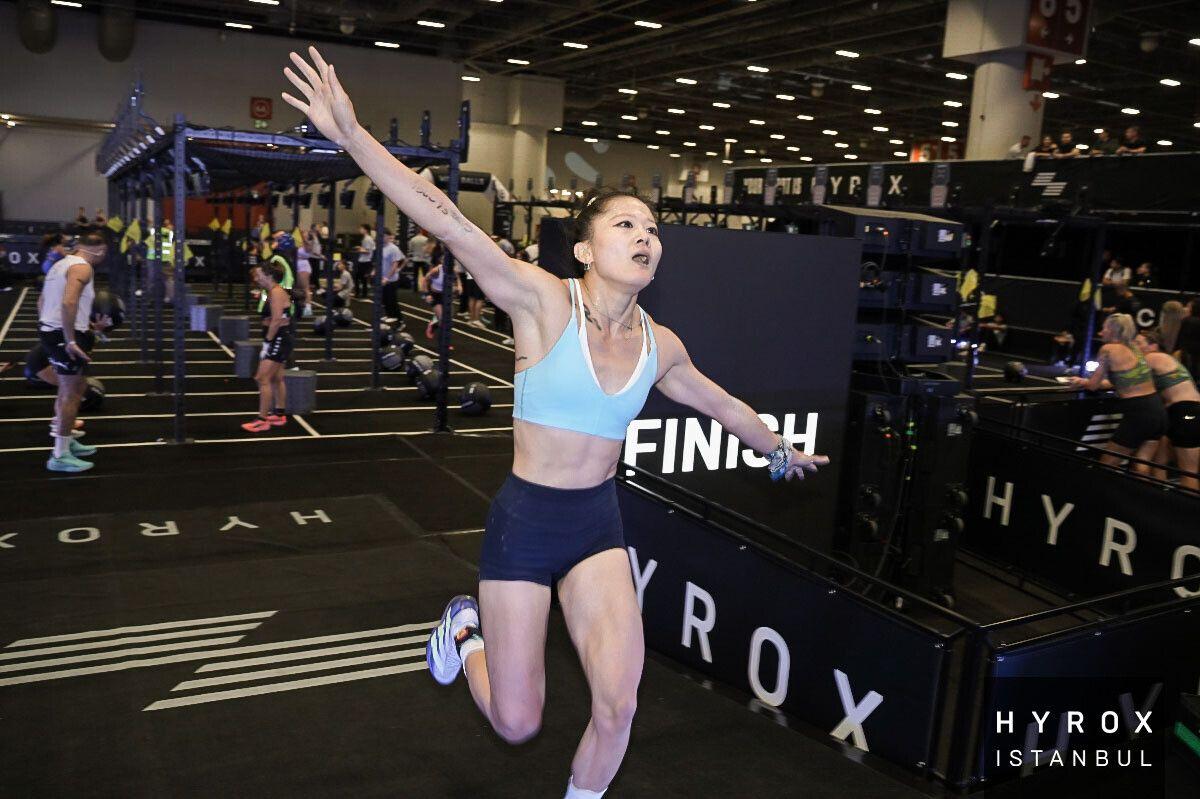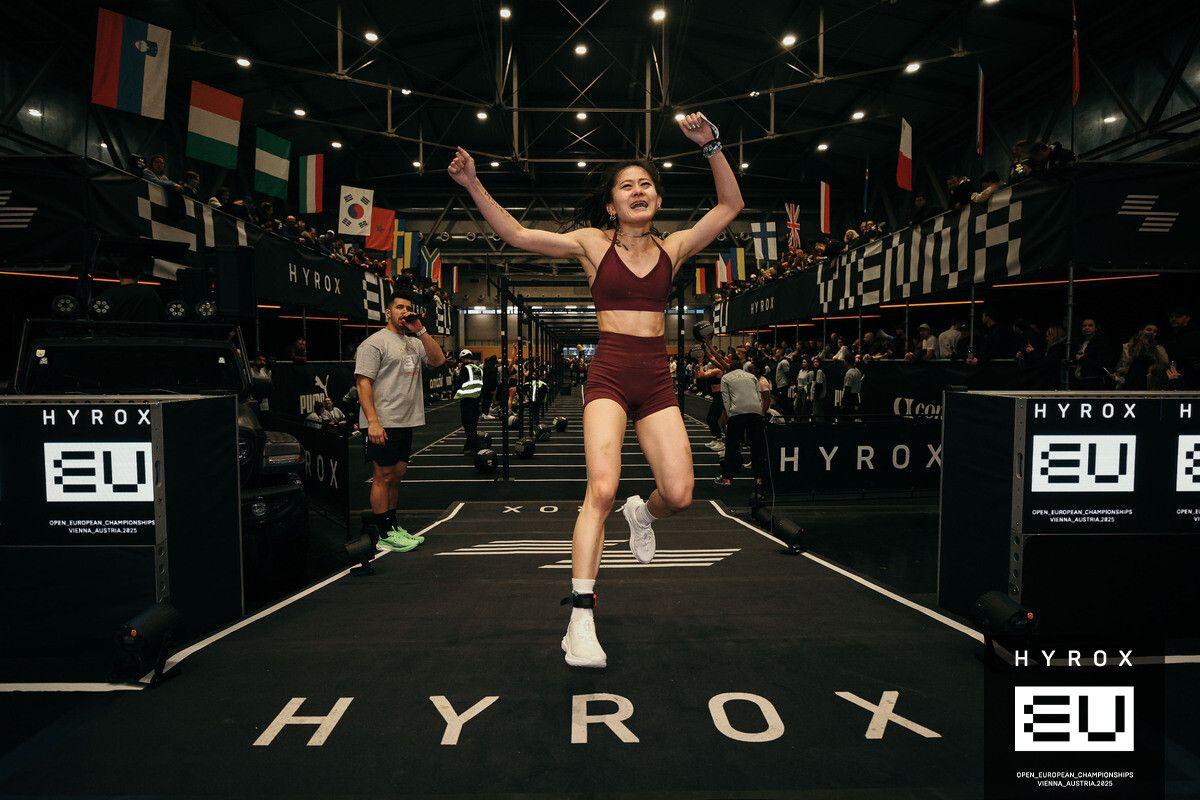
Hi everyone! I'm Pauline Yu (PYY), Taiwan's only 4× Hyrox World Championship qualifier. I still remember standing at the finish line of my first marathon in KinMen, legs completely dead, thinking — okay, I ran 42.195 km, now what? A few years later I crossed my first Hyrox finish line in Paris and felt something totally different: my lungs were on fire, my arms were shaking from the sled pushes, and my brain was buzzing from solving eight functional stations in real time. Both experiences changed me. But they are not the same challenge — not even close. If you're a woman in Taiwan or anywhere across Asia asking yourself 'Hyrox or marathon?', I'm going to give you the most honest, experience-first comparison I possibly can, because I've lived both.
Key Takeaways
- ▸Hyrox combines 8 km of running with 8 functional workout stations, making it a true hybrid fitness challenge that tests both cardiovascular endurance and muscular strength in a single race format — something no standard marathon does.
- ▸Marathon training demands 4–6 months of high weekly running volume, often 50–80 km per week at peak, which carries significant overuse injury risk for women who are new to long-distance running in Asian climates with high heat and humidity.
- ▸Hyrox is more accessible for women in Taiwan who already do CrossFit, strength training, or group fitness classes, because your existing gym base translates directly into the functional stations like wall balls, rowing, and sled work.
- ▸Women's elite Hyrox is an incredibly competitive and fast-growing category across Asia — if you have an athletic background and want to compete at a high level sooner than you could in marathon running, Hyrox may be your faster path to the podium.
- ▸Neither challenge is objectively better — the right choice depends on your current fitness background, how much weekly training time you can realistically commit to, and honestly, which race experience lights you up emotionally when you imagine crossing that finish line.
- ▸You don't have to choose forever — many women in Taiwan and across Asia are now doing both in the same year, using marathon training to build their aerobic base for Hyrox and using Hyrox prep to add the strength that marathon training tends to strip away.
What Each Race Actually Demands: An Honest Side-by-Side
Let me be real with you. Before I discovered Hyrox, I thought I was fit. I'd been running marathons, doing some gym work, and generally feeling good about my aerobic base. Then I stepped into my first Hyrox training block and got absolutely humbled by the sled push. I had to load a weighted sled and push it for 50 metres — and my legs, which had run 42 km before, turned to absolute jelly. That was the moment I realised these two events live in completely different physiological universes. A marathon is a pure endurance event — you run 42.195 km and the only physical task is putting one foot in front of the other. Hyrox, on the other hand, is a 1 km run, then a functional station, then another 1 km run, then another station — eight times over. The total running distance is 8 km, and the eight stations include things like the SkiErg, sled push, sled pull, burpee broad jumps, rowing, farmer's carry, sandbag lunges, and wall balls. The formats are so fundamentally different that comparing them based on distance or time alone is a mistake.
Here's what I've noticed training women across Taiwan: the runners in my circle tend to underestimate how much grip strength, upper body endurance, and pure power Hyrox demands. And the gym athletes tend to underestimate how much the 8 km of running — broken up into 1 km intervals between stations — will absolutely destroy your legs when they're already fatigued from loading. For a marathon, you're managing a single physiological system over a very long time. For Hyrox, you're constantly switching between aerobic running and anaerobic muscular effort, which is a completely different kind of fatigue. Both are brutally hard in their own way. But if you're a woman in Asia asking which one is more likely to suit your existing training lifestyle, that context matters enormously.
- ▸Marathon running demands consistent weekly mileage over months — if you're not already running at least 30 km per week comfortably, expect a 6-month minimum build-up before you're ready to race 42 km safely and enjoyably.
- ▸Hyrox preparation should include at least two dedicated strength sessions per week on top of running intervals, because the functional stations require real muscular power — especially the sled push, sandbag lunges, and wall balls — that pure running training simply will not develop.
- ▸The hybrid fitness challenge nature of Hyrox means your body composition tends to shift more noticeably during training — you'll likely build lean muscle mass while maintaining cardiovascular fitness, which many women in Taiwan find more motivating than the plateau-prone phase of late marathon training blocks.
- ▸Marathons in Taiwan like the Taipei Marathon are typically held in December, which gives you cooler weather — but Hyrox events held at indoor venues mean climate is not a factor, making Hyrox a more consistent training and racing experience year-round regardless of Taiwan's brutal summer heat.
Time, Cost, and Lifestyle Fit: What No One Tells You Before You Sign Up
I get DMs all the time from women in Taiwan and across Asia asking 'which one takes less time to train for?' And I have to be honest — it's a complicated question. On paper, Hyrox training volume is lower than marathon training volume. A well-designed Hyrox plan for a first-timer might have you training five days a week for three to four months, with long runs capping around 10–12 km. A marathon plan for a beginner might have you out running for three hours on a Sunday morning and clocking 60+ km per week at peak. But here's the thing: Hyrox training requires access to specific equipment. You need a SkiErg, a rowing machine, a sled, wall balls, a sandbag, and space to do burpee broad jumps. In Taiwan's major cities like Taipei and Kaohsiung, finding a gym that has all of this is now much easier than it was three years ago — but it still affects your schedule because you can't just lace up and run out your front door the way marathon training lets you.
Cost is another factor nobody talks about enough. Marathon entry fees in Taiwan are typically quite reasonable — the Taipei Marathon, for example, is very accessible in terms of registration cost. Hyrox international events carry a higher entry fee, and if you're flying to events in Japan, Singapore, or further to Europe for the World Championships like I have, the travel and accommodation costs add up fast. That said, the Hyrox community in Asia is growing so quickly that there are now more local and regional events happening, which makes it much more financially accessible than it was when I first started. From a lifestyle fit perspective, I'd say Hyrox training integrates better into a gym-going lifestyle, while marathon training integrates better into a morning running routine. Neither is superior — it just depends on which one matches how you already live.
- ▸Before committing to either challenge, audit your current weekly schedule honestly — if you can only train four days per week, a Hyrox plan with two strength sessions and two run-focused sessions is probably more manageable than a marathon plan that demands five or six running days at peak.
- ▸If you have access to a well-equipped functional fitness gym in Taiwan or your Asian city, Hyrox training costs are mostly absorbed into your existing gym membership — factor in the race entry fee separately and budget for at least one practice event before your goal race.
- ▸For women considering Hyrox vs marathon as their first ever endurance challenge, I'd lean toward recommending Hyrox simply because the shorter race duration — typically 60 to 90 minutes for most first-timers — means a shorter window of peak suffering, which tends to keep first-timers coming back for more.
Who Should Choose Hyrox, Who Should Choose Marathon, and Who Should Do Both
After four World Championship appearances in women's elite Hyrox and more road races than I can count, I've developed a pretty clear mental framework for who should go in which direction. If you come from a strength training or CrossFit background and you've always been curious about endurance events, Hyrox is almost certainly your gateway. You'll feel at home in the gym-like environment, you'll have a head start on the functional stations, and the community of women pushing into this hybrid fitness challenge space across Asia right now is genuinely one of the most supportive and exciting communities I've been part of. I've seen women in Taiwan who had never run more than 5 km in their lives complete Hyrox within just four months of focused training — and absolutely love it.
On the other hand, if you're someone who genuinely loves long, meditative runs — if Sunday long runs are your therapy, if you find flow in sustained rhythmic movement, if the idea of running through the streets of Taipei at sunrise fills you with joy — then marathon is probably your soul sport. The marathon community in Taiwan is also enormous, welcoming, and incredibly well-organised. And there's something uniquely profound about finishing a 42 km race that Hyrox, for all its intensity, doesn't quite replicate. My honest take? If you're physically capable and have the training time, do both. I've found that marathon aerobic base work makes my Hyrox running segments feel controlled and efficient, while Hyrox strength work prevents the muscle loss and postural breakdown that long marathon training blocks can sometimes cause in women. They complement each other more than most people realise.
- ▸If you have a CrossFit, functional fitness, or gym-based training history, start with Hyrox — your strength foundation will give you a significant advantage in the stations, and you'll only need to develop your running fitness to fill the gap in the 8 km of intervals.
- ▸If you're a seasoned runner in Taiwan who has already finished multiple half-marathons or marathons and is looking for a new challenge that adds a strength dimension, Hyrox is the natural next step — your aerobic base is already there, you just need to build the power for the stations.
- ▸If you want to do both in the same year, structure it strategically — build your marathon aerobic base in the first half of the year, then transition into a Hyrox-specific block in the second half, keeping your long runs shorter but adding two to three strength and station-specific sessions each week.
What the Research Says
The science here is genuinely fascinating, and it lines up with everything I've experienced in training. Research published in the British Journal of Sports Medicine has consistently shown that concurrent training — meaning combining endurance work with resistance training in the same program — produces superior overall fitness adaptations compared to focusing exclusively on one modality. This is essentially what Hyrox training forces you to do: you cannot ignore either your running fitness or your muscular strength, because the race punishes both weaknesses mercilessly. For women specifically, this is hugely relevant. Research in Medicine and Science in Sports and Exercise has consistently highlighted that women tend to respond very well to concurrent training in terms of maintaining lean body mass while improving cardiovascular efficiency — which is exactly the physical profile that Hyrox training builds. When I look at my own body composition and performance data across my four World Championship qualification cycles, the periods where I was doing the most balanced concurrent training — mixing tempo runs with heavy strength days — were the periods where I performed best. The science isn't just theory. I've felt it. And if you're a woman in Taiwan weighing up this Hyrox vs marathon question, knowing that the hybrid approach has genuine physiological backing should make you feel confident that you're not 'compromising' by choosing Hyrox — you might actually be optimising.
Frequently Asked Questions
Q: I've never done a race before — is Hyrox or marathon better as my very first event? A: Honestly, from my personal experience coaching and connecting with women across Taiwan and Asia, I'd lean toward Hyrox for most first-timers who already have some gym background. Here's why: the race takes 60 to 90 minutes for most beginners, which is a much shorter window of peak discomfort than a marathon's 4 to 6 hours. The training block is also shorter and more varied, which keeps motivation high throughout the prep process. That said, if you're a natural runner who finds strength work intimidating, starting with a half-marathon might be a gentler first step before you tackle either a full marathon or your first Hyrox event.
Q: As a woman, will Hyrox training make me bulk up too much? A: This is one of the most common concerns I hear from women in Taiwan who are considering Hyrox, and I want to address it directly from my own experience. No — Hyrox training will not make you 'bulky'. The training develops functional strength and lean muscle mass, but the high volume of running and metabolic conditioning keeps body composition lean. I personally carry more muscle now than when I was purely marathon training, and I move better, feel stronger, and have far fewer injuries. The women's elite Hyrox field is full of athletes who are lean, powerful, and athletic — not bulky. The fear of getting too muscular from functional training is largely unfounded, especially for women training at recreational to competitive levels.
Q: Are there Hyrox events in Taiwan or nearby in Asia that I can target as my first race? A: The Hyrox event calendar in Asia has been expanding rapidly, and this makes me so happy as someone who had to fly to Europe for my early events. There are now Hyrox events happening regularly in Japan, Singapore, South Korea, and other Asian cities, and the community in Taiwan is growing every single year. I'd recommend checking the official Hyrox website for the current Asia race calendar, then giving yourself a minimum of three to four months of structured preparation before your goal event. If you can find a local training group in Taipei or your city, that community support will make the whole journey so much more enjoyable — it certainly made mine.
Whatever you decide — Hyrox, marathon, or both — I genuinely believe that choosing to challenge yourself and show up on that start line is always the right move. I'm cheering for every woman in Taiwan and across Asia who is brave enough to sign up for something that scares her a little. Come find me at paulineyuyu.com and subscribe for more training content, race tips, and honest first-person insight from my ongoing journey in women's elite Hyrox. Let's grow this community together — PYY.
Sources: British Journal of Sports Medicine / Medicine & Science in Sports & Exercise
Taiwan's elite HYROX Pro athlete and 4× World Championship qualifier. I share my training journey, race insights, and performance notes from the competition floor.