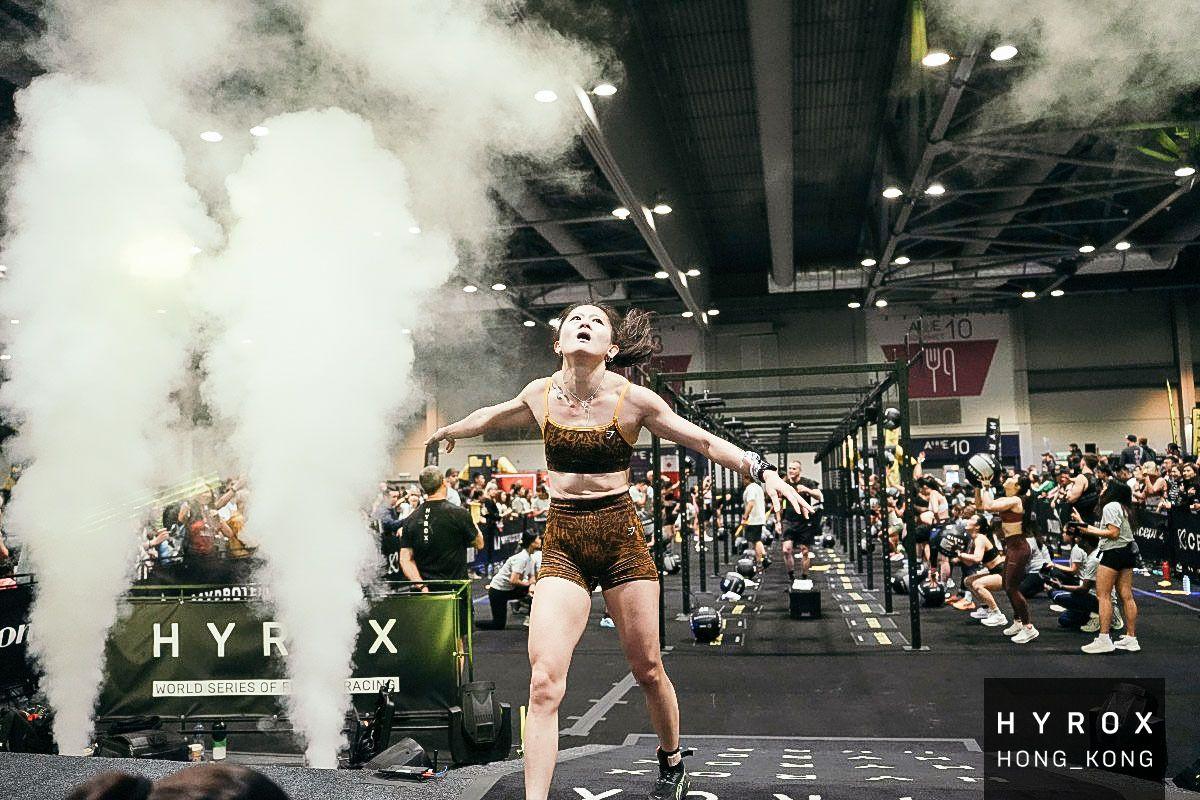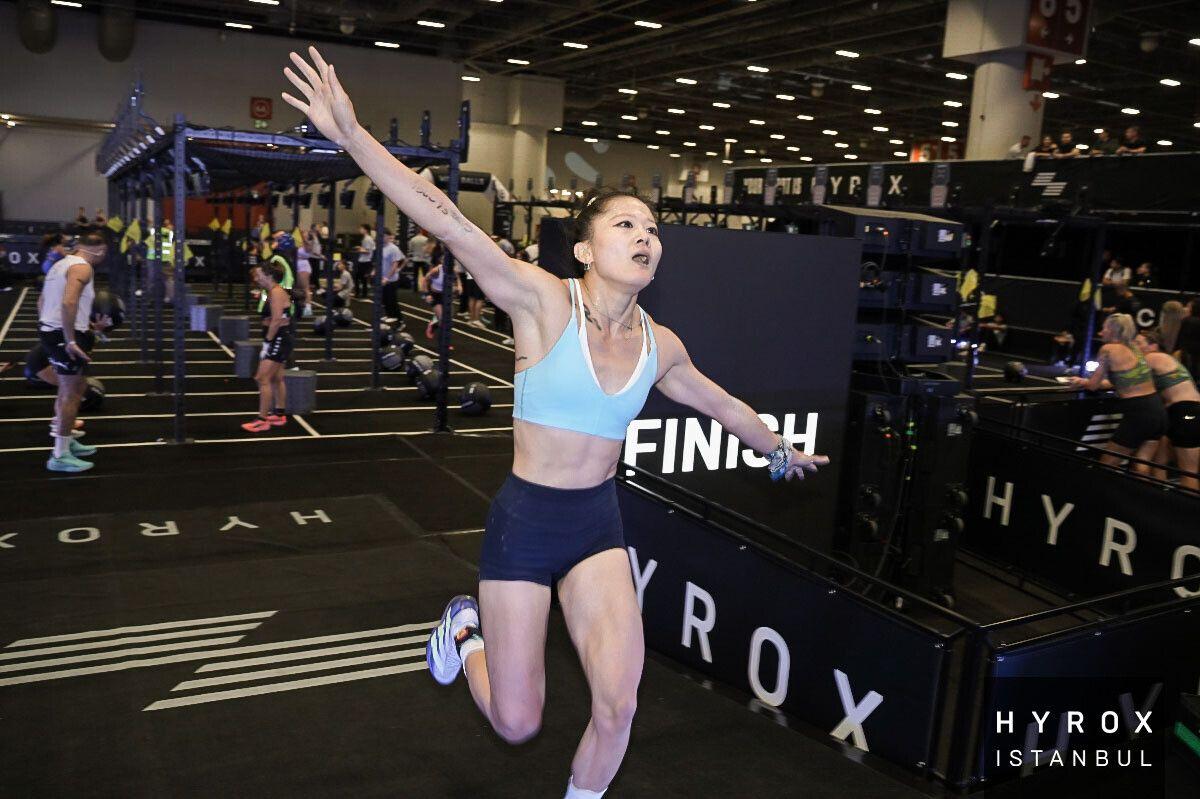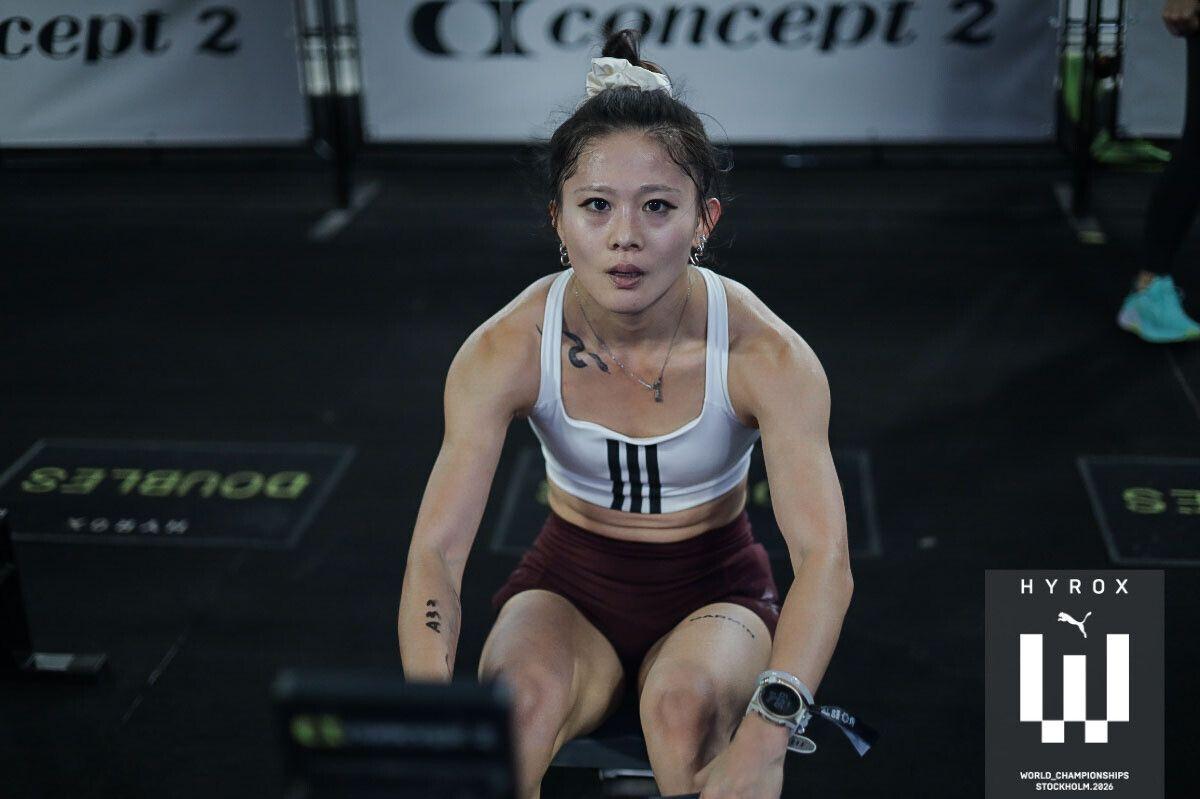
Hi everyone! I'm Pauline Yu (PYY), Taiwan's only 4× Hyrox World Championship qualifier. A few years ago I was standing in a sports lab in Taiwan staring at a number on a screen — my VO2 max result — and feeling genuinely embarrassed. I had been training hard, logging long runs through the Paris streets every single week, and yet my aerobic ceiling was nowhere near where it needed to be for women's elite Hyrox. That moment was a real turning point for me. I stopped guessing and started being deliberate about Hyrox interval training, and over the following competition cycle I watched my numbers climb in a way that completely changed how I raced. Today I want to share exactly what worked — not the generic advice you find everywhere online, but the specific sessions I used and the hard lessons I learned building my engine here in Asia.
Key Takeaways
- ▸Long slow distance alone will not raise your Hyrox VO2 max meaningfully — you must include structured high intensity Hyrox intervals at or above 90% of your max heart rate at least twice per week to drive real aerobic adaptation.
- ▸The 4×4 minute interval protocol — four hard efforts at near-maximal intensity with three to four minutes of active recovery between each — is the single session that moved my VO2 max numbers faster than anything else I tried over four competition seasons.
- ▸Hyrox demands that your aerobic system recovers quickly between eight different functional stations, so your interval training must mimic that stop-start demand rather than only training sustained steady-state effort.
- ▸Running economy matters just as much as raw VO2 max for Hyrox performance — pairing your improve VO2 max running sessions with strides and short hill sprints will make every millilitre of oxygen you consume go further on race day.
- ▸Recovery is not optional — I made the mistake of stacking too many high intensity Hyrox intervals into one week, which blunted my adaptation and left me flat heading into training blocks. Two hard sessions per week with genuine easy days in between is the sweet spot I keep coming back to.
Why My VO2 Max Was Stuck — And What Finally Changed
When I started competing seriously in Hyrox here in Taiwan, my training looked like a lot of other athletes I see across Asia: plenty of steady running, some gym work, and the occasional hard effort thrown in without much structure. I genuinely believed that putting in the kilometres was enough. But Hyrox is a unique beast — you are not just running a 10K, you are running one kilometre, stopping, performing a functional station under load, then running again, eight times over. Your aerobic system has to be able to spike, recover, and spike again repeatedly. A high VO2 max is the foundation that makes all of that possible, and mine simply was not high enough. The moment I started tracking my heart rate data properly and saw how slowly I was recovering between efforts, it became obvious that my aerobic engine needed a serious rebuild, not just more miles.
The shift that changed everything was moving from thinking about volume to thinking about stimulus. I had been running six days a week in the Taiwanese heat and logging impressive kilometre counts, but most of those runs were at a moderate pace that never truly challenged my aerobic ceiling. To improve VO2 max running, you have to actually reach the intensities that force your cardiovascular system to adapt — and for most of us, that means spending meaningful time at 90 to 100 percent of our maximum heart rate. Once I reorganised my week around two genuine high intensity Hyrox intervals sessions and let the rest of my running be genuinely easy, everything shifted. My heart rate at a given pace dropped, my recovery between station efforts in races got faster, and my overall Hyrox finish times improved noticeably within a single training block.
- ▸Audit your current training honestly: if you cannot clearly identify two sessions per week where your heart rate hits above 90% of maximum and stays there for meaningful intervals, your aerobic ceiling is probably not being challenged enough to improve.
- ▸Use a heart rate monitor for every run, not just races — I wasted months training by feel and discovered later that my perceived hard effort was only about 80% of max, which is not enough to drive the VO2 max adaptations Hyrox demands.
- ▸Make your easy days genuinely easy: running at conversational pace on recovery days allows your body to absorb the high intensity work and come back stronger — I run at a pace that feels almost embarrassingly slow on easy days and it makes a real difference.
- ▸Track your resting heart rate each morning as a simple readiness signal — when mine creeps up by more than five to seven beats above my personal baseline, I know I need an easy day rather than another high intensity Hyrox intervals session, no matter what the training plan says.
The Exact Interval Sessions That Moved My Numbers Most
I have experimented with a lot of different Hyrox interval training formats over the years, and I want to be really specific here because I think generic advice like 'do some intervals' is not very useful. The session that has consistently produced the biggest VO2 max gains for me is the classic 4×4 protocol: four efforts of four minutes each at an intensity where you cannot hold a conversation — right at the top end of your aerobic capacity — with three to four minutes of easy jogging or walking recovery between each rep. The first rep always feels manageable, the second feels hard, the third feels brutal, and the fourth requires genuine mental commitment. That is exactly how it should feel. I do this session on a flat road or treadmill so I can control my pace and effort precisely, and I target a heart rate of 93 to 97 percent of my maximum for the working intervals.
My second favourite session for improving Hyrox VO2 max is what I call station intervals, and it is much more specific to Hyrox than a standard running workout. I set up a short running loop — about 800 metres — and after each loop I perform a brief functional movement: wall balls, burpee broad jumps, or sled-style pushing against resistance. The goal is to keep my heart rate elevated through the transition and then immediately push hard on the next running loop. This mimics the exact physiological demand of a Hyrox race and teaches your body to clear lactate and restore oxygen delivery while still under load. For women's elite Hyrox athletes and anyone serious about competing in Asia and beyond, this type of race-specific interval training is something I wish I had started much earlier in my competitive journey.
- ▸4×4 protocol session: warm up for 10 to 15 minutes at easy pace, then run four hard four-minute efforts at 93 to 97% of maximum heart rate with three to four minutes of easy recovery jog between each, followed by a 10-minute easy cool-down — this is the most evidence-supported Hyrox interval training format I have used.
- ▸Short interval ladders: run 30 seconds hard, 30 seconds easy, then 45 seconds hard, 45 seconds easy, then 60 seconds hard, 60 seconds easy — repeat the ladder three to four times total — this trains your body to tolerate rapid intensity fluctuations that happen constantly in a Hyrox race.
- ▸Station intervals: complete a 600 to 800 metre running effort at race pace, immediately perform 20 to 30 reps of a functional movement like wall balls or burpees, then go straight back into the next running effort with minimal rest — programme four to six rounds and treat this as your most race-specific high intensity Hyrox workout of the week.
Building the Plan Around Your Life — Not Just Your Training Goals
One thing I see constantly in the Asian Hyrox community, and something I personally struggled with in my earlier seasons, is the tendency to treat a training plan like a rigid rulebook rather than a living guide. Life in Taiwan is busy — I work, I coach, I have personal commitments, and the weather here can be absolutely brutal in summer, with heat and humidity that makes running at high intensity genuinely harder and more stressful on the body than the same session would be in a cool European climate. Adjusting for heat is not weakness, it is smart training. When I am running intervals in July in Taipei, I know my heart rate will spike faster and my perceived effort will be higher than the numbers suggest, so I adjust the target intensities accordingly and prioritise hydration in a way that simply is not necessary in cooler conditions.
The broader principle here is that sustainable improvement in your Hyrox VO2 max comes from consistency over months and years, not from one heroic training block. I have qualified for the World Championships four times not because I had perfect training cycles every season, but because I kept showing up, kept adapting, and kept applying what I was learning about my own body. For anyone in Taiwan or across Asia working toward their first or next Hyrox qualification, the most important thing is to build a weekly structure you can actually maintain — two genuine high intensity Hyrox intervals sessions, three to four easy or moderate running days, and adequate sleep and nutrition to support the adaptation. That rhythm, repeated over twelve to sixteen weeks, is what actually moves your aerobic ceiling.
- ▸Schedule your two high intensity Hyrox interval sessions on non-consecutive days — Monday and Thursday, or Tuesday and Friday — so that your nervous system and cardiovascular system have at least 48 hours to begin recovering before you ask them to perform at maximum intensity again.
- ▸If you are training in hot and humid conditions like Taiwan's summer, reduce your target interval pace by roughly five to eight percent and use heart rate as your primary intensity guide rather than pace — your physiology does not care about your pace, it cares about the actual stress you are placing on your aerobic system.
- ▸Plan your training in four-week cycles with three weeks of progressive loading and one week of reduced volume and intensity — this is the structure I use across every competition season and it consistently allows me to absorb training stress and arrive at races feeling sharp rather than depleted.
What the Research Says
The science behind Hyrox VO2 max training is actually quite clear, and it aligns closely with what I have experienced personally over four competition cycles. Research published in the British Journal of Sports Medicine has consistently shown that high intensity interval training performed at or above 90 percent of maximum heart rate produces significantly greater improvements in VO2 max than moderate intensity continuous training over equivalent time periods. This is exactly why I shifted away from long slow distance as my primary training stimulus and toward structured high intensity Hyrox intervals — the dose-response relationship between training intensity and aerobic adaptation is genuinely steep at the top end of the intensity spectrum. Similarly, research published in Medicine and Science in Sports and Exercise has established that the ability to sustain and repeat high-intensity efforts — exactly what Hyrox demands across eight stations — is strongly predicted by VO2 max, confirming that improving this metric is not just about cardiovascular health but directly translates to faster race times. For me, seeing the science align with what I was observing in my own training data was incredibly motivating and gave me confidence to keep pushing the intensity even on days when it felt uncomfortable to do so.
Frequently Asked Questions
Q: How long does it take to see a measurable improvement in VO2 max from interval training? A: In my personal experience, and consistent with what coaches and exercise scientists generally describe, you can expect to see meaningful changes in your aerobic capacity within eight to twelve weeks of consistent high intensity Hyrox interval training — provided you are actually reaching the right intensities. I saw my first noticeable shift after about ten weeks of structured work, and it showed up as a lower heart rate at race pace rather than a dramatic lab number change. Be patient, trust the process, and track your training heart rate data so you have objective evidence of improvement even before your next formal VO2 max test.
Q: Can I improve my Hyrox VO2 max without access to a track or running lab? A: Absolutely — I have done most of my interval training on regular roads and even on a treadmill during Taiwan's hottest summer months when outdoor training is genuinely risky. All you need is a reliable heart rate monitor and a flat surface where you can run consistently for three to five minutes without stopping. The 4×4 protocol I described works perfectly on a treadmill, a road loop, or any consistent surface. The track and the lab are helpful for precision, but they are not prerequisites for real improvement in your Hyrox VO2 max.
Q: Should I be doing VO2 max intervals year-round, or just in specific phases of my Hyrox training? A: This is a really important question and one I got wrong in my early seasons. I used to hammer high intensity Hyrox intervals all year and then wonder why I felt flat and stale before races. Now I use a periodised approach: I build my aerobic base with easier running for the first four to six weeks of a new cycle, then introduce structured interval work in the middle phase of my training block, and in the final three to four weeks before a race I reduce interval volume while maintaining some intensity to stay sharp. This approach has consistently produced my best race-day performances and I recommend it strongly to any athlete — beginner or women's elite Hyrox — who wants to peak at the right moment.
Training your aerobic engine is a long game, and I genuinely love that process — even the hard sessions that make you question your life choices somewhere around the third interval rep. I hope this gives you a clear, concrete place to start or to level up your own Hyrox VO2 max training. Come find me at paulineyuyu.com and subscribe for more training content, race breakdowns, and honest conversations about what it actually takes to compete at the highest level of Hyrox in Asia and beyond. See you there — PYY.
Sources: British Journal of Sports Medicine / Medicine & Science in Sports & Exercise
Taiwan's elite HYROX Pro athlete and 4× World Championship qualifier. I share my training journey, race insights, and performance notes from the competition floor.