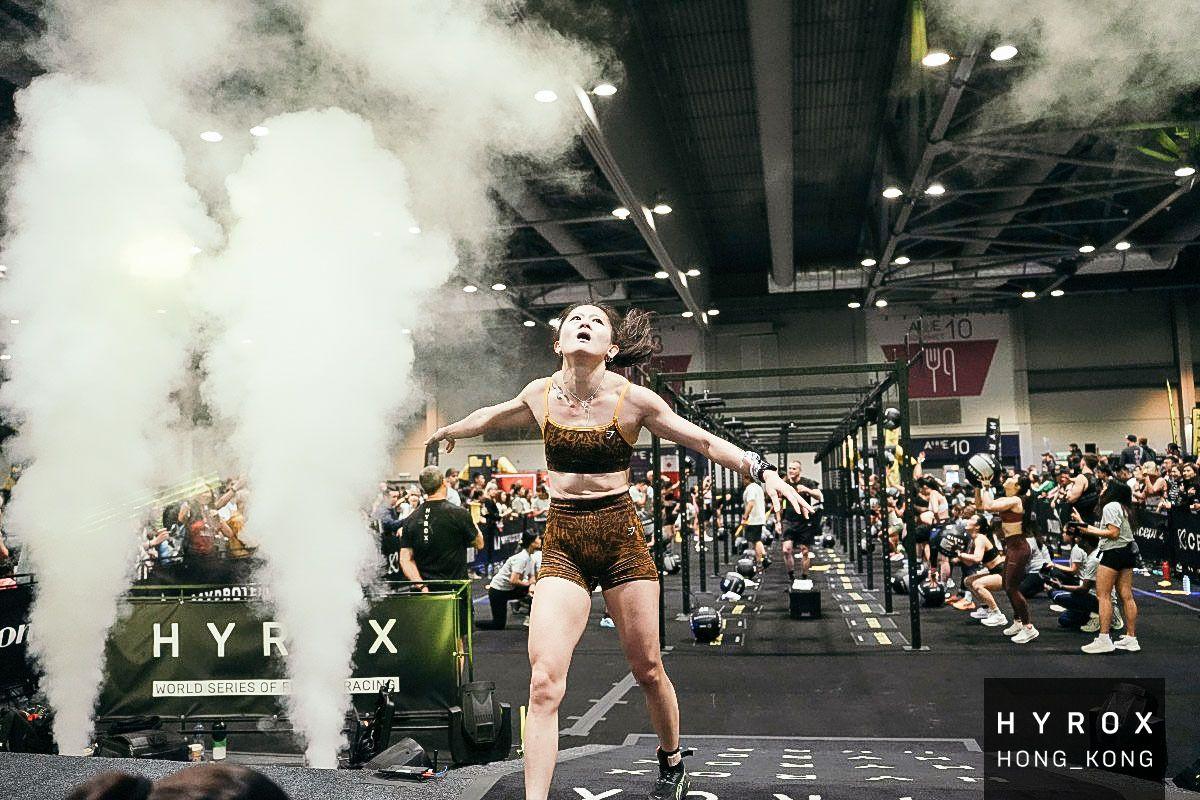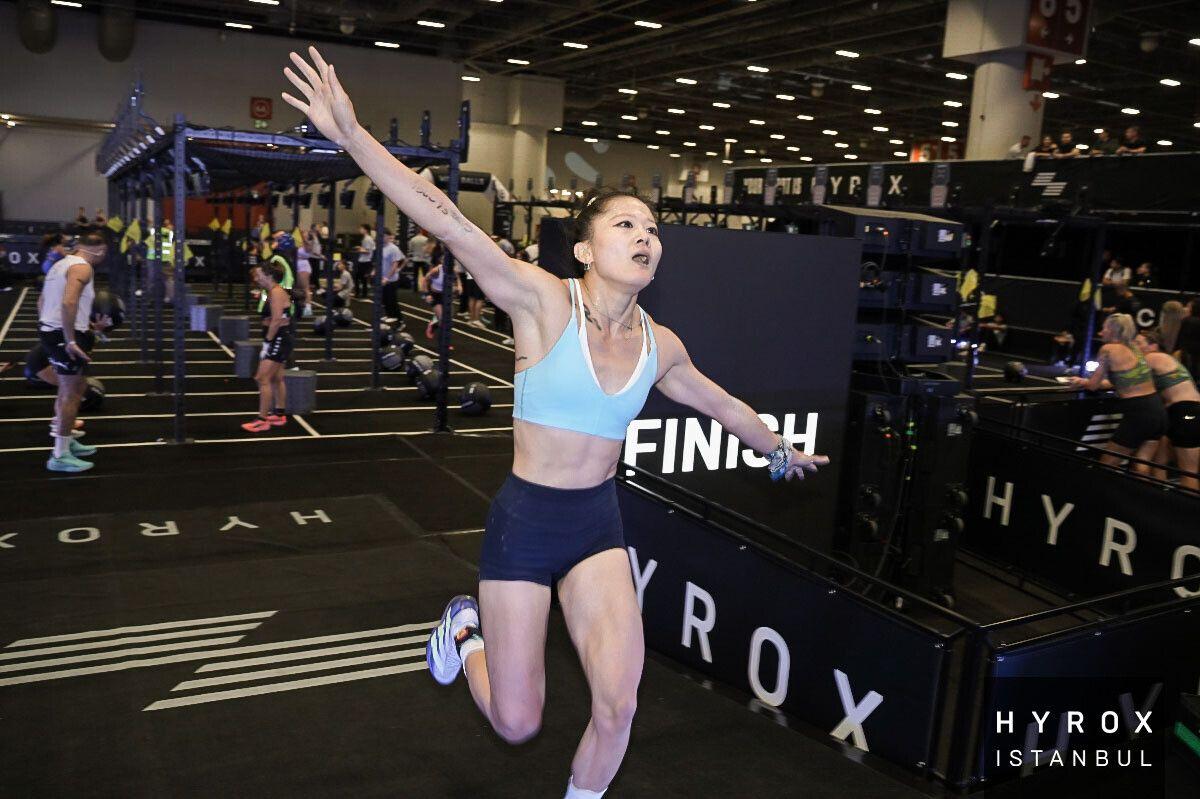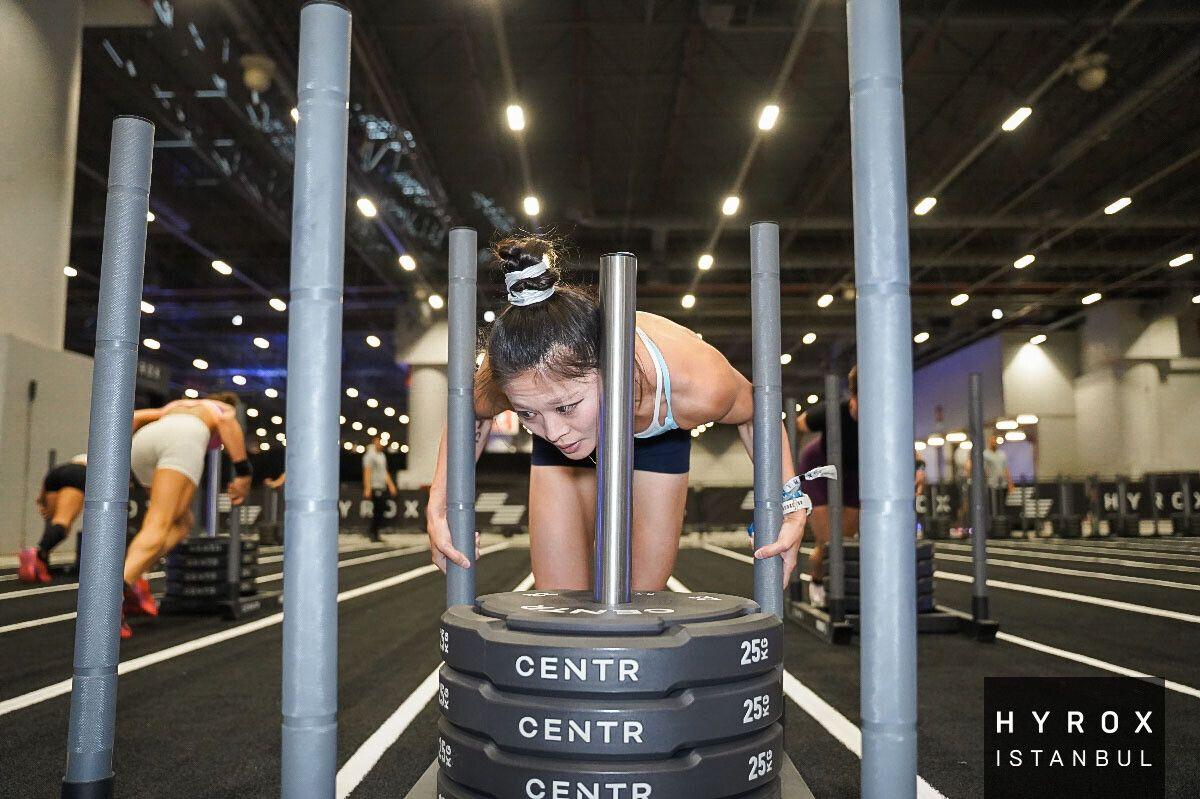
Hi everyone! I'm Pauline Yu (PYY), Taiwan's only 4× Hyrox World Championship qualifier. I still remember standing at registration for my very first Hyrox race, completely frozen in front of the category dropdown, thinking — solo? doubles? mixed doubles? What on earth is the difference, and which one won't destroy me? Nobody warned me how nerve-wracking that single decision would feel, and honestly I made my choice based on pure gut instinct that day. Since then I've competed across multiple formats, coached athletes across Taiwan and Asia, and watched countless first-timers thrive — or struggle — based entirely on whether they picked the right category for where they were in their training journey. So let me save you that paralysis and walk you through exactly how to make this call with confidence.
Key Takeaways
- ▸Hyrox Solo is the purest test of individual fitness — you complete all 8 km of running and all 8 workout stations alone, so your preparation must be comprehensive and your pacing strategy has to be airtight from the very first kilometer.
- ▸Hyrox Doubles means you and a partner split the running and the workout stations between you, which roughly halves the volume per person but introduces the critical skill of transition management and real-time communication under fatigue.
- ▸Mixed Doubles pairs one male and one female athlete — a brilliant entry point for couples or training partners in Taiwan who want a shared race experience while still competing at a meaningful, structured level.
- ▸If you have fewer than three months of consistent structured training behind you, Doubles or Mixed Doubles will give you a safer, more enjoyable first race experience without sacrificing the thrill of crossing that Hyrox finish line.
- ▸Your weakest station — not your strongest — should drive your category decision, because in Solo every single station is yours to face alone, and there is no partner to cover for a movement you haven't mastered yet.
- ▸Women's elite Hyrox competition is growing rapidly across Asia, and choosing the right category for your debut race builds the confidence and race-specific experience you need to eventually compete at higher levels.
Understanding What Each Category Actually Demands of Your Body
Here's the thing most people don't realize when they first look at the Hyrox format: every category uses the same course, the same eight stations, and the same eight one-kilometer running segments — but the way those kilometers and reps are distributed changes everything about how you need to train and race. In Hyrox Solo, you are responsible for all 8 km of running and every single repetition across all eight workout stations: SkiErg, sled push, sled pull, burpee broad jumps, rowing, farmer's carry, sandbag lunges, and wall balls. That's the full menu, and it's all yours. When I first competed Solo in the women's open category, I was shocked by how much the accumulated fatigue from the early stations affected my ability to hold pace on the later running laps. I thought I was fit — and I was — but race fitness and training fitness are two very different animals.
In Doubles — whether same-sex or mixed — you and your partner share the load. Typically, one athlete works while the other rests, and you alternate through the running and the stations. This doesn't make it easy by any stretch, but it does mean the peak cardiovascular demand on any single athlete is lower than in Solo. What it adds instead is a strategic layer: who leads which station? How do you tag efficiently? What happens if one partner is struggling at the sled push and you need to step in? I've watched so many doubles teams in Taiwan fall apart not because of fitness but because they never practiced transitions together. The physical demand in Doubles is more manageable for beginners, but the partnership demand is very real and requires its own preparation.
- ▸If you can currently run 8 km continuously at a conversational pace and complete all eight Hyrox stations without scaling, Solo is probably within reach — but train specifically for the combined fatigue, not just each element in isolation.
- ▸In Doubles, practice your transitions deliberately — set a timer and rehearse the tag handoff at each station at least a dozen times before race day so the switch feels automatic even when both of you are completely breathless.
- ▸Assess your eight Hyrox stations honestly and identify your two weakest movements — if those weak movements appear early in the race order, your Solo finish time will suffer significantly, and Doubles might buy you the recovery window you need.
- ▸Don't assume that Doubles is just an easier version of Solo — the psychological pressure of not letting your partner down can actually be more intense than running Solo, so pick a partner whose work ethic and attitude match yours.
Mixed Doubles Hyrox Taiwan: Why This Category Is Perfect for Your First Race Together
Mixed Doubles is honestly one of my favourite categories to recommend to athletes in Taiwan who are new to Hyrox, and here's why: it combines the social and motivational power of racing alongside someone you care about with a format that is genuinely competitive and structured. I've seen couples in Taipei sign up for Mixed Doubles as their first race and completely fall in love with the Hyrox community because of how that shared suffering builds connection. It's also a great equalizer — the format pairs male and female athletes, so the weights used at each station are set according to the standards for each athlete's gender, meaning neither partner is unfairly disadvantaged by the prescribed loads. In my experience coaching mixed doubles pairs across Asia, the teams that perform best are the ones where the female athlete has specifically prepared for her stations and doesn't rely on the male partner to compensate.
One thing I want to be very direct about: Mixed Doubles is not a soft option. I've seen women's elite Hyrox athletes use Mixed Doubles as a vehicle to push their absolute limits because a strong male partner raises the pace and the intensity of the whole race. If you're a woman in Taiwan who is competitive and wants to eventually move toward women's open or women's elite Hyrox, racing Mixed Doubles first is actually a brilliant development step. You get race-day experience under pressure, you learn how to manage transitions and pacing in a live race environment, and you walk away with real data about where your fitness gaps are. The psychological confidence from completing your first race — any category — is something that training alone simply cannot replicate, and that confidence compounds over time.
- ▸Choose a Mixed Doubles partner whose fitness level is close to yours — a massive gap in ability means one person ends up waiting or recovering for too long between efforts, which disrupts both athletes' rhythm and race flow.
- ▸Agree before race day on a clear split strategy for each station — for example, decide who handles the sled push first and who takes the farmer's carry lead, so you're not making those decisions while you're both gasping for air mid-race.
- ▸Women in Mixed Doubles should train with the prescribed female weights for every Hyrox station rather than scaling down, because race day is not the time to discover that the sandbag lunges feel heavier than you expected after six kilometers of running.
How to Actually Make the Decision: A Practical Framework From My Own Experience
After years of competing, coaching, and watching the Hyrox scene grow across Taiwan and Asia, I've developed a simple framework I give every athlete who asks me this exact question. First, I ask them how long they've been training in a structured way specifically for Hyrox or hybrid fitness. If the answer is less than twelve weeks, I almost always steer them toward Doubles or Mixed Doubles for their first race. Not because they can't finish Solo — plenty of people do — but because the goal of your first race should be to enjoy the experience, learn the format, and come away motivated to do it again. A brutal Solo debut where you blow up at station five and shuffle through the last three kilometers is not going to inspire you to sign up for the next one. And trust me, I've seen it happen more times than I can count.
Second, I ask them to be brutally honest about whether they have a real training partner available. Doubles and Mixed Doubles require you to not just find a partner but to train together, race plan together, and build genuine race-day chemistry. If you don't have that person in your life right now — or if your potential partner isn't willing to put in the same preparation hours you are — Solo might actually be the cleaner, less stressful choice, even for a beginner. There's something incredibly freeing about Solo competition: you control your own pace, your own strategy, and your own outcome. No waiting, no communication pressure, no compromise. When I raced my first Solo at the World Championships, that sense of total ownership over my race was something I hadn't felt in team formats, and it changed how I understood my own athletic identity.
- ▸Use this simple rule of thumb: if you've completed at least one full Hyrox simulation workout — all eight stations plus running transitions — within the last six weeks, you're ready to seriously consider entering Solo for your first race.
- ▸If you're entering Doubles or Mixed Doubles, block at least two joint training sessions per week in the final four weeks before your race, specifically practicing your transition protocol and learning each other's pacing tendencies under real fatigue.
- ▸Don't let ego drive your category decision — I've coached strong, experienced athletes in Taiwan who chose Solo before they were truly ready and had miserable race experiences that set back their motivation by months, so be honest with yourself about where you are right now.
What the Research Says
The science behind category selection in hybrid racing comes down to two core concepts: accumulated fatigue and psychological readiness. Research in the British Journal of Sports Medicine has consistently shown that combined endurance and strength events produce a fatigue profile that is disproportionately greater than either discipline performed in isolation — meaning the cognitive and physical cost of running between strength stations is not simply additive, it's compounding. This is exactly why so many athletes underestimate Hyrox Solo and why the Doubles format, which introduces built-in recovery windows between efforts, can be physiologically more appropriate for athletes who haven't yet built the specific fitness base for sustained hybrid output. Research in the Journal of Strength and Conditioning Research has also consistently highlighted that partner-based training and competition can elevate both motivation and performance output through social facilitation effects — which explains why so many first-time Hyrox athletes in Taiwan and across Asia report that their Doubles or Mixed Doubles race felt more energizing and less demoralizing than training alone. In my own experience, the first time I competed alongside a partner I trusted completely, I found depths of effort I genuinely didn't know I had. The science and the lived experience line up beautifully on this one.
Frequently Asked Questions
Q: Can a complete beginner really compete in Hyrox Solo at their very first race? A: Yes, absolutely — but I want you to go in with realistic expectations. Solo is a demanding format that requires you to run 8 km total and complete all eight workout stations on your own, and the fatigue accumulates faster than most beginners predict. I always tell first-timers in Taiwan: if you can't currently run 5 km at a steady pace AND do all eight Hyrox stations in a single training session without skipping or heavily scaling, please consider Doubles first. Solo will always be there for your second race. Your debut should leave you hungry for more, not broken on the floor.
Q: Does it matter who I pick as my Mixed Doubles partner? A: It matters enormously, and I can't stress this enough from personal experience. Your Mixed Doubles partner should be someone you can communicate honestly with under stress — because race day is not the time to discover that your partner shuts down when they're struggling or that you have completely different pacing philosophies. Beyond the relationship dynamic, look for someone whose current fitness level is within roughly 20% of yours. A huge fitness gap means the stronger partner is constantly waiting or holding back, which kills race momentum for both of you. Train together, plan together, and make sure you genuinely enjoy each other's company when things get hard.
Q: Is Mixed Doubles Hyrox Taiwan becoming more competitive? Should I worry about racing against experienced teams? A: The Taiwan Hyrox scene has grown incredibly fast over the past few years, and yes — Mixed Doubles in particular has become quite competitive at local races. But here's my honest take: don't let that intimidate you into not entering. Every elite Mixed Doubles team you see on that start line was once a nervous first-timer too. Focus entirely on your own execution, your own transitions, and your own finish. The Hyrox community in Taiwan is genuinely welcoming and supportive, and finishing your first race — regardless of placement — is a milestone worth celebrating loudly.
I hope this breakdown helps you feel genuinely confident about your category choice — that decision really can shape your entire first Hyrox experience, and you deserve to get it right. Whether you go Solo, Doubles, or Mixed Doubles, what matters most is that you show up prepared, race smart, and cross that finish line with a smile. If you want more training guides, race strategies, and honest advice from someone who has lived this journey across Taiwan and the world stage, come subscribe at paulineyuyu.com — I share new content regularly and I would love to be part of your Hyrox journey.
Sources: British Journal of Sports Medicine / Journal of Strength and Conditioning Research
Taiwan's elite HYROX Pro athlete and 4× World Championship qualifier. I share my training journey, race insights, and performance notes from the competition floor.