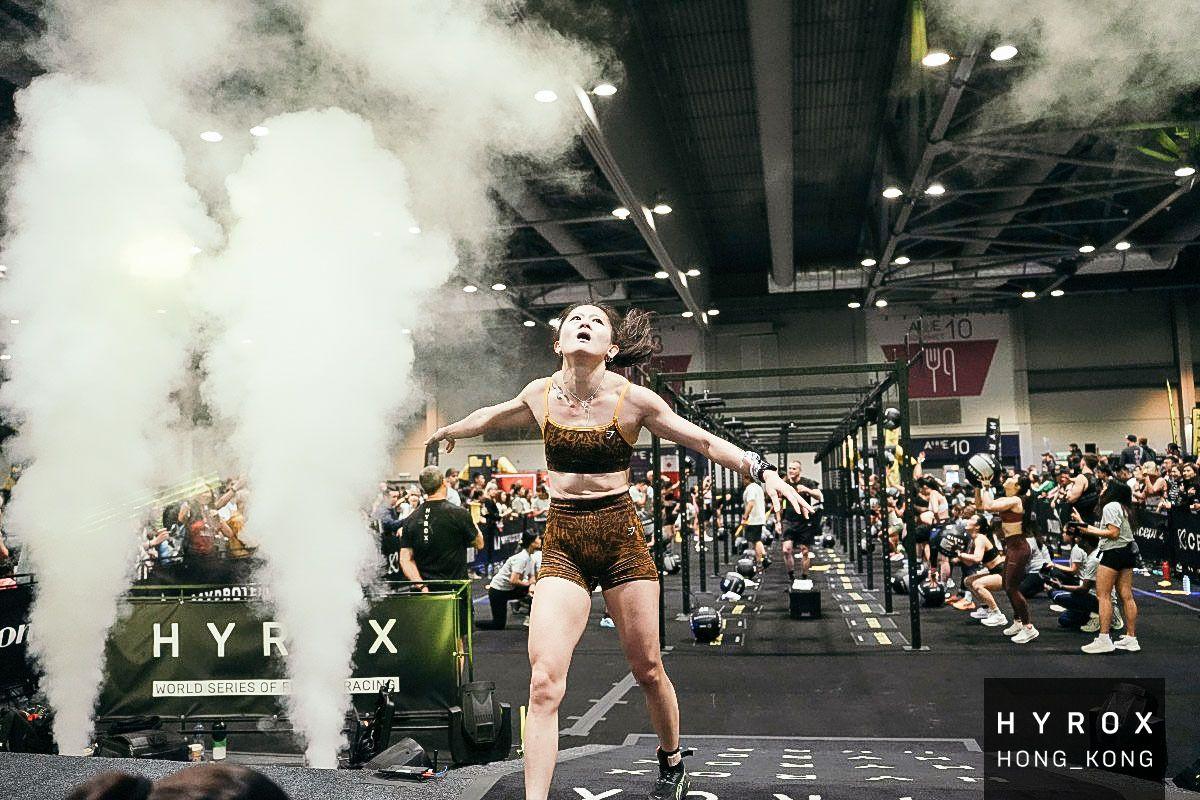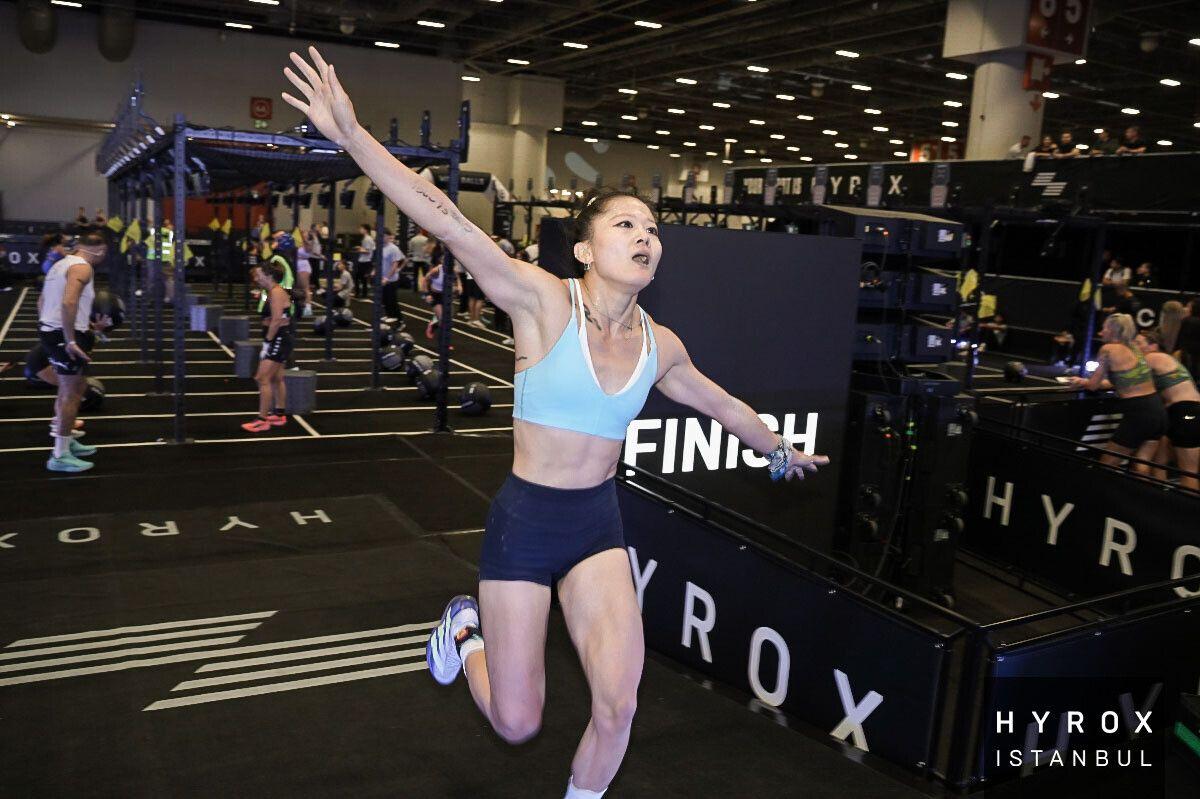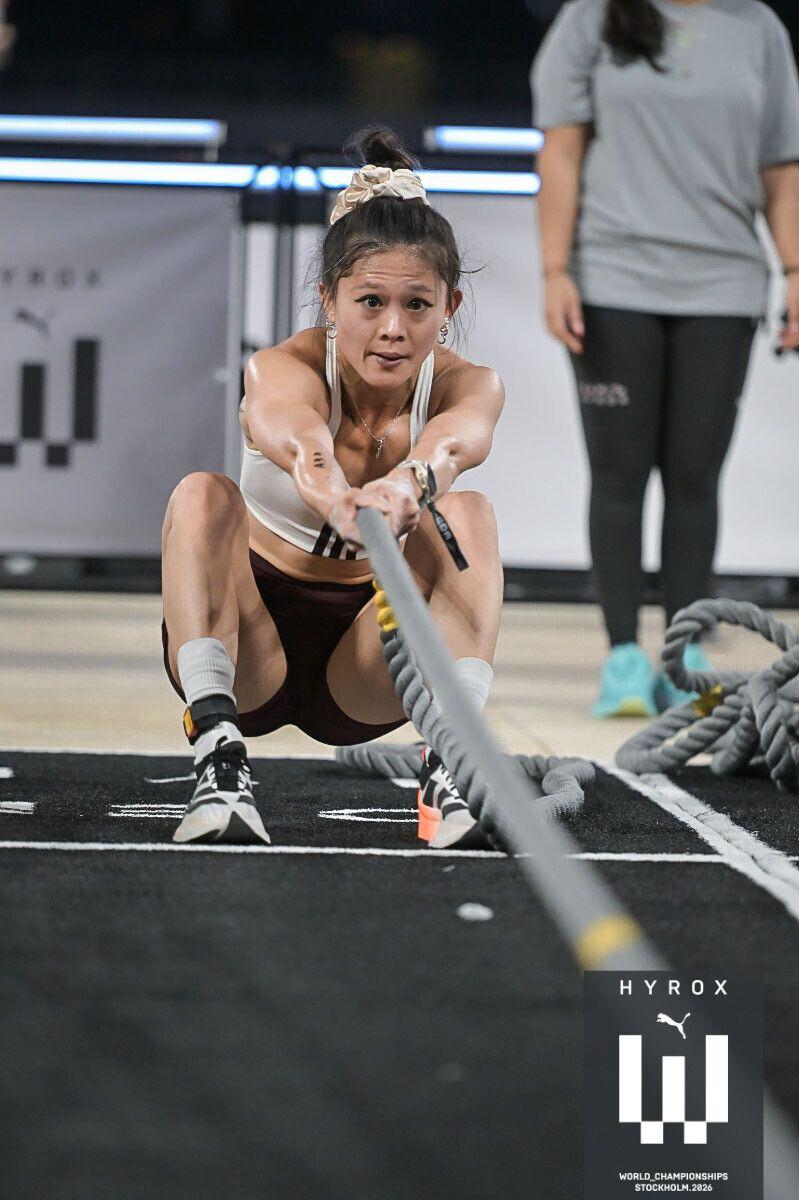
Hi everyone! I'm Pauline Yu (PYY), Taiwan's only 4× Hyrox World Championship qualifier. I still remember my very first Hyrox race — standing behind the sled at the pull station, grabbing that rope like my life depended on it, white-knuckling every single step. By the time I finished those 25 metres, my forearms were completely fried and I had five more stations to go. It was a humbling, painful lesson. I kept thinking: why does this station wreck my arms when the strongest-looking athletes around me seem to glide through it almost effortlessly? The answer, it turned out, had almost nothing to do with arm strength and everything to do with how you use your body weight and your hips. It took me two full training cycles and a lot of embarrassing slow pulls to figure this out, and today I want to share everything I've learned so you don't have to waste the same time I did.
Key Takeaways
- ▸The sled pull is a full-body movement driven by your hips and legs, not your arms — your hands are just hooks on the rope, and the real power comes from loading your posterior chain with every step backward.
- ▸Leaning back at a 45-degree angle and keeping your elbows slightly bent creates a mechanical advantage that lets your bodyweight do the pulling work, dramatically reducing forearm fatigue across the 25-metre distance.
- ▸Short, powerful steps with full hip extension beat long shuffling strides every time — aim for a quick, rhythmic cadence where each step drives your hips backward and loads the rope with your body, not a bicep curl.
- ▸Breathing matters more than most women realise at this station — exhale forcefully with every pull step to keep your core braced and your torso stable, which protects your lower back and transfers force more efficiently to the sled.
- ▸Practising the sled pull with a lighter load first to drill perfect body-lean and hip mechanics will pay off more in competition than always training heavy — quality of movement under fatigue is the real Hyrox sled pull skill to develop.
Why Your Arms Are Lying to You: The Real Engine of the Sled Pull
Let me paint you a picture. It's a Saturday morning in Taipei, I'm training at my gym, and I'm doing sled pull repeats. I had just come back from watching footage of some of the top women's elite Hyrox athletes at a European race, and I noticed something that stopped me cold: the best women weren't yanking the rope. They were almost walking backward in a deep, committed lean, rope taut against their bodies, barely bending their elbows at all. I went back to my own training video from the week before and saw the exact opposite — I was bent forward, arms pumping like I was doing a standing cable row, barely any lean in my torso. No wonder I was gassing out. The arms are simply not big enough muscles to sustain that kind of load over 25 metres, especially when you're already deep into a race and your cardiovascular system is already taxed from the 1000-metre ski erg and the sled push that came before. Once I understood that the sled pull is fundamentally a hip-hinge and body-weight loading exercise rather than an arm exercise, everything changed for me. It's one of those shifts in understanding that sounds simple but genuinely restructures how you train.
The mechanics work like this: when you lean your torso back at roughly a 45-degree angle and take a step backward, you are essentially using your entire bodyweight as a counterbalance to the sled's resistance. Your arms stay relatively straight or only slightly bent — they're transmitting force from your torso to the rope, not generating the force themselves. Your glutes and hamstrings fire with each backward step to extend your hip, and that hip drive is what actually moves the sled. Think of it like a tug of war: the teams that win aren't the ones whose arms are strongest — they're the ones who sit back into their weight and use their legs. That mental image helped me enormously when I was trying to retrain my instincts at this Hyrox station. For sled pull women in particular, this is great news — because our legs and glutes are typically our strongest assets relative to our upper body, and the sled pull, done correctly, plays entirely into that strength. It's not a disadvantage being a woman at this station. Done right, it's actually one where technique levels the playing field significantly.
- ▸Set your lean before you start pulling: before you take your first step, consciously hinge back at the hips until you feel your bodyweight loading the rope, then begin stepping — this primes the right muscles from rep one and prevents you from defaulting to an arm-dominant pull.
- ▸Keep your elbows at about 20 to 30 degrees of bend maximum throughout the pull — think of your arms as rigid cables rather than levers, because the moment you start actively curling the rope toward your chest you are recruiting small muscles that will fatigue very quickly under race conditions.
- ▸Film yourself from the side during a training sled pull and check your torso angle — if you are more upright than 45 degrees, you are likely relying too much on your upper body, and a simple cue like 'sit into the rope' can immediately shift the load to your hips and legs.
- ▸Practise the body lean pattern without a sled first by doing backward walks with a resistance band anchored in front of you, holding the band handles at chest height with arms nearly straight — this drills the exact torso angle and hip extension pattern you need for Hyrox sled pull technique without the added complexity of managing the rope.
Foot Pattern, Breathing, and the Rhythm That Saves Your Race
Once you've sorted your body lean, the next thing that made a huge difference for me was foot pattern and breathing. This sounds almost too simple to matter, but I promise you it does. In my early races, I would take long, reaching steps backward, which sounds powerful but actually does the opposite — a long step throws your weight forward momentarily before you can load it back, which means the rope goes slack for a fraction of a second and then snaps taut again. That stop-start tension is incredibly inefficient and it's also really hard on your grip. The athletes I admired were taking shorter, quicker steps, almost like a boxer's shuffle, staying continuously loaded against the rope. The sled moved at a steadier pace, and they looked far less panicked. I started drilling short-step cadence in training and the improvement in my sled pull station time was noticeable within just a few weeks. It's one of those technique refinements that feels almost too minor to bother with until you actually try it under race fatigue and realise how much energy it saves.
Breathing is the other piece that almost no one talks about in the context of Hyrox station tips, but it's transformed how I handle this station. When I used to hold my breath or breathe shallowly while pulling, my core would soften, my lower back would round slightly, and I'd lose the rigid torso I needed to transmit force effectively. Now I exhale sharply on every single pull step — step, exhale, step, exhale — and it keeps my intra-abdominal pressure high and my torso solid. This isn't just a feel-good trick. A braced, rigid torso means less energy leaks through your midsection and more of every hip-drive step actually translates into sled movement. For women competing in the elite or competitive waves, shaving seconds at every station adds up to minutes over the full race. I've spoken to other Asia-based women's elite Hyrox athletes who trained alongside me in Taiwan and they confirmed the same thing — breathing rhythm at the pull station was a game-changer they wished they'd known from the start.
- ▸Aim for a step cadence that keeps the rope under constant tension — think quick and rhythmic rather than long and powerful, because consistent tension means the sled moves steadily forward without the momentum losses that come from slack-then-snap pulling cycles.
- ▸Exhale forcefully on every backward step as a deliberate habit — not just when you remember to — because consistent intra-abdominal pressure across all 25 metres keeps your core rigid and allows your hip-drive to transfer cleanly through your torso and arms to the sled.
- ▸If you feel your grip slipping during the pull, resist the urge to re-grip by curling your wrists up — instead, reset your body lean and let the weight shift back into your hips, because most grip failures mid-pull are actually a symptom of losing your lean angle and defaulting to arm strength.
Training the Sled Pull Like a Smart Women's Elite Hyrox Athlete
Training the sled pull efficiently is something I've spent a lot of time refining, and I've made plenty of mistakes along the way. One of the biggest was always training at competition weight or heavier and treating every session like a max-effort test. What I found was that my technique would break down under the heavy load, I'd reinforce bad patterns, and I'd arrive at races having drilled inefficient movement into my muscle memory. The smarter approach — and this is what I now recommend to every woman I coach in Taiwan who's preparing for their first or second Hyrox — is to spend at least half of your sled pull training sessions at a lighter load specifically focused on body lean, step cadence, and breathing. Only once those patterns are grooved do you add weight to stress-test them. It sounds counterintuitive, especially if you're used to strength sports where heavier is always better, but Hyrox is a race and technique efficiency under cumulative fatigue is the actual skill being tested.
I also want to address something specific to sled pull women training in Asia, because the gym setups here can be quite different from what you see at dedicated Hyrox training facilities in Europe or North America. Many gyms in Taiwan and across Asia either don't have a proper sled track or have a very short one. Don't let that stop you from training the right patterns. You can simulate the body-lean and hip-drive mechanics with a cable machine or a resistance band anchored low, practising the backward walk and lean angle until it becomes second nature. When you do get access to an actual sled — whether at a Hyrox training event, a competition venue, or a well-equipped gym — your mechanics will be ready to go. I've used this approach myself when travelling and it absolutely transfers. The movement pattern is the skill; the sled is just the tool that tests it.
- ▸Program at least one dedicated technique-focused sled pull session per week at 60 to 70 percent of your competition load, concentrating entirely on lean angle, step cadence, and breathing rhythm rather than trying to beat your previous time or distance — this is how you build efficient movement patterns that hold up under race fatigue.
- ▸Add Romanian deadlifts, hip hinges, and single-leg glute bridges to your accessory work to specifically strengthen the posterior chain muscles — glutes, hamstrings, and erectors — that do the actual work in a properly executed sled pull, because stronger hip extensors directly translate to a faster and less fatiguing pull.
- ▸Simulate race-specific fatigue before your heavy sled pull training sets by doing a five-minute row or ski erg effort at race pace first, because your sled pull technique under rested conditions is not the same skill as your sled pull technique when your heart rate is already at 85 percent — training the latter is what actually prepares you for Hyrox race day.
What the Research Says
The principles behind efficient sled pulling are well-supported by sports science, even if the research hasn't always been conducted specifically on Hyrox athletes. Research published in the Journal of Strength and Conditioning Research has consistently shown that resisted locomotion tasks — like sled drags and pulls — are most efficiently performed when athletes use a forward lean angle that allows the larger hip extensor muscles to dominate the movement, rather than relying on smaller, more fatigue-prone muscle groups like the biceps and forearms. This aligns exactly with what I've experienced personally: the moment I shifted my lean back and stopped trying to arm-curl the rope, my endurance at the station improved dramatically. Studies in the British Journal of Sports Medicine have also consistently highlighted the importance of core stability and intra-abdominal pressure during high-load locomotive tasks — essentially confirming that the breathing pattern I described isn't just a feel-good trick but a biomechanically sound strategy for force transfer and injury prevention. For women competing in women's elite Hyrox categories, where the sled weights are set at challenging but manageable loads, the efficiency of movement technique is genuinely more predictive of station performance than raw upper-body strength. That's the science backing up what experience in Taiwan's training rooms and on international Hyrox race floors has already taught me.
Frequently Asked Questions
Q: What weight is the sled pull for women at a Hyrox race? A: In the standard women's Hyrox category, the sled pull is performed over 25 metres with a set competition weight — but I always recommend checking the current official Hyrox rulebook for the most up-to-date weight specifications because they can vary by category. What I can tell you from personal experience competing and training across multiple Hyrox seasons is that the weight is absolutely manageable for most trained women if you use correct body-lean technique. The women who struggle with this station are almost universally trying to arm-pull the sled rather than using their hips and body weight, regardless of how strong they are in the gym. Technique is the unlock here, not raw strength.
Q: My grip always gives out during the sled pull — how do I fix this? A: This is one of the most common complaints I hear from women training for their first Hyrox, and I had the exact same problem. The honest answer is that grip failure in the sled pull is almost always a symptom of over-relying on your arms rather than a true grip strength deficit. When you're arm-pulling, your forearm flexors are doing double duty — both gripping the rope and generating the pulling force — which exhausts them quickly. When you shift to a body-lean, hip-drive approach, your grip only needs to hold on, not pull. That's a much smaller ask for your forearm muscles. Try the technique corrections in this article first before investing in grip strength accessories. I think you'll be surprised how much less grip fatigue you experience once your lean and step mechanics are dialled in.
Q: How do I practise sled pull technique if my gym doesn't have a sled? A: This is something I dealt with constantly when I first started training for Hyrox in Taiwan, where dedicated sled tracks were not easy to find. My go-to substitutions were cable machine backward walks and low-anchor resistance band pulls, both performed with the same body-lean angle and short-step cadence I described in this article. These aren't perfect replicas of the actual sled pull experience — the rope dynamics are different — but they absolutely drill the hip-hinge, body-lean, and breathing pattern that transfers directly once you get on a real sled. I'd also recommend seeking out Hyrox-specific training events or trial races in your city, because even one or two sessions on an actual sled before your competition will dramatically boost your confidence and let you test whether your technique patterns are transferring correctly under real load.
The sled pull is one of those Hyrox stations that can genuinely become a strength for women who invest the time to learn the right mechanics — and I hope this article gives you a real head start on that journey. You've got the legs and the hips for this; it's just about learning to use them. If you want more Hyrox training content, race prep strategy, and honest first-person insights from my journey as Taiwan's only 4× World Championship qualifier, come find me at paulineyuyu.com and subscribe to my newsletter. I'd love to train alongside you.
Sources: British Journal of Sports Medicine / Journal of Strength and Conditioning Research
Taiwan's elite HYROX Pro athlete and 4× World Championship qualifier. I share my training journey, race insights, and performance notes from the competition floor.