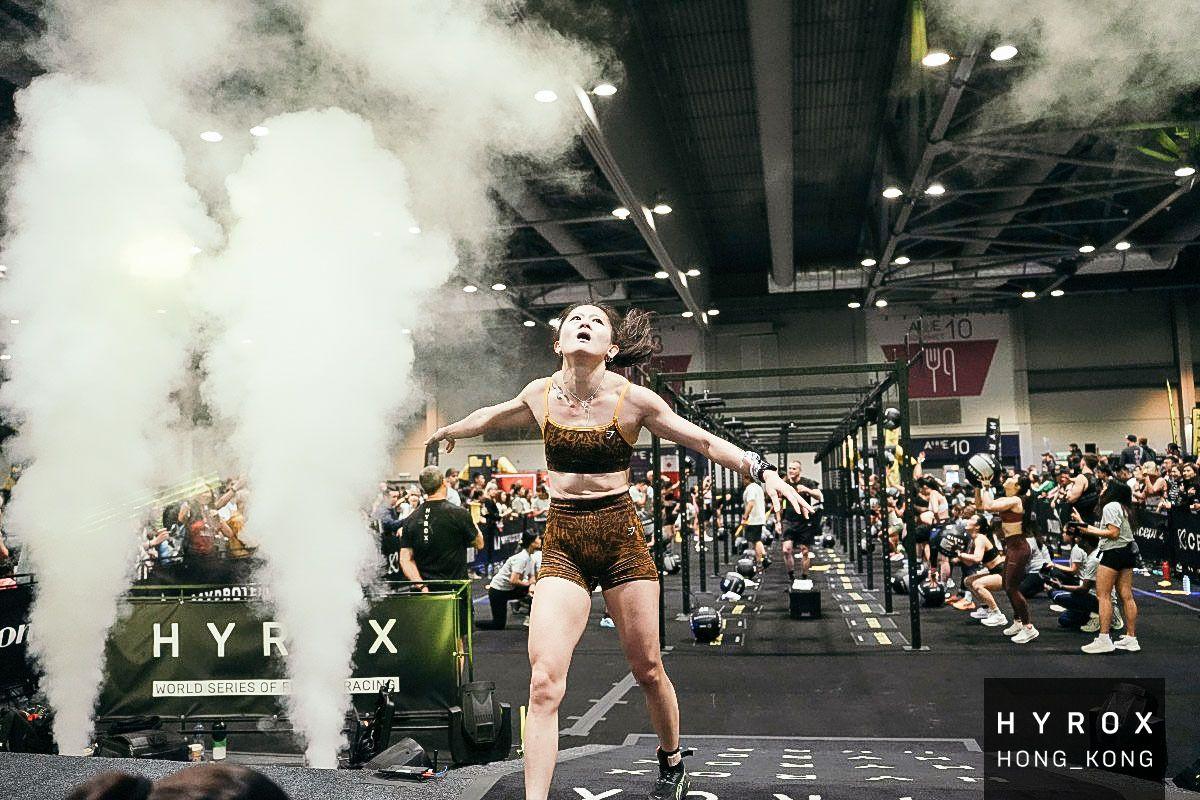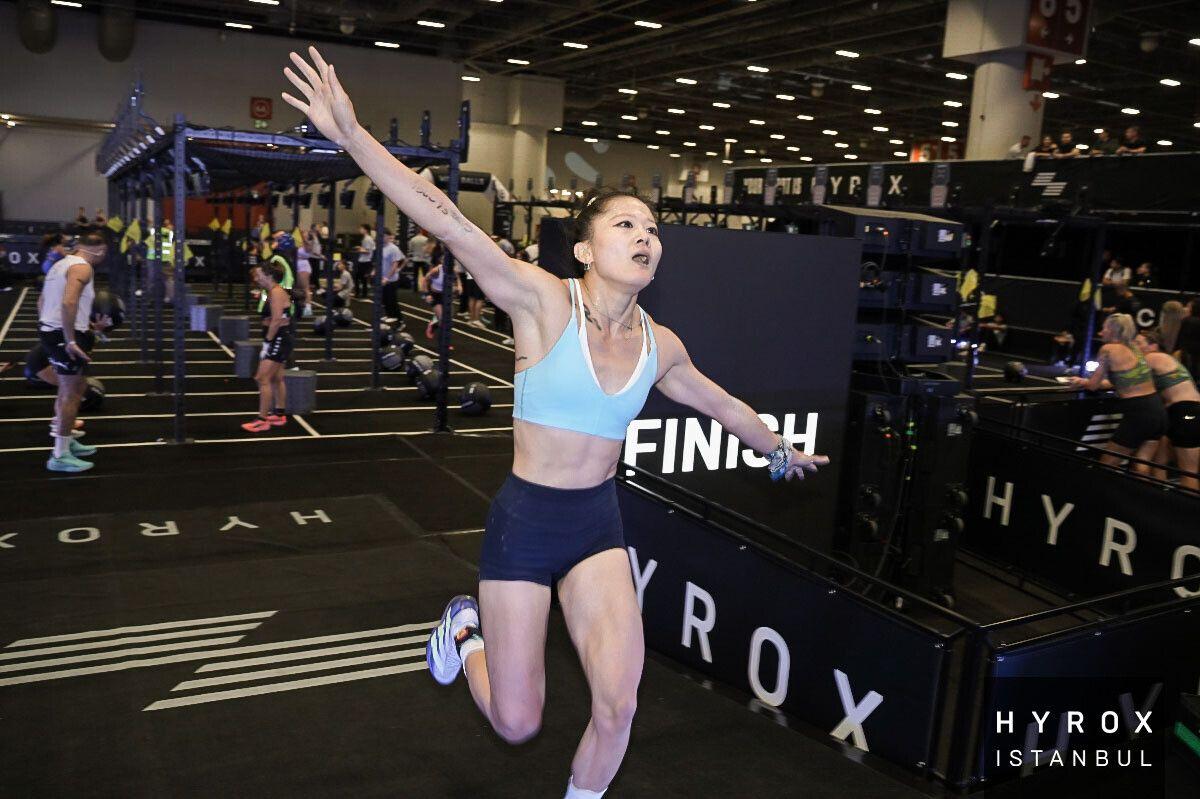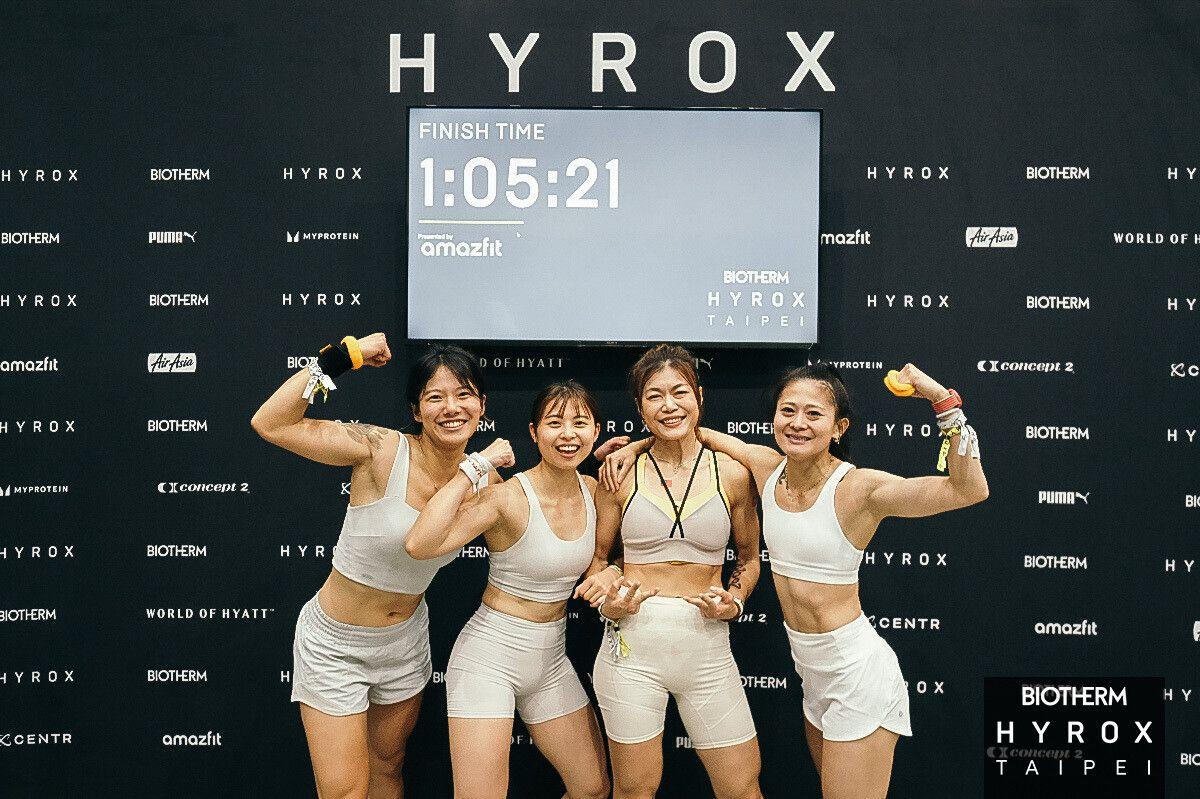
Hi everyone! I'm Pauline Yu (PYY), Taiwan's only 4× Hyrox World Championship qualifier. I still remember the first time I stood at the start line of a Hyrox Doubles race — I'd spent months training as a Singles athlete, and I genuinely thought the teamwork part would feel easier. It didn't. My partner and I had completely different pacing instincts, and by the time we hit the Ski Erg in the second half, we were barely communicating. That race humbled me in a way my solo efforts never had, and it was the moment I realized that Hyrox format differences aren't just logistical — they demand fundamentally different mindsets, training protocols, and race-day strategies. Since then I've competed across all three formats — Singles, Doubles, and Relay — in races across Taiwan, Singapore, and beyond, and I want to share everything I've learned so you don't make the same expensive mistakes I did.
Key Takeaways
- ▸Hyrox Singles demands the highest overall aerobic and muscular endurance because you personally complete every single one of the eight 1 km runs and all eight workout stations without any partner relief.
- ▸Hyrox Doubles training must prioritize transition speed and communication drills just as much as raw fitness, because a poorly coordinated handoff can cost you 30 seconds or more per station.
- ▸In Hyrox Relay format, each of the four athletes runs two 1 km legs and completes two workout stations, so speed and power output per effort become far more important than sustained aerobic endurance.
- ▸Women competing in women's elite Hyrox singles should train their weakest station twice as frequently as their strongest one, because your overall time is only as fast as your slowest discipline.
- ▸Regardless of format, building an aerobic base first before adding Hyrox-specific strength work is the single most important training principle I've applied throughout my career in Taiwan and at World Championships.
How Hyrox Singles Tested Every Weakness I Had
Hyrox singles is the format that started my whole competitive journey, and honestly, it is the most brutally honest test of a complete athlete I've ever encountered. In Singles, you run 8 km total — broken into eight 1 km run segments — and you complete all eight workout stations yourself: SkiErg, Sled Push, Sled Pull, Burpee Broad Jumps, Rowing, Farmers Carry, Sandbag Lunges, and Wall Balls. There is nowhere to hide. I remember my very first competitive Hyrox in Taiwan — I'd been a CrossFit athlete for years and thought the running would be my weakness, but it was actually the Sled Push toward the end of the race that broke me. My legs had nothing left because I hadn't specifically trained the combination of heavy pushing after sustained running. That taught me the core principle of Singles training: every element must be practiced in a fatigued state, not fresh.
For anyone training for Hyrox singles, the most critical training block is what I call 'simulation sets' — where you string two or three Hyrox stations back-to-back after a 1 km run, deliberately accumulating fatigue before each effort. This is what separates Hyrox training from general functional fitness training. You're not just building capacity at each station in isolation; you're training your body to perform under the specific metabolic stress that the race creates. When I was preparing for the World Championships, I was doing full race simulations in my training facility in Taiwan every two to three weeks in the final eight weeks of my prep, and those sessions told me more about my readiness than any benchmark workout ever could. Hyrox format differences start here — singles athletes need the longest sustained aerobic engine of all three formats.
- ▸Train your Hyrox stations in a fatigued state by always pairing them with a 1 km run beforehand — this is the only way to accurately simulate race conditions and identify your true weak points.
- ▸Build your long aerobic base with Zone 2 runs of 40 to 60 minutes at least twice per week during the off-season, because Singles demands you sustain output for 60 to 90 minutes or longer without any teammate to carry the load.
- ▸Identify your three weakest Hyrox stations using a time trial in training, then program those specific movements twice as often as your stronger stations during your 12-week race prep block.
- ▸Practice your pacing strategy for the first three runs — going out too hard in the first 1 km is the single most common mistake I see in women's elite Hyrox singles fields in Asia, and it destroys performance in the back half of the race.
What Competing in Doubles Taught Me About Trust and Pacing
Hyrox Doubles is genuinely a different sport from Singles, and I mean that seriously. On paper, it looks easier — you're sharing the work with a partner, each of you alternating on the stations. In Doubles, both athletes complete the full distance of each station together but alternate the effort, meaning you switch on and off within each station rather than one person doing the whole thing alone. What this actually means in practice is that your transition speed, your communication quality, and your partner's pacing instincts matter just as much as your raw fitness. When I competed in Doubles for the first time, my partner was incredibly fit — arguably fitter than me in isolation — but we hadn't trained our transitions together, and we had different instincts about when to push hard versus recover. We lost significant time not because of fitness, but because of coordination failure.
The strategy for Doubles racing is also fundamentally different when it comes to pacing the run legs. Because you're running alongside your partner, you need to agree on a shared pace that is challenging but sustainable for the slightly slower of the two athletes — because in Doubles, your slowest run is the race's slowest run. This is a nuanced strategic decision that requires honest conversation before race day. In my experience coaching and competing in the Asia Hyrox scene, most Doubles teams make the mistake of letting the faster runner set the pace, which burns out the partner and collapses the back half of the race. The smarter strategy is to let the slower runner set a pace they can sustain for all eight runs, and trust that the time saved by maintaining quality at each station will more than compensate. Hyrox training by format has to account for these interpersonal dynamics — they're as real as any physiological variable.
- ▸Schedule at least four full partner practice sessions in the eight weeks before your Doubles race, where you practice both the physical transitions and the verbal communication cues you'll use on race day to avoid confusion.
- ▸In Doubles training, always let the slightly slower partner set the run pace during practice so you both build confidence in a sustainable shared rhythm rather than accumulating fatigue at a pace only one of you can hold.
- ▸Assign station strengths and weaknesses honestly between partners before race day — for example, if one partner is much stronger on the Sled Push, let them lead that station in practice so you both know how to optimize effort distribution when it counts.
Relay Format: Where Pure Power and Smart Team Selection Win Races
The Hyrox Relay format is the most misunderstood of the three, and I say that having watched so many teams in Taiwan and across Asia approach it with completely the wrong training mindset. In Relay, a team of four athletes each completes two 1 km runs and two workout stations. Because each individual effort is much shorter than in Singles or Doubles, the physiological demands shift dramatically — you need explosive power output and the ability to go from resting heart rate to near-maximum intensity very quickly, rather than the sustained aerobic endurance that defines Singles performance. The best Relay athletes I've competed against are the ones who've trained for that specific quality: fast activation, high peak output, and then the mental ability to shut off and recover actively during their teammates' legs.
Team selection and station assignment in Relay is a strategic puzzle that is genuinely fascinating, and getting it right can make a huge difference to your total race time. The smartest Relay teams I've seen in women's elite Hyrox competition strategically match each athlete's physical strengths to specific stations. If you have one teammate who is an exceptional runner, you might choose to give them the run legs that immediately precede the most demanding stations, so the stronger station athletes receive a slightly fresher handoff. If you have someone with a very high deadlift or farmer's carry capacity, assign them the Sled Pull or Farmers Carry station. This sounds obvious, but in practice I've seen Relay teams at races across Asia simply randomize the station assignments and leave significant time on the table. Hyrox relay format strategy is about optimizing the chain, not just the individual links.
- ▸Train specifically for rapid onset of high-intensity effort in Relay preparation by practicing sprinting to full power within the first 200 meters of a run, rather than building pace gradually the way a Singles athlete would.
- ▸Assign your Relay station order at least four weeks before race day and then train that specific station pairing consistently so each athlete becomes deeply efficient at their two assigned movements, not just generally fit.
- ▸Practice active recovery between Relay legs — light walking, controlled breathing, and staying warm — because going cold and stiff during your teammates' legs and then launching into a hard effort is a recipe for injury and a terrible split time.
What the Research Says
The physiological differences between the three Hyrox formats map very clearly onto what exercise science has established about mixed-modal sport. Research published in the British Journal of Sports Medicine has consistently shown that concurrent training — combining endurance and strength work in the same session — produces different adaptations depending on volume, intensity distribution, and recovery time between modalities. This directly supports the idea that Singles athletes, who must sustain high output across both running and station work for 60 to 90-plus minutes, need a very different training stimulus than Relay athletes, who require short-duration explosive capacity. Additionally, research in the Journal of Strength and Conditioning Research has long established that aerobic base development is the foundation upon which high-intensity functional performance is built — and this has been absolutely consistent with my personal experience training in Taiwan and preparing for World Championships. I used to skip long Zone 2 work in favor of more exciting Hyrox-specific pieces, and my performance plateaued. When I reintroduced structured aerobic base blocks into my program, my station times improved — not just my runs. The science and my lived experience tell the same story: build the engine first, then sharpen the specific tools for your format.
Frequently Asked Questions
Q: I'm completely new to Hyrox — which format should I start with? A: Honestly, I'd recommend starting with Doubles or Relay if you have friends who are also curious about Hyrox, and here's why: the social accountability and shared experience makes training more enjoyable, and on race day the shared effort means you're less likely to have an overwhelming or discouraging first experience. That said, if you want to understand your true fitness level across all the Hyrox disciplines, Singles gives you the clearest picture. I started with Singles in Taiwan and it was humbling, but the feedback I got about my specific weaknesses was invaluable and drove years of targeted improvement. Either way, commit to at least 12 weeks of structured preparation before race day — don't wing it.
Q: Can I use the same weekly training plan for Doubles as I do for Singles? A: You can use the same foundation — aerobic base work, strength sessions, and Hyrox station practice — but you absolutely need to add partner-specific sessions if you're serious about Doubles. The physical preparation overlaps about 70 to 80 percent, but the remaining 20 to 30 percent involves things that can't be trained alone: transition timing, shared pacing decisions, and the communication patterns you'll need under race stress. In my experience, teams that train exclusively solo and then meet for the first time on race day rarely perform to their individual potential. Block out at least one or two sessions per week in the final six weeks specifically with your partner, practicing the race as a unit.
Q: In Relay, how do we decide who does which stations? A: This is one of my favorite strategy conversations to have with Relay teams. Start by having every team member do a time trial on all eight Hyrox stations individually, then rank everyone on each movement. Assign each athlete the two stations where they rank highest relative to the rest of the team. After that, look at the station sequence in the race and think about recovery windows — if athlete A does a very demanding station, make sure athlete B, who follows them in the rotation, gets a station that gives athlete A enough time to recover before their second effort. Don't just think about individual strengths in isolation; think about the sequence as a system. Teams that approach Relay this way consistently outperform teams with similar raw fitness levels who haven't done this planning work.
No matter which Hyrox format you're training for, the most important thing is that you show up consistently, stay curious about your weaknesses, and enjoy the process — because this sport genuinely has something to offer every type of athlete. I'm so grateful to be part of this growing community in Taiwan and across Asia, and I hope this breakdown helps you feel more confident stepping into whichever format calls to you. If you want more training content, race strategy deep-dives, and behind-the-scenes looks at my World Championship prep, come subscribe at paulineyuyu.com — I share everything there, and I'd love to see you in the Hyrox community. See you at the start line!
Sources: British Journal of Sports Medicine / Journal of Strength and Conditioning Research
Taiwan's elite HYROX Pro athlete and 4× World Championship qualifier. I share my training journey, race insights, and performance notes from the competition floor.