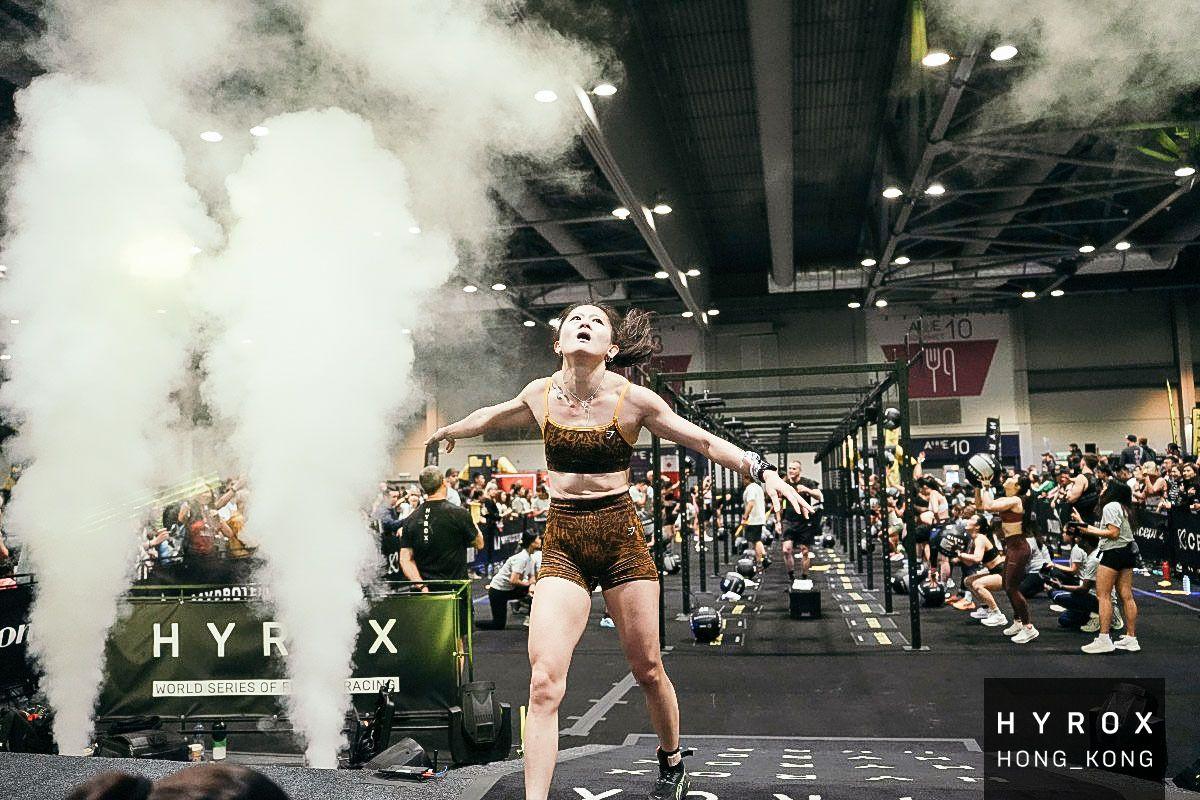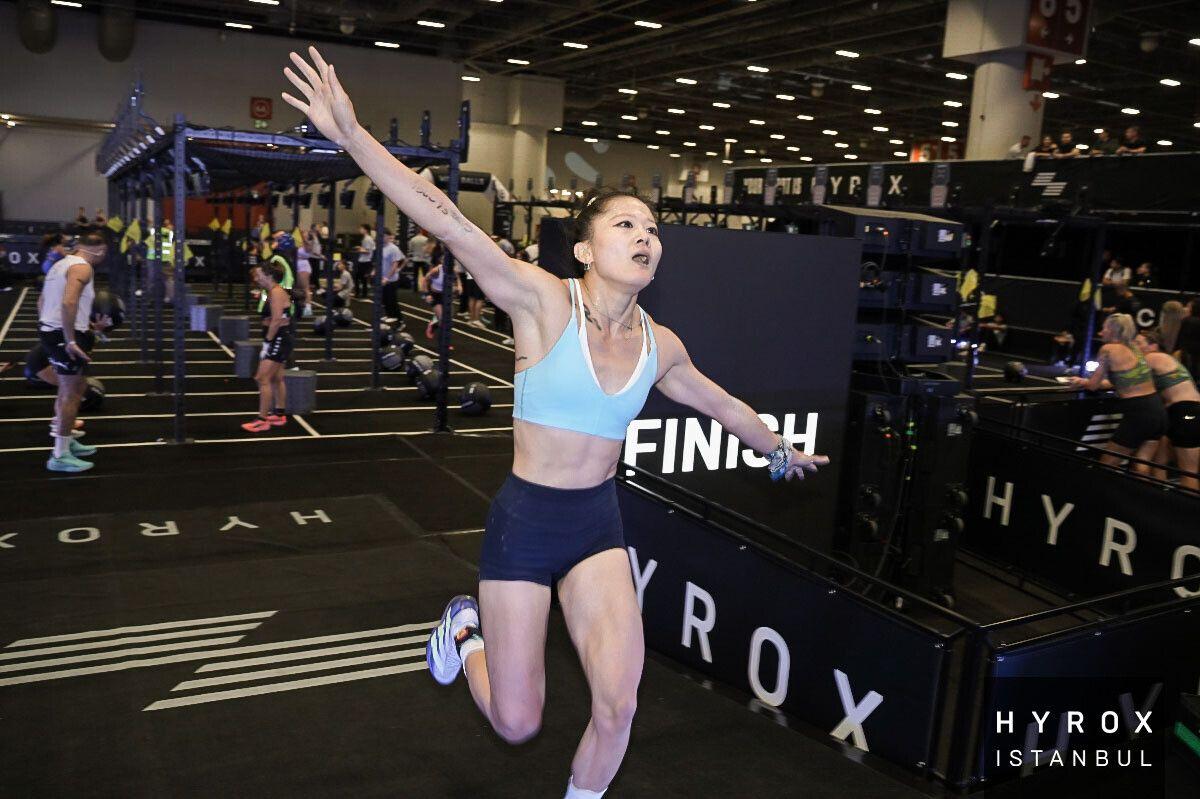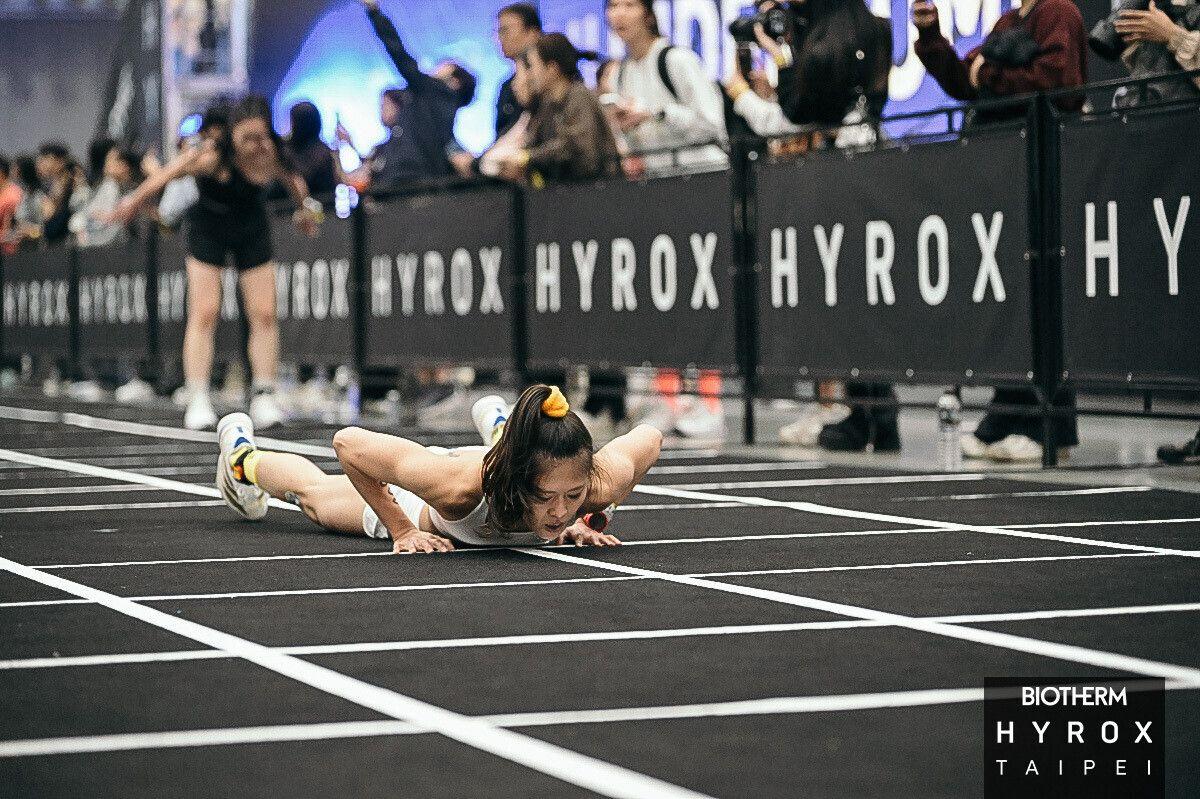
Hi everyone! I'm Pauline Yu (PYY), Taiwan's only 4× Hyrox World Championship qualifier. I still remember the moment I truly understood what Hyrox demanded of my body — it was during my second season of competing, somewhere between the SkiErg and the sled push, when my legs gave out in a way that no amount of separate running or gym sessions had prepared me for. I'd been training like a runner who occasionally lifted, and the race exposed every gap in that approach brutally and publicly. That humbling experience sent me back to the drawing board, and what I rebuilt was a training philosophy that treats Hyrox running strength combination not as two separate disciplines bolted together, but as one integrated system. That system has taken me to four World Championships, and today I'm sharing every piece of it with you.
Key Takeaways
- ▸Never train running and strength on completely separate tracks — Hyrox demands that your cardiovascular system and your muscles fire simultaneously under fatigue, so your training must replicate that exact demand at least twice per week.
- ▸Prioritise movement-specific strength work: sled pushes, wall balls, sandbag lunges, and burpee broad jumps should form the backbone of your gym sessions because they mirror the eight Hyrox stations directly.
- ▸Running economy matters more than raw speed for Hyrox — train your aerobic base with Zone 2 running for at least 60 percent of your weekly running volume so your body can recover between stations efficiently.
- ▸Transition training — practising the switch from running directly into a strength station without a rest — is a non-negotiable weekly session for any woman competing at the elite Hyrox level and is grossly underused by recreational athletes.
- ▸Recovery and sleep are training inputs, not rewards — as a hybrid training woman competing in Asia's humid climate, I treat eight hours of sleep and deliberate nutrition timing as seriously as any workout block on my calendar.
Why I Stopped Separating Running and Strength — and What Changed
In my early Hyrox career here in Taiwan, I trained the way most athletes in Asia approach fitness: run your kilometres in the morning, hit the gym in the evening, sleep, repeat. It felt productive. The training log looked impressive. But when I stood on the competition floor, something was consistently wrong — my running splits would hold up, and my strength numbers looked fine in isolation, but the moment I had to push a sled after already running one kilometre, or perform wall balls with a heart rate already sitting above 170 bpm, everything fell apart. The connection between my cardiovascular system and my muscular endurance simply hadn't been trained to work together under that specific kind of compounding fatigue. It took two full seasons of honest reflection, conversations with my coach, and watching women from Europe and North America perform the Hyrox running strength combination seamlessly before I finally made the structural change that transformed my results.
The change I made wasn't radical in terms of volume — I didn't suddenly double my training hours. What changed was the sequencing and the intent behind every session. I started programming what I call 'coupling blocks': a running interval immediately followed by a strength station, with no rest between the two. A classic example from my current Taiwan Hyrox training method would be running 400 metres at race pace on a treadmill, stepping off, and going straight into 20 metres of sandbag lunges at competition weight without pausing to catch my breath. The discomfort of this is enormous at first. But within four to six weeks, my body began to adapt in a way that pure running or pure strength training had never produced. My race day transitions became faster, my station execution under fatigue became cleaner, and — critically for women's elite Hyrox — my mental composure in the back half of the race improved dramatically because the training had already put me in that exact suffering zone hundreds of times.
- ▸Start your coupling blocks conservatively: pair a 200-metre easy jog with one light station movement for the first two weeks so your joints and connective tissue can adapt before you increase intensity.
- ▸Use your heart rate monitor during coupling blocks to ensure you're actually reaching race-realistic intensity — if your heart rate never climbs above 155 bpm during these sessions, you're not training the right adaptation.
- ▸Film yourself performing station movements during coupling blocks at least once a month — fatigue changes your form in ways you can't feel in the moment, and catching those breakdowns on video lets you correct them before they become race-day habits.
- ▸Schedule coupling block sessions on Tuesday and Thursday if you're running a five-day training week, leaving Monday for aerobic base work, Wednesday for pure strength, and Saturday for your long Zone 2 run — this structure balances stimulus and recovery well.
Building the Aerobic Engine That Fuels Every Station
One of the biggest mistakes I see among hybrid training women who are new to Hyrox — both here in Taiwan and across Asia at the regional events I've attended — is neglecting the aerobic base in favour of high-intensity work. I understand the temptation. High-intensity sessions feel productive, they're time-efficient, and they produce that satisfying exhaustion that makes you feel like you've worked hard. But Hyrox is a race that lasts anywhere from 65 minutes to well over two hours for most recreational athletes, and the aerobic system is the engine that determines how efficiently you can operate across that entire duration. Without a strong aerobic base, you burn through glycogen too fast, your heart rate spikes unsustainably at each station, and the back half of your race becomes a survival exercise rather than a performance. I learned this through painful experience during my third World Championship qualification season, when I over-indexed on interval training and arrived at the event with excellent top-end speed but a compromised ability to sustain anything for more than 20 minutes.
My current approach to aerobic base building for the Taiwan Hyrox training method involves keeping at least 60 percent of my total weekly running volume in Zone 2 — that's the conversational pace zone where you can speak in full sentences without gasping. For me, that means roughly three to four runs per week where I'm deliberately resisting the urge to push harder, keeping my heart rate between 130 and 150 bpm for 45 to 75 minutes. The remaining running volume is split between threshold work and race-pace intervals. This distribution feels almost frustratingly easy on the easy days, and that's exactly the point. The adaptation happening in Zone 2 — mitochondrial density, fat oxidation efficiency, cardiac stroke volume — takes months to build and is the foundation that makes every other piece of Hyrox running strength combination work. It's not glamorous, but as a women's elite Hyrox athlete who has raced on the world stage four times, I can tell you it's non-negotiable.
- ▸Use nasal breathing as a simple field test for Zone 2: if you can breathe entirely through your nose while running, you're in the right intensity range — the moment you need to open your mouth, you've drifted above Zone 2.
- ▸Protect your long Zone 2 run as sacred — it should be the last session you cut when life gets busy, because it's the single workout that does the most to support your Hyrox race sustainability over a 60-to-90-minute competition effort.
- ▸Add one weekly threshold run of 20 to 30 minutes at a comfortably hard pace — this bridges the gap between your aerobic base and your race-pace running intervals, and keeps your lactate threshold moving upward throughout your training block.
Programming Strength for the Eight Stations Without Killing Your Running
Here's the tension every Hyrox athlete faces: the strength work you need to perform the eight stations well — heavy sled pushes and pulls, loaded carries, wall balls, sandbag lunges — creates significant muscular fatigue and soreness that can compromise the quality of your running sessions if programmed carelessly. I made this mistake constantly in my first two seasons. I'd do heavy deadlifts on a Monday, then wonder why my Tuesday interval run felt like running through wet concrete. The problem wasn't the deadlifts — it was the sequencing. Learning to programme strength in a way that serves your Hyrox running strength combination goals rather than undermining them is one of the most important skills you'll develop as a hybrid training woman, and it took me the better part of two years to figure it out intuitively. The short version is this: heavy lower-body strength work and hard running sessions need at least 48 hours between them, and station-specific strength work should be treated as a skill practice as much as a strength builder.
What I mean by station-specific strength as skill practice is this: when I program wall balls, I'm not just counting repetitions and moving on. I'm practising the breathing pattern, the hip drive timing, the point in the movement where I can momentarily relax my shoulders, the mental cue that keeps me from breaking the set too early. These are the same things I'll be managing on race day when my heart rate is at 175 bpm and I've already run four kilometres. The same principle applies to every other station. My sandbag lunge sets aren't just weighted walking — they're rehearsals for maintaining posture, knee tracking, and breathing rhythm under the specific type of fatigue Hyrox produces. This is how the Taiwan Hyrox training method treats strength work: not as a separate training modality, but as race simulation in a controlled environment. And it's a mindset shift that I believe separates athletes who perform their strength numbers in the gym from athletes who execute cleanly under women's elite Hyrox race conditions.
- ▸Never programme heavy squats or heavy deadlifts within 48 hours of a key running session — the residual muscular fatigue will degrade your running mechanics and rob you of the quality that makes those intervals actually improve your race fitness.
- ▸Treat your station-specific strength sessions as dress rehearsals: use competition weights, competition rep counts, and deliberately practise breathing control and pacing strategy during each set, not just brute force completion.
- ▸Include upper-body pulling work — rows, pull-ups, cable pulls — at least twice per week, because the roxzone sled pull and ski erg demand significant lat and upper-back strength that many women underestimate until they're on the competition floor.
What the Research Says
The approach I've built through years of personal trial and error in Taiwan's competitive Hyrox scene is well supported by the broader sports science literature. Research in the British Journal of Sports Medicine has consistently shown that concurrent training — the combination of endurance and resistance work within the same training programme — produces superior real-world athletic performance compared to either modality trained in isolation, particularly for events that require sustained power output over time. The key nuance the research highlights, and one I've experienced firsthand, is that the sequencing and recovery between endurance and strength sessions is what determines whether concurrent training enhances or interferes with adaptation. When programmed intelligently — as I've described through my coupling block method and the 48-hour rule for lower-body strength and running — the two modalities amplify each other. Research in the Journal of Strength and Conditioning Research has also consistently supported the importance of specificity in hybrid training: the closer your training movements match your competition demands, the more directly your training gains transfer to race performance. That's precisely why I build the Hyrox station exercises into my strength sessions rather than relying on generic gym movements, and it's the principle at the heart of every recommendation I've made in this article.
Frequently Asked Questions
Q: I'm a beginner in Taiwan who wants to try Hyrox — how many days per week should I train, and how do I split running and strength? A: Honestly, when I was starting out, four days per week was more than enough to make meaningful progress, and I'd recommend the same for most beginners. Try two days focused on running — one easy Zone 2 run of 45 minutes, one interval session of 20 to 30 minutes — and two days of strength focused on Hyrox station movements. As your fitness builds over three to four months, you can add a fifth day that combines elements of both. The biggest mistake beginners make is trying to do too much too soon and getting injured before they even reach a start line. Start conservative, be consistent, and the results will come.
Q: Should I do cardio before or after strength training? A: This is one of the most common questions I get from hybrid training women across Asia, and my honest answer is: it depends on what you're trying to prioritise that day. If running quality is the priority — say, it's an interval day — do your running first while your legs are fresh, then do a shorter strength session afterwards. If strength quality is the priority — you're practising heavy sled pushes or technique-heavy movements — do strength first. What I try to avoid is doing two maximal-effort sessions back to back in the same day, because the second one will always suffer. The coupling blocks I mentioned earlier are a deliberate exception, where the point is to train under accumulated fatigue — but those are structured carefully with appropriate recovery built into the weekly plan.
Q: How do I know if I'm ready to compete in my first Hyrox race? A: I always tell athletes that the best way to know you're ready is to complete a full mock race in training — run eight one-kilometre efforts on a treadmill, each separated by one of the eight Hyrox stations at the prescribed weight, and see how you feel at the end. If you can finish that simulation without stopping, without reducing the weights, and without hating every second of it, you're ready to race. In Taiwan and across Asia, Hyrox events have a warm and encouraging community atmosphere, and the truth is that most first-timers simply need to experience the race to understand what to prepare for next. Don't wait until you feel perfectly ready — you won't. Sign up, do your best, learn everything, and come back faster.
Thank you so much for reading all the way through — it genuinely means a lot to me that you're investing this time in your training. Whether you're brand new to Hyrox or you're chasing a personal best on the world stage, I hope the Taiwan Hyrox training method I've laid out here gives you a concrete framework to build from. If you want more training content, weekly tips, and behind-the-scenes looks at how I prepare as a women's elite Hyrox athlete, come find me and subscribe at paulineyuyu.com — I'd love to have you in the community. See you on the race floor!
Sources: British Journal of Sports Medicine / Journal of Strength and Conditioning Research
Taiwan's elite HYROX Pro athlete and 4× World Championship qualifier. I share my training journey, race insights, and performance notes from the competition floor.