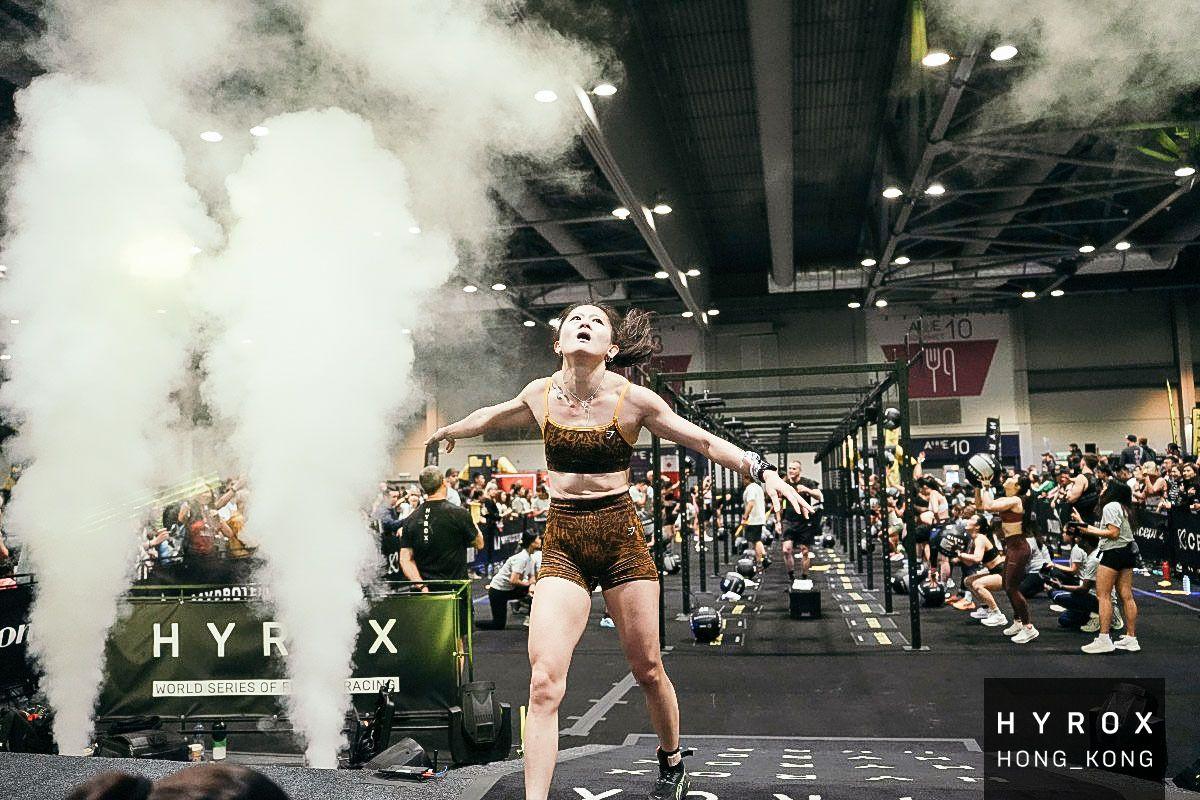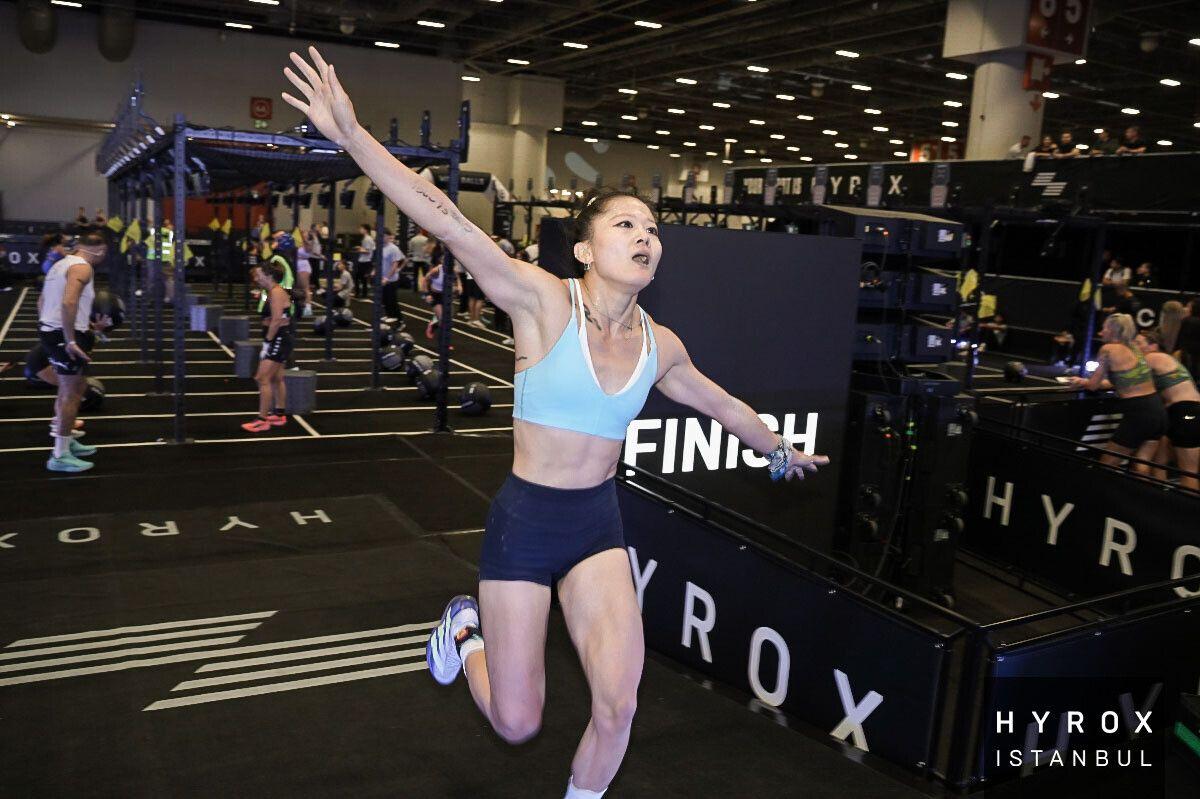
Hi everyone! I'm Pauline Yu (PYY), Taiwan's only 4× Hyrox World Championship qualifier. I still remember standing in the roxzone at my second World Championship, chest heaving, brain completely blank, just staring at the ski erg like I'd never seen one before. I'd trained my running splits obsessively, I'd hit every functional station in practice, but I had completely ignored what happened in between — and it cost me nearly ninety seconds across the entire race. That was the day I realized the roxzone isn't just a corridor you jog through; it's a performance variable that elite women in Hyrox treat as seriously as any single station. Since then, mastering Hyrox transitions has become one of the most talked-about parts of my coaching work here in Taiwan, and I want to share everything I've learned so you don't waste the same time I did.
Key Takeaways
- ▸The roxzone is the corridor connecting each 1 km run loop to the eight functional stations, and the time you spend there is fully on the clock — treat every second of it as a scorable opportunity, not a rest break.
- ▸Practice your mental pre-cue system during training so that the last 100 metres of every run loop is already priming your body and brain for the specific movement pattern of the next station, reducing the blank-stare freeze that costs most athletes five to fifteen seconds.
- ▸Your breathing reset protocol — two to three forced exhales as you enter the roxzone — can meaningfully lower your perceived exertion before you touch any equipment, which means you start each station with more composure and better mechanics.
- ▸Walk-throughs of the actual race venue layout, or a scaled mock-up in your gym, are non-negotiable for women competing in elite Hyrox divisions because knowing exactly where to go removes the cognitive load that compounds fatigue mid-race.
- ▸Pacing the roxzone jog deliberately — not sprinting it, not shuffling it — at roughly your easy aerobic pace preserves muscular freshness for the upcoming station and is a strategy I personally drill into every athlete I coach across Asia.
- ▸Race-day gear decisions like shoe choice, bib placement, and hydration timing relative to the roxzone entry and exit points can each save you a small but compounding amount of time that adds up to a meaningful result improvement over the full eight-station race.
Why Most Athletes Ignore the Roxzone Until It's Too Late
When I first got into Hyrox, the community conversation in Taiwan was almost entirely about running pace and station weights. How fast is your 1 km split? Can you hold your ski erg watts? Can you do unbroken wall balls? All of that matters enormously, of course. But nobody was talking about the transition zone — the roxzone — as a trainable skill. I trained for eight months before my first World Championships appearance and I can honestly say I never once simulated entering a station from a running state in a way that forced me to think about the physical corridor between them. Then I watched my race footage back and I was genuinely embarrassed. I was slowing to almost a walk before stations, fumbling with my positioning, taking five or six full seconds just to settle into my stance. Multiplied across eight transitions, that's forty to fifty seconds of dead time that had nothing to do with fitness.
Here's the thing most training plans miss: the roxzone is where your fatigue compounds your decision-making. When you're deep in a race, you're not just physically tired — you're cognitively depleted. The simple act of navigating a corridor, finding your station, and initiating movement under high heart rate stress is genuinely harder than it sounds. Research in the British Journal of Sports Medicine has consistently shown that decision-making speed and motor initiation both degrade significantly under sustained cardiovascular load, which is exactly the state you're in every time you enter the roxzone. So if you haven't trained specifically for that transition state, you're going into battle without armour. I started integrating what I call transition blocks into my weekly sessions — short, intense run-to-station sequences — and the effect on my race composure was immediate and dramatic.
- ▸Add dedicated run-to-station blocks in at least two sessions per week: run one kilometre at race pace, then enter your chosen station immediately without rest, focusing on the quality of your mental and physical transition rather than just the station performance itself.
- ▸Film yourself from the side during these transition blocks so you can review how long it takes from the moment you stop running to the moment you produce your first quality rep — that gap is your transition tax, and seeing it on video is the fastest way to motivate yourself to fix it.
- ▸Build a consistent physical trigger to start every station — for me it's planting my left foot first and taking one deliberate breath — because a repeated physical anchor cuts through mental fog and gets you moving with intention instead of hesitation when your brain is struggling under fatigue.
- ▸Study the official Hyrox race map for your specific event city because venue layouts vary, and knowing exactly how many metres of roxzone corridor you have before each station lets you time your breathing reset and mental pre-cue to land precisely as you arrive at the equipment.
The Mental Pre-Cue System That Saved Me Minutes
One of the biggest shifts in my Hyrox performance came when I stopped thinking about each run and each station as separate events and started treating the last one hundred metres of every run loop as the beginning of the next station. This sounds simple but it fundamentally changes how you pace, how you breathe, and how you think during that final stretch of running. Instead of finishing the run and then figuring out what comes next, I mentally label the upcoming station before I even exit the running track. I say the station name in my head — 'ski erg' or 'sled push' or 'burpee broad jump' — and I start physically preparing my body posture and breathing pattern for that specific demand while I'm still running. By the time I step into the roxzone, my body already has a head start.
What makes it powerful is that it offloads the cognitive decision to a moment when you're slightly less fatigued — during the end of the run — rather than waiting until you're standing in the roxzone with your heart rate peaking and your lungs screaming. For women competing in elite Hyrox divisions especially, where the margins between podium positions can be thirty seconds or less, this kind of mental efficiency is the difference between a personal best and a frustrating day. I genuinely believe this system has contributed more to my competitive results than any single increase in my functional fitness.
- ▸Memorise the exact station order before race day until it's completely automatic — station sequence, weight requirements for your division, and any setup steps — so that your pre-cue during the final 100 metres of each run is specific and accurate rather than vague and uncertain.
- ▸Use a three-word mental script for each station transition — for example, 'brace, hinge, drive' for the sled push — and rehearse saying it during the last 100 metres of your training runs so that the phrase becomes a physical trigger that fires the right motor patterns on race day.
- ▸Practice the full station sequence in order at least once during your build phase — not just individual stations in isolation — because the cumulative fatigue context of stations three, four, and five is completely different from practicing them fresh, and your pre-cue system needs to be trained under that realistic tiredness to hold up in competition.
Pace, Breath, and Body Position: The Physical Mechanics of a Fast Hyrox Transition
Beyond the mental game, there are very concrete physical mechanics that determine how fast your Hyrox transition actually is on race day. The first is roxzone jogging pace. I see so many athletes either sprint through the corridor — arriving at the station with their heart rate spiked even higher — or shuffle through it like they're cooling down, losing ten or fifteen seconds of potential time. The right approach is deliberate easy aerobic jogging, roughly sixty to sixty-five percent of your max heart rate if you're monitoring it. This pace keeps blood moving and maintains your body temperature and muscle readiness without adding unnecessary cardiovascular stress on top of an already demanding race. When I coach athletes in Taiwan, I describe the roxzone jog as 'purposeful and calm' — you're not resting, but you're not racing either.
The second physical mechanic is your breathing reset. I use a forced exhale protocol — two or three sharp, deliberate exhales as I enter the roxzone — which has a measurable effect on lowering my perceived effort before I reach the station. This isn't just a feeling; research in the Journal of Strength and Conditioning Research has consistently documented that voluntary breathing regulation under exercise stress can reduce perceived exertion and help restore parasympathetic tone faster than passive recovery alone. The third mechanic is body position: keep your shoulders down and your chest slightly open as you jog through the roxzone, because hunching forward after a hard run locks tension into your upper body that then compromises your first reps on the ski erg, rowing machine, or any upper-body station. Small adjustments, massive compounding effect.
- ▸Practice your forced exhale reset specifically during your transition training blocks — two sharp exhales as you cross the imaginary roxzone entry line in your gym — so it becomes an automatic physical habit that fires even when your brain is too fatigued to consciously initiate it on race day.
- ▸Wear your race shoes for every transition training block, not just your comfort training shoes, because shoe weight and heel drop affect how your foot strikes when you shift from a running gait into the more grounded, braced posture required at most Hyrox stations, and your body needs reps to adapt to that specific footwear feel.
- ▸Plan exactly where on your body you will carry any race essentials — a gel, a small water bottle, your race number — before race day, because fumbling with gear in the roxzone is a completely avoidable time loss that I have personally made in competition and will never make again.
What the Research Says
The science behind transition performance in hybrid racing is still catching up to what athletes like me are experiencing on the competition floor, but two fields of research are directly relevant. The British Journal of Sports Medicine has consistently shown that cognitive function — including reaction time, decision-making accuracy, and motor initiation speed — degrades progressively under sustained high-intensity exercise. This is exactly why the roxzone feels harder to navigate in the back half of a Hyrox race than in the first two or three transitions: your brain is genuinely slower, not just your legs. Training your pre-cue system and physical anchors directly addresses this by automating decisions that would otherwise require conscious processing. Additionally, research in the Journal of Strength and Conditioning Research has established that voluntary control of breathing patterns during submaximal exercise can meaningfully reduce both perceived exertion and heart rate recovery time. That's the science behind my forced exhale protocol in the roxzone. I've experienced this firsthand at every major competition I've entered, from my early Hyrox races in Asia to the World Championships stage: the athletes who arrive at each station composed and deliberate consistently outperform those who arrive panicked and gasping, even when their underlying fitness levels are similar. The roxzone is where fitness alone stops being the deciding variable.
Frequently Asked Questions
Q: How long is the roxzone in a Hyrox race, and does it vary by venue? A: The roxzone is the transition corridor that connects the 1 km running track to each of the eight functional stations, and its physical length can vary slightly depending on the venue layout. In my experience across multiple World Championship events and regional races in Asia, it typically ranges from about twenty to fifty metres of walkable corridor space. What matters more than the exact distance is that you know the layout before you race — ideally by walking the course during athlete briefing or check-in. In Taiwan and at international events, I always arrive early specifically to walk the roxzone so there are zero surprises on race day. Every unfamiliar step in that corridor under fatigue costs you more time than you'd expect.
Q: Should I walk or jog through the roxzone to save energy for the stations? A: This is one of the most common questions I get from newer Hyrox athletes, and the honest answer is: jog, always jog — but do it at an intentionally easy, controlled pace. Walking feels like it saves energy, but it actually disrupts your cardiovascular rhythm and lets your muscles cool down slightly in a way that hurts your station performance more than a steady easy jog would. I made the mistake of power-walking parts of the roxzone in one of my early races thinking I was being smart, and my first few reps at the next station felt stiff and slow. A deliberate jog at sixty to sixty-five percent effort keeps your engine warm, maintains blood flow to working muscles, and gets you to the station faster without adding meaningful fatigue. It's the pace I coach all my athletes to target.
Q: How do I stop freezing at the start of each station after a hard run? A: The freeze is real and it happens to almost every athlete, especially in the second half of the race when cognitive fatigue is compounding physical fatigue. The fix is what I call a physical anchor — a specific, repeatable action you program into your body during training that automatically initiates your station setup without requiring a conscious decision. For me it's planting my left foot and taking one deliberate breath. For some athletes I coach in Taiwan it's touching the equipment with both hands before setting up. The specific anchor doesn't matter as much as the consistency: you have to practice it dozens of times in training under realistic fatigue conditions so that it fires automatically on race day. If you've never practiced it, you'll freeze every time. If you've drilled it, your body will take over even when your brain has checked out.
Transitions aren't glamorous training, I know — nobody posts roxzone jog videos on their Instagram highlights. But this is where races are genuinely won and lost, and I hope this article gives you the permission and the framework to take it seriously. If you want more content like this — practical, honest, first-person insights from someone who's made every mistake on the international stage so you don't have to — come subscribe at paulineyuyu.com. I share weekly training content, race recaps, and coaching tips specifically for the Hyrox community in Taiwan, Asia, and beyond. See you there, and see you in the roxzone. PYY.
Sources: British Journal of Sports Medicine / Journal of Strength and Conditioning Research
Taiwan's elite HYROX Pro athlete and 4× World Championship qualifier. I share my training journey, race insights, and performance notes from the competition floor.