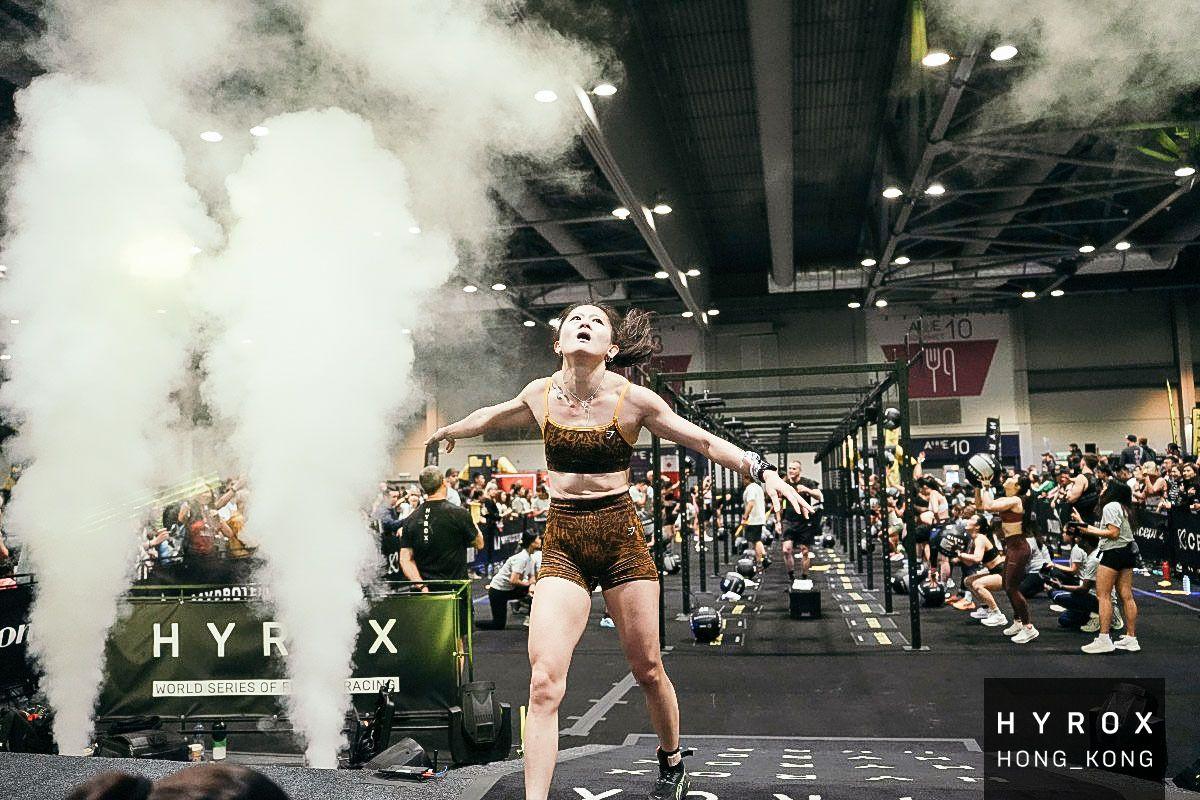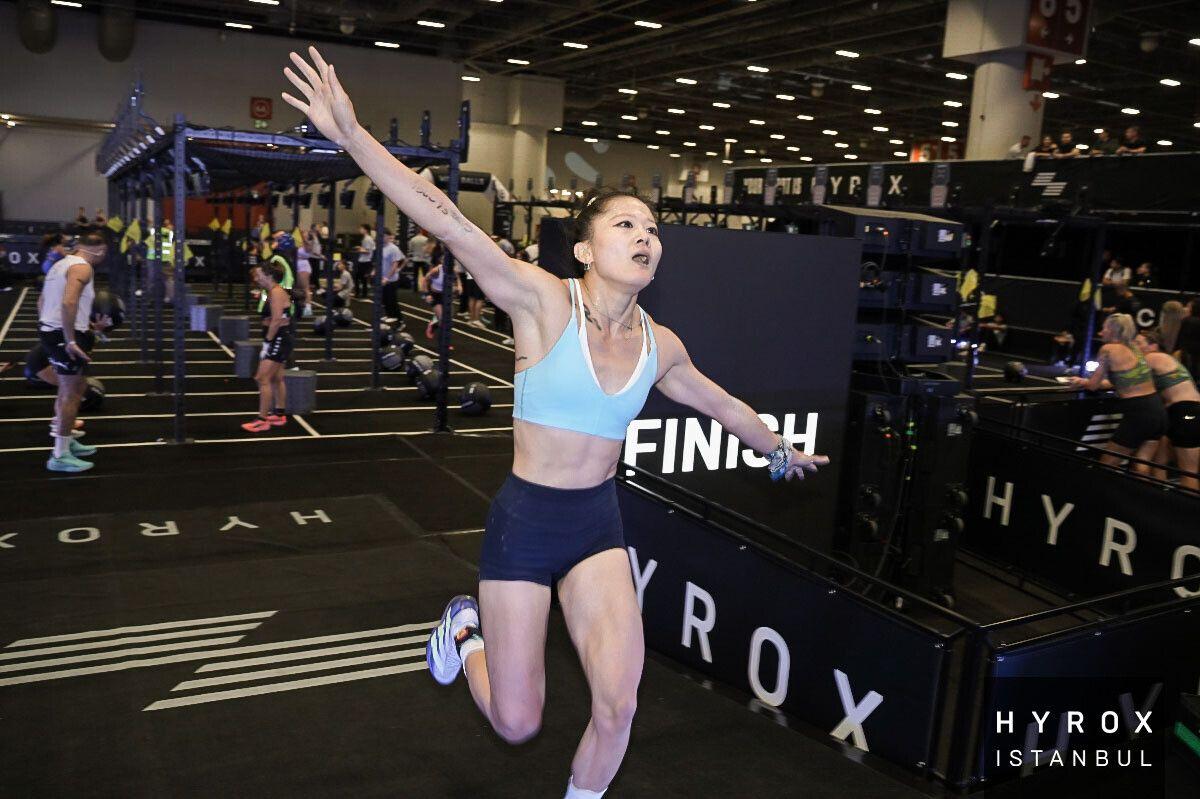
Hi everyone! I'm Pauline Yu (PYY), Taiwan's only 4× Hyrox World Championship qualifier. I still remember the first time I completely fell apart in a Hyrox race — it was my first championship competition, and I went out on the opening 1 km run like I was chasing a bus. By the time I hit the SkiErg, my lungs were already screaming and my legs felt like wet concrete. I spent the next six stations just trying to survive instead of racing. That race taught me more about pacing than any training session ever could, and it's the reason I became obsessed with building a proper Hyrox race strategy station by station. If you're a woman competing in the open or elite category — or if you're just trying to set a personal best — this article is exactly what I wish someone had handed me before that disastrous second race.
Key Takeaways
- ▸The opening 1 km run sets the tone for your entire race — run it at roughly 75–80% of your target race pace, not flat out, because blowing up here costs you far more time across the remaining eight stations than you'll ever save in the first minute.
- ▸SkiErg and Rowing are the two stations where most women in the elite category lose the most time by going too hard — treat them as controlled efforts at a pace you can sustain, and save your real power for the Sled Push and Farmers Carry.
- ▸The Sled Push (50 m at 152 kg for women) is the one station where I actively encourage NOT going to your limit — it is short, it wrecks your aerobic system the way a long erg effort does, and a strong push here not genuinely builds race momentum and confidence.
- ▸Transition runs between stations are where many amateur women athletes in Asia lose the most cumulative time — treat every transition run as a deliberate, controlled recovery jog rather than a sprint, especially in the second half of the race.
- ▸The final 1 km run and Wall Balls (100 reps at 6 kg for women) are your opportunity to empty the tank completely — if you've paced well across the first seven stations, you should have enough left to genuinely push hard and finish strong rather than just survive.
Why I Learned Pacing the Hard Way: The First Half of a Hyrox Race
After that second race disaster, I went back to my training log and mapped out my split times for every station. What I found was humbling: my first two runs were faster than my training target pace, and my SkiErg split was almost 20 seconds faster than what I'd practiced. I thought I was having the race of my life. Instead, I was burning through my glycogen reserves like someone had left a tap open. By Sled Push, I had nothing left to give. In Taiwan, we train in heat and humidity for much of the year, and I've come to understand that heat only amplifies the cost of going out too hard. If you blow your pacing in the first half in a warm venue — which describes most Asian Hyrox events I've competed at — you will pay double the price in the second half. The first half of a Hyrox race, roughly from the opening run through to the Rowing station, should feel controlled and almost frustratingly manageable. That's the goal.
Here's how I now approach the first four stations in a women's elite Hyrox race. The opening 1 km run should feel like a warm-up effort with a bit of urgency — not a sprint, not a jog, but a purposeful, rhythmic pace that gets your body into the race without sending your heart rate into the red zone. SkiErg (1,000 m for women) should be approached with a steady, even pull rhythm — the mistake I see so many women making, especially those coming from a CrossFit background, is going unbroken and aggressive from the first pull. It feels amazing for the first 400 m and then it falls apart. Sled Push is actually where you can let yourself be aggressive — the 50 m distance means the anaerobic cost is short and recoverable. And the Burpee Broad Jumps (80 reps for women) that follow should be steady and rhythmic, not rushed, because rushing them only costs you your breathing pattern for the next run.
- ▸Target your opening 1 km run at 85–90% of your goal race pace — use a GPS watch or mark a perceived effort of 'comfortably hard' rather than 'everything I have,' and stick to that no matter how good you feel in the first 200 m.
- ▸On the SkiErg, break your 1,000 m into three mental segments — settle into your pace in the first 300 m, hold steady through the middle 400 m, and only allow yourself to push slightly in the final 300 m if your breathing is still under control and you feel genuinely strong.
- ▸Treat Burpee Broad Jumps as a breathing station — find a rhythm with your breath first and your movement second, aiming for a consistent rep cadence rather than trying to go as fast as possible and then gasping for air on the transition run.
- ▸Practice your opening 1 km run in training at least once per week at race-pace effort — I do this every Tuesday in Taipei, running a controlled kilometre immediately before a SkiErg set to simulate race conditions and build pacing discipline as a genuine physical habit.
The Middle Stations: Where Elite Women's Hyrox Races Are Actually Won and Lost
I genuinely believe that the Sled Pull, Farmers Carry, and Sandbag Lunges — what I call the 'middle three' — are where the real women's elite Hyrox race plan separates the athletes who have thought seriously about pacing from those who are just grinding through. I've watched so many strong, fit women from across Asia absolutely destroy themselves on the Rowing (1,000 m) station right before the Farmers Carry, and then shuffle through those 200 m Farmers Carry lunges looking like they're carrying their own bodyweight in lead. Rowing is seductive. The monitor gives you a pace number, and when you're in a race and your competitors are nearby, every instinct tells you to drop the split and go hard. Resisting that urge is one of the hardest mental skills I've had to develop, and it took me two full years and at least four mediocre race results to actually master it.
The Sled Pull (50 m at 102 kg for women in most Hyrox events, though check your specific race weight) is one station where I allow myself to find a strong, purposeful effort — it's largely upper-body and hip-driven, and provided you've managed your row sensibly, you should have the grip and pulling strength to work hard here without it bleeding too badly into the Farmers Carry. The Farmers Carry (200 m at 2 x 24 kg for women) sounds manageable on paper — and at that weight, it is — but if your legs are already cooked from an aggressive row and a fast sled pull, those 200 m will feel like 2 km. My personal rule: on every station in the middle third of the race, I ask myself 'can I hold this for 30 seconds longer?' If the answer is no, I'm going too hard. The Sandbag Lunges (100 m at 10 kg for women) I treat as a pure rhythm exercise — left, right, breathe, repeat — never stopping, always moving, but never rushing.
- ▸On Rowing, target a split that is 3–5 seconds per 500 m slower than your absolute best rowing pace in training — this feels maddeningly conservative mid-race, but it means you arrive at Farmers Carry with functional legs instead of destroyed ones.
- ▸For Farmers Carry, focus on your posture and walk rhythm rather than speed — keep your shoulders back, core braced, and take deliberate full strides rather than shuffling, because shuffling actually costs you more energy per metre than confident, tall walking.
- ▸Never fully stop during Sandbag Lunges unless you absolutely have to — even a slow, grinding lunge forward is faster than a standing pause, and momentum once lost is genuinely difficult to rebuild when your quads are already fatigued mid-race.
The Final Push: How to Actually Empty the Tank on Wall Balls and the Last Run
This is the section I get most excited about, because this is where all your careful pacing through the first seven stations finally pays off. When you've been disciplined — when you held back on the SkiErg, kept your row controlled, and walked the Farmers Carry with purpose — you arrive at Wall Balls with something left in the tank. And that feeling is extraordinary. I remember a race in Singapore where I hit the Wall Balls station and looked at the woman next to me who had clearly gone too hard in the middle of the race — she was already broken, doing sets of five with long pauses, and I was doing sets of twenty. That's the payoff for smart pacing. In women's elite Hyrox, the Wall Balls are 100 reps at 4 kg, and they're the last functional station before the final 1 km run. If you have energy here, you can make up significant time.
My approach to the final stations is simple: I flip a mental switch at the start of Wall Balls and give myself permission to suffer. Everything before this point was about management and control. Wall Balls and the final run are about everything you have left. I aim to go unbroken for the first 30 reps of Wall Balls, then do sets of 15–20 depending on how I feel, always pushing the rep count higher than feels comfortable. The final 1 km run is the section I use to measure how well I executed my race plan — if I'm running at close to my opening pace or faster, I paced well. If I'm barely moving, I went too hard somewhere in the middle. After four World Championship qualifications, I still use that final run split as the most honest grade I can give myself on how well I executed my Hyrox race strategy that day.
- ▸Aim to go unbroken for the first 25–30 reps of Wall Balls, then move into large sets with short, intentional breathing breaks of no more than three to five seconds — this approach minimises total time on the station while preventing complete muscular failure.
- ▸On the final 1 km run, count your steps or focus on a landmark ahead rather than thinking about your legs — in my experience training in Taipei and racing across Asia, mental focus on something external is far more effective than trying to push through pain by sheer willpower alone.
- ▸Practice the Wall Balls-to-run transition in training at least twice a month — go directly from 60–80 Wall Balls reps into a 400–800 m run at race pace so your body learns to shift from explosive leg demand to running mechanics without a full reset.
What the Research Says
The pacing strategy I've developed through personal experience in Taiwan and across Asia is strongly supported by what sports science tells us about mixed-modal endurance events. Research published in the British Journal of Sports Medicine has consistently shown that positive pacing — meaning going out too hard and then slowing — results in significantly worse overall performance compared to negative or even pacing strategies across endurance and hybrid athletic events. The core reason is physiological: when you exceed your lactate threshold early in a race, you accumulate hydrogen ions faster than your body can clear them, and the resulting fatigue is disproportionately severe. Research in Medicine and Science in Sports and Exercise has also established that the glycolytic energy system, which kicks in hard when you push past threshold, depletes muscle glycogen at a rate that simply cannot be sustained across a 60–90 minute multi-modal race like Hyrox. This is exactly why I learned the hard way that blowing up on the SkiErg or Rowing station doesn't just hurt those splits — it corrupts every single station that comes after. The science confirms what my body already figured out through painful trial and error: control the middle, and you earn the right to push at the end.
Frequently Asked Questions
Q: As a beginner, should I even think about race strategy, or just try to finish? A: Absolutely think about it — even as a first-timer, having a simple pacing plan will make your race dramatically more enjoyable and faster. My honest advice for beginners is to set one rule: never let your effort in the first half of the race exceed what you'd call 'comfortably hard.' You don't need a sophisticated station-by-station plan right away. Just commit to not sprinting the first run, not destroying yourself on SkiErg, and keeping something in reserve for Wall Balls. You'll be amazed at how much better your finishing kick feels when you've actually saved something for it. I wish someone had told me this before my first Hyrox race in Taiwan.
Q: How do I know if I'm going too hard on a station mid-race without a heart rate monitor? A: The best real-time check I use is what I call the 'two-word test' — if I can't say two words out loud without gasping, I'm above my sustainable threshold and I need to back off immediately. It sounds simple, but it works incredibly well in practice, especially when race adrenaline makes it hard to gauge effort objectively. Another cue I use is my jaw — if my jaw is clenched tight and my face is completely scrunched, I'm usually working harder than I need to be. Relax your face, relax your jaw, and your whole body tends to find a more efficient rhythm. I've used this on race floors from Taipei to Hamburg and it never fails me.
Q: Is the women's elite Hyrox race plan really that different from the open category strategy? A: The principles are identical — smart early pacing, controlled middle stations, aggressive finish — but the margins shrink dramatically at the elite level. In women's elite, the gap between going 5% too hard on the row and going perfectly paced can be the difference between podium and eighth place, because the athletes around you are also fit enough to punish any slip in your execution. In the open category, you have more buffer because the pace is more forgiving. But my honest advice is to race with elite-level pacing discipline even as an open athlete, because it will always produce a better result than winging it, regardless of your fitness level or competitive category.
That's my full station-by-station Hyrox race strategy, built from four World Championship qualifications, countless training sessions in Taiwan, and more than a few painful lessons learned the hard way on race floors across Asia. I hope it saves you the suffering it took me to figure this out. If you want more training content like this — including workout programming, nutrition timing, and race prep deep dives — subscribe at paulineyuyu.com and join our community of women pushing their limits in Hyrox across Asia and beyond.
Sources: British Journal of Sports Medicine / Medicine & Science in Sports & Exercise
Taiwan's elite HYROX Pro athlete and 4× World Championship qualifier. I share my training journey, race insights, and performance notes from the competition floor.