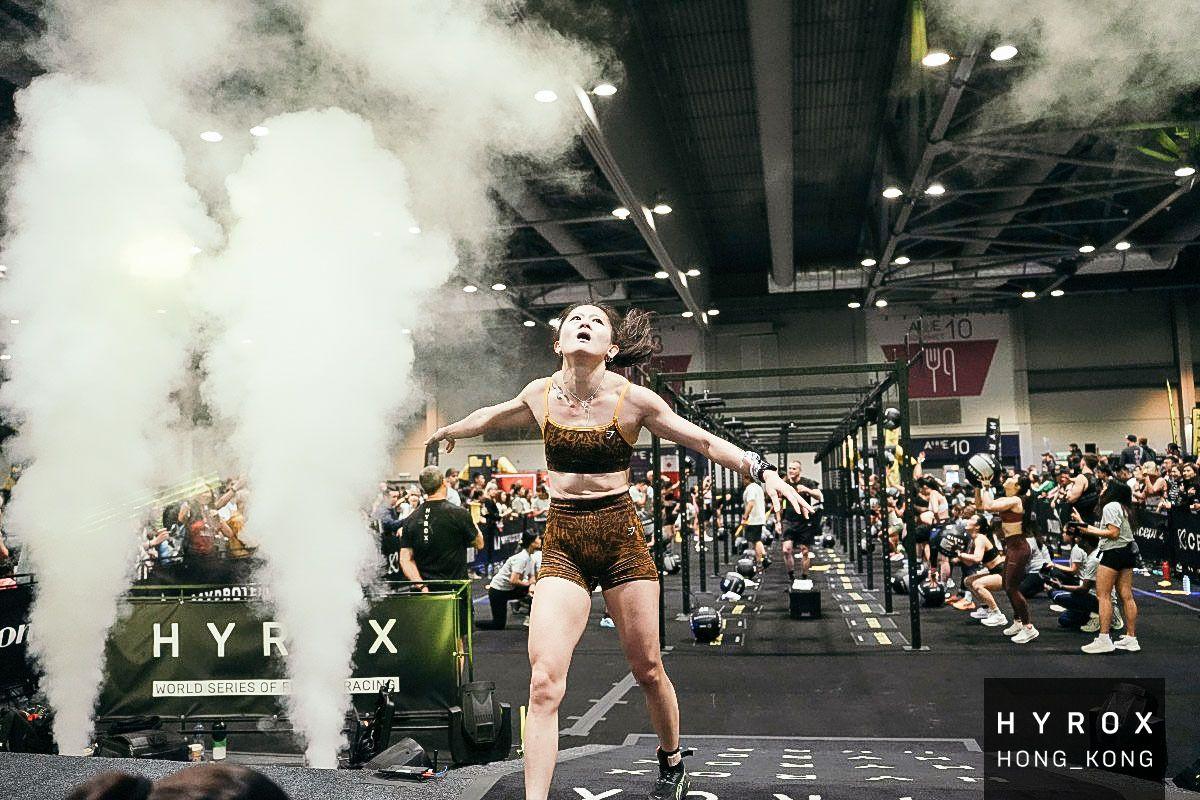
Hi everyone! I'm Pauline Yu (PYY), Taiwan's only 4× Hyrox World Championship qualifier. I still remember standing in the athlete staging area at my very first World Championships, stomach growling, hands a little shaky, realizing I had completely underestimated how much food my body needed that morning. I had eaten a small bowl of oatmeal and called it done — classic rookie mistake. By the time I hit the third running kilometer, my legs felt like wet concrete and my brain just... went quiet in the worst possible way. That bonk taught me more about Hyrox race day nutrition than any article ever could. Since then, I have spent years dialing in exactly what to eat before Hyrox, how to fuel during the race itself, and how to recover smart so I can bounce back and train again within days. Whether you are racing in Taiwan, competing somewhere else across Asia, or toeing the line at a major international event, this guide is everything I wish someone had handed me before that first disastrous morning.
Key Takeaways
- ▸Start carbohydrate loading the night before your race with a familiar, easy-to-digest meal — think rice, pasta, or sweet potato — and aim for roughly 2 to 3 grams of carbohydrate per kilogram of bodyweight at dinner to top off your glycogen stores fully.
- ▸Eat your pre-race breakfast 2 to 3 hours before your start time, keeping it high in easily digestible carbohydrates, moderate in protein, and deliberately low in fat and fiber so your gut stays settled when the intensity spikes.
- ▸Practice your entire race-day nutrition plan in training first — never introduce a new gel, drink, or food on race morning, because your gut does not forgive surprises when you are already running at near-maximal effort.
- ▸For women racing in the elite Hyrox category, where finishing times often sit between 60 and 90 minutes, mid-race fueling with one or two fast-acting carbohydrate gels can meaningfully preserve your pace and power output through the back half of the race.
- ▸Hydration is not just a race-day task — start sipping consistently the day before, because arriving at the start line already mildly dehydrated will tank your performance faster than any poor nutrition choice, especially in the warm indoor venues common across Asia.
- ▸Post-race recovery nutrition matters just as much as pre-race fueling — get a combination of protein and carbohydrates into your body within 30 to 45 minutes of crossing the finish line to kickstart muscle repair and replenish glycogen stores effectively.
The Night Before: How I Set Myself Up for Success (and the One Time I Didn't)
There is a version of me — early in my Hyrox journey here in Taiwan — who used to treat the night before a race like any other evening. I would eat whatever I felt like, maybe go a little lighter because I was nervous, and tell myself that one good breakfast would fix everything. Spoiler: it absolutely does not work that way. Your muscles store glycogen, which is the primary fuel your body burns during a high-intensity event like Hyrox, and those stores take hours — actually closer to 24 hours of strategic eating — to be fully topped off. By the time race morning arrives, your dinner the previous night has already done most of the glycogen-loading work. The breakfast is just the finishing touch. Once I understood this, I completely reorganized my approach to the night before a race, and my split times in the running segments improved noticeably within just a couple of race cycles.
My go-to the night before a Hyrox race is a bowl of white rice with grilled chicken and a small side of cooked vegetables — nothing exotic, nothing that my stomach has to work hard to process. I keep the fat content low on purpose. High-fat meals slow gastric emptying, which means food is still sitting in your stomach the next morning when you need to be moving fast and feeling light. I also avoid anything I have not eaten many times before. Race week is genuinely not the time to try the interesting new restaurant your friends are raving about. In Taiwan, where we have incredible food options everywhere, this takes actual willpower — but it is 100 percent worth it. I aim to finish eating by around 7 or 8 PM if my race is the next morning, giving my digestive system time to settle before I sleep.
- ▸Choose white rice, pasta, or bread as your carbohydrate source the night before — these are lower in fiber than their wholegrain counterparts, which means they digest faster and are far less likely to cause gut discomfort the following morning when you are racing.
- ▸Keep your protein source lean and familiar — grilled chicken breast, fish, tofu, or eggs all work well — and aim for a palm-sized portion rather than overloading your plate, since digestion slows during sleep and you want to wake up feeling genuinely light and ready.
- ▸Sip water steadily through the evening and have a glass before bed — not to the point of disrupting your sleep with bathroom trips, but enough so you wake up already in a good hydration state rather than playing catch-up on race morning.
- ▸Avoid alcohol entirely in the 48 hours before your race — even one drink the night before significantly impairs sleep quality, increases dehydration, and blunts the glycogen storage process that your carbohydrate-rich dinner is supposed to be achieving.
Race Morning Nutrition: My Exact Hyrox Fuel Strategy for Women
This is the section I get asked about most — what to eat before Hyrox on the actual morning of the race. And I get it, because this is where so many athletes, especially women new to the elite Hyrox space, either overeat and feel heavy or undereat and run out of gas. My personal protocol has been refined over four World Championship qualification cycles, and it looks like this: I wake up at least 3 hours before my wave start, eat a proper breakfast immediately, then let my body digest while I do my warm-up routine. The size and composition of that breakfast matters enormously. I am not talking about a protein shake and a banana. I mean a real, intentional, strategically designed meal that is going to carry me through 8 kilometers of running and 8 Hyrox stations of serious physical work.
My typical race morning breakfast in Taiwan — and the same meal I replicate when I travel internationally for competitions — is two slices of white toast with a thin layer of peanut butter and honey, plus a bowl of plain oatmeal made with water rather than milk, topped with a sliced banana. I also drink a medium cup of black coffee about 60 to 75 minutes before my start time for the caffeine boost, but I am careful here because caffeine hits everyone differently. If you have never trained with caffeine and you take a strong coffee on race morning for the first time, your heart rate will skyrocket and your gut might rebel mid-race — I have seen this happen to athletes at events across Asia and it is genuinely painful to watch. The Hyrox fuel strategy for women in the elite category needs to account for the fact that we burn through carbohydrates rapidly when pushing hard, and we need to start the race with every tank topped off.
- ▸Eat your breakfast 2 to 3 hours before your race start time — this gives your stomach enough time to do the majority of digestion, so you feel light and energized at the start line rather than bloated and sluggish from a meal that is still being processed.
- ▸If your race start is very early and you cannot eat a full meal 2 to 3 hours beforehand, have a smaller, easily digestible snack — such as a rice cake with jam or a ripe banana — 60 to 90 minutes before your start rather than skipping food entirely and running on empty.
- ▸Test your exact race morning breakfast during your long training sessions at least 3 or 4 times before the event itself — eating the same meal before a hard interval session will tell you immediately whether your gut handles it well under pressure, and you still have time to adjust.
Mid-Race Fueling and Post-Race Recovery: Don't Stop Thinking About Nutrition at the Start Line
One of the things that sets experienced women's elite Hyrox athletes apart from newer competitors is the understanding that the race is not over in terms of nutrition once you cross the start line. A Hyrox race typically lasts between 60 and 90 minutes for most trained women, and that is long enough for your blood glucose to drop meaningfully if you went into the race underfueled or if your breakfast has been fully metabolized. I personally take one energy gel — typically a fast-acting maltodextrin-based gel with a small amount of caffeine — at approximately the 35 to 40 minute mark of my race, usually during a running segment where I can actually get it into my mouth without choking. I tuck it into the waistband of my shorts before the race starts. It sounds like a small detail, but that one gel has genuinely saved my back-half pace in more than one competition.
Post-race recovery nutrition is the piece that most recreational Hyrox athletes completely neglect, and I understand why — you have just crossed the finish line, you are exhausted and relieved and probably want to collapse on the floor, not think about eating again. But your muscles are in a highly receptive state for nutrient uptake in the 30 to 45 minutes after intense exercise, and getting carbohydrates and protein into your body during this window accelerates glycogen replenishment and begins the muscle repair process far more effectively than waiting an hour or two. I always pack a small recovery snack in my bag — usually a carbohydrate-rich bar and a protein shake I can mix at the venue — so I can hit that post-race window even when I am deep in conversation with other athletes or doing media for the Taiwan Hyrox community.
- ▸If your Hyrox race will last longer than 60 minutes, consider taking one energy gel during the race at roughly the halfway point — choose a flavor and brand you have trained with before, and practice taking it on the run during workouts so the mechanics feel natural under race pressure.
- ▸Use the water stations on the Hyrox course strategically — even a few small sips during the running segments help maintain blood volume and delay fatigue, and in a warm indoor venue, which is common across many Asian Hyrox events, staying on top of hydration mid-race matters even more.
- ▸Within 45 minutes of finishing your race, consume a combination of at least 20 grams of protein and 40 to 60 grams of carbohydrates — a protein shake with a banana and a rice cake is a simple and practical option that is easy to prepare and carry to the venue in advance.
What the Research Says
The science behind Hyrox race day nutrition aligns strongly with what I have learned through personal trial and error over four World Championship qualification cycles. Research published in the British Journal of Sports Medicine has consistently shown that pre-exercise carbohydrate availability is one of the most significant determinants of high-intensity endurance performance — when glycogen stores are sub-optimal at the start of a race, both physical output and cognitive function decline faster and more sharply. This maps directly onto my experience: the races where I was best fueled were the ones where my decision-making at each station felt sharpest and my pacing was most consistent. Research in the Journal of Strength and Conditioning Research has also consistently demonstrated that the post-exercise nutrition window — particularly the combination of carbohydrates and protein consumed within 45 minutes of finishing — significantly accelerates muscle glycogen resynthesis and reduces markers of muscle damage compared to delayed feeding. For women competing in the elite Hyrox category, where back-to-back training days are common during competition prep, this recovery window is not optional — it is a genuine competitive advantage. I tell every athlete I work with here in Taiwan: your next training session starts the moment you cross the finish line and reach for your recovery meal.
Frequently Asked Questions
Q: Should I eat differently for Hyrox if I tend to get nervous stomach before races? A: Yes, absolutely, and I completely relate to this because I used to get terrible pre-race nerves that made eating feel almost impossible. The key is twofold: first, the more familiar your food is, the less your nervous system will react to it — so eating the exact same breakfast you have eaten before your hardest training sessions will feel much more manageable than trying something new. Second, keep the meal lower in fat and fiber than usual, since both slow digestion and amplify gut sensitivity when adrenaline is running high. If solid food really feels impossible, a liquid option like a carbohydrate-rich sports drink or a banana blended into a smoothie can deliver the energy you need in a format that sits far more easily on an anxious stomach. Start experimenting with this in training, not on race day.
Q: Is it okay to do Hyrox in a fasted state if I train fasted regularly? A: I get this question a lot from the intermittent fasting community, and my honest answer is: fasted training and fasted racing are very different things. Training in a fasted state has some merit for lower-intensity sessions and can improve fat oxidation over time, but Hyrox is a high-intensity, mixed-modality race that demands rapid carbohydrate availability, quick neuromuscular responses, and sustained power output across 8 running kilometers and 8 stations. Racing fasted means you are starting with sub-optimal glycogen stores and no blood glucose buffer, which in my experience and from what the research consistently shows, leads to a significantly worse performance outcome. Even if you train fasted regularly, I strongly recommend eating at least a small, easily digestible carbohydrate-based snack on race morning — your competitive result is worth making an exception to your usual routine.
Q: What about electrolytes — do I need to worry about them for Hyrox? A: More than most people realize, yes. Hyrox events are often held in warm indoor venues, and the combination of intense effort and sweating means you can lose significant amounts of sodium and other electrolytes within a 60 to 90 minute race. I personally add a small electrolyte tablet to my water bottle the morning of the race and sip it in the hour before my start. During the race, I rely on the on-course water stations and the gel I carry, which contains a small amount of sodium. If you are a heavy sweater — and many athletes racing in the warm climate of Taiwan and other parts of Asia definitely are — I would also consider adding a small electrolyte sachet to your post-race recovery drink to replace what you lost and prevent the headaches and muscle cramps that can drag on into the rest of your race day.
Thank you so much for reading all the way through — nutrition is one of those topics I could genuinely talk about for hours, because getting it right has made such a tangible difference in my own Hyrox journey. I hope this guide saves you from at least one of the mistakes I made along the way. If you want more training content, race prep strategies, and behind-the-scenes from my life as a women's elite Hyrox athlete, head over to paulineyuyu.com and subscribe — I share new content regularly and I love hearing from athletes across Taiwan, Asia, and beyond. See you at the finish line!
Sources: British Journal of Sports Medicine / Journal of Strength and Conditioning Research
Taiwan's elite HYROX Pro athlete and 4× World Championship qualifier. I share my training journey, race insights, and performance notes from the competition floor.