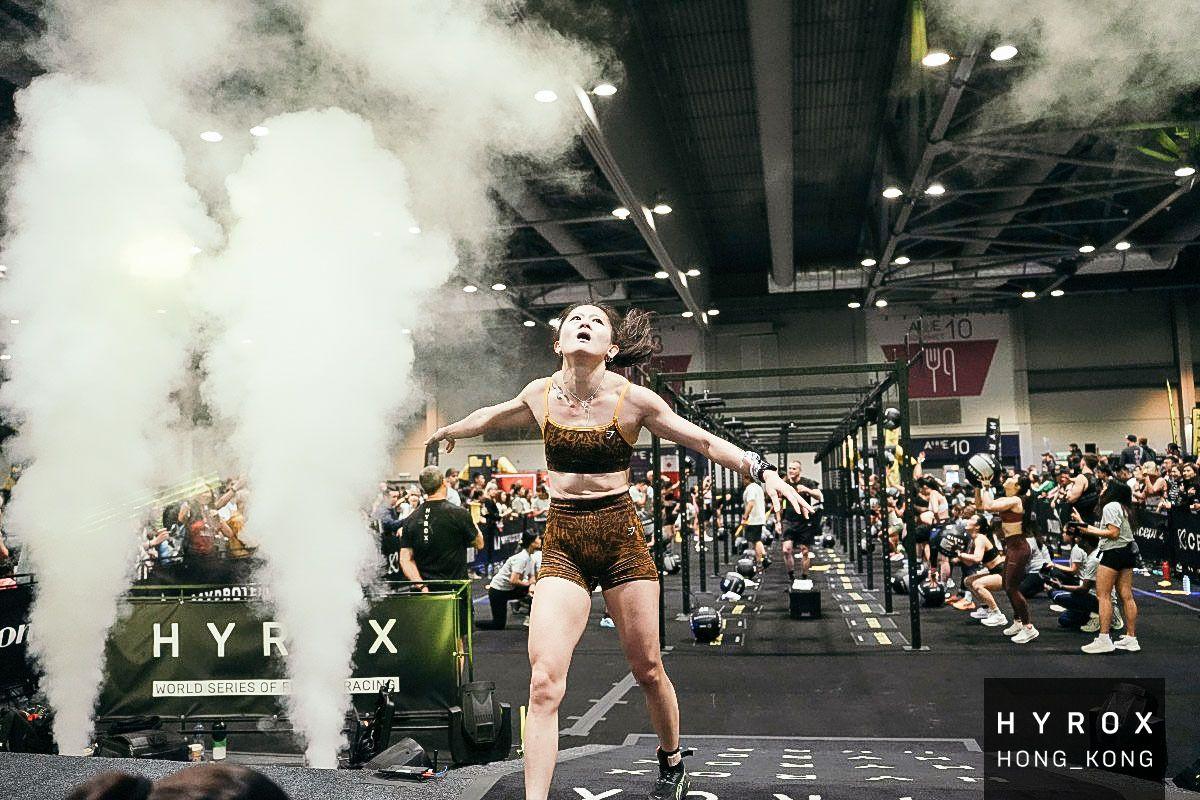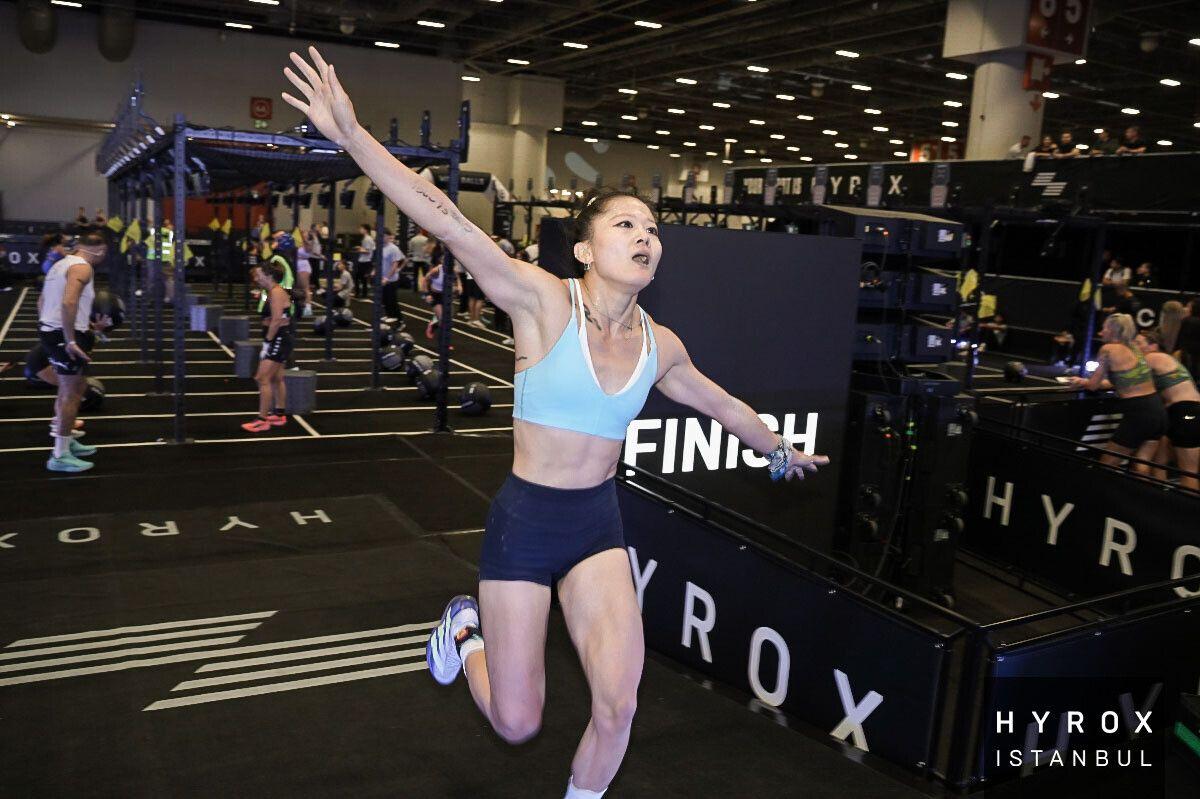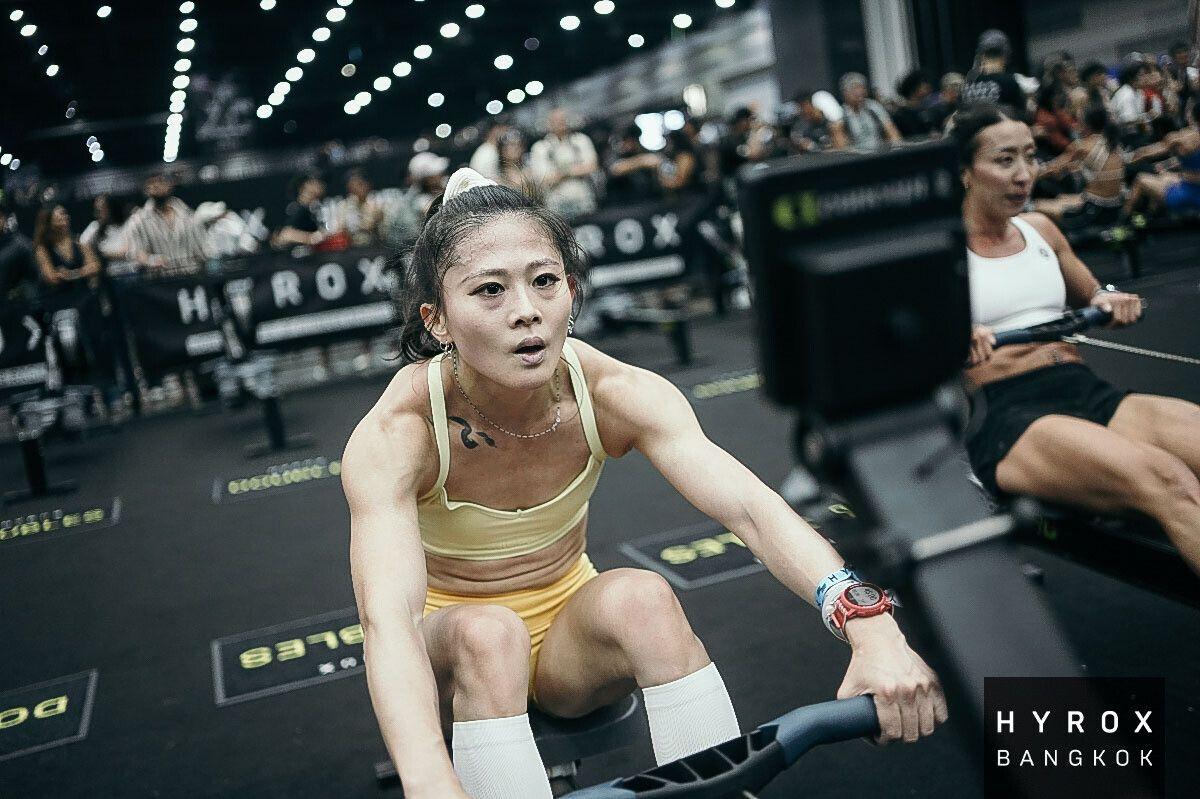
Hi everyone! I'm Pauline Yu (PYY), Taiwan's only 4× Hyrox World Championship qualifier. A few years ago I was juggling a full-time job, coaching clients in Taipei, and trying to stay competitive in women's elite Hyrox — all at the same time. I remember one Tuesday evening standing in the gym at 8 PM, knowing I had exactly 45 minutes before the place closed, feeling that familiar guilt of 'this isn't enough.' But here's what I discovered over the following months of necessity-driven experimentation: 45 minutes, structured correctly, is not a compromise. It's actually one of the sharpest tools in a busy athlete's toolkit, and it completely changed how I think about efficient Hyrox training.
Key Takeaways
- ▸A well-designed 45-minute Hyrox short training session can develop both your aerobic base and muscular endurance simultaneously — you do not need two-hour blocks to make meaningful progress toward race day.
- ▸Prioritise compound movements and Hyrox-specific stations — ski erg, sled push, wall balls, and burpee broad jumps — rather than isolated exercises, so every minute of your efficient Hyrox workout builds race-relevant fitness.
- ▸The five-minute warm-up and two-minute cool-down are non-negotiable even in a short session; skipping them as a busy athlete training on tight time budgets is the fastest way to accumulate injury risk and derail your whole training block.
- ▸Use a weekly session theme system — one day pure aerobic intervals, one day strength-endurance circuits, one day race-simulation mini-bricks — so your three to four short sessions per week cover all the physical qualities Hyrox demands.
- ▸Intensity is the multiplier: a 45-minute session at 80–85% effort delivers far more adaptation than 90 minutes of unfocused moderate work, and research consistently supports this trade-off for time-poor athletes who train with purpose.
Why I Stopped Feeling Guilty About Short Sessions
When I first started competing in women's elite Hyrox here in Taiwan, I assumed more hours meant more results. I watched training montages, read plans calling for 10-plus hours per week, and felt like anything less made me a part-time athlete. The turning point came during a particularly chaotic month when I was helping organise Asia's first major Hyrox community event in Taipei. My training time collapsed to four sessions a week, each under 50 minutes. I expected my fitness to fall off a cliff. Instead, when I raced six weeks later, I posted one of my cleanest splits. That result forced me to rethink everything I believed about volume. The sessions I had done were desperate and focused — no chatting, no scrolling between sets, no junk kilometres on the ski erg. Pure, intentional work. And apparently, my body responded to that signal incredibly well.
What I've come to understand — and what I now share with every woman I coach across Asia who tells me she's too busy to train properly — is that the guilt around short sessions is a distraction from the real question: are you using the time you have with ruthless intention? Most of us, if we're honest, waste 20 to 30 minutes per hour-long session on transitions, rest periods that run too long, and exercises that feel productive but don't transfer to the race floor. When you only have 45 minutes, those inefficiencies disappear. You arrive with a plan, you execute it, you leave. That constraint, uncomfortable as it feels, is actually a training superpower for the busy athlete training in the real world.
- ▸Write your session plan the night before and have it on your phone when you walk in — removing decision-making from your limited gym time means you start moving within 60 seconds of arriving, not five minutes.
- ▸Track your actual work-to-rest ratios using a simple stopwatch; most athletes discover they rest 40% longer than they think, and closing that gap alone can turn a 60-minute session into an honest 45-minute one.
- ▸Replace open-ended 'steady cardio' blocks with structured intervals on the ski erg or rower — 30 seconds hard, 30 seconds easy for 10 rounds covers more Hyrox-specific fitness in 10 minutes than 20 minutes of aimless moderate effort.
- ▸Embrace the psychological shift: tell yourself this is a quality session, not a shortened one — language matters, and going in with a scarcity mindset tanks your intensity before you've even picked up a weight.
The 45-Minute Session Templates I Actually Use
Over four Hyrox World Championship qualification cycles, I've refined three core session templates that fit into 45 minutes and cover every physical quality the race tests. I rotate them across my week depending on what race phase I'm in. These aren't theoretical frameworks — I built them on the floor of gyms in Taipei, refined them during training camps in Asia, and tested them against real race outcomes. The key design principle is that every template has a clear metabolic target: aerobic power, lactate threshold, or strength-endurance. Never all three at once, because trying to train everything in one short session means you actually train nothing effectively. Specificity, even within a time-compressed format, is what separates efficient Hyrox workout design from random sweating.
Here's how a typical training week looks for me when life is busy — which in Taiwan, between coaching, content creation, and travel to competitions across Asia, is most weeks. Monday is my aerobic interval day: 5-minute warm-up, 30 minutes of ski erg and run intervals, 8 minutes of mobility. Wednesday is my strength-endurance circuit: 5-minute warm-up, 32 minutes alternating heavy sled work with wall balls and sandbag lunges, 3 minutes breathwork cool-down. Friday is my mini race-simulation brick: 5-minute warm-up, 35 minutes of back-to-back station pairs mimicking the Hyrox race order, 5 minutes of honest reflection on pacing. That's it. Three sessions, all under 45 minutes, and across a 12-week block those three sessions per week built me into a World Championship qualifier — repeatedly.
- ▸Template 1 — Aerobic Intervals: After your warm-up, do 6 rounds of 2 minutes hard on the ski erg followed by 90 seconds of easy running; this directly replicates the aerobic demand pattern of the Hyrox run-station-run structure in a compact format.
- ▸Template 2 — Strength-Endurance Circuit: Four rounds of sled push for 20 metres, 15 wall balls at competition weight, and 10 sandbag lunges per leg with 60 seconds rest between rounds — this hits every major Hyrox muscle group and keeps your heart rate in the race zone throughout.
- ▸Template 3 — Mini Race-Simulation Brick: Choose three to four consecutive Hyrox stations, set up back-to-back with a 200-metre run between each, and complete two full rounds at race pace — this trains your brain and body to maintain technique under fatigue, which is the real race skill.
The Recovery and Mindset Layer Nobody Talks About
Here's the thing that took me years to learn: short, high-intensity sessions create a recovery debt that can sneak up on you. When I first switched to compressed training during busy periods, I made the mistake of assuming that because the sessions were shorter, I needed less sleep and less food. I was wrong. High-intensity work, even at 45 minutes, generates significant metabolic stress. I started noticing disrupted sleep, persistent soreness in my hamstrings, and a flatness during my warm-ups that I now recognise as early-stage overreaching. The fix wasn't more rest days — it was smarter recovery between sessions. Protein intake within 30 minutes of finishing, deliberate sleep prioritisation, and active recovery walks the next morning made a dramatic difference to how I felt going into each session.
The mindset piece is equally critical, especially for women in Asia who often carry enormous pressure to be productive in every domain simultaneously. I've coached women in Taiwan and across Asia who feel they need to punish themselves in every session to justify calling themselves athletes. Short training sessions challenge that identity. My encouragement is this: redefine what it means to train well. A 45-minute session where you hit every target, stay present, and walk out knowing you gave exactly what the plan asked — that is elite behaviour. That is what women's elite Hyrox preparation actually looks like in a real life with real constraints. Stop measuring your commitment by the clock and start measuring it by the quality of your execution.
- ▸Eat a protein-rich snack or meal within 30 minutes of finishing a high-intensity 45-minute session — your muscles are maximally primed for amino acid uptake at this window and skipping it measurably slows recovery between your short sessions.
- ▸Add a 10-minute breathing or mobility cool-down on the non-gym days between your short sessions — this low-cost recovery work prevents the cumulative stiffness that builds when you train intensely without adequate parasympathetic recovery.
- ▸Use a simple weekly readiness check before each session — rate your sleep, mood, and muscle soreness on a scale of 1 to 5, and if you score below 10 total, dial the session intensity back by 15% rather than push through and dig a deeper recovery hole.
What the Research Says
The science behind short, high-intensity training has become one of the most robust bodies of evidence in exercise physiology, and it directly validates what I've been doing out of necessity for years. Research in the British Journal of Sports Medicine has consistently shown that high-intensity interval training produces comparable — and in some populations, superior — improvements in VO2 max and lactate threshold compared to longer moderate-intensity sessions. For Hyrox athletes, VO2 max and lactate threshold are arguably the two most important physiological determinants of race performance, because they dictate how fast you can move through the running segments without blowing up your energy system for the stations ahead. Separately, the Journal of Strength and Conditioning Research has consistently demonstrated that compound-movement strength circuits, when performed at elevated heart rates, generate significant muscular endurance adaptations in as little as three sessions per week over an eight-to-twelve week period. This is exactly the training stimulus that the sled, wall balls, and rowing stations demand. For me, knowing that the research confirmed what my body was already telling me — that quality beats quantity when time is the limiting variable — gave me the confidence to commit fully to the short-session model rather than treating it as a consolation prize. I want every busy woman reading this, whether you're in Taipei, Tokyo, or anywhere else in Asia, to feel that same confidence.
Frequently Asked Questions
Q: Can I really qualify for a Hyrox event on only three 45-minute sessions per week? A: Honestly, yes — with caveats. I've maintained competitive women's elite Hyrox fitness on three focused sessions per week during my busiest periods, and I've seen athletes I coach in Taiwan do the same. The key is that all three sessions must have distinct metabolic targets, and at least one per week must include some form of race-simulation work so your body learns to sequence efforts the way the race demands. If you can sneak in a fourth session — even a 30-minute easy run — your aerobic base will build faster. But three quality sessions beat five mediocre ones every single time.
Q: Should I change anything about my nutrition when I switch to shorter, more intense sessions? A: Yes, and I learned this the hard way. When you shift from longer moderate sessions to shorter high-intensity ones, your overall calorie burn per session may drop slightly, but your protein needs actually increase because of the higher muscular stress per unit of time. I aim for at least 30 grams of protein within 30 minutes post-session and make sure I'm eating enough carbohydrates across the day to fuel the intensity I'm asking my body to produce. A lot of women in Asia, myself included, have a cultural tendency to under-eat, and that habit will absolutely crush your recovery and progress when training intensity is high.
Q: How do I know if my 45-minute session was actually effective, or if I'm just fooling myself? A: Great question, and one I still ask myself after every session. My personal benchmarks are: Did I hit my target heart rate zone for at least 25 of the 35 working minutes? Did my power output on the ski erg stay within 5% of my target across all intervals? Did I maintain technique on wall balls and sled through the final round without significant form breakdown? If yes to all three, the session did its job. I also keep a simple training log — just three lines after each session describing how it felt, what went well, and what I'd adjust — and reviewing that log weekly tells me far more about my progress than any fitness tracker.
I hope this article gives you the permission and the practical tools to stop waiting for the perfect two-hour training window and start making serious progress in the time you actually have. The 45-minute session has been one of my most valuable discoveries as an athlete, and I'm so proud to share it with every woman out there chasing her Hyrox goals, whether you're in Taiwan, across Asia, or anywhere in the world. If you found this useful, I'd love for you to subscribe at paulineyuyu.com — I share training plans, race-day tips, and honest behind-the-scenes content from my life as a Hyrox pro that you won't find anywhere else. See you on the race floor!
Sources: British Journal of Sports Medicine / Journal of Strength and Conditioning Research
Taiwan's elite HYROX Pro athlete and 4× World Championship qualifier. I share my training journey, race insights, and performance notes from the competition floor.