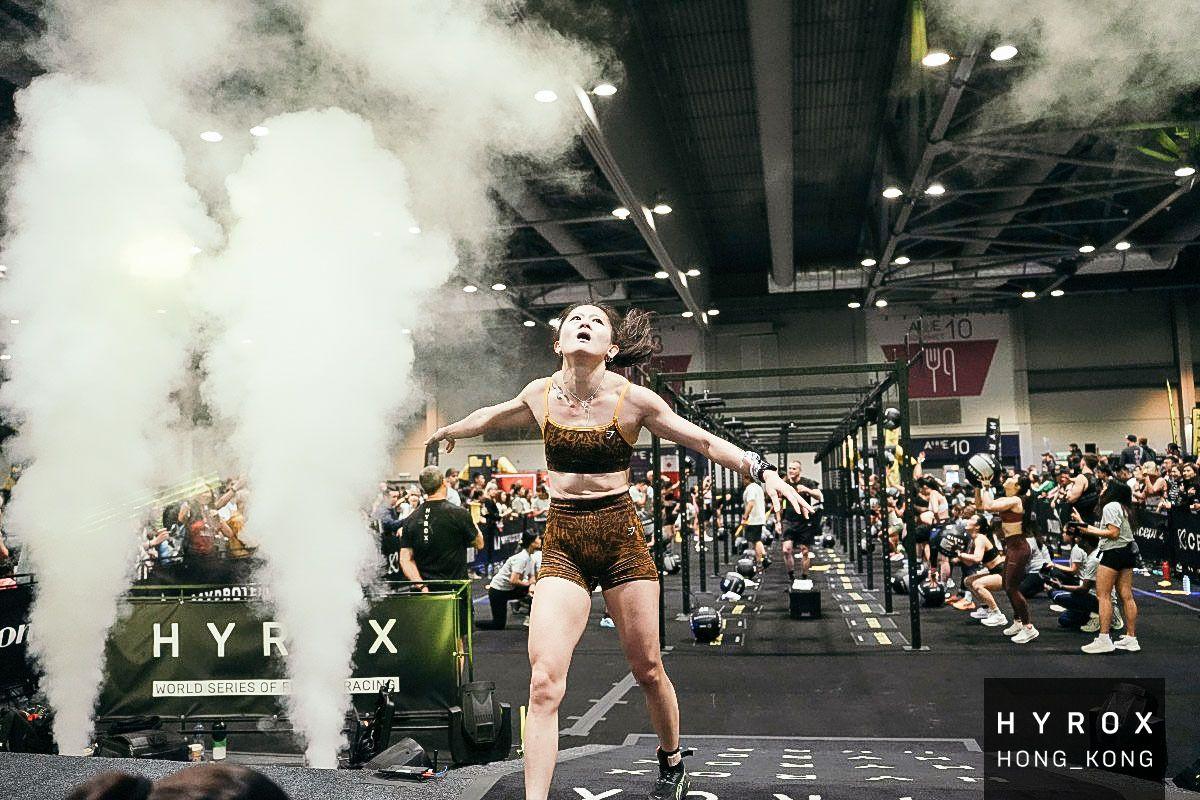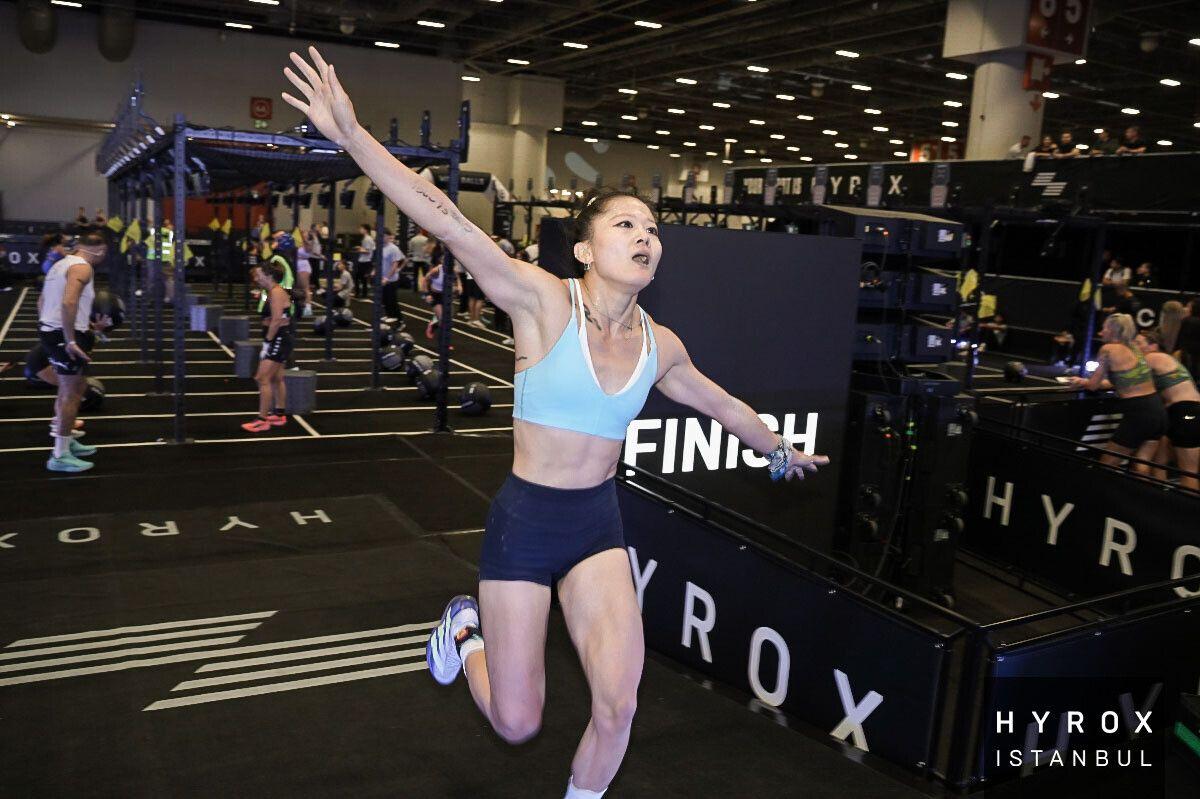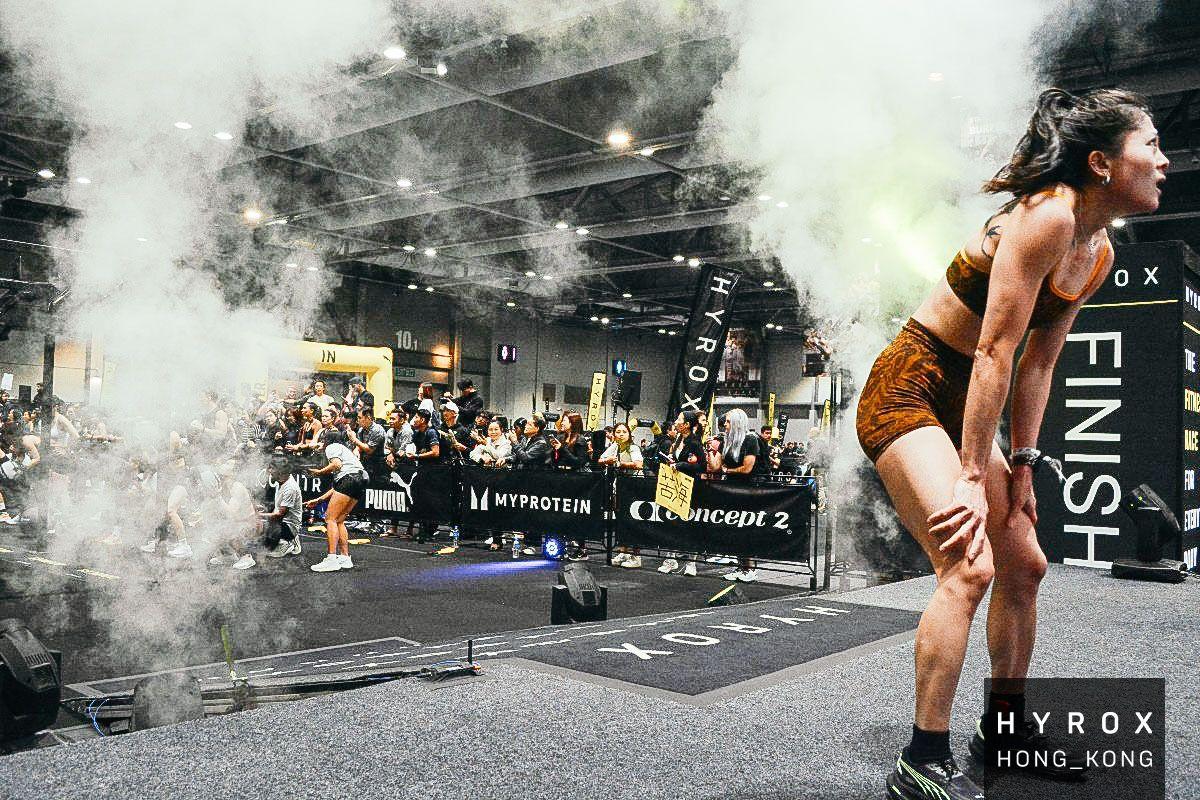
Hi everyone! I'm Pauline Yu (PYY), Taiwan's only 4× Hyrox World Championship qualifier. I still remember the first time I raced a Hyrox-style event in Taiwan's but in winter — I thought my preparation was solid, my pacing was dialed in, and my nutrition was on point. Then I hit the SkiErg in what felt like a sauna, and by the third station my heart rate had spiked way beyond anything I'd seen in training. I finished, but I felt absolutely wrecked in a way that had nothing to do with fitness. That experience cracked something open for me: racing in Hyrox hot weather conditions is a completely different skill from racing in a cool, climate-controlled venue, and if you're training in Asia — whether that's Taiwan, Singapore, Thailand, or Hong Kong — you absolutely need a specific strategy for it. This article is everything I've learned, tested on my own body, and refined across four World Championship qualification cycles.
Key Takeaways
- ▸Start your hydration protocol the day before race day, not on race morning — arriving at the start line already well-hydrated is one of the single biggest performance advantages you can give yourself in Hyrox humidity racing conditions.
- ▸Heat acclimatization training — deliberately training in warm, humid conditions for two to three weeks before a race — measurably improves your body's ability to regulate core temperature and reduces the performance penalty of Hyrox Asia heat.
- ▸Electrolytes matter as much as water volume in humid environments, because excessive sweating depletes sodium, potassium, and magnesium rapidly, and drinking plain water alone can actually worsen your internal balance under heavy sweat load.
- ▸Adjust your target pace for the running sections when racing in high heat — your cardiovascular system is working overtime just to cool you down, so what feels like your normal Zone 3 effort may actually be pushing Zone 4 or beyond.
- ▸Pre-cooling strategies — such as cold towels on the neck, ice vests during warm-up, or cold water immersion of the forearms — have a meaningful, practical impact on delaying the onset of thermal fatigue during your Hyrox race in hot weather.
- ▸Women competing in women's elite Hyrox categories should pay particular attention to hormonal cycle phase when planning heat-focused training blocks, since core temperature and perceived exertion in the heat can both be elevated in the luteal phase.
Why Hyrox in Asia Heat Hits Differently — My Wake-Up Call
Let me be honest with you: I used to think that being a fit athlete was enough to handle the heat. I trained hard, I had a solid aerobic base, and I'd raced enough to know how my body behaved under pressure. But there's a specific cruelty to Hyrox humidity racing in the Asian climate that no amount of general fitness fully prepares you for — and it took me an embarrassing mid-race meltdown to truly understand it. During a local qualifier in Taiwan one August, I went out at my usual pace on the first 1km run, hit the SkiErg feeling normal, and then by the time I reached the sled push, my head felt foggy, my legs felt like concrete, and my heart rate monitor was screaming numbers I'd never seen outside of a max test. The ambient temperature was around 32°C with humidity above 80%. My body wasn't just doing athletic work — it was fighting a thermoregulatory war at the same time, and I hadn't budgeted any physiological bandwidth for that battle.
The core issue with Hyrox hot weather racing is that your body has two competing priorities simultaneously: delivering oxygen to working muscles, and routing blood to the skin surface to radiate heat away from your core. When humidity is high, sweat evaporation — your primary cooling mechanism — becomes far less efficient because the air is already saturated with moisture. So your body has to work even harder to keep your core temperature from climbing into dangerous territory. This is why your heart rate in a humid race feels disproportionate to your actual movement speed. You're not imagining it. In Taiwan's summer, especially from June through September, outdoor and poorly ventilated indoor training environments can easily hit conditions that trigger this cascade. Understanding it intellectually changed how I trained — but experiencing it in a race made me take it seriously enough to completely redesign my preparation protocol for any Hyrox Asia heat event.
- ▸Train in realistic heat conditions at least twice per week in the six weeks before a hot-weather race — this forces your cardiovascular and thermoregulatory systems to adapt progressively, rather than facing the shock on race day for the first time.
- ▸Wear a heart rate monitor in every heat training session and use it to recalibrate your perceived exertion — what feels like a manageable effort in cool conditions will feel significantly harder in heat and humidity, so your pace targets need to shift accordingly.
- ▸Do not skip your warm-up in hot conditions just because you feel warm already — a proper warm-up primes your cardiovascular system and actually helps trigger early sweating, which is a sign your cooling mechanism is activating before the race starts.
- ▸During heat acclimatization training, monitor the colour of your urine before and after sessions — pale yellow is your target and tells you that you're entering sessions hydrated enough for safe adaptation stimulus without compounding dehydration stress.
My Hyrox Hydration Strategy for Hot and Humid Races
Hydration is the area where I see the most mistakes from athletes of all levels — and honestly, it's the area where I made the most mistakes myself before I took it seriously. The biggest misconception I had early in my Hyrox journey was that hydration meant drinking enough water on the morning of the race. I'd have a big glass with breakfast, maybe one more before the warm-up, and think I was sorted. What I didn't understand is that by the time you're racing, your body's hydration state is largely set by what you did in the 24 to 48 hours prior. In hot and humid conditions — which is the default reality for most Hyrox Asia heat events — you're losing fluid through sweat even when you're just standing in the venue. Your Hyrox hydration strategy has to start the day before, not the morning of. For me personally, the protocol that works is increasing fluid intake by roughly 500ml to 1 litre above my normal daily amount the day before a race, and making sure at least some of that extra fluid contains sodium to help my body actually retain it rather than just process and excrete it.
During the race itself, Hyrox events typically offer water at the aid stations between stations, and I treat every single one as non-negotiable in hot conditions — even when I don't feel desperately thirsty. Thirst is a lagging indicator of dehydration; by the time you feel thirsty, you're already behind. I take a few sips at each available point and I've learned to do it without breaking my rhythm too dramatically. Beyond plain water, I pay close attention to electrolyte intake for Hyrox humidity racing. I'll take an electrolyte tablet or drink in the 30 minutes before the race start, and if it's an especially brutal day — Taiwan summers, I'm looking at you — I'll also have sodium-rich food like salted crackers or a small amount of miso soup the evening before. This isn't just broscience; the principle here is grounded in well-established physiology and it makes a tangible, felt difference in how I manage the later stations of a race when other athletes are fading.
- ▸Increase your total fluid intake by 500ml to 1 litre above your normal daily amount on the day before any Hyrox hot weather race, and include at least one sodium-containing drink or food to help your body retain that extra hydration overnight.
- ▸Take an electrolyte supplement — not just water — in the 30 to 45 minutes before your race start, especially in Hyrox humidity racing conditions where sweat rate is elevated from the moment you begin your warm-up in the venue.
- ▸Never skip an aid station during a hot-weather Hyrox race, even if you feel fine — thirst is a delayed signal of dehydration, and taking a few sips at every available point keeps you ahead of the curve through the demanding final stations like wall balls and sandbag lunges.
Pre-Cooling, Pacing Adjustments, and Race-Day Execution in the Heat
One of the most practical tools I've added to my hot-weather race prep is pre-cooling, and I genuinely wish someone had told me about it earlier in my career. The concept is simple: lower your core or skin temperature before the race starts, so you have more thermal headroom before your body reaches the point where heat stress starts degrading your performance. I've experimented with several approaches over the years. My favourite for Hyrox hot weather races is a combination of ice towels on the back of my neck and forearms during the 20 minutes before my wave starts, plus keeping in a shaded or air-conditioned area for as long as possible before heading to the start corral. Some elite athletes use full ice vests, which are effective but can be logistically tricky at race venues. Even without fancy gear, simply staying out of direct sunlight, drinking cold fluids, and using a cold wet towel strategically can meaningfully delay the onset of thermal fatigue and give you a better first few stations.
Pacing is the other massive variable that athletes get wrong in Hyrox Asia heat conditions. The temptation is to race at the same splits you hit in training or at previous cool-weather events. Resist that. In genuine heat and humidity, a pace that would be Zone 3 at 18°C can easily be Zone 4 or higher at 30°C-plus with 80% humidity, and blowing your cardiovascular budget in the first two running segments will cost you far more time at the functional fitness stations — where you can't exactly slow down to recover. My personal rule for hot-weather races: start the first 1km run feeling almost uncomfortably conservative, then assess. I'd rather negative-split a race and feel strong on the farmers carry and wall balls than go out at target pace and fall apart by the burpee broad jumps. The athletes I see having the hardest time in women's elite Hyrox hot-weather races are almost always the ones who raced the opening run at full speed and paid for it with degraded functional station performance across the back half.
- ▸Apply cold wet towels to your neck, wrists, and forearms in the 15 to 20 minutes before your wave start as a simple, equipment-free pre-cooling strategy that can genuinely delay thermal fatigue without requiring expensive gear or complex logistics at the venue.
- ▸Deliberately reduce your target running pace by five to ten percent compared to your cool-weather race targets when competing in high heat and humidity — this accounts for the cardiovascular overhead of thermoregulation and preserves energy for the functional fitness stations later in the race.
- ▸Stay shaded and in air-conditioned spaces for as long as possible before your wave is called — every minute you spend standing in direct sun or a hot venue is thermal stress that costs you performance before the race even begins, so protect your pre-race environment deliberately.
What the Research Says
The science behind heat and athletic performance is robust and well-established, and I find it genuinely reassuring to know that the strategies I've arrived at through hard personal experience are backed by real physiology research. Research consistently published in the British Journal of Sports Medicine has shown that exercising in hot and humid conditions significantly elevates cardiovascular strain, reduces time to exhaustion, and impairs power output — effects that are especially pronounced when relative humidity is high enough to limit evaporative cooling efficiency. These findings align exactly with what I feel in my body during Hyrox humidity racing in Taiwan: the HR spike, the earlier onset of fatigue, the reduced ability to sustain effort at functional fitness stations. Importantly, BJSM research has also consistently demonstrated that heat acclimatization — typically a two-to-three-week block of deliberate training in warm conditions — produces measurable adaptations including increased plasma volume, earlier onset of sweating, and reduced cardiovascular strain at equivalent workloads. For women's elite Hyrox athletes and recreational competitors alike, this means structured heat training is not optional if you live and race in Asia. Research in Medicine and Science in Sports and Exercise has additionally highlighted that fluid and electrolyte losses in endurance-style high-intensity exercise in humid environments are substantial enough to impair performance even at relatively modest dehydration levels — reinforcing the core message of every hydration strategy I've described in this article. The science says hydrate early, replace electrolytes, acclimatize deliberately, and pace conservatively in heat. That matches everything I've learned through racing.
Frequently Asked Questions
Q: How much extra water should I drink on race day for a Hyrox hot weather event? A: Honestly, the most important thing to understand is that race-morning hydration is too late to make up for what you didn't do the day before. My personal approach is to increase my intake by about 500ml to 1 litre above normal on the day before the race, making sure at least some of it contains electrolytes so my body actually holds onto it. On race morning, I drink about 500ml of water with breakfast and another 300 to 400ml with an electrolyte mix roughly 30 to 45 minutes before my warm-up. I check my urine colour as a simple real-time indicator — pale yellow means I'm in good shape, darker means I need to drink more immediately. Don't rely solely on thirst; in my experience, race-day adrenaline can completely mask your thirst signals until you're already meaningfully dehydrated.
Q: Can I really acclimatize to heat in Taiwan if I train indoors most of the time? A: This is such a common situation for athletes in Taiwan and across Asia — our indoor gyms are often air-conditioned, which is great for high-quality training but doesn't prepare you for hot outdoor or warm indoor race venues. What I do is deliberately include at least two sessions per week outdoors or in a warmer environment in the four to six weeks before a hot-weather race. It doesn't have to be your hardest sessions — even easy runs or functional fitness circuits in the heat accumulate meaningful acclimatization stimulus. Your body needs repeated exposure to heat stress to trigger the adaptations that matter: increased sweat rate, improved blood volume, and better cardiovascular efficiency in the heat. Even two to three weeks of consistent heat exposure makes a noticeable difference in how you feel at the start line of a Hyrox Asia heat event.
Q: Should women adjust their heat strategy differently from men in Hyrox racing? A: This is something I think about a lot as a women's elite Hyrox athlete, and the honest answer is yes — there are some meaningful considerations. From my own experience and what the broader research suggests, women's thermoregulatory responses can differ from men's, particularly across the menstrual cycle. During the luteal phase — roughly the two weeks after ovulation — resting core temperature is slightly elevated, perceived exertion in the heat can feel greater, and the heat acclimatization response may be somewhat different. Practically speaking, I track my cycle and try not to schedule my hardest heat-training sessions in the late luteal phase if I can help it. On race day, if I'm in that phase, I'm extra conservative with my opening pace and extra diligent with pre-cooling and hydration. It's not about performing less — it's about being smart and giving your body what it needs to still perform at its best despite that added physiological load.
Heat and humidity have genuinely made me a smarter, more complete athlete — not just because I had to figure out strategies to survive them, but because the process of solving that puzzle forced me to understand my body at a much deeper level. I hope these lessons save you some of the hard miles I had to log to learn them. If you want more training insights, race prep tips, and honest behind-the-scenes content from my Hyrox journey, come subscribe at paulineyuyu.com — I share everything there, and I'd love to have you along for the ride. See you at the start line!
Sources: British Journal of Sports Medicine / Medicine & Science in Sports & Exercise
Taiwan's elite HYROX Pro athlete and 4× World Championship qualifier. I share my training journey, race insights, and performance notes from the competition floor.