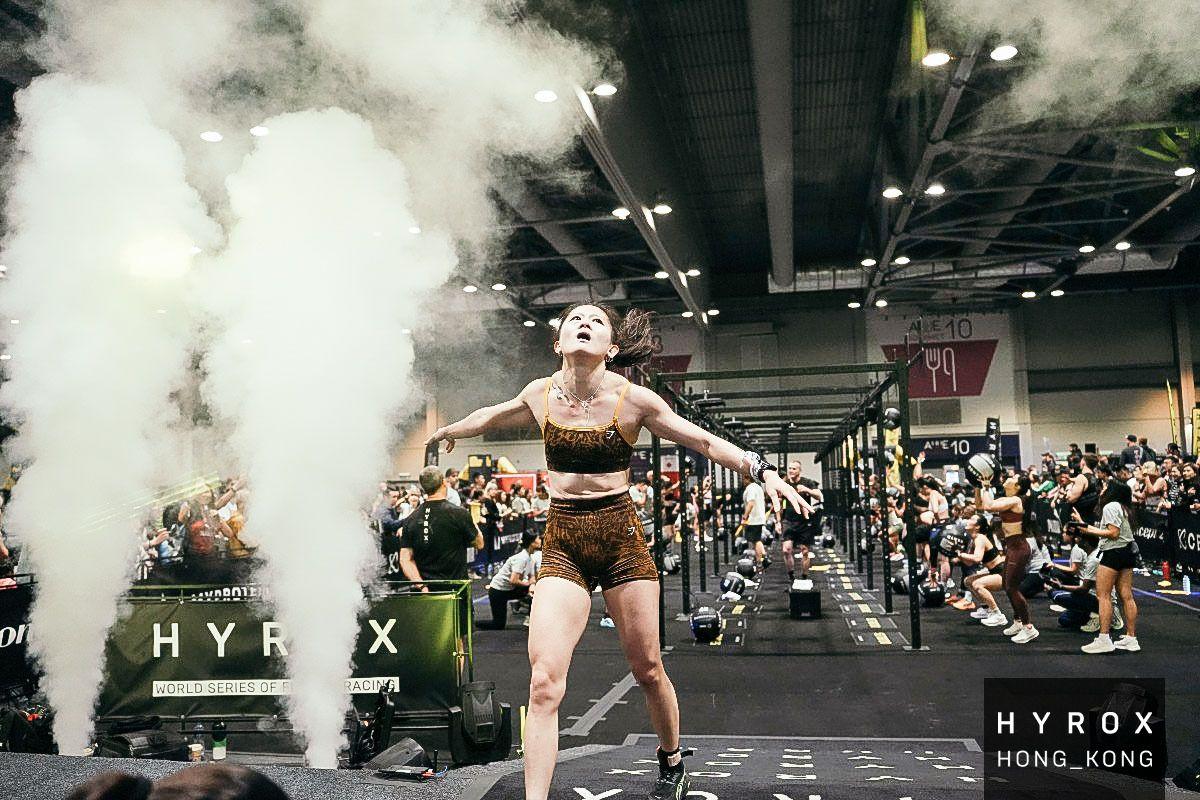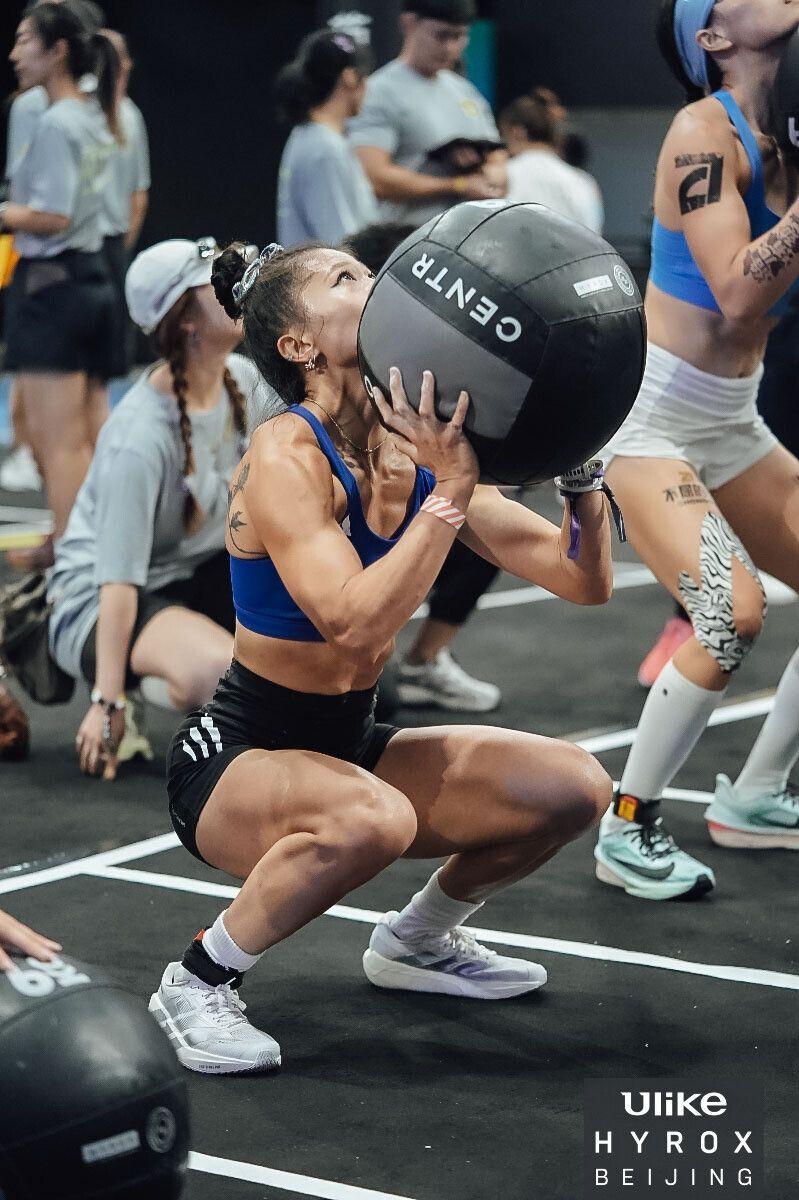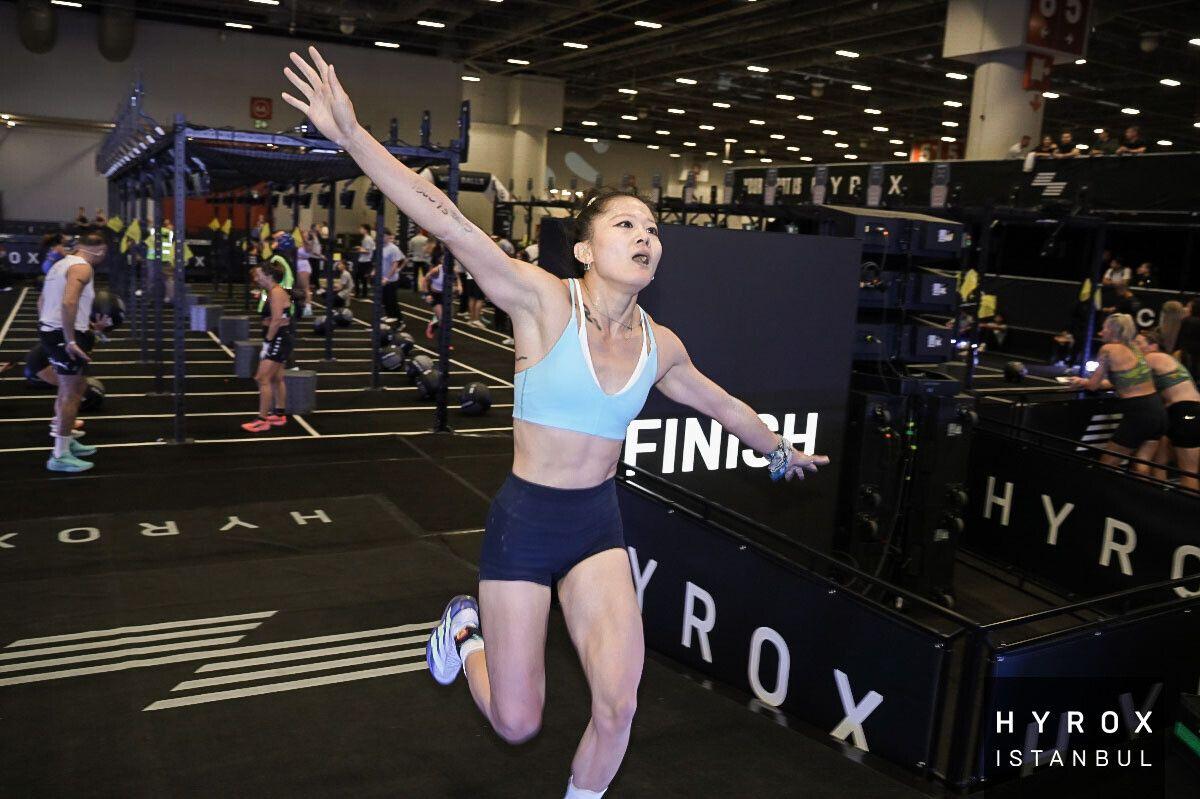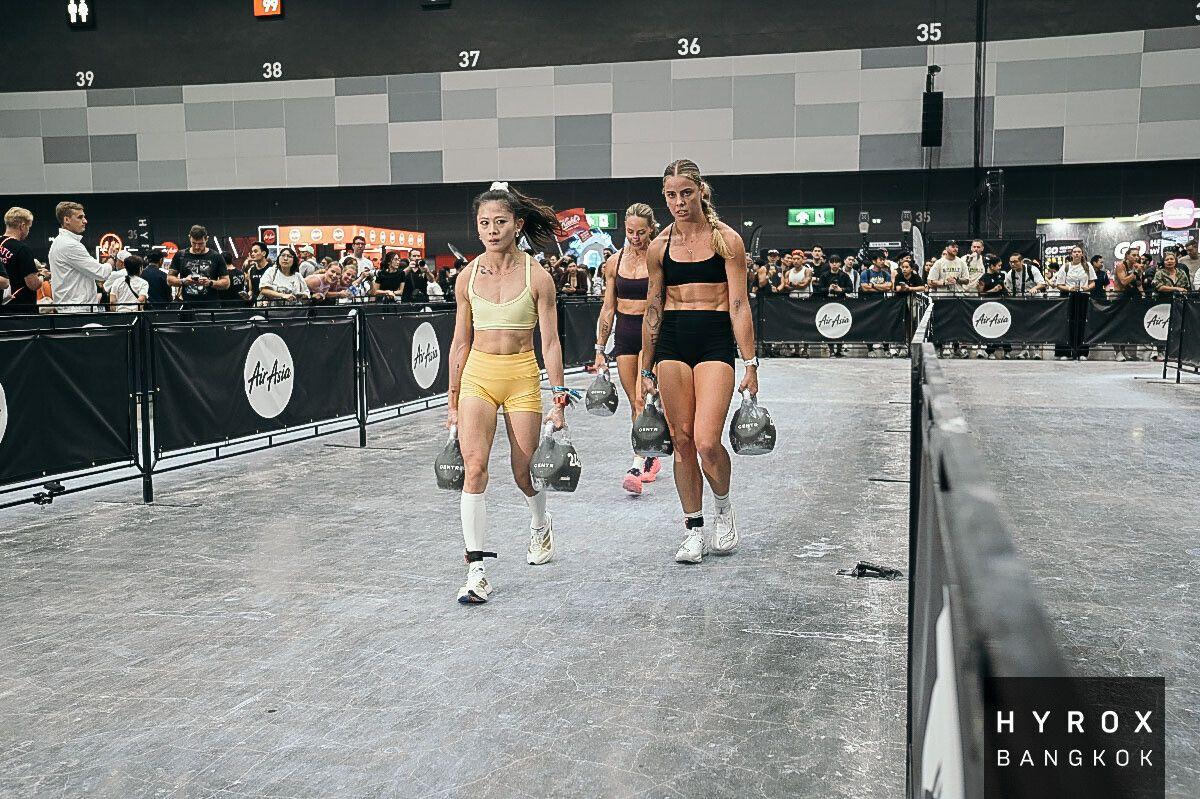
Hi everyone! I'm Pauline Yu (PYY), Taiwan's only 4× Hyrox World Championship qualifier. I want to tell you about the exact moment I truly understood the farmers carry — and it wasn't a proud moment. It was my second Hyrox race, somewhere around the 200-metre mark of that 200-metre farmers carry, and I put the kettlebells down. Not because my legs gave out, not because I was injured — my grip just completely let go, and I hadn't trained it specifically at all. I stood there for a few seconds feeling genuinely embarrassed, and in that pause I made a promise to myself: I would never be caught underprepared on this station again. That moment changed how I train, how I program, and honestly how I think about suffering during competition.
Key Takeaways
- ▸In Hyrox, the farmers carry is a 200-metre carry using two kettlebells — women in the Pro/Elite category carry 2 x 24 kg, so training with competition-weight implements specific to your division is non-negotiable from day one.
- ▸Your grip is the first thing to fail, not your legs or lungs — so building dedicated grip strength through dead hangs, heavy holds, and thick-handle work should be a weekly priority in your Hyrox training block.
- ▸Posture is everything: keep your shoulders packed down and back, chest tall, and core braced like you're about to take a punch — letting the weight pull your shoulders forward is the single biggest form mistake I see in athletes across Asia.
- ▸The mental game of not putting it down comes down to pre-setting a rule before the race — decide in advance exactly where your planned rest points are, if any, so your brain isn't negotiating with itself mid-carry when it's already fatigued.
- ▸Breathing rhythm during the carry is an underrated tool — short, controlled exhales timed with your steps help maintain intra-abdominal pressure and keep your torso stable, which directly reduces the spinal load you feel during a heavy carry.
- ▸Practice the carry at the end of a full training session when you're already tired, not fresh — because in a race, your farmers carry comes after seven other brutal stations, so your training environment should reflect that accumulated fatigue as closely as possible.
Grip Strength: The Foundation Nobody Talks About Enough
When I first started training seriously for Hyrox in Taiwan, I followed a lot of generic fitness programming that treated grip strength as a byproduct — something you'd get for free by doing deadlifts and pull-ups. And for a while, that felt true. But as my race intensity went up and the cumulative fatigue of eight stations started stacking, I realised that grip was its own specific weakness that needed its own specific training. In women's elite Hyrox, the farmers carry demands that you sustain a tight, controlled grip on heavy kettlebells through a full 200 metres — and when your forearms are already pumped from previous stations, that challenge becomes genuinely brutal. My grip was failing before my cardiovascular system or my legs ever got close to their limits. That mismatch was the problem, and once I named it clearly, I could fix it.
I started adding dedicated grip work into my weekly programming — nothing exotic, just consistent and intentional. Dead hangs from a pull-up bar for timed holds, heavy farmer carry holds in place for 30 to 60 seconds, and occasional thick-grip training using towels wrapped around dumbbells. Within about six weeks I noticed a dramatic difference in how confident I felt approaching the carry station in training simulations. Grip strength for women in Hyrox is one of those areas where relatively small, targeted investments pay outsized returns because most women — especially those coming from a running or general fitness background — have simply never trained it with intention. This is a real competitive edge, especially across the Asian women's field where I compete most frequently.
- ▸Add timed dead hangs to your weekly training — start with 3 sets of 20 to 30 seconds and progress toward 60 seconds, as this directly conditions the specific muscles and tendons involved in sustained kettlebell grip during the farmers walk.
- ▸Practice static carries at competition weight — set a timer for 60 to 90 seconds and simply hold both kettlebells without walking, which isolates grip endurance and teaches your nervous system to stay calm under sustained tension.
- ▸Use chalk during training — not just on race day — because training your grip without chalk and then using it in competition is cheating yourself out of accurate feedback about where your real grip failure threshold actually sits.
- ▸Train your grip at the end of your session, not the beginning — placing grip work after your main lifts simulates the fatigued state your hands will be in during a real Hyrox race, making your adaptation much more race-specific and transferable.
Posture Cues That Actually Work Under Load and Fatigue
Here's something I learned the hard way through watching race footage of myself: when my grip starts to struggle, my posture collapses almost immediately. The shoulders round forward, the chest drops, and suddenly I'm carrying the kettlebells more with my lower back and traps than with a stable, braced torso. This chain reaction is incredibly common — I've seen it in athletes across Taiwan and at Hyrox World Championship events in Europe too. The good news is that posture under load is very coachable, but you have to drill the correct cues until they become automatic, because when you're 40 minutes into a race and your brain is foggy, you will not consciously think about your scapular position unless it's already a habit wired in.
The cue that works best for me — and that I give to every athlete I train with — is to imagine you're trying to tuck your shoulder blades into your back pockets. That one image does so much work simultaneously: it depresses and retracts the scapulae, it opens the chest, and it automatically engages the mid-back. Pair that with a braced core — think 360-degree tension around your entire trunk, not just sucking in your stomach — and you have a posture that can actually withstand the lateral pull of two heavy kettlebells for 200 metres. The other cue I use is to keep my eyes forward and slightly elevated, because wherever your gaze goes, your head goes, and wherever your head goes, your spine follows. Looking down at the ground is the fastest way to start collapsing your thoracic spine.
- ▸Use the cue 'shoulder blades into back pockets' before you pick up the kettlebells — setting this position before the carry begins is far easier than trying to correct it mid-carry when you're already under load and your attention is divided.
- ▸Keep your gaze forward or very slightly elevated throughout the carry — looking down encourages thoracic flexion and a forward head position, which transfers stress directly to your lower back and makes the carry feel significantly heavier than it needs to.
- ▸Brace your core as if you're about to be lightly punched in the stomach — this 360-degree tension through your trunk stabilises your spine against the downward and lateral forces of the kettlebells and protects your lower back across the full 200-metre distance.
The Mental Game: Why Athletes Put It Down and How to Stop
I genuinely believe the farmers carry is more of a mental event than a physical one at the intermediate-to-elite level of Hyrox competition. Once you've built adequate grip strength and your posture is solid, the limiting factor becomes your brain's negotiation with itself. Your forearms are burning. Your traps are screaming. Some small voice in your head is calculating exactly how much time you'll lose if you set the weights down for just three seconds — and that voice sounds very reasonable in the moment. I've had that conversation with myself in races across Taiwan and on the World Championship floor, and I can tell you from experience that the voice is lying. Those three seconds become six, and six becomes ten, and every set-down costs you more time and momentum than your tired brain is calculating in real time.
The strategy that changed everything for me was making the decision before the race starts — not during it. I set a rule: I will not put these kettlebells down unless I reach my predetermined checkpoint, or unless I genuinely feel an injury risk. By setting that rule in advance, I remove the in-race negotiation entirely. There's no decision to make at the 100-metre mark because the decision was already made in the warm-up area. I also use a specific mental anchor — I pick a short phrase that I repeat in rhythm with my steps. Something like 'strong hands, tall chest' or just counting steps in groups of ten. This kind of rhythmic self-talk keeps the prefrontal cortex occupied and away from the suffering signals coming from your forearms. It sounds simple, but it works. I've seen this approach completely transform how athletes in my training circle in Taiwan approach the carry.
- ▸Make your 'no put-down' rule before the race, not during it — decide in advance whether you will carry unbroken or allow one planned rest at a specific marker, so your brain is following a plan rather than improvising under pressure at the worst possible moment.
- ▸Use a rhythmic mantra timed to your footsteps — phrases like 'strong hands, tall chest' or simply counting steps in groups of ten occupy your conscious mind and reduce the perceived intensity of the grip and trap fatigue you're experiencing.
- ▸Practice 'suffering stays' in training — when you feel like putting the kettlebells down in a practice carry, make yourself take ten more steps before reassessing, because building the habit of overriding that first put-down impulse is exactly what race day demands of you.
What the Research Says
Research published in the Journal of Strength and Conditioning Research has consistently shown that grip strength is a meaningful predictor of overall athletic performance and functional capacity — not just in obvious pulling movements, but across compound exercises where grip is the first system to fail under sustained load. This aligns exactly with what I experience in training and racing: when my grip goes, everything else goes with it. Separately, research in the British Journal of Sports Medicine has broadly supported the importance of trunk stability and braced-core mechanics for reducing spinal load during loaded carries and asymmetric movements. The science backs up the posture cues I've been drilling for years — a stable, braced trunk isn't just about looking good under load, it's genuinely protective and performance-enhancing at the same time. Knowing this research exists gives me extra confidence every time I cue an athlete to brace before picking up the bells. The evidence and the lived experience point in exactly the same direction.
Frequently Asked Questions
Q: How heavy are the kettlebells for women in Hyrox, and should I train heavier than competition weight? A: In Hyrox, women in the Open category typically carry 2 x 12 kg, while women in the Pro/Elite category carry 2 x 24 kg — always check the current official Hyrox rulebook for your division as weights can be updated. I personally recommend training at competition weight for technique work and going slightly heavier — around 20 kg per hand — for dedicated strength blocks, because building a strength reserve above your race weight makes competition feel more manageable. That said, never sacrifice posture for extra load. Quality of movement at race weight matters far more than how heavy you can grind through with bad form.
Q: My forearms pump out really fast during the farmers carry — what can I do about it specifically? A: This is one of the most common questions I get from women training Hyrox in Taiwan and across Asia, and the honest answer is that forearm pump is almost always a training adaptation issue rather than a technique issue. Your forearms pump because they're not yet conditioned to sustain that level of grip tension for that duration. The fix is progressive, consistent grip endurance work — timed holds, dead hangs, and repeated carries — done over weeks, not days. I also find that slightly relaxing the grip to the minimum tension needed to maintain control, rather than death-gripping the handles, dramatically reduces forearm pump during longer carries. Practice finding that minimum effective grip tension in training.
Q: Is it better to walk fast or slow during the farmers carry in Hyrox? A: My honest answer from personal racing experience is: walk as fast as your posture and grip allow you to maintain — not faster. Going too fast breaks your posture, accelerates grip failure, and often costs you more time than a slightly slower, controlled pace would. I experimented with this across multiple races and found my sweet spot is a brisk, purposeful stride where I can still take controlled breaths and keep my shoulders packed. Think of it less as 'walking speed' and more as 'how fast can I move while keeping everything together.' That answer will change as your fitness improves, but the principle stays the same at every level of Hyrox competition.
The farmers carry has taught me more about mental toughness and targeted physical preparation than almost any other Hyrox station — and I genuinely love it now, even though it humbled me completely back in race two. If you want more honest, experience-based training content like this, come find me and subscribe at paulineyuyu.com. I share training programming, race breakdowns, and everything I'm learning as I keep pushing in women's elite Hyrox — for Taiwan, for Asia, and for every woman who refuses to put it down.
Sources: British Journal of Sports Medicine / Journal of Strength and Conditioning Research
Taiwan's elite HYROX Pro athlete and 4× World Championship qualifier. I share my training journey, race insights, and performance notes from the competition floor.