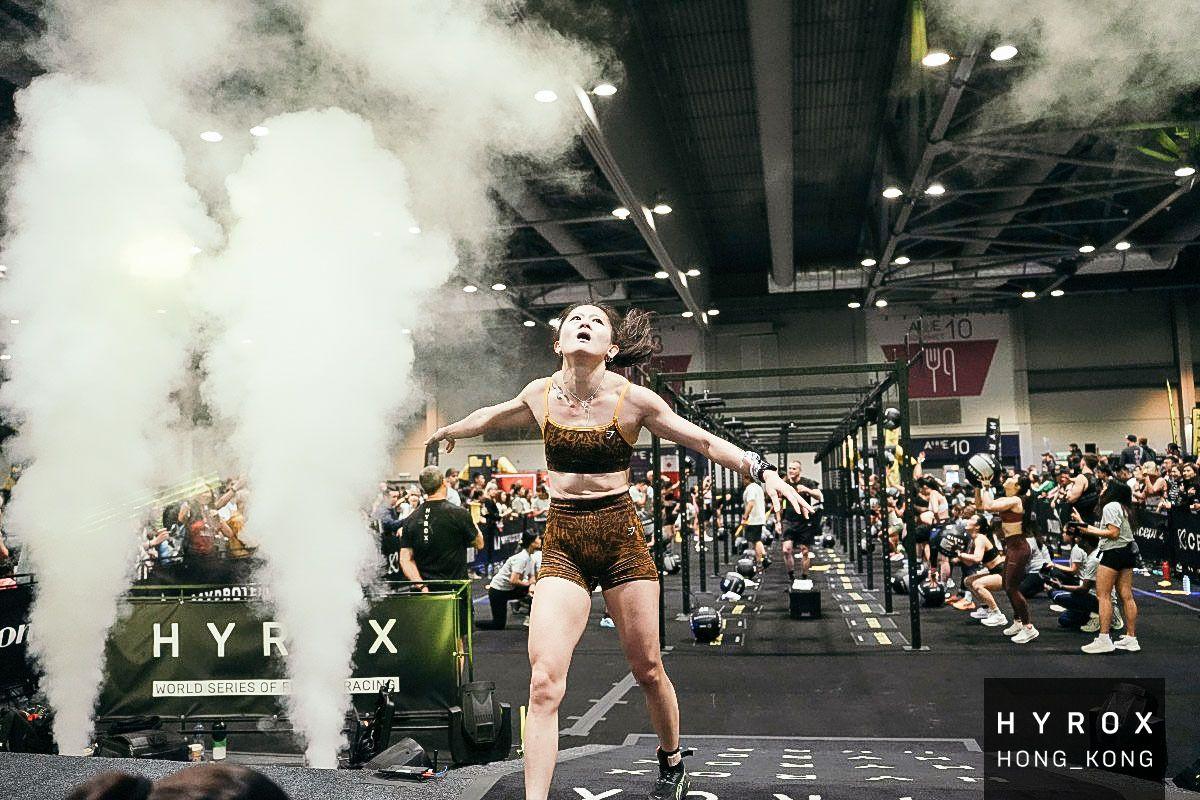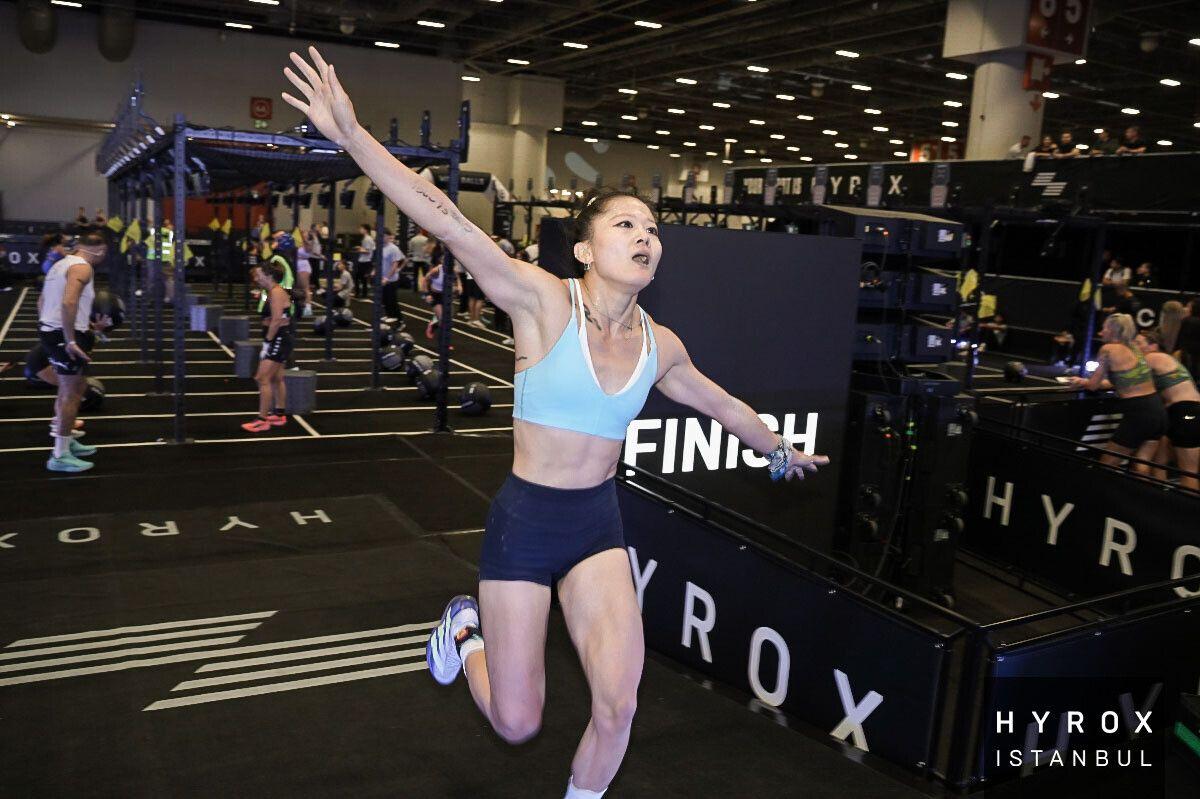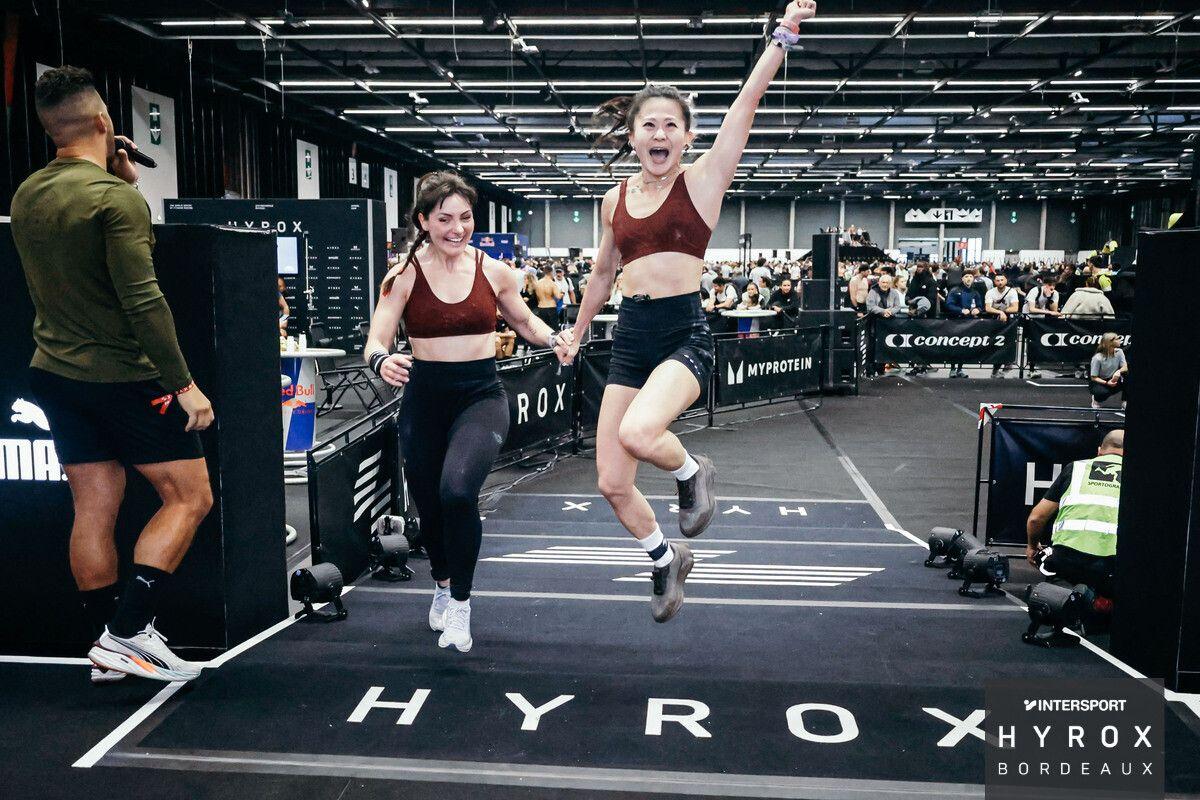
Hi everyone! I'm Pauline Yu (PYY), Taiwan's only 4× Hyrox World Championship qualifier. I still remember the first time a friend grabbed me by the arm at a gym in Paris and said, 'Pauline, let's do a Hyrox doubles together — it'll be fun, it won't be that hard, we can share the work!' Reader, I almost laughed out loud. But then I thought about it more seriously: doubles is actually one of the most strategic and rewarding formats in all of Hyrox, and it's genuinely one of the best entry points for beginners who want to experience the race without going in completely solo. Whether you're a woman in Taiwan just discovering the sport, a mixed-gender pair in Asia looking for a shared fitness goal, or two best friends who train together three times a week and want to level things up — this guide is for you. I'm going to share everything I know about how to train Hyrox with a partner, how to split the work intelligently, and how to make sure you both cross that finish line smiling.
Key Takeaways
- ▸In Hyrox doubles, both partners run every kilometer together and alternate work at each of the 8 functional stations — understanding this structure before your first training session will save you enormous confusion and wasted energy on race day.
- ▸Assign stations to each partner based on individual strengths before race day, not on the fly — one partner taking Ski Erg while the other owns Burpee Broad Jumps can shave minutes off your total time without either of you working harder overall.
- ▸Train your running together at least once a week as a pair, because staying side-by-side at a comfortable shared pace during the 1 km intervals is a skill that requires practice, communication, and honest conversation about each other's aerobic capacity.
- ▸For Hyrox doubles beginners, the Wall Balls and Sled stations are the highest-stakes moments — practice the weights used in competition (the open women's category uses 4 kg medicine ball and specific sled loads) so you're never surprised on race day.
- ▸Communication is your biggest competitive advantage as a doubles pair — develop simple verbal cues and a rotation system during training so that swapping mid-station on race day feels automatic, not chaotic or emotionally charged.
- ▸Hyrox doubles for beginner women in Taiwan and across Asia is growing fast — the format is perfect for building confidence, enjoying community, and finishing your first race with someone you trust beside you the whole way.
Understanding the Doubles Format: What You're Actually Signing Up For
When I first started coaching people for Hyrox here in Taiwan, the number one mistake I saw Hyrox doubles beginners make was misunderstanding the actual race format. They thought it was like a relay — one person runs, then the other takes over, and they take turns the entire way. That's not how it works, and getting this wrong in training means you'll show up on race day completely unprepared for the demands you'll actually face. In Hyrox doubles, both partners run every single 1 km segment together. You are side by side on the running floor for all 8 kilometers of running. What you split is the functional workout stations. At each of the 8 stations, you and your partner alternate doing the work — you can divide it however you agree, but you must both be present and working in that station zone. This completely changes how you need to train together.
Once you understand that the running is shared and the stations are where you split labor, your whole approach to first Hyrox doubles training becomes clearer and more purposeful. Think of yourselves less like relay runners and more like a two-person team on a shared mission where the terrain is identical for both of you, but the heavy lifting gets divided. This is actually fantastic news for beginners, because it means even if one partner is a stronger runner and the other is stronger at strength movements, you can build a race strategy that plays to both your advantages simultaneously. I've helped train several women's doubles pairs here in Taiwan, and the ones who crack the format early — who really internalize the 'we both run, we split stations' model — consistently perform better and enjoy race day far more than the ones who are still figuring it out in the warm-up area.
- ▸Run every training session together at least once per week — practice holding the same pace for a full 8 km with 8 built-in stops, because this is exactly what race day will feel like and you need to know your shared comfortable pace in advance.
- ▸Study the official Hyrox station order before your first training block: SkiErg, Sled Push, Sled Pull, Burpee Broad Jump, Rowing, Farmers Carry, Sandbag Lunges, and Wall Balls — knowing what comes next helps you pace your effort and plan your splits strategically.
- ▸Simulate the full race in training at least twice before your event — even if you go slower than race pace, completing all 8 stations back-to-back with your partner will reveal exactly where your plan breaks down and where you need more work.
- ▸Check the exact competition weights and distances for your category on the official Hyrox website before you design your training plan — women's open doubles and mixed doubles have different requirements, and training with the wrong loads builds the wrong fitness.
How to Split the Stations: Build a Strategy That Plays to Both Your Strengths
This is where first Hyrox doubles training gets really interesting, and honestly where I've seen the biggest performance gains for the pairs I've worked with across Taiwan and at events in Asia. The smart approach is not to split every station 50/50 down the middle. That sounds fair, but it's often inefficient. Instead, you want to map each partner's strengths and weaknesses against the 8 stations, then build a split that minimizes your collective weakness and maximizes your collective strength. When I was helping one women's doubles pair prepare for their first Hyrox in Taipei, one of them was a former swimmer — incredible upper body and a strong erg pull — and the other was a runner with powerful legs but got gassed fast on upper-body work. We gave the swimmer the SkiErg and the Rowing, and the runner took the Sled Push and Sled Pull. On the Burpee Broad Jumps, The one with better aerobic capacity or even smaller size do more. The result was a race that felt controlled and strategic rather than desperate and chaotic.
The stations where splitting mid-movement is most common are Burpee Broad Jumps (80 M total in open), Wall Balls (100 total in open), Sandbag Lunges (200 meters total), and Farmers Carry (200 meters total). For these, you'll need to decide in advance whether you split by reps, by distance segments, or by timed intervals. My personal recommendation for Hyrox doubles for beginners women — especially if you haven't done many partner workouts before — is to split by reps or clear distance markers rather than by time. Time-based splits require a watch and mental math when you're already exhausted and your heart rate is through the roof. Rep-based splits are simpler: 'You do 10 Wall Balls, I do 10 Wall Balls, we're done.' Practice your split system in training until it's completely automatic, because on race day you don't want to be having a negotiation while 100 meters of Sandbag Lunges looms ahead of you.
- ▸Assign the SkiErg and Rowing machine to whichever partner has more upper-body endurance and pulling strength — these are high-volume aerobic stations where technique and stamina matter far more than raw power, so play to your physiological strengths.
- ▸Give the Sled Push and Sled Pull to the partner with stronger legs and a lower center of gravity — these stations are brutal on the quads and hip flexors, and the partner who handles them needs to be able to recover quickly for the next running kilometer.
- ▸For the Burpee Broad Jumps, split the 80 total reps evenly or give slightly more to the partner with better conditioning — this is the station where most beginner doubles pairs lose the most time, so practice it together every single week without exception.
Race Day Mindset and Partner Communication: The Skill Nobody Talks About
I want to be real with you here, because this is the thing that almost no Hyrox doubles guide talks about: the emotional and communication side of racing with a partner is genuinely challenging, and if you don't prepare for it, it can derail an otherwise well-trained team. I've seen this happen at events in Asia, including in Taiwan. Two people who train together beautifully fall apart on race day because one of them slows down on the run, the other gets frustrated, and suddenly there's tension where there should be teamwork. Or one partner pushes too hard at station three and then can't hold the pace for the next three kilometers of running, and the other partner is left carrying the emotional weight of not knowing whether to slow down and wait or push ahead. These moments are genuinely hard, even for experienced athletes. For women's elite Hyrox athletes, partner communication is a trained skill — and it needs to be trained in your beginner doubles prep too.
The way I teach communication to all the doubles pairs I work with is simple: develop a short vocabulary of clear, kind, non-negotiable cues before race day, and practice using them in every training session. Things like 'I need 10 seconds,' 'your turn,' 'let's go together,' and 'I've got this one' — short, clear, and emotionally neutral. You also need to have an honest conversation before race day about what happens when things get hard. Because they will get hard. The last two kilometers of a Hyrox race are genuinely tough, and if you haven't talked about how to support each other when one of you hits a wall, you'll have that conversation in the worst possible moment — mid-race, exhausted, with a sandbag in your arms. Have it in a coffee shop in Taipei instead, when you're both calm and caffeinated.
- ▸Create a short list of agreed cue words before your first training simulation — practice using them out loud during every session so that on race day, calling 'your turn' at Wall Balls feels as natural as breathing and doesn't require any extra cognitive load.
- ▸Have a frank pre-race conversation about what each of you needs when you're struggling — some athletes want encouragement, others need silence and space, and knowing your partner's preference in advance prevents misread signals that cause unnecessary friction mid-race.
- ▸Agree on a running pace strategy that is built around the slower runner, not the faster one — in Hyrox doubles, you run together, so the fastest your team can run is the pace that your less aerobically developed partner can sustain across all 8 kilometers without blowing up.
What the Research Says
Training science strongly supports the kind of paired, high-intensity functional fitness approach that Hyrox doubles demands. Research published in the Journal of Strength and Conditioning Research has consistently shown that training in pairs or small groups — particularly when effort is shared and goals are aligned — produces measurable improvements in sustained output, motivation, and adherence to training programs over time. This is something I've observed firsthand across my years of training and coaching in Taiwan: people who train with a committed partner simply show up more consistently and push harder on the days when solo motivation would have failed them. Additionally, research in the British Journal of Sports Medicine has established that concurrent training — combining aerobic running work with resistance-based functional movements — significantly improves both cardiovascular fitness and muscular endurance when programmed intelligently. This is exactly the physiological demand of Hyrox doubles: you need both the aerobic base to run 8 kilometers and the muscular endurance to perform hundreds of reps across 8 stations. The science confirms what any experienced Hyrox athlete already knows from the floor: you can't just be a runner, and you can't just be a lifter. You need both, and you need to train both, together, with your partner, consistently.
Frequently Asked Questions
Q: How many weeks do we need to prepare for our first Hyrox doubles as beginners? A: In my experience coaching beginner doubles pairs in Taiwan, I'd recommend a minimum of 10 to 12 weeks of dedicated preparation if you're coming from a general fitness background. That gives you enough time to build your aerobic base for the 8 km of running, learn the station movements with correct technique, develop your splitting strategy, and run at least two full race simulations together. If you only have 8 weeks, it's still doable — but be conservative with your race-day goals and prioritize finishing strong over finishing fast. The most important thing is arriving at the start line healthy, prepared, and genuinely excited to race together.
Q: Can a beginner women's doubles pair compete without any prior Hyrox experience? A: Absolutely yes — and honestly, the doubles format is one of the most beginner-friendly ways to enter the Hyrox world. You're sharing the physical load, you always have someone beside you on the run, and the social energy of racing with a partner makes the hard moments much more manageable. I've seen women in Taiwan complete their first Hyrox doubles with just 8 weeks of preparation and absolutely love it. The key is that at least one of you should have a solid fitness foundation — regular running, some gym experience, and basic familiarity with movements like rowing and lunges. You don't need to be an elite athlete. You just need to prepare honestly and have a plan.
Q: What's the most common mistake beginner doubles pairs make in training? A: Without question, it's neglecting to train the running together. Most beginner pairs spend all their prep time working on the functional stations — the SkiErg, the Sled, the Wall Balls — and then show up on race day having never actually run 8 kilometers side by side at a shared pace. The running is where races are won and lost in doubles, because if your paces are mismatched and you're fighting each other on the run, you'll arrive at every station already exhausted and emotionally drained. Train the run together. Find your shared pace. Practice the transitions between running and stations. That's the work that makes the difference between a great first doubles experience and a painful one.
Doing your first Hyrox doubles is one of the most exciting things you can do in functional fitness — and I genuinely hope this guide helps you and your partner walk into that race feeling ready, connected, and pumped. If you want more detailed training plans, race strategy tips, and behind-the-scenes content from my own journey as Taiwan's top female Hyrox athlete, come visit me at paulineyuyu.com and subscribe for weekly updates. I'd love to cheer you both on to the finish line.
Sources: British Journal of Sports Medicine / Journal of Strength and Conditioning Research
Taiwan's elite HYROX Pro athlete and 4× World Championship qualifier. I share my training journey, race insights, and performance notes from the competition floor.