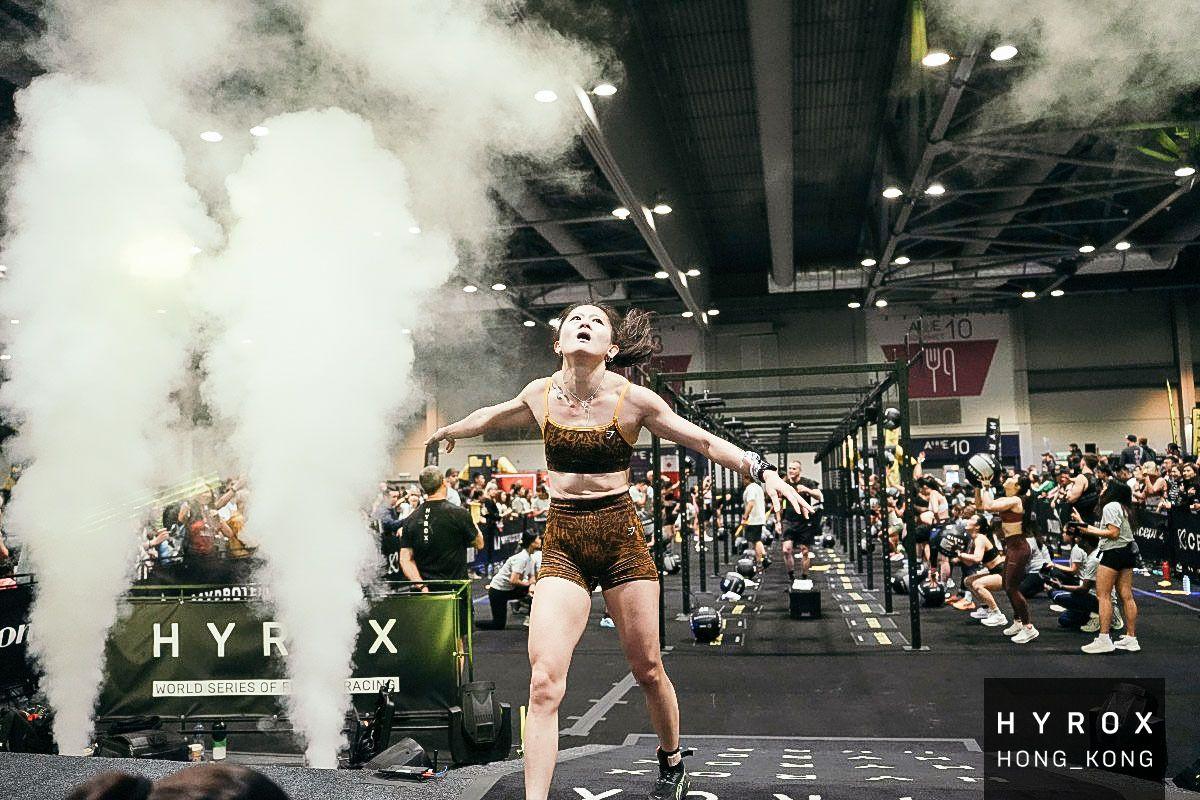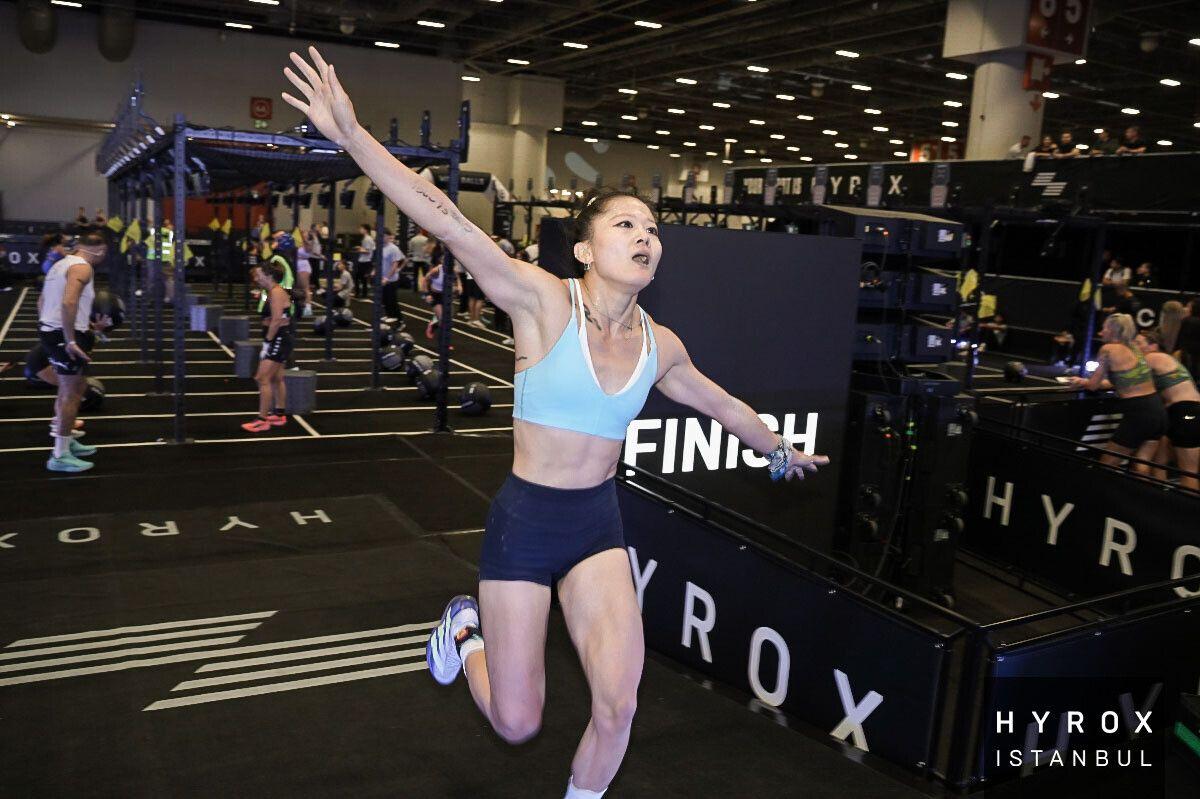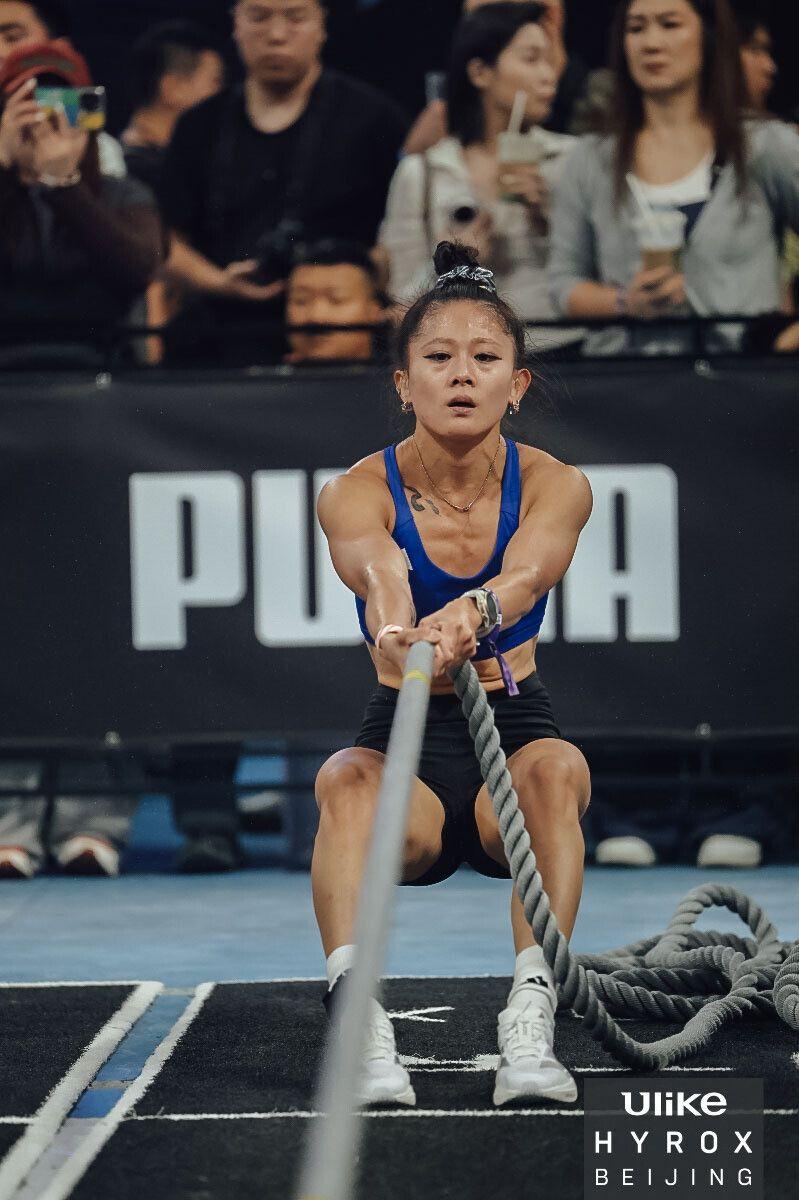
Hi everyone! I'm Pauline Yu (PYY), Taiwan's only 4× Hyrox World Championship qualifier. Standing in the athlete holding area in Beijing on the morning of September 12, 2026, I remember feeling the air-conditioning blast of the venue hit me like a wall — cool, sharp, and weirdly calming after the humid commute from the hotel. I'd flown in from Taiwan two days earlier specifically to give myself time to adjust, and in that quiet moment before the race horn sounded, I kept replaying my pacing plan over and over. Beijing was a big deal for me — not just as another race on the Asia Hyrox women elite circuit, but as a chance to test every adjustment I'd made to my training since the World Championships. I knew the competition would be fierce, the field deep, and the venue loud. What I didn't fully anticipate was how much the experience would teach me about racing smart under pressure.
Key Takeaways
- ▸Arriving two days early in Beijing made a measurable difference — the time zone shift from Taiwan is manageable, but the unfamiliar air quality and humidity spike on race day can drain you faster than you expect if you haven't acclimated even briefly.
- ▸My ski erg splits were the most controlled I've ever run in a race — keeping my watts steady in the first 30 seconds instead of spiking out of excitement saved me real energy for the sled push later in the race.
- ▸The wall balls station at Beijing exposed a weakness I thought I'd fixed — my breathing cadence broke down around rep 40 of 100, and that mental reset cost me roughly 15 to 20 seconds I'll never get back.
- ▸Racing in Asia against a growing women's elite Hyrox field means you cannot afford to bank time anywhere — the margins between podium and top 10 are shrinking with every season, and Beijing proved that point harder than any race I've done before.
- ▸Post-race, the single most useful thing I did was sit down within 30 minutes and voice-memo my raw impressions before the adrenaline faded — those notes became the foundation for every training adjustment I've made since.
- ▸Competing as a Taiwan representative on the Asia Hyrox stage carries weight beyond personal performance — every result shapes how the sport grows in our region, and that responsibility actually fuels me rather than adding pressure.
Race Morning: How Beijing Felt Different From Every Other Start Line
I've toed start lines in Hamburg, Nice, and across Asia, but Beijing had an energy I hadn't quite encountered before. The venue was enormous — the kind of space where sound bounces off every wall and the crowd noise wraps around you from all directions. I warmed up for about 25 minutes, which for me is longer than usual; I needed more time to feel loose in the cooler indoor air after the warmth outside. I've learned over four World Championship campaigns that my body runs better when my warm-up is genuinely thorough, not just a checkbox. I did a short ski erg piece at race pace, some dynamic hip work, and three or four short acceleration runs. By the time my wave was called, my heart rate had settled into that familiar pre-race hum — elevated, alert, but not spiking. I ate a small banana and a gel about 45 minutes before the gun, which has been my race-morning ritual for two years now. Everything felt as dialed in as I could make it.
The first running kilometer is always where I have to fight my own instincts the hardest. In Beijing, the course layout meant the first 1km loop passed directly in front of the loudest spectator section, and I could feel the crowd pulling my pace up dangerously fast. I've made this mistake before — gone out too hot in the first run, paid for it on the second sled push, and spent the back half of the race grinding through a deficit I created myself. So in Beijing, I was almost brutally disciplined. I ran the first kilometer by feel and effort, not by watching anyone around me. I let two women go in front of me who I knew were running too fast — and I trusted that the race would come back to me. That trust in the process is something that only comes from racing enough times to know what your body can actually sustain. It doesn't feel natural. It feels like losing, right up until it doesn't.
- ▸Resist the crowd pull in the first running kilometer — pick a specific effort level before you enter the corral and commit to it mentally, because the noise will try to drag your pace up whether you want it to or not.
- ▸Do a genuine race-pace piece on the ski erg during your warm-up, even just 60 to 90 seconds — it primes your nervous system and stops you from having that jarring transition shock when the station arrives in the race.
- ▸Eat your pre-race fuel at least 40 minutes before the start and keep the quantity conservative — I've raced on too much food and it sits heavily; a small banana plus one gel is the sweet spot that works consistently for me.
- ▸When you see competitors going out ahead of you at an unsustainable pace, let them go — practice this in training by deliberately running the first interval of a set slower than feels right, so the restraint becomes a trained skill rather than a willpower battle.
Station by Station: Where I Won Time and Where I Left It on the Floor
The ski erg was my strongest station in Beijing, and I think it came down to one specific change I'd made in training over the preceding eight weeks. I had been practicing what I call 'watt-capped sets' — rowing and skiing at a strictly controlled power output for longer and longer durations, training my body to not blow the ceiling in the first 20 seconds out of excitement. In the race, my splits held beautifully. I finished feeling like I had something left, which is exactly how the ski erg should feel. From there, the sled push was grinding but manageable — the turf in Beijing had a very slight drag resistance that I wasn't expecting, and my first few meters felt heavier than practice. I recalibrated quickly and found my rhythm. Sled pull came and went cleanly. Then came burpee broad jumps, which are always a moment of reckoning for me. I've trained these extensively, but in a race setting, the fatigue accumulation from the preceding stations means your broad jump distance shrinks and your burpee tempo drops. I held my target rep cadence for the first 30, slowed slightly through the middle, and pushed back to tempo for the final third — a strategy that's served me well across multiple races.
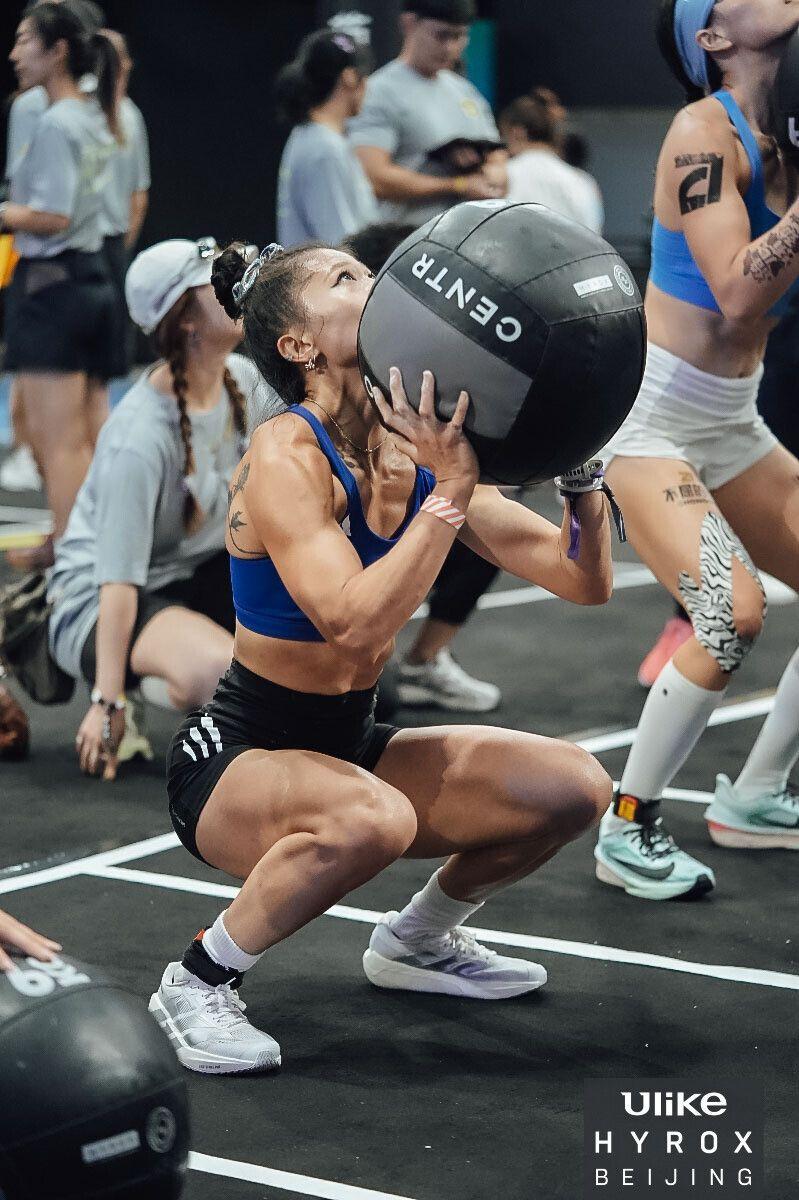
The wall balls were where Beijing bit me. I use an 8kg ball in women's elite Hyrox competition, and I genuinely thought I had the breathing rhythm dialed after months of specific training. I do. In the gym. Under controlled conditions. On race day in Beijing, with accumulated fatigue from six previous stations and 6km of running in my legs, my breathing pattern started fragmenting around rep 38 to 40 of the required 100 reps. I had to do a brief reset — three deep breaths and a deliberate re-grip — which cost me time I can quantify. Around 15 to 20 seconds. That might sound small, but in women's elite Hyrox, 15 seconds is the difference between a podium and fourth place. What I've taken from this is that my wall ball training needs to happen much deeper into a fatigued state — I should be doing wall balls as the last exercise in a long training session that already includes running and loaded movements, not as a standalone piece where I'm relatively fresh. The roxzone transitions between stations were smooth, though — I've gotten much better at not wasting time there.
- ▸Practice 'watt-capped' ski erg sets in training — pick a power output that is hard but sustainable for the full duration and refuse to exceed it, so that race-day excitement doesn't blow your pacing strategy in the opening seconds.
- ▸Train your wall balls in a pre-fatigued state at least once every two weeks — finish a run or a heavy sled block, then go directly into 100 unbroken reps to replicate what race day actually demands from your body.
- ▸Have a pre-planned reset cue for when breathing breaks down during a station — mine is three deep diaphragm breaths and a deliberate re-grip of the ball, practiced so many times that it's automatic even when I'm deep in the pain cave.
Reflections on Racing in Asia and What This Means for Taiwanese Athletes
Every time I compete at an Asia Hyrox event, I feel the weight and the privilege of representing Taiwan on a regional stage. When I first started racing Hyrox, Asia's women's elite field was relatively small and the competition, while serious, didn't have the depth it does now. Beijing in 2026 was a completely different landscape. There were athletes from China, South Korea, Japan, Australia, and across Southeast Asia who were fully prepared, deeply trained, and racing with genuine tactical sophistication. The growth of women's elite Hyrox in Asia over the past three or four years has been extraordinary, and Beijing was proof of just how far the sport has come in our region. I finished the race proud of my effort and already mentally cataloguing what I need to refine — which is, honestly, the only mindset that keeps me improving year over year.
One thing I want to say directly to any Taiwanese athletes reading this HYROX Beijing race report: the path to competing at this level is real and it is open to you. I came from zero — no athletic scholarship, no professional training background, just a genuine obsession with figuring out what my body could do. Every time I race in Asia, I'm acutely aware that younger athletes back in Taiwan are watching results, reading race reports like this one, and deciding whether this sport is something they can pursue seriously. The answer is yes. What it takes is structured training, race experience, and the willingness to be honestly self-critical after every competition. Taiwan's Hyrox results on the Asia stage are going to keep improving, and I want to be part of the reason for that — both through my own performances and through sharing everything I learn as openly as I can.
- ▸If you are a Taiwanese athlete considering entering women's elite Hyrox, start racing in the open or pro division first to build race experience — the elite field demands not just fitness but tactical awareness that only comes from competition repetitions.
- ▸Study the Asia Hyrox results pages after every regional event — track which athletes are improving fastest and see if you can identify patterns in their station splits, because those patterns often reveal training priorities worth adopting.
- ▸Competing at Asian Hyrox events before targeting the World Championships is not optional — the noise, logistics, and race-day unpredictability of a big international event are skills that must be trained through real competition exposure.
What the Research Says
After every race, I go back to the science to cross-check my gut feelings against what the research actually supports. Two areas stood out to me most after Beijing. First, pacing. Research in the British Journal of Sports Medicine has consistently shown that athletes who adopt a positive pacing strategy — going out faster than they can sustain — show significantly greater performance decrements in the latter stages of hybrid endurance-strength events compared to athletes who use a more even or slightly negative split approach. My discipline on the first running kilometer in Beijing was directly informed by this principle, and the data validates what my legs already knew. Second, fatigue and skill retention. Research in Medicine and Science in Sports and Exercise has broadly established that complex movement patterns — like the breathing-and-throwing coordination required in wall balls — degrade meaningfully under cardiovascular and muscular fatigue, even in well-trained athletes. This is exactly what happened to me at rep 40 in Beijing. Knowing this research doesn't stop the wall balls from getting hard; but it does tell me that the solution is training the skill under fatigue conditions more systematically, not just adding more volume in a fresh state. Both of these findings connect directly to the adjustments I'm making in my training block leading into the next competition.
Frequently Asked Questions
Q: How do you manage travel and jet lag before a Hyrox race like HYROX Beijing? A: This is something I've gotten better at with experience. From Taiwan to Beijing the time difference is small — we're both in the same or adjacent time zones — but the bigger issue is the physical fatigue of travel itself, plus adapting to a new environment. I always arrive at least two full days before race day, never just one. I keep my training very light on arrival day — just a short walk or 20-minute easy jog to get the legs moving — and I prioritize sleep aggressively. I avoid heavy sightseeing or standing around for hours, which sounds obvious but is genuinely tempting when you're in an interesting city. I also hydrate much more than usual in the 48 hours pre-race because travel tends to dehydrate you without you noticing. The goal is to arrive and immediately start the recovery process, not start exploring.
Q: What was the women's elite competition like at HYROX Beijing, and how does Asia's field compare to Europe? A: Honestly, the gap is closing faster than most people outside the Asia Hyrox women elite scene realize. Beijing had a genuinely deep field — the top athletes were fit, tactical, and racing with the kind of composure you only see in experienced competitors. The European field still has more depth overall at the very top end, largely because the sport has been established there longer and there are more regional races building that base. But the trajectory in Asia is steep and upward. I'd estimate that in two to three more seasons, the Asian elite women's field will be fully competitive with Europe's at the World Championship level. Racing in Asia right now is not an easy ride — you need to be prepared for athletes who have done their homework.
Q: What's the single most important thing you'd tell someone training for their first Hyrox race? A: Honestly, it's this: train the transitions. Not just the eight stations, not just the running — the actual experience of going from a hard cardiovascular effort into a loaded movement station. Most people train the ski erg, the sled, the wall balls as separate blocks and then wonder why race day feels so much harder. In a Hyrox race, you are always arriving at a station already fatigued from the preceding run, and you always have to start running again immediately after finishing a station. That constant state of accumulated fatigue is the skill you're training, not just the individual exercises. Once I started building my training sessions around simulating that specific stress — running, then station, then running, repeated — my race performances improved more than from any other single change I made.
Beijing was everything I hoped for and more demanding than I expected — and I genuinely wouldn't have it any other way. Every race that challenges me this hard makes me better, and I'm already excited about applying everything I learned here to what comes next. If you want to follow the full training journey, read my deep-dive station breakdowns, and get early access to race reports like this one, come subscribe at paulineyuyu.com — I'd love to have you in the community.
Sources: British Journal of Sports Medicine / Medicine & Science in Sports & Exercise
Taiwan's elite HYROX Pro athlete and 4× World Championship qualifier. I share my training journey, race insights, and performance notes from the competition floor.