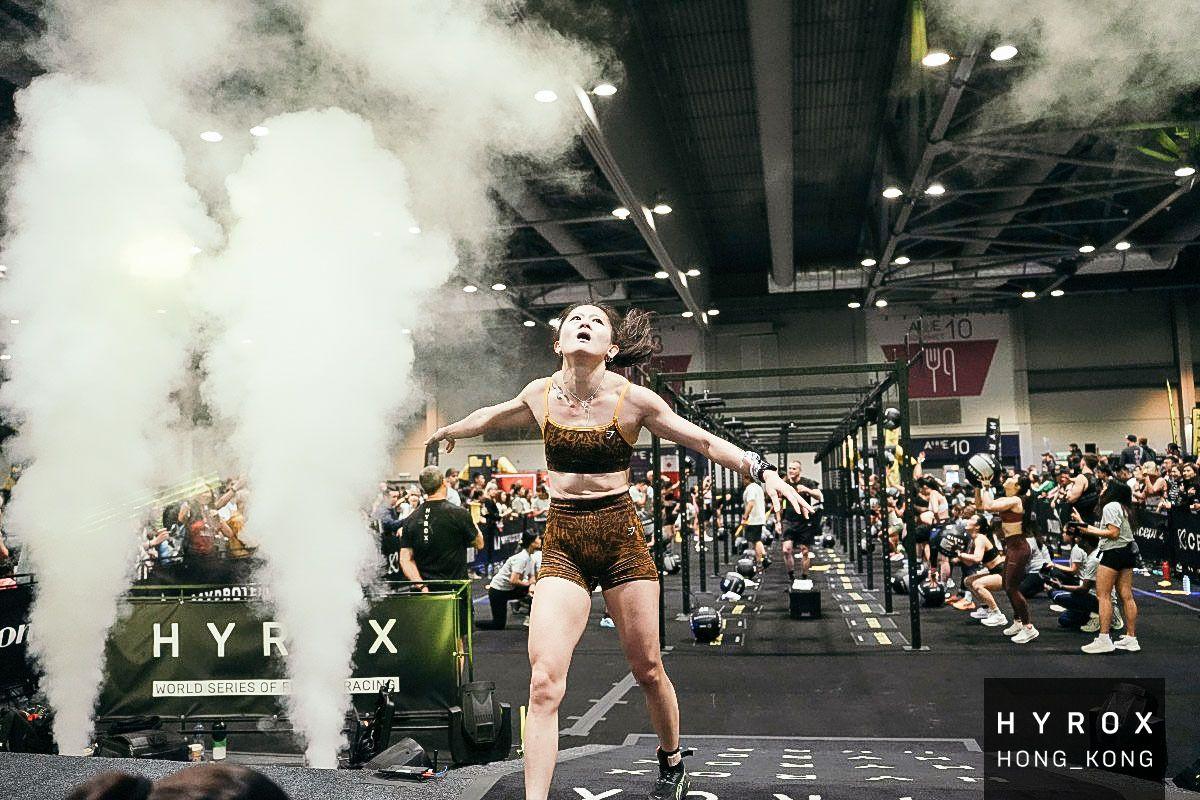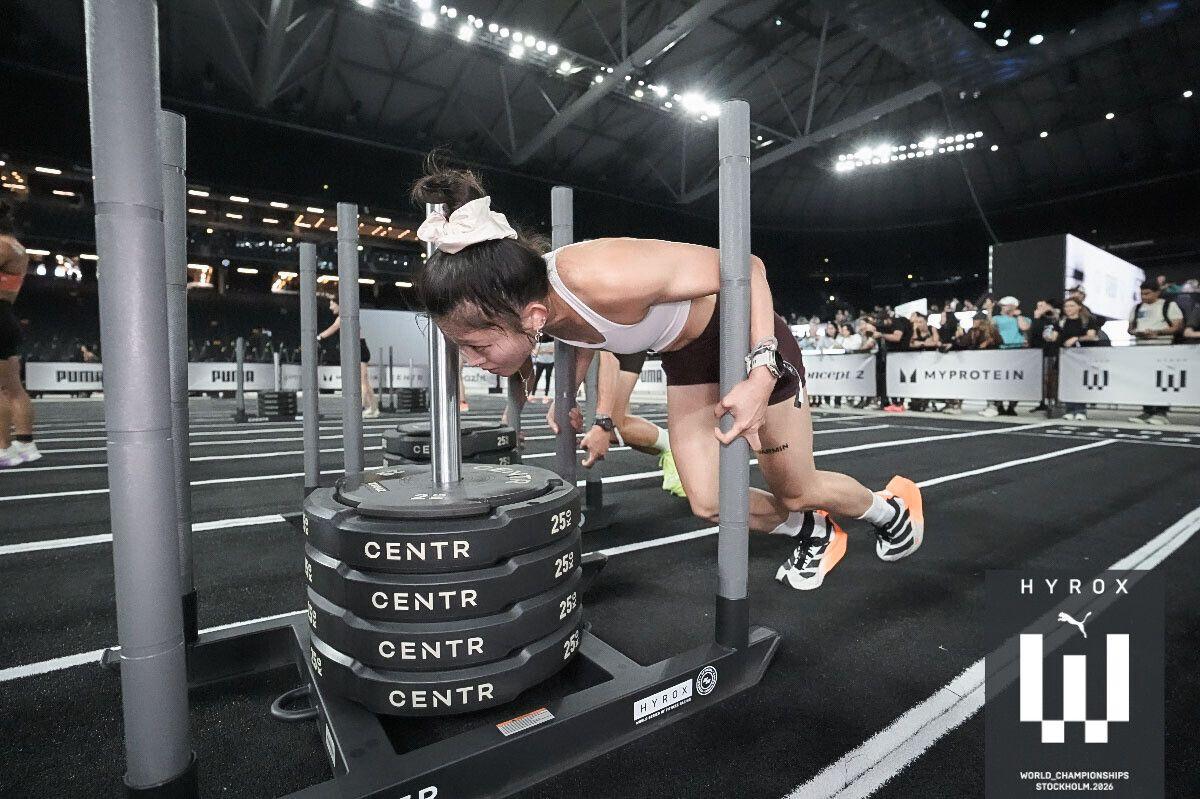
Hi everyone! I'm Pauline Yu (PYY), Taiwan's only 4× Hyrox World Championship qualifier. I still remember the first time I stood at a Hyrox start line — my legs were already shaking before the gun went off, and I genuinely had no idea what the next hour-plus was going to feel like. I'd trained hard, but I hadn't trained smart, and the difference showed up brutally around the ski erg in the second half of the race. If you're sitting here wondering how long Hyrox preparation time actually takes before your first race, I want to give you the honest, real-world answer — not the overly optimistic social media version. This is the timeline I wish someone had handed me when I started out, and it's built on every mistake, every breakthrough, and every lesson I've collected across four World Championship campaigns in the women's elite Hyrox division.
Key Takeaways
- ▸Most beginners need a minimum of 12 to 16 weeks of dedicated Hyrox preparation time to finish their first race feeling strong and in control, rather than just surviving the final stations.
- ▸Your current fitness baseline matters enormously — someone with a solid running and gym background can compress the first Hyrox timeline significantly compared to a complete beginner starting from scratch.
- ▸Hyrox is not just about fitness; it's about learning the specific movement patterns for all eight stations, so practising the actual exercises — SkiErg, sled push, sled pull, burpee broad jumps, rowing, farmers carry, sandbag lunges, and wall balls — is non-negotiable from week one.
- ▸Aerobic base building in the first phase of your training is the single most important investment you can make, because without it, your heart rate will skyrocket the moment you hit the first station and you'll never fully recover.
- ▸Combining two or three stations back-to-back in training — called simulation sets — is what bridges the gap between gym fitness and actual Hyrox race readiness, and most people skip this step entirely.
- ▸Taper the final two weeks before race day: reduce volume by about 40 percent, keep intensity present but controlled, and trust the work you've already put in rather than cramming last-minute training sessions.
Phase One — Building the Base You Can't Skip
When I first started building my Hyrox preparation in Paris, I made the classic mistake that nearly every new athlete makes: I went straight into hard, heavy training without first establishing an aerobic foundation. I thought that because I was already active — doing CrossFit a few times a week and running occasionally — I was ahead of the curve. I was wrong. Hyrox is relentless. The race format sends you through one kilometre of running followed by a functional exercise station, repeated eight times for a total of eight kilometres of running and eight stations of work. Without a strong aerobic engine, your body switches to anaerobic energy systems early, and you feel that burn accumulate with nowhere to escape. I finished my first race barely holding on through the final sled pull and wall balls, and I promised myself I'd never skip the base phase again.
For anyone asking how long to train for Hyrox before a first race, I always start with this question: how is your aerobic base and basic strengh right now? If you can't run at a conversational pace without stopping, that's your first priority. Weeks one through six of your first Hyrox timeline should be almost entirely about building that aerobic capacity — easy zone two runs three to four times per week, gradually increasing your weekly mileage by no more than ten percent at a time. In Asia and specifically in Taiwan, the heat and humidity also play a huge role in your perceived effort, so learning to run by feel rather than pace is a skill worth developing early. Don't be embarrassed if your easy pace is slower than you expected — I've coached athletes in Taiwan who were surprised by how slow true zone two running feels at first. It gets faster, I promise.
- ▸Run three to four times per week during phase one, keeping at least two of those runs at a fully conversational easy pace to build aerobic efficiency without accumulating excessive fatigue.
- ▸Increase your total weekly running volume by no more than ten percent from one week to the next — this rule exists to protect your joints and tendons, which adapt more slowly than your cardiovascular system.
- ▸Learn the SkiErg and rowing machine mechanics during phase one, even at low intensity, because technique faults at high heart rates are very hard to fix and will cost you time and energy on race day.
- ▸Practice sled movements and build the basic strength weekly from the very start of your training — sled push and sled pull require very specific neuromuscular patterns that your body needs time to learn, regardless of how strong your legs feel in other exercises.
Phase Two — Building Strength and Introducing Race-Specific Work
Once you have six to eight weeks of aerobic base work behind you, it's time to shift focus without abandoning the running. This middle phase of your Hyrox preparation time is where the real transformation happens, and honestly it's also where I personally find training the most exciting. You're no longer just doing generic fitness work — you're starting to train specifically for Hyrox. That means weighted carries, lunges with a sandbag, wall ball sets, and burpee broad jump practice all need a regular place in your programme. I remember when I first started loading the sandbag lunges seriously — I was shocked at how different they felt from regular barbell lunges. The awkward, shifting weight of a sandbag recruits your stabilisers in a completely different way, and if you haven't practised it, the twenty metres of sandbag lunges in a race will humble you fast.
The women's open Hyrox division uses a ten-kilogram sandbag for lunges, while the women's elite and pro divisions use heavier loads — so make sure you're training with the correct weight for your division from the start. Simulation sets are the secret weapon of this phase. A simulation set means you finish a run interval and then immediately move into one or two station exercises without rest, forcing your body to perform strength work while your heart rate is still elevated from running. This is the closest thing to a race-specific stimulus you can create in training, and it's something I now build into every Hyrox preparation block I design for myself and for athletes I coach in Taiwan. Start with one or two simulation sets per session and build up from there as your body adapts.
- ▸Train every Hyrox station at least twice per week during phase two so that each movement pattern becomes automatic — you want zero cognitive load on race day, only physical effort.
- ▸Include at least one simulation set per training session in weeks seven through twelve, combining a short run interval with one or two stations performed back-to-back without a rest period in between.
- ▸Check the official Hyrox division weights early and train with exact competition loads — guessing the weight and getting it wrong on race day is an entirely avoidable source of shock to your system.
Phase Three — Race Simulation and the Final Push Before Race Day
The final phase of your first Hyrox timeline is about sharpening what you've built, not cramming in new fitness. In the last three to four weeks before your race — whether that's in Taiwan, elsewhere in Asia, or internationally — your goal is to peak intelligently. This is where I see the most anxiety in first-timers, because there's a natural urge to work harder when race day is approaching. I've felt it myself every single cycle, even now as a four-time World Championship qualifier. The truth is, any fitness you don't have in the final month before a race isn't going to appear from desperate last-minute training. What those final weeks are for is nervous system readiness, race-pace familiarity, and building confidence through controlled intensity.
A full or partial race simulation — running one kilometre and then completing all eight stations with the full competition weights — is something I recommend every first-timer attempt at least once in the month before their race. It doesn't have to be done at maximum effort; the goal is to understand what your body will go through sequentially so that nothing on race day feels unfamiliar. In the final two weeks, start reducing your volume. Keep at least two sessions per week with some race-pace running and a station or two, but the total training load should come down by around forty percent. Sleep, nutrition, and stress management become just as important as your physical training sessions in this window, and I say that from hard-won personal experience racing at the women's elite Hyrox level.
- ▸Complete at least one full or partial Hyrox race simulation four to six weeks before your race day, running one kilometre between each station at a controlled but honest effort so your body learns the sequential fatigue pattern.
- ▸Reduce total training volume by roughly forty percent in the final two weeks before your race, keeping intensity present in two sessions but avoiding any heavy loading that could leave residual fatigue on race morning.
- ▸Prioritise sleep above all else in the final week — research and personal experience both confirm that sleep quality directly affects power output, pain tolerance, and mental resilience, all of which you need on race day.
What the Research Says
The science behind Hyrox preparation time aligns well with what sports researchers have been saying about concurrent training — the combination of endurance and strength work — for decades. Research published in the British Journal of Sports Medicine has consistently shown that athletes who build a strong aerobic foundation before adding high-intensity combined-modality training adapt faster, recover better between sessions, and are significantly less likely to sustain overuse injuries during a structured programme. This directly validates the phased approach I've described above: base first, then specific work, then race simulation. The Journal of Strength and Conditioning Research has also produced a broad body of evidence showing that sport-specific movement pattern practice — essentially training the exact movements you'll perform in competition — produces far greater performance transfer than general fitness work alone. This is exactly why I emphasise practising every single Hyrox station from week one of your preparation, not just running and lifting generically. When I look back at my own progression as a women's elite Hyrox athlete in Taiwan, the seasons where I improved the most were the ones where my training was most specific to the race demands, not the seasons where I simply trained harder or longer.
Frequently Asked Questions
Q: I'm a complete beginner with no running background — is 16 weeks enough Hyrox preparation time for my first race? A: Honestly, if you're starting from zero running fitness, I'd recommend pushing your race registration out to at least twenty weeks if you can. Sixteen weeks is workable if you're already reasonably active — maybe you lift weights or do some cardio regularly — but if running five kilometres feels like a major challenge right now, you need more runway. I've seen athletes in Taiwan rush into a Hyrox race undercooked and they often have a deeply unpleasant experience that puts them off the sport entirely. That would be a shame, because Hyrox is genuinely incredible once you're prepared for it. Give yourself time to actually enjoy the race, not just endure it.
Q: Do I need a Hyrox-specific gym or can I train at any regular gym in Taiwan? A: You can absolutely prepare at a regular gym, but you do need access to a few key pieces of equipment: a SkiErg, a rowing machine (or erg), a sled or equivalent for push and pull, kettlebells or a loaded frame for farmers carry, a sandbag, a medicine ball with a wall target, and open floor space for burpee broad jumps. Many gyms in Taipei and other cities in Taiwan have most of this equipment now that Hyrox has grown so much in Asia. If your gym is missing the sled, that's the hardest to substitute — I'd genuinely recommend finding one training session per week at a facility that has it, because sled mechanics are so unique that nothing else fully replicates them.
Q: How many days per week should I train during my first Hyrox preparation block? A: I typically recommend four to five days per week for most first-timers, with at least one full rest day and one active recovery day built in. Trying to train six or seven days per week when you're new to this kind of combined endurance and strength work is a fast track to burnout or injury. In my own training during my first Hyrox preparation cycle, I was doing five days and wishing I'd built in more recovery — my tendons were talking to me by week eight. Quality over quantity is the principle that applies here more than almost anywhere else in fitness. A focused four-day week will outperform a sloppy, tired seven-day week every single time.
Whether you're preparing for your first race in Taiwan, somewhere else in Asia, or anywhere in the world, the fundamentals are the same: build smart, train specific, recover hard, and trust the process. I'm genuinely rooting for every one of you who is brave enough to line up at a Hyrox start line for the first time — it's a moment you'll never forget. If you want more training content, personalised tips, and honest insights from my journey as a women's elite Hyrox athlete, head over to paulineyuyu.com and subscribe. I share everything I know, and I'd love to have you along for the journey.
Sources: British Journal of Sports Medicine / Journal of Strength and Conditioning Research
Taiwan's elite HYROX Pro athlete and 4× World Championship qualifier. I share my training journey, race insights, and performance notes from the competition floor.