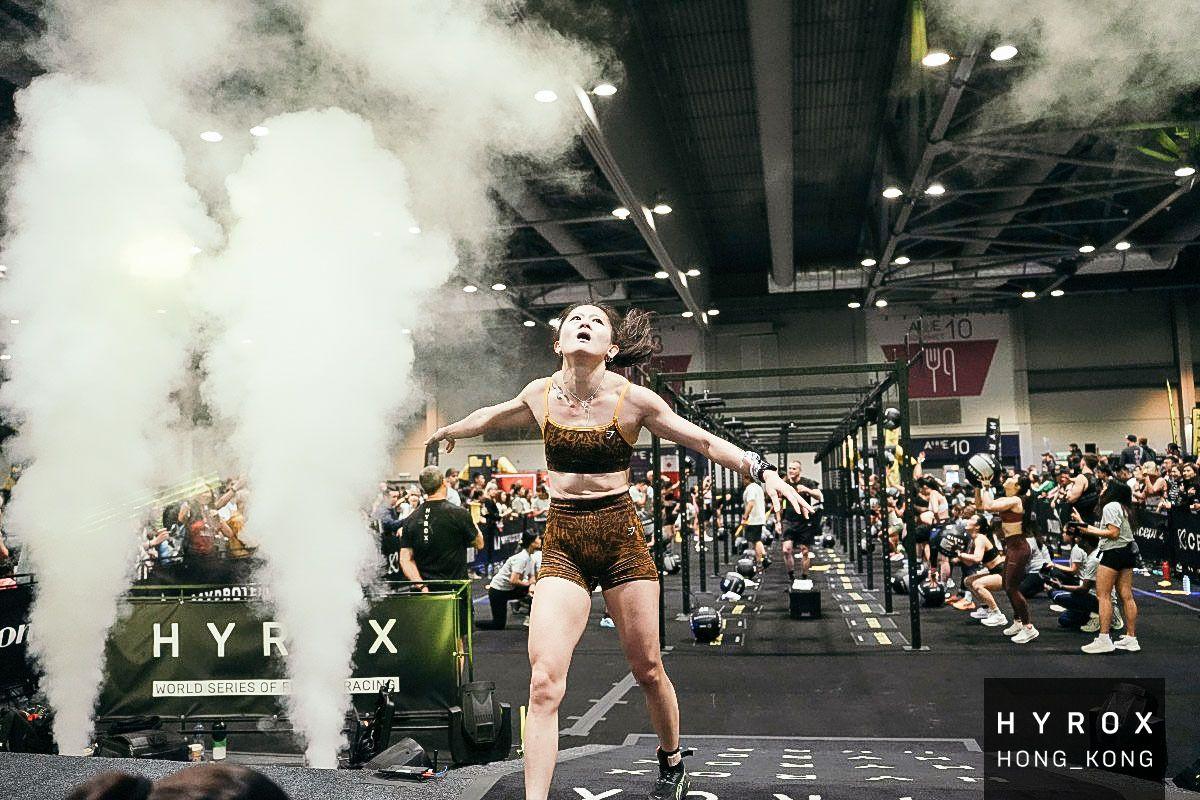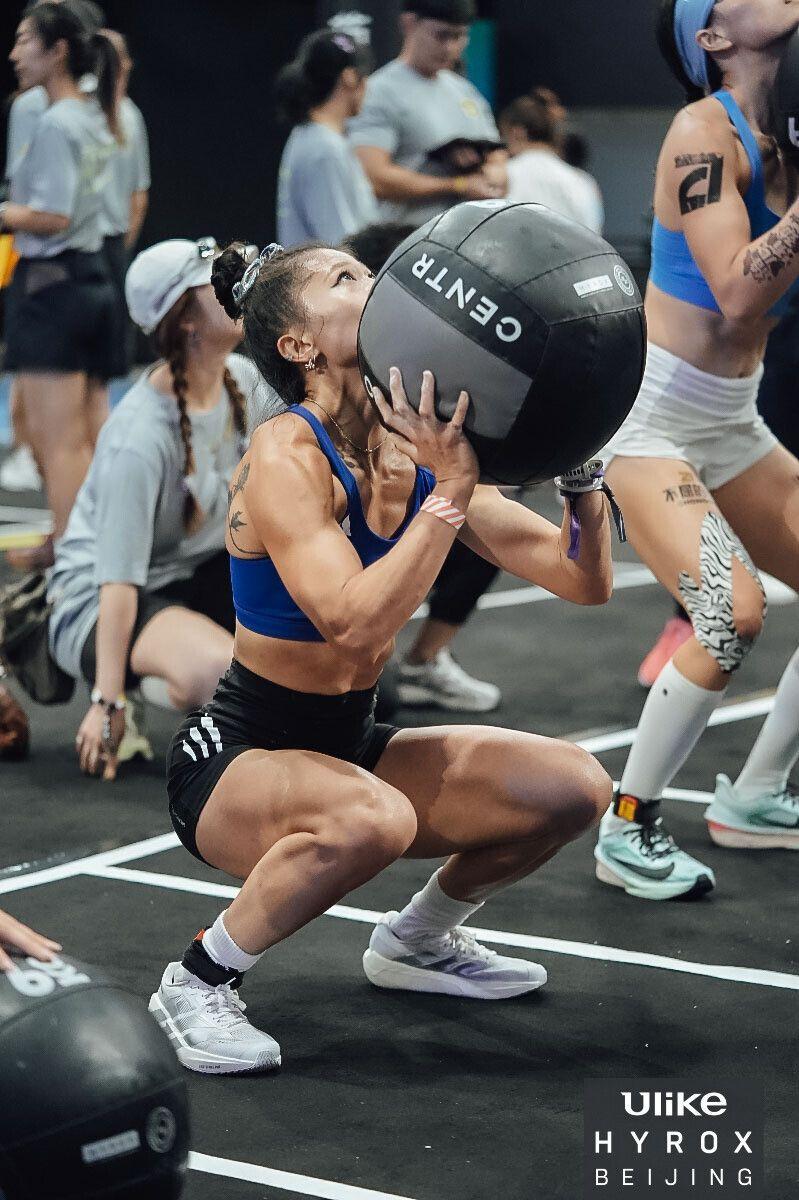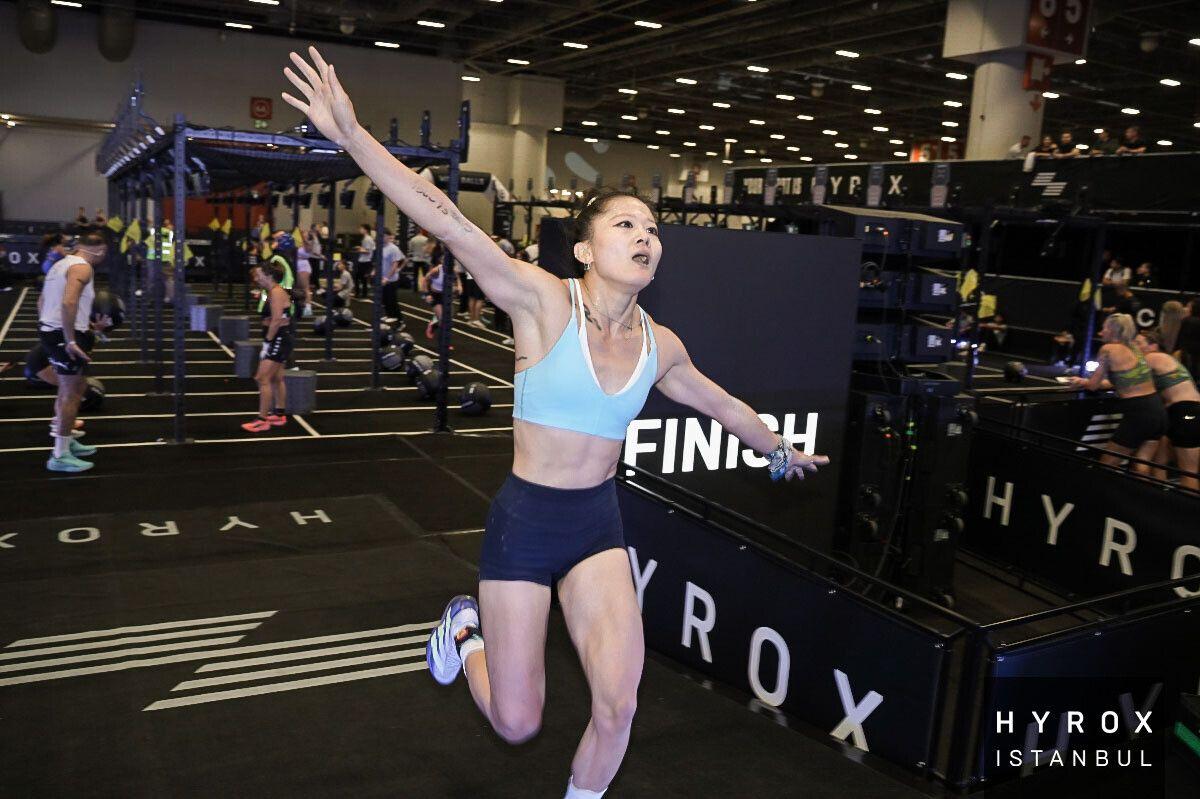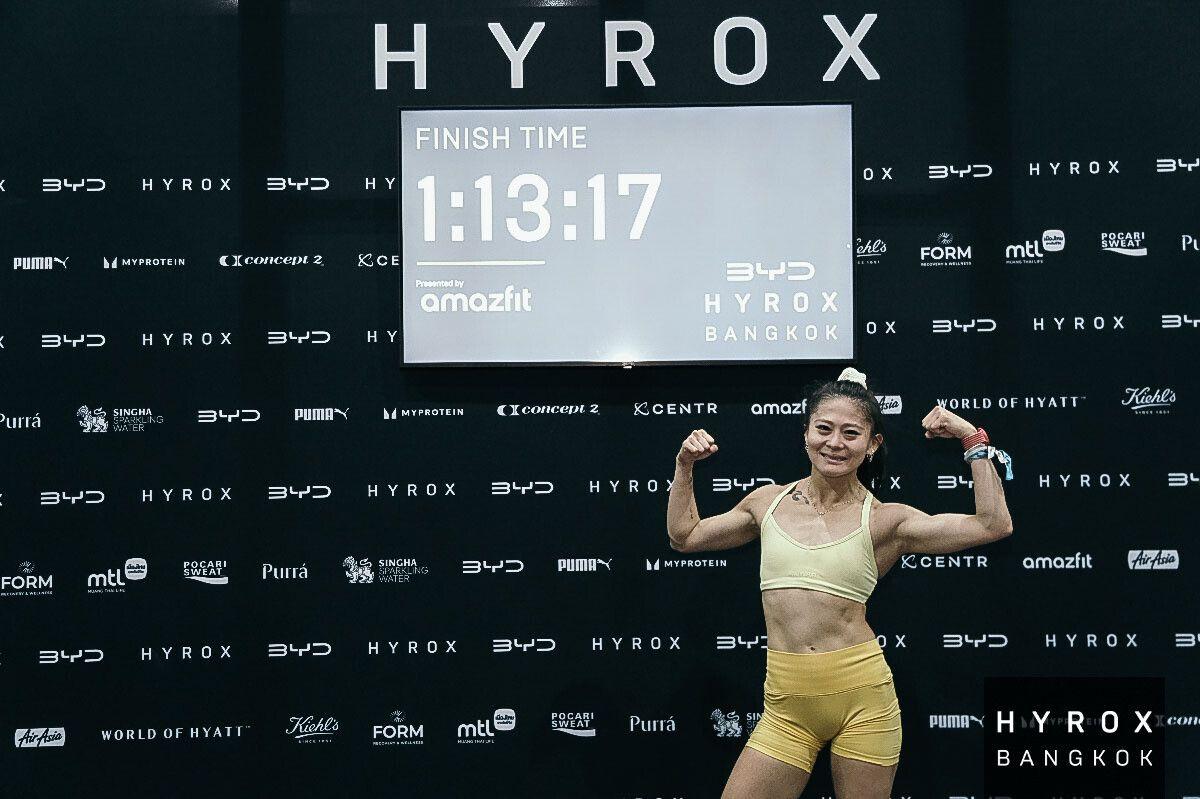
Hi everyone! I'm Pauline Yu (PYY), Taiwan's only 4× Hyrox World Championship qualifier. I still remember the first time I stepped onto a Hyrox race floor in Asia and genuinely thought my strength training background would carry me through — I was wrong in the most humbling way possible. I hit the sled push station at around the 4 km mark and my legs just gave out. Not because I hadn't trained hard, but because I'd been training the wrong things. That race cracked something open for me, and over the next two years of competing at the elite women's level, I figured out exactly which three strength exercises changed everything for female Hyrox athletes. If you're training for Hyrox in Taiwan or anywhere in Asia, this article is for you.
Key Takeaways
- ▸The trap bar deadlift builds the posterior chain strength and hip-hinge mechanics that directly transfer to the sled push and sled pull stations, making it non-negotiable for Hyrox strength training for women.
- ▸The Bulgarian split squat addresses the single-leg strength deficit that most female athletes have, and fixing it dramatically improves your running economy and lunges station performance on race day.
- ▸The overhead press — especially when performed standing — builds the shoulder and core stability needed to survive wall balls and farmers carries without breaking form late in the race when fatigue sets in.
- ▸Prioritise strength work two to three times per week in the 12 weeks before your race, treating it as a primary session rather than an afterthought tacked onto the end of a run.
- ▸Female Hyrox athletes in the women's elite category often lose the most time not during the run segments but at the stations — and that time loss is almost always a strength and technique problem, not a cardio problem.
- ▸Progressive overload over 8 to 12 weeks on these three movements will produce more race-ready strength than doing dozens of different exercises without a structured plan — consistency and progression beat variety every time.
Exercise 1: The Trap Bar Deadlift — The Foundation I Wish I'd Built Earlier
When I first started my Hyrox strength training journey as a woman competing in Taiwan, I avoided heavy deadlifts. I had this fear — common among female athletes I've since coached — that lifting heavy would make me slow or bulky. So I focused almost entirely on running and lighter circuit work. Then I watched a video of myself at the sled push station and the problem was obvious: my hips were too high, my back was taking the strain, and I was pushing from a completely inefficient position. That's a hip-hinge problem. The trap bar deadlift fixed it within two training blocks. It taught my body how to load the posterior chain — glutes, hamstrings, and erectors — through a full range of motion while keeping my torso in a position almost identical to what you need on the sled. I now consider it the single most important female Hyrox workout movement in existence.
What I love about the trap bar deadlift specifically for Hyrox strength training for women is how forgiving it is on the lower back compared to a conventional barbell deadlift. Because the handles are at your sides rather than in front of you, the moment arm on your spine is shorter, which means you can load heavier earlier and focus on building real strength rather than fighting technique issues. For women in Asia who might be newer to barbell training, this is a massive advantage — you get the strength stimulus without the intimidating learning curve of a conventional pull. I program trap bar deadlifts for myself and for the female Hyrox athletes I train in Taiwan, usually three to five sets of four to six reps at around 75 to 85 percent of max effort, and the carryover to sled stations is almost immediate.
- ▸Start with the high handles on the trap bar if you're new to deadlifting — this reduces the range of motion slightly and lets you groove the hip-hinge pattern safely before progressing to heavier loads over 4 to 6 weeks.
- ▸Film yourself from the side during every session for the first month — you want to see your hips drop and chest rise simultaneously at the lift-off point, not your hips shooting up while your back rounds forward.
- ▸Add 2.5 to 5 kg every one to two weeks as long as your form holds — progressive overload is the entire point, and too many female athletes stay at the same weight for months out of caution when they could safely progress.
- ▸Pair trap bar deadlifts with a 200-metre tempo run immediately after two of your sets per session — this trains your body to produce force while fatigued, which is exactly the demand Hyrox places on you at every station.
Exercise 2: The Bulgarian Split Squat — The Uncomfortable Truth About Single-Leg Strength
I hate Bulgarian split squats. There, I said it. They are deeply uncomfortable, they reveal imbalances you didn't know you had, and they make your legs shake in a way that feels very undignified. I also think they might be the single greatest predictor of how well a female Hyrox athlete will perform on race day. Here's why: every single running stride in Hyrox is a single-leg event. Every single lunge — and there are 100 walking lunges at the station — is a single-leg event. If you have a left-to-right strength deficit of more than 10 percent, and most women do, you will compensate with your lower back and your opposite hip, and that compensation will cost you time and potentially cause injury by kilometre six or seven. When I first tested my split squat one year into competing at the women's elite Hyrox level, my left leg was 18 percent weaker than my right. I was horrified. Six months of focused Bulgarian split squat work closed that gap to under 5 percent and my running splits dropped noticeably.
The Bulgarian split squat works because it loads each leg independently, forces your weaker side to do its fair share, and builds the hip stability and quad strength that transfers directly to both the running kilometres and the lunge station. For Hyrox exercises in Taiwan and across the women's elite field globally, I've noticed that athletes who can perform a weighted Bulgarian split squat with control — no knee caving, no trunk tipping — almost always have stronger and more consistent station performances than those who skip single-leg work in favour of bilateral squats alone. Don't get me wrong, I still program bilateral squats too, but if I had to choose one lower-body exercise for a female Hyrox athlete with limited training time, the Bulgarian split squat wins every time. Start with bodyweight, add dumbbells when you can do 12 clean reps per side, then progress to a barbell on your back when you're ready.
- ▸Keep your front foot far enough forward that your shin stays close to vertical at the bottom of the rep — if your knee shoots too far over your toes with heavy load, you'll accumulate knee stress that compounds over a training block.
- ▸Always start with your weaker leg first in every set — this ensures your dominant leg doesn't set a fatigue advantage that lets your weak side cheat its way through the reps and mask the deficit you're trying to correct.
- ▸Test your single-leg strength every four weeks by comparing your 8-rep maximum on each side — tracking this number and watching the gap close over time is one of the most motivating things you can do in your Hyrox strength training for women.
Exercise 3: The Standing Overhead Press — The Overlooked Weapon for the Final Stations
Most female Hyrox athletes I've talked to in Taiwan and across Asia focus their upper body training almost entirely on pulling movements — rows, pull-ups, lat pulldowns. And those are valuable, don't get me wrong. But the overhead press is consistently the most neglected movement in the female Hyrox workout toolkit, and it shows during the wall ball and farmers carry stations. Wall balls require you to catch a heavy medicine ball at chest height and drive it overhead repeatedly — in the women's open category it's a 4 kg ball, and in the pro/elite women's division it's 6 kg — for 100 repetitions. If your shoulders fatigue after 30 reps, you're going to slow down dramatically and potentially drop the ball, which costs you precious seconds. I've been there. Standing overhead press builds the exact pressing endurance and shoulder girdle stability that you need to push through all 100 wall ball reps without your form collapsing.
What makes the standing version specifically valuable over a seated press or machine press is the core demand. When you press a barbell or dumbbells overhead while standing, your entire trunk — abs, obliques, and lower back — has to work to stabilise you and prevent excessive arching. This is almost identical to the demand your core faces during farmers carries, where you're holding heavy kettlebells or dumbbells at your sides for 200 metres and trying not to let your spine rotate or collapse. Female Hyrox workout design should treat core stability as a systemic quality, not an isolated ab-training problem, and the standing overhead press trains it in exactly that integrated way. I program three to four sets of six to eight reps, focusing on bracing hard before every rep and not letting my lower back extend excessively as the weight gets heavier. Over time, this builds the kind of shoulder and core durability that lasts for an entire race.
- ▸Before pressing, take a big breath into your belly and brace your core as if you're about to take a punch — this intra-abdominal pressure protects your spine and transfers force more efficiently from your legs through to the bar overhead.
- ▸Add a light overhead press finisher of 3 sets of 15 to 20 reps with 50 percent of your working weight at the end of your strength sessions every week — this builds the shoulder endurance that mirrors the high-rep demand of wall balls on race day.
- ▸If you find the barbell press uncomfortable on your wrists, switch to dumbbells and use a neutral grip — maintaining full range of motion and consistent training frequency matters far more than which implement you use, especially in your first year of Hyrox strength training.
What the Research Says
The science here is genuinely reassuring for female athletes who worry about getting the balance between strength training and endurance right. Research published in the Journal of Strength and Conditioning Research has consistently shown that concurrent training — combining strength work with endurance training in the same program — does not significantly impair strength or aerobic development when the sessions are well-structured and recovery is managed appropriately. This matters enormously for Hyrox strength training for women, because so many of us were told at some point to choose between being a runner and being a lifter. The evidence says you don't have to choose. Additionally, findings from the British Journal of Sports Medicine on injury prevention in female athletes have consistently highlighted that strength asymmetries between limbs — exactly the kind the Bulgarian split squat addresses — are a significant risk factor for lower limb injury. Fixing those imbalances isn't just about performance; it's about staying healthy enough to train consistently over months and years. My own training data from four World Championship cycles backs this up completely — the seasons where I prioritised these three lifts were the seasons where I stayed injury-free and performed best on race day in Taiwan and abroad.
Frequently Asked Questions
Q: How many times per week should I do strength training if I'm also running for Hyrox? A: In my experience and from what I've seen work for female Hyrox athletes in Taiwan and across Asia, two to three dedicated strength sessions per week is the sweet spot in the 12 weeks before a race. Each session should be 45 to 60 minutes and focus on the compound movements we discussed — not endless accessory circuits. One session can be heavier and more strength-focused, one can be moderate weight with higher reps to build muscular endurance. Your running volume should be the variable you reduce if you're feeling overloaded, not your strength training, because the station-specific strength is often the bigger limiter for most female Hyrox athletes at the intermediate level.
Q: I'm a beginner with no barbell experience — can I still do these exercises? A: Absolutely, and honestly I think beginners in the women's Hyrox training community sometimes have an advantage because they don't have to unlearn bad habits. Start the trap bar deadlift with just the empty bar or light plates to groove the pattern. Do Bulgarian split squats with just your bodyweight for the first two to four weeks. And use dumbbells for the overhead press before touching a barbell. The movement pattern and consistent progressive overload matter far more than the implement you use early on. I've introduced dozens of women in Taiwan to these three Hyrox exercises with zero barbell experience, and within 8 to 10 weeks they're lifting confidently and seeing real changes in their station performance times.
Q: Should I still do these exercises close to race day, or should I stop strength training in the final two weeks? A: This is such a common question and I made the mistake of completely dropping strength work in the final two weeks early in my career — big mistake. I always felt flat and weak on race day as a result. What I do now, and what I recommend for female Hyrox workout periodisation, is to keep all three exercises in your program right up until race week but reduce the volume significantly. In the final week before racing, I'll do one light session — maybe two sets of five reps on each movement at around 60 percent effort — just to keep the neuromuscular patterns sharp and avoid feeling sluggish. Deload the volume, not the frequency. Your body remembers the strength it built; you just need to remind it without creating fatigue.
These three movements genuinely changed my Hyrox career, and I share them because I want more women — in Taiwan, across Asia, and everywhere in the global Hyrox community — to walk onto that race floor feeling truly prepared and strong. You deserve to feel that. If you want more training plans, race strategy breakdowns, and honest personal insights from my journey as a women's elite Hyrox athlete, head over to paulineyuyu.com and subscribe — I'd love to train alongside you. See you at the start line. — PYY
Sources: British Journal of Sports Medicine / Journal of Strength and Conditioning Research
Taiwan's elite HYROX Pro athlete and 4× World Championship qualifier. I share my training journey, race insights, and performance notes from the competition floor.